 info@sweetrich.cn
  +86-(0)512-82283871
Content
- 1 A Travel Smart Wheelchair Designed Around Real Mobility Needs
- 2 Key Product Specifications
- 3 Fast Folding as a Practical Competitive Advantage
- 4 Lightweight Aluminum Construction for Transport and Durability
- 5 Power, Range, and Daily Performance
- 6 Stability Through Suspension, Tires, and Braking
- 7 User Comfort and Control
- 8 How This Wheelchair Compares with Typical Alternatives
- 9 Manufacturing Strength Behind the Product
- 10 Advanced Production Processes and Quality Control
- 11 Design for International Markets
- 12 Benefits for Users
- 13 Benefits for Caregivers and Families
- 14 Benefits for Dealers, Distributors, and Retailers
- 15 Safety, Responsible Use, and Practical Limitations
- 16 Why the Product Fits the Travel Smart Category
- 17 Company Expertise and Long-Term Value
- 18 Q&A Section
- 18.1 What type of user is this foldable aluminum power wheelchair designed for?
- 18.2 How quickly can the wheelchair fold and unfold?
- 18.3 What is the maximum driving range?
- 18.4 What batteries are available?
- 18.5 What is the weight capacity?
- 18.6 Does it have suspension?
- 18.7 What kind of braking system does it use?
- 18.8 Can the joystick be installed on either side?
- 18.9 What makes this wheelchair better than many competing foldable models?
- 18.10 Is this wheelchair suitable for travel?
- 18.11 What is the standard maximum speed?
- 18.12 Who manufactures the product?
- 19 Conclusion
- 20 References
- 21 Product: iFold Medical foldable aluminum rollator wheelchair with footrest light weight Wheelchair
Modern personal mobility is no longer defined only by whether a device can move from one place to another. Users now expect a mobility solution that folds quickly, travels easily, feels stable, supports daily independence, and is built with consistent manufacturing quality. The foldable aluminum power wheelchair described here is designed for exactly that purpose: convenient movement for seniors, disabled users, and people who need a compact powered mobility aid for daily routines, travel, shopping, community activities, and home-to-vehicle transitions.
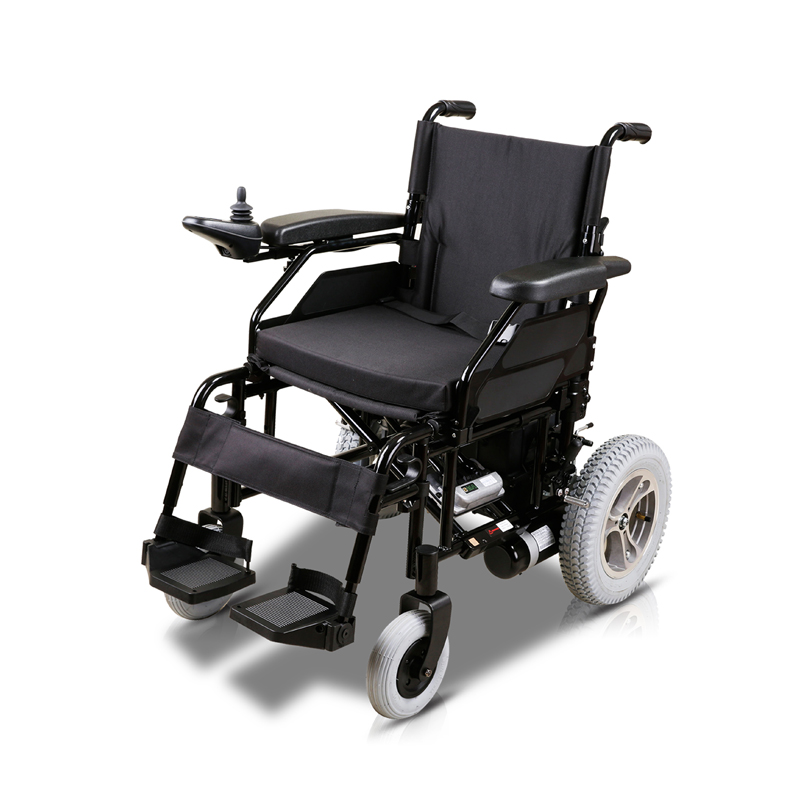
This product belongs to the Travel Smart Wheelchairs category and combines several important qualities in one platform: a lightweight aluminum structure, rapid folding, a large foot platform, front and rear suspension, electromagnetic braking, dual 250W motors, a practical lithium battery system, and a joystick that can be configured for left-side or right-side use. It is intended as a non-medical personal mobility device for the U.S. market, while still offering the type of stability, comfort, and operational confidence users often expect from higher-grade mobility equipment.
For distributors, care-product retailers, mobility dealers, and international buyers, the value of this wheelchair is not only found in the product specifications. It is also supported by the manufacturing capabilities of Sweetrich Mobility, a company with more than ten years of experience in the research, development, and production of mobility scooters and power wheelchairs. With a 30,000-square-meter factory, advanced production management, strict quality control, and an export footprint covering America, Europe, Japan, Australia, the Middle East, Russia, and other markets, the company provides a strong foundation for stable supply and long-term cooperation.
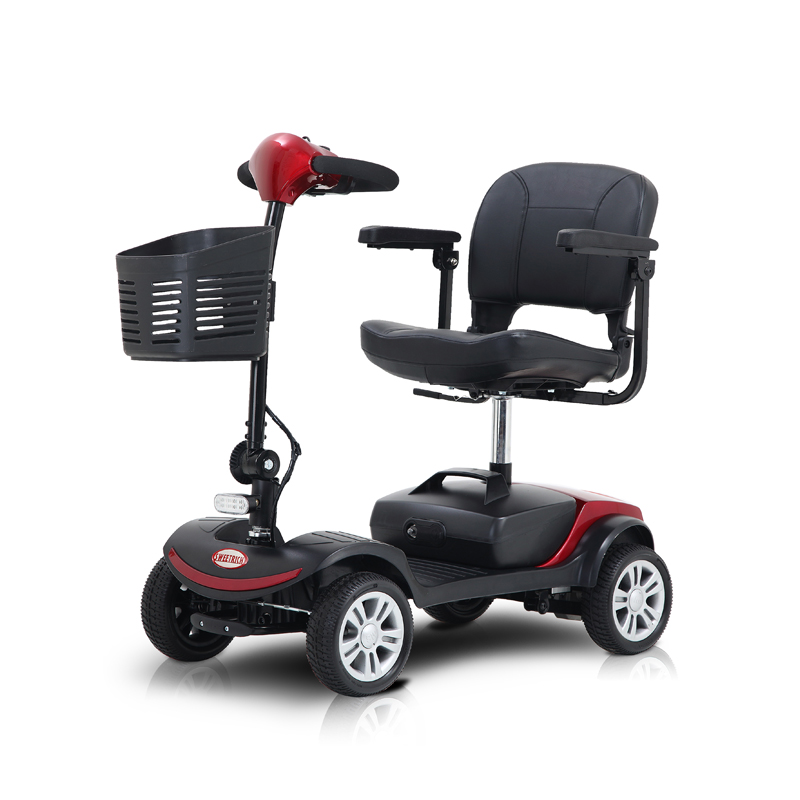
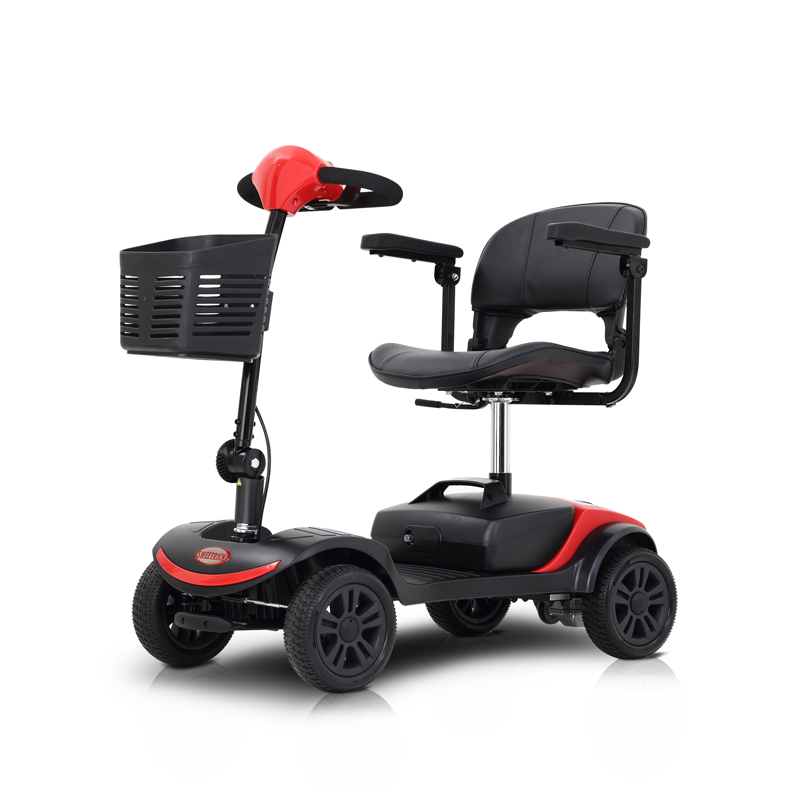
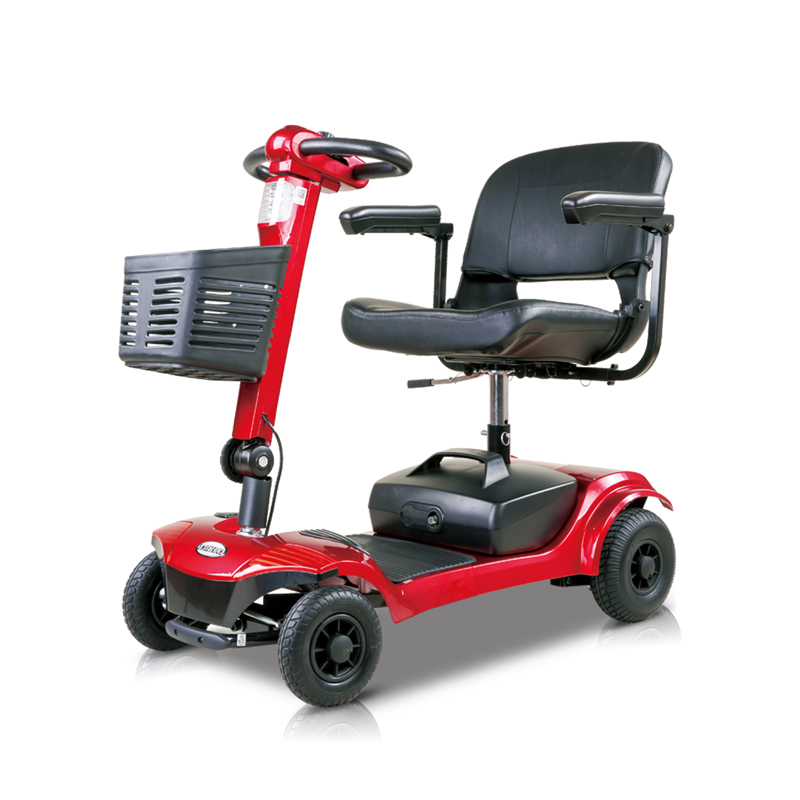
iFold Medical foldable aluminum rollator wheelchair with footrest light weight Wheelchair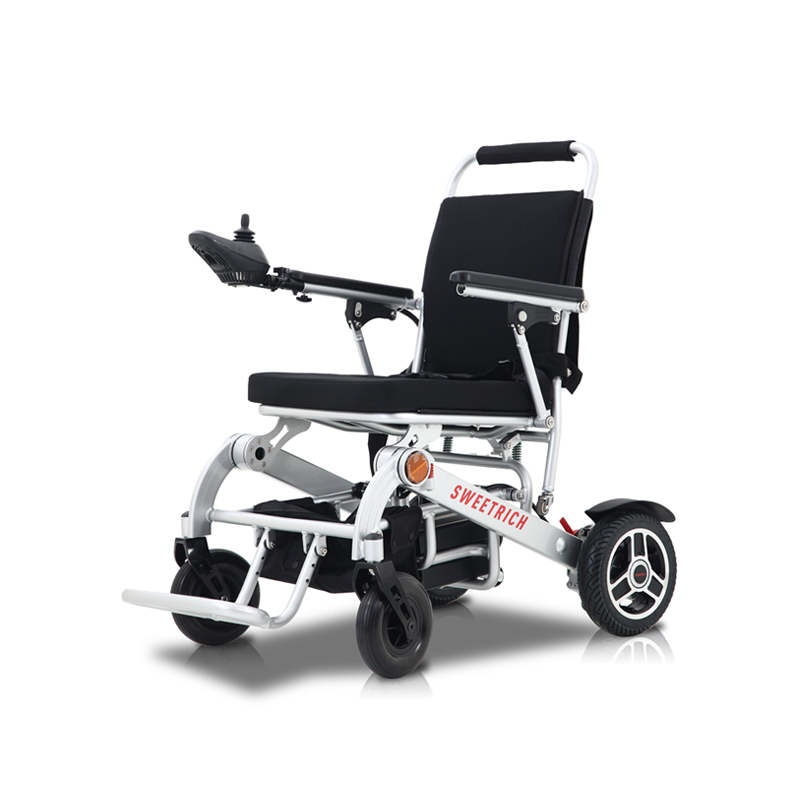
A Travel Smart Wheelchair Designed Around Real Mobility Needs
A foldable power wheelchair must do more than collapse into a smaller shape. It must solve the everyday problems that users and caregivers face: limited storage space, difficulty lifting heavy equipment, inconvenient transfers, narrow indoor environments, uneven outdoor surfaces, fatigue from manual propulsion, and the need for reliable braking when stopping on slopes or crowded pathways.
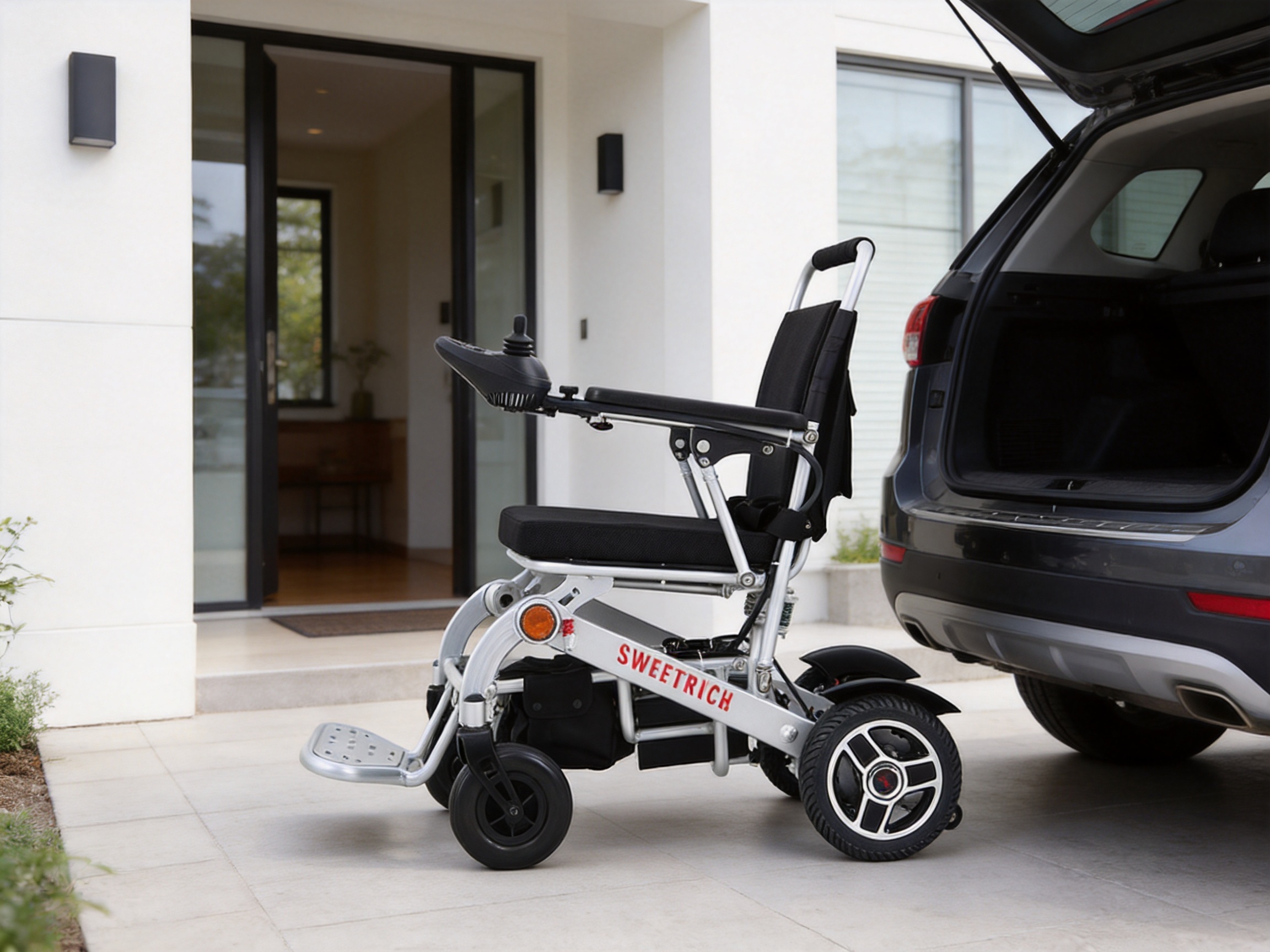
The foldable aluminum power wheelchair addresses these needs through a design that emphasizes speed of folding, compact handling, controlled driving, and practical comfort. Its fold-and-unfold mechanism can be completed in approximately one second, which is a major advantage for users who frequently move between indoor spaces, cars, elevators, public areas, and travel destinations. Many competing power wheelchairs require multiple steps, separate locking actions, or tool-assisted adjustments. A fast-folding system reduces frustration and makes the chair more convenient for both independent users and caregivers.
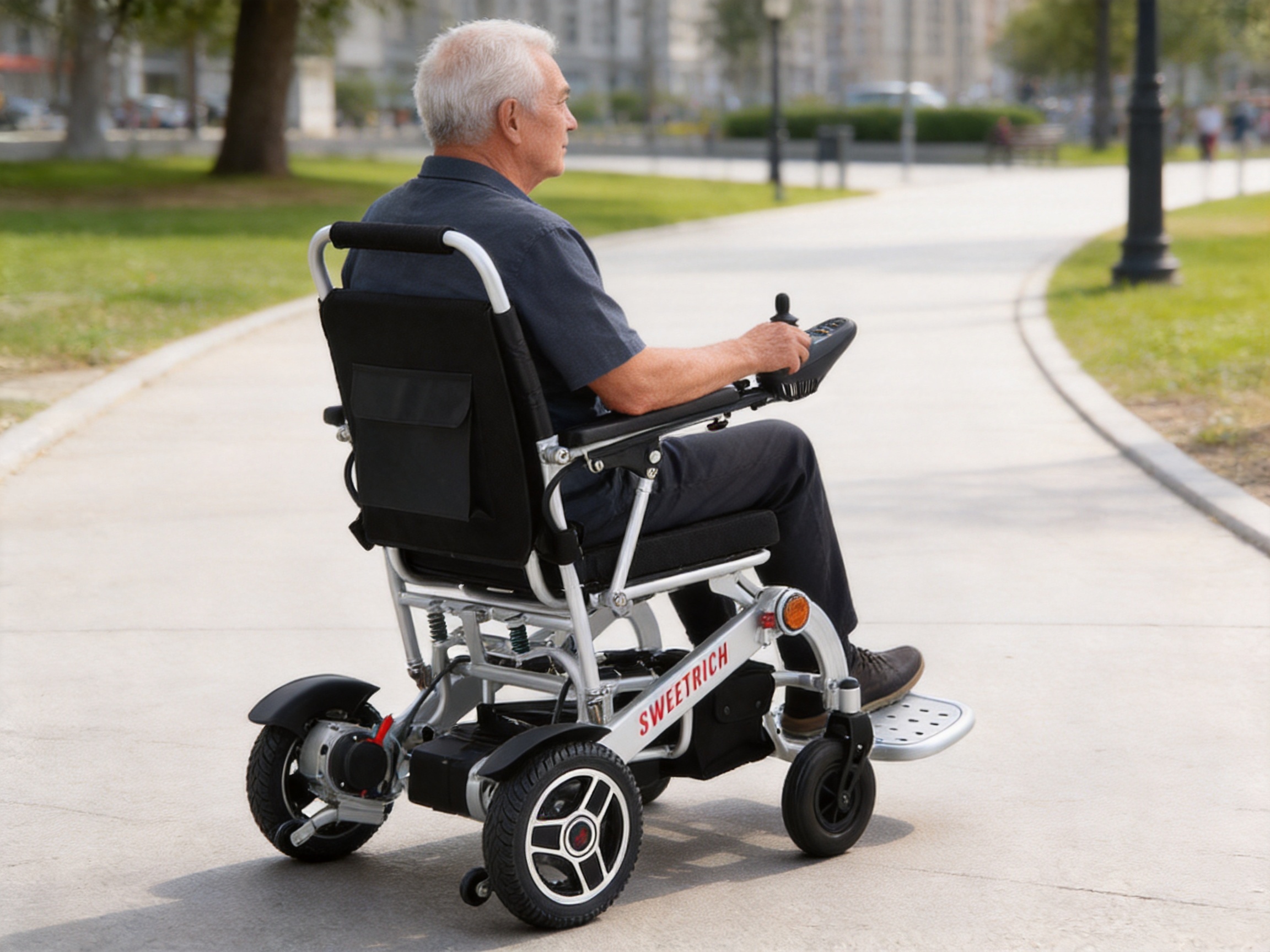
The aluminum structure is another important part of the product’s appeal. Aluminum helps reduce frame weight while maintaining strength and corrosion resistance. The wheelchair weighs about 24 kg without the battery, making it significantly easier to move after folding than many conventional powered wheelchairs that use heavier steel structures. While no powered wheelchair should be lifted casually without considering user safety and handling conditions, reducing weight can make a meaningful difference for caregivers, family members, transport staff, and dealers demonstrating the product in retail environments.
Another user-centered feature is the large foot platform. A spacious foot platform improves support during riding and makes foot placement more natural. For many users, small or poorly positioned footrests can create discomfort, instability, or awkward sitting posture. By providing a larger platform, this wheelchair improves the feeling of support, especially during longer rides or while moving over varied surfaces.
The joystick can be installed for use on either side, which is especially valuable because user needs differ. Some users have stronger control on the right hand, while others require left-hand operation due to injury, disability, stroke recovery, personal preference, or caregiver assistance style. Side-flexible joystick positioning gives dealers and users more freedom during setup and reduces the need to stock separate left-hand and right-hand versions.
Key Product Specifications
The following table summarizes the principal specifications of the foldable aluminum power wheelchair. Exact performance may vary depending on user weight, terrain, battery condition, temperature, driving style, and market configuration.
Specification |
Value |
Overall Dimensions |
1090 mm L × 605 mm W × 998 mm H |
Standard Maximum Forward Speed |
6 km/h |
Available Speed Configuration |
Up to 8.5 km/h depending on configuration and market requirements |
Maximum Driving Gradient |
10 degrees |
Maximum Driving Range |
30 ± 5 km |
Weight Capacity |
120 kg / 265 lbs |
Suspension |
Front and rear suspension |
Tire Sizes |
8-inch front tires and 10-inch rear tires |
Brake System |
Electromagnetic brake |
Battery Options |
Lithium 24V / 10.2Ah and 20Ah, with optional higher-capacity configurations up to 30Ah |
Charger |
DC24V 2A, AC115-230V |
Charging Time |
Approximately 5 hours |
Motor |
24V / 250W × 2 pcs |
Motor Controller |
24V / 50A |
Weight Without Battery |
24 kg |
Fast Folding as a Practical Competitive Advantage
One of the strongest advantages of this wheelchair is its ability to fold and unfold in approximately one second. In the mobility equipment market, folding speed is not a cosmetic feature; it directly affects daily usability. A user may need to fold the chair when entering a car, storing it in a hallway, boarding a transport vehicle, visiting a restaurant, or placing it in a small apartment. If the folding process is complicated, the user becomes dependent on a caregiver or may avoid using the product in situations where it would otherwise be helpful.
Compared with many traditional power wheelchairs, which may require disassembly, removal of heavy parts, or multi-step frame operations, this model emphasizes immediate folding. That makes it especially suitable for travel-oriented use. It can be folded quickly after a trip, moved more easily after folding, and stored with less effort. For retailers, this is also a strong demonstration feature. A product that folds quickly can be shown clearly in a showroom, trade fair, or customer consultation, allowing buyers to understand the value immediately.
The one-second fold also reduces the physical and mental burden on caregivers. In real use, caregivers often have to manage bags, car doors, ramps, weather, traffic, and the user’s comfort at the same time. A complicated wheelchair folding process can become a major source of stress. A simple fold design allows the caregiver to focus more on the person and less on the machine.
Lightweight Aluminum Construction for Transport and Durability
The use of aluminum is central to the product’s balance between strength and portability. A power wheelchair must resist frame stress during turning, braking, riding over minor obstacles, and loading into vehicles. At the same time, it must not be so heavy that it becomes impractical for travel. Aluminum helps solve this conflict by offering favorable strength-to-weight performance.
At approximately 24 kg without battery, the wheelchair is positioned as a lightweight powered solution compared with many bulky conventional electric wheelchairs. This lower frame weight supports easier handling after folding and can reduce transport difficulty. It also gives the product a cleaner, more modern feel, which matters increasingly in the mobility market. Users do not want a device that appears institutional or overly heavy; they want a product that supports independence while fitting into normal life.
Aluminum also offers natural resistance to corrosion compared with untreated steel. For users who travel, ride outdoors, store devices in garages, or live in humid climates, corrosion resistance contributes to longer-term appearance and reliability. Combined with proper surface treatment and controlled manufacturing processes, aluminum construction can provide a strong foundation for a durable travel wheelchair.
Power, Range, and Daily Performance
The wheelchair uses two 24V / 250W motors, providing balanced power delivery to the drive system. Dual motors are important because they support turning control, traction distribution, and smoother handling than single-drive arrangements in many powered mobility applications. The 24V / 50A motor controller coordinates the power output, helping the chair respond predictably to joystick input.
The standard maximum forward speed is listed as 6 km/h, a practical pace for indoor and outdoor personal mobility. Some configurations can reach up to 8.5 km/h depending on market requirements and product setup. This flexibility allows the product to meet different regional expectations and user preferences. A moderate operating speed is often preferred for safety in public places, while higher configurations may be attractive in open areas where regulations and use conditions allow.
The maximum driving range of 30 ± 5 km is a strong advantage for users who need confidence during longer outings. Many users worry about battery life, especially when visiting shopping centers, parks, hospitals, transportation stations, campuses, or tourist areas. A practical range helps reduce “range anxiety” and allows the user to complete daily activities without constantly searching for charging opportunities.
The product supports lithium battery options including 24V / 10.2Ah and 20Ah, with optional battery configurations up to 30Ah for extended distance. Lithium batteries are well suited to travel-oriented mobility equipment because they are generally more energy-dense than traditional lead-acid batteries and can help reduce total system weight. The charger supports AC115-230V input, making the product adaptable for different international electrical environments, subject to plug type and regional requirements.
Stability Through Suspension, Tires, and Braking
Comfort and safety are not created by a single component. They result from the interaction of frame geometry, suspension, tires, braking, motor control, and user position. This wheelchair includes front and rear suspension, which helps reduce vibration and impact when traveling over uneven surfaces. For users who may be sensitive to jolts, suspension can make a significant difference in perceived comfort.
The tire configuration uses 8-inch front tires and 10-inch rear tires. Larger rear tires can improve outdoor handling and obstacle negotiation compared with smaller wheels commonly found on compact indoor-only chairs. The front and rear tire combination supports maneuverability while retaining enough ground contact for practical travel. This makes the wheelchair suitable for a wider range of everyday surfaces such as sidewalks, tiled floors, ramps, paved paths, and residential areas.
The electromagnetic brake system is another significant benefit. Electromagnetic brakes are widely used in powered mobility equipment because they can engage automatically when the joystick is released or when power conditions require stopping. This helps prevent unwanted rolling and gives users greater confidence, especially when stopping on mild slopes or in crowded environments. Compared with purely manual brake systems, electromagnetic braking improves convenience and reduces the chance that a user forgets to engage a brake after stopping.
The listed maximum driving gradient is 10 degrees. This gives the chair useful climbing capability for ramps and mild inclines, although safe use always depends on surface condition, user weight, battery charge, and correct driving behavior. The combination of dual motors, electromagnetic braking, suspension, and appropriate tire sizes gives the product a strong performance profile for travel-oriented daily mobility.
User Comfort and Control
A wheelchair can have strong technical specifications and still fail if the user does not feel comfortable and confident. This product addresses comfort through its stable frame, large foot platform, practical dimensions, suspension system, and joystick flexibility. The overall dimensions of 1090 mm length, 605 mm width, and 998 mm height create a balance between user space and maneuverability. A width of 605 mm helps the chair remain suitable for many indoor passages while still providing enough structure for a stable ride.
The large foot platform supports a more secure seated position. This matters when users ride for extended periods or when crossing small surface transitions. Stable foot placement can reduce fatigue and help maintain posture. It also gives users a stronger sense of being supported by the chair rather than perched on a narrow mobility device.
The joystick available for both-side use is a practical customization advantage. In mobility equipment, one-size-fits-all control placement can exclude users who have limited dexterity or strength on one side. By allowing the joystick to be positioned according to user preference, the wheelchair becomes more adaptable for real-world needs. This also helps dealers serve a broader customer base without requiring multiple different product models.
How This Wheelchair Compares with Typical Alternatives
In the competitive mobility market, buyers often compare foldable powered wheelchairs across weight, range, speed, folding convenience, comfort, braking, after-sales support, and manufacturer credibility. This model stands out in several ways.
First, the folding speed is a major advantage. Some competing chairs are labeled as foldable but still require several actions, such as removing cushions, folding footrests, unlocking side frames, detaching battery boxes, or adjusting arm components. A one-second folding design simplifies the process and makes the product more attractive for travel users.
Second, the weight without battery is competitive. Heavy electric wheelchairs can offer durability, but they often sacrifice transport convenience. At approximately 24 kg without battery, this chair is designed for easier post-fold movement. This does not eliminate the need for safe lifting practices, but it clearly improves portability compared with heavier models.
Third, the 30 ± 5 km maximum driving range is strong for daily mobility. Some compact travel chairs offer shorter ranges that are suitable only for limited indoor use or brief errands. A longer range gives users more confidence and increases the product’s appeal for outdoor activities and travel.
Fourth, the chair combines portability with comfort features such as front and rear suspension. Many lightweight chairs reduce weight by eliminating suspension or using very small wheels. This may make the product compact but can reduce comfort. By including suspension and 8-inch front and 10-inch rear tires, this model offers a more balanced solution.
Fifth, the electromagnetic brake system provides a safety-related advantage over simpler braking arrangements. For powered mobility users, predictable stopping is essential. Electromagnetic braking supports smoother daily operation and helps protect the user in common stop-and-go situations.
Finally, the product is backed by a manufacturer with specialized experience in mobility scooters and power wheelchairs. For buyers, the manufacturer’s production background matters because it affects consistency, spare parts support, quality control, and long-term product improvement. A reliable supplier can be as important as the product itself.
Manufacturing Strength Behind the Product
The product is manufactured by Sweetrich Mobility, formally Suzhou Sweetrich Vehicle Industry Technology Co., Ltd., a high-tech company located in Suzhou Industrial Zone, Jiangsu, China. Established in 2011, the company has accumulated more than ten years of experience in the development and production of mobility scooters and power wheelchairs. Its facility covers 60 acres and includes a 30,000-square-meter factory, providing the physical scale needed for organized production, quality control, warehousing, and export preparation.
Manufacturing strength is especially important in the mobility industry because these products are not disposable consumer goods. Users rely on them for independence, daily movement, and safety. A poorly made product can create inconvenience, service issues, and risk. A well-managed production system helps ensure that every frame, controller, motor, battery interface, brake component, and folding mechanism performs as expected.
The company focuses on improving the convenience and quality of life of elderly and disabled users. This mission influences product design, because mobility equipment must be practical, comfortable, safe, and dignified. The company owns intellectual property rights for its electric scooters and power wheelchairs, showing a commitment to in-house development rather than simple imitation. This is important for international partners who want products with stable design ownership and ongoing engineering support.
Advanced Production Processes and Quality Control
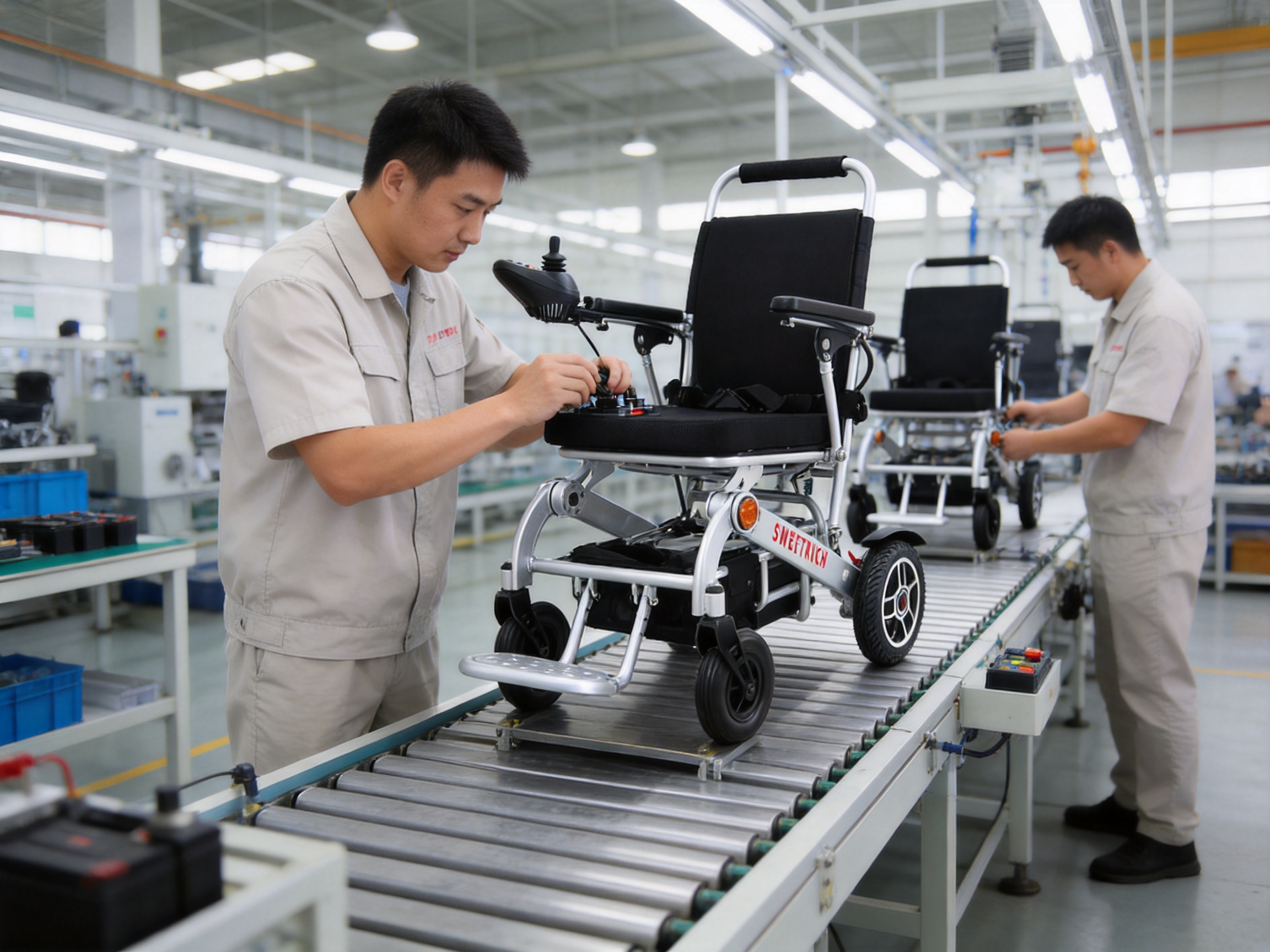
A foldable power wheelchair requires precise manufacturing because the frame must open and close smoothly while remaining strong during use. The production process begins with material selection. Aluminum components must meet strength and consistency requirements before entering cutting, forming, machining, welding, and assembly. Incoming inspection helps confirm that raw materials and purchased components meet technical specifications.
Frame production typically relies on accurate jigs and fixtures to control geometry. If the frame is misaligned, the wheelchair may fold poorly, ride unevenly, or experience unnecessary stress at pivot points. Controlled welding and joining processes help maintain structural integrity. After frame fabrication, surface treatment and finishing improve appearance and corrosion resistance. A clean finish also reflects manufacturing discipline and contributes to customer confidence.
The folding mechanism is a key quality-control focus. Because the product is designed to fold and unfold quickly, hinges, locking points, pivot areas, and structural contact surfaces must be produced with consistent tolerances. The mechanism must be smooth enough for convenience yet secure enough to support use. Repeated folding checks can help identify assembly problems before shipment.
Electrical assembly is another critical area. The motors, controller, joystick, battery connection, charger interface, electromagnetic brake, and wiring harness must be installed correctly and protected from unnecessary strain. Proper cable routing prevents pinching during folding and reduces long-term service issues. Controller calibration helps ensure predictable acceleration, deceleration, turning, and braking behavior.
Battery system integration must be managed carefully. Lithium battery packs require suitable electrical matching, charging compatibility, secure mounting, and appropriate user instructions. A reliable battery connection is especially important for foldable chairs because movement and transport can create vibration and handling stress. Strong battery integration helps improve reliability and user confidence.
Final inspection should include operational testing, braking checks, folding checks, charger verification, joystick response, wheel alignment, fastener inspection, and visual review. For export products, packaging also matters. A foldable wheelchair must be protected during long-distance transportation, warehousing, and final delivery. Good packaging reduces cosmetic damage and helps distributors receive products ready for sale.
Design for International Markets
The wheelchair is designed with global market needs in mind. The charger supports AC115-230V input, which makes it adaptable for many regions. The product’s moderate dimensions, folding structure, and lithium battery options align with demand in markets where users value portability, compact storage, and travel convenience.
Sweetrich Mobility exports products to America, Europe, Japan, Australia, the Middle East, Russia, and other regions. This international experience matters because different markets have different expectations for documentation, packaging, product configuration, labeling, dealer support, and customer service. A manufacturer with established export experience is more likely to understand the practical requirements of international buyers.
For the U.S. market, the product is identified as a non-medical device. This distinction is important for positioning, distribution, and customer communication. The wheelchair can be presented as a personal mobility aid for convenience and independence rather than a regulated medical treatment device. Clear positioning helps avoid misunderstanding and supports responsible marketing.
Benefits for Users
For individual users, the main benefit is greater independence. A foldable powered wheelchair allows users to move through daily life with less physical exertion. Instead of depending entirely on manual propulsion or caregiver pushing, the user can control movement with a joystick. This can make shopping, visiting friends, attending appointments, traveling, or enjoying outdoor spaces more accessible.
The quick-fold design supports spontaneous activity. Users and caregivers do not have to plan around complicated equipment handling. If a destination changes, the chair can be folded and moved quickly. If storage space is limited, the compact folded form becomes useful at home or in vehicles.
The range of 30 ± 5 km supports longer outings. Users can travel through larger facilities, parks, or public areas with less concern about battery depletion. Optional higher-capacity battery configurations can extend travel possibilities further, making the chair suitable for users who spend more time outside the home.
Comfort is another meaningful benefit. Front and rear suspension help reduce bumps, and the tire combination supports a smoother ride than many small-wheel compact chairs. The large foot platform supports posture and confidence. The electromagnetic brake adds peace of mind when stopping.
Benefits for Caregivers and Families
Caregivers and family members often influence mobility equipment decisions. They need products that are safe, manageable, and easy to transport. The fast-fold design can reduce the time and effort required when moving the wheelchair into storage or transport situations. The lightweight aluminum frame reduces handling difficulty compared with heavier power wheelchairs.
Families also appreciate products that are reliable and simple to operate. The joystick control, electromagnetic brake, and stable driving characteristics make the chair easier to understand. The side-adjustable joystick allows the product to fit different users in the same household or accommodate changing needs over time.
For caregivers who accompany users in public, the chair’s maneuverability and compact width are helpful. A travel-oriented wheelchair must fit through ordinary environments without constantly creating obstacles. At 605 mm wide, the product is suitable for many everyday indoor and public spaces while still providing a stable base.
Benefits for Dealers, Distributors, and Retailers
For dealers and distributors, the product has strong marketability because it offers clear selling points that customers can understand quickly. The one-second folding function is easy to demonstrate. The lightweight aluminum construction is easy to explain. The range, suspension, electromagnetic brake, and dual motors provide technical substance behind the sales message.
The product can serve multiple customer groups, including seniors seeking independence, disabled users needing powered assistance, travelers wanting a compact mobility solution, caregivers seeking easier transport, and retailers looking for a reliable foldable power wheelchair category product. This broad appeal can improve inventory efficiency.
Manufacturer strength is also important for dealers. Sweetrich Mobility’s production scale, export experience, and focus on mobility products support more dependable cooperation. Dealers need consistent quality, clear communication, spare parts availability, and the ability to maintain long-term supply. A manufacturer with specialized experience in mobility scooters and power wheelchairs can better support these needs than a general-purpose assembly supplier.
Safety, Responsible Use, and Practical Limitations
Every mobility product should be used responsibly. Although the wheelchair offers strong convenience and performance, users should follow operating instructions, observe local regulations, avoid unsafe slopes, and check battery levels before longer trips. The maximum driving gradient of 10 degrees should not be treated as permission to climb every incline in all conditions. Wet surfaces, loose gravel, excessive user load, low battery, or sharp turns on slopes can affect safety.
The electromagnetic brake is a valuable safety feature, but users should still learn proper joystick control and stopping behavior. Sudden movements should be avoided in crowded areas. Users should reduce speed indoors, near pedestrians, or when turning. Caregivers should be familiar with folding, charging, and transport procedures.
Battery care is also important. Lithium batteries should be charged with the provided compatible charger and stored according to instructions. Users should avoid exposing the battery to extreme heat, water, or damage. Dealers should provide clear battery guidance to customers to support safe and long-lasting use.
Why the Product Fits the Travel Smart Category
The Travel Smart Wheelchairs category requires a specific balance of portability, usability, and performance. A chair that is powerful but too heavy is not travel smart. A chair that folds but has poor range is not travel smart. A chair that is compact but uncomfortable may not satisfy users beyond short indoor movement. This product fits the category because it combines fast folding, manageable weight, practical driving range, suspension comfort, and user-adaptable controls.
The ability to move easily after folding is especially important. Travel often involves transitions: home to car, car to destination, hotel lobby to elevator, airport entrance to waiting area, or sidewalk to indoor venue. The chair is designed to reduce friction during these transitions. The large foot platform and suspension help maintain comfort once the user is seated and moving.
The product’s dimensions also support travel use. Its width is practical for many real-world spaces, while its folded handling makes it easier to store when not in use. These features make it suitable for customers who want a powered wheelchair without the bulk of a traditional heavy model.
Company Expertise and Long-Term Value
Sweetrich Mobility has built its business around mobility scooters and power wheelchairs, rather than treating them as secondary product lines. This specialization gives the company deeper familiarity with user needs, production challenges, and international buyer expectations. The company’s principle of quality first, credit above, and customer supreme reflects a focus on long-term relationships rather than short-term sales.
The company’s design philosophy emphasizes comfort, advanced control technology, and smooth safe operation. These values are reflected in the wheelchair’s joystick flexibility, suspension, electromagnetic braking, folding convenience, and dual-motor drive system. The product is not simply a collection of components; it is an integrated mobility platform designed around practical daily use.
For international partners, long-term value includes more than the initial purchase price. It includes consistent production, reliable communication, product documentation, after-sales support, customization potential, and the ability to build stable market presence. A manufacturer with over ten years of experience and established export channels can help reduce sourcing risk.
Q&A Section
What type of user is this foldable aluminum power wheelchair designed for?
It is designed for seniors, disabled users, and people who need a compact powered mobility aid for daily independence, travel, shopping, community movement, and home-to-vehicle transitions. For the U.S. market, it is positioned as a non-medical personal mobility device.
How quickly can the wheelchair fold and unfold?
The wheelchair is designed to fold and unfold in approximately one second, making it highly convenient for travel, storage, and transport.
What is the maximum driving range?
The maximum driving range is 30 ± 5 km under suitable conditions. Actual range can vary depending on user weight, terrain, speed, temperature, battery condition, and driving style.
What batteries are available?
The wheelchair supports lithium battery options including 24V / 10.2Ah and 20Ah, with optional higher-capacity configurations up to 30Ah for users who require longer travel distance.
What is the weight capacity?
The wheelchair supports a maximum user weight of 120 kg, equivalent to approximately 265 lbs.
Does it have suspension?
Yes. The product includes front and rear suspension to improve comfort and reduce vibration over varied surfaces.
What kind of braking system does it use?
It uses an electromagnetic brake system, which supports controlled stopping and helps prevent unwanted rolling when the chair is stopped.
Can the joystick be installed on either side?
Yes. The joystick can be configured for both left-side and right-side use, making the chair suitable for users with different control preferences or physical needs.
What makes this wheelchair better than many competing foldable models?
Its advantages include one-second folding, lightweight aluminum construction, dual 250W motors, practical 30 ± 5 km range, front and rear suspension, electromagnetic braking, large foot platform, adjustable joystick positioning, and backing from an experienced mobility-product manufacturer.
Is this wheelchair suitable for travel?
Yes. Its fast-folding structure, manageable frame weight, lithium battery options, compact handling after folding, and travel-oriented design make it suitable for many travel and daily transport situations.
What is the standard maximum speed?
The standard maximum forward speed is 6 km/h. Some configurations may support speeds up to 8.5 km/h depending on market requirements and setup.
Who manufactures the product?
The product is manufactured by Sweetrich Mobility, a high-tech mobility equipment company located in Suzhou Industrial Zone, Jiangsu, China, with more than ten years of experience in mobility scooters and power wheelchairs.
Conclusion
The foldable aluminum power wheelchair is a strong example of travel-oriented mobility design. It combines rapid folding, lightweight construction, practical range, dual-motor performance, suspension comfort, electromagnetic braking, and user-adaptable joystick control. These features directly address the needs of users, caregivers, dealers, and distributors who want a compact powered mobility solution without sacrificing essential comfort and reliability.
Its advantages over many competing products are clear. The one-second folding mechanism improves daily convenience. The aluminum frame reduces handling difficulty. The 30 ± 5 km range supports longer outings. The suspension system and tire configuration improve ride comfort. The electromagnetic brake supports safer stopping. The large foot platform and flexible joystick placement improve user confidence and customization.
Behind the product is a manufacturer with dedicated experience, production scale, export capability, and a clear focus on improving mobility for elderly and disabled users. Sweetrich Mobility’s 30,000-square-meter factory, more than a decade of product development experience, intellectual property foundation, and international market presence provide important assurance for buyers seeking stable cooperation.
For users, this wheelchair offers independence and convenience. For caregivers, it reduces handling stress. For dealers, it provides strong selling points and broad customer appeal. For distributors, it represents a product supported by manufacturing experience and market-ready design. In the growing mobility equipment market, this foldable aluminum power wheelchair stands out as a practical, travel-smart solution for modern personal mobility.
References
1. Product specification data for foldable aluminum power wheelchair, Travel Smart Wheelchairs category.
2. Manufacturer company profile and production background of Suzhou Sweetrich Vehicle Industry Technology Co., Ltd.
3. General industry principles for powered mobility device design, including folding mechanisms, lithium battery integration, electromagnetic braking, and dual-motor drive systems.
4. Mobility equipment user-experience considerations for seniors, disabled users, caregivers, retailers, and international distributors.
5. Common manufacturing quality-control practices for aluminum-frame powered wheelchairs, including incoming inspection, frame alignment, electrical assembly testing, and final performance review.