 info@sweetrich.cn
  +86-(0)512-82283871
Content
- 1 What Makes Uneven Outdoor Paths Difficult for Mobility Scooters
- 2 How Does a Four Wheel Structure Affect Outdoor Stability
- 3 How Do Wheels Respond to Uneven Ground
- 4 What Role Does Ground Clearance Play on Outdoor Paths
- 5 How Does Suspension Influence Riding Comfort
- 6 Which Outdoor Surfaces Are More Suitable for Four Wheel Scooters
- 7 How Should Speed and Steering Change on Uneven Paths
- 8 What Should Be Checked Before Outdoor Use
- 9 How Do Manufacturers Consider Uneven Terrain During Scooter Design
- 10 When Is an Uneven Path Not Suitable for a Mobility Scooter
- 11 How Can Outdoor Route Planning Reduce Handling Problems
- 12 What Factors Matter When Choosing a Scooter for Outdoor Paths
Outdoor mobility often involves more than smooth sidewalks and indoor floors. Cracked pavement, shallow bumps, loose gravel, sloped paths, and uneven transitions between surfaces can all change how a mobility scooter moves. A route that looks easy from a distance may create noticeable movement once wheels begin crossing irregular ground.
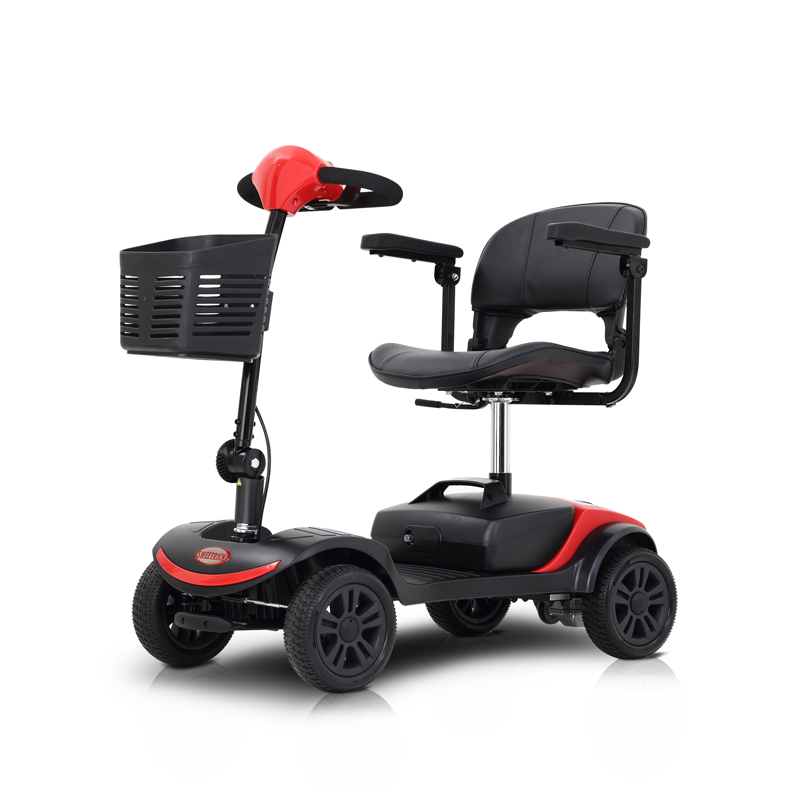
Four‑wheel mobility scooters are commonly considered for outdoor travel because their wheel layout provides contact with the ground at four points. Stability, however, does not come from wheel count alone. Wheel size, ground clearance, suspension, steering response, seat position, and surface condition all influence how a scooter behaves on an uneven path.
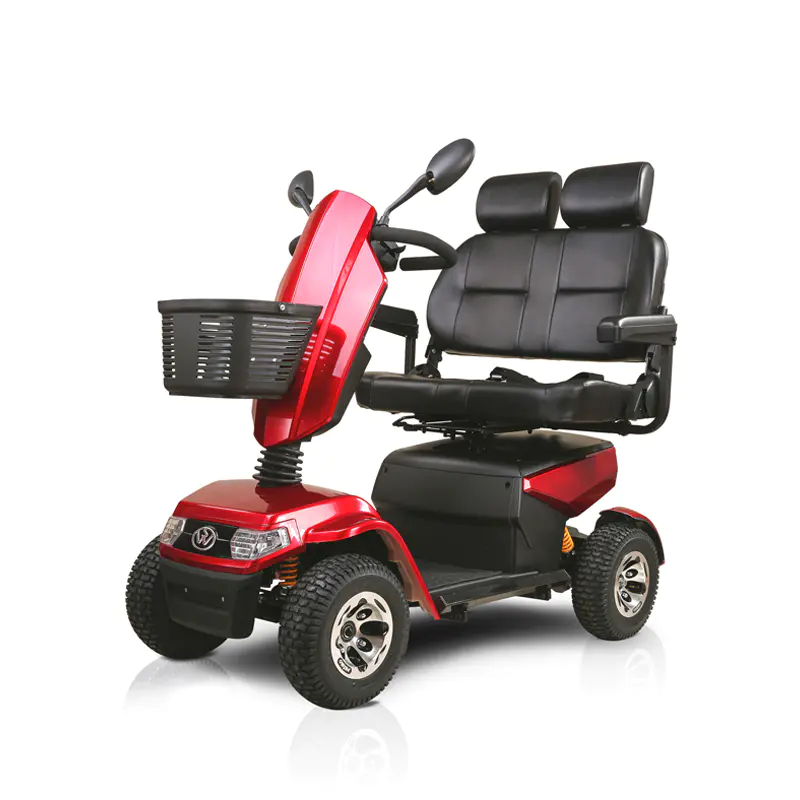
For a Heavy Duty 4 Wheel Scooter, outdoor suitability therefore depends on how its physical design matches the ground conditions along the intended route. A firm paved path with occasional cracks presents a different challenge from loose gravel or a sharply broken surface.
What Makes Uneven Outdoor Paths Difficult for Mobility Scooters
Uneven ground changes the movement of a scooter in several ways. A smooth sidewalk allows the wheels to travel along a relatively predictable plane, while broken pavement introduces repeated changes in wheel height and direction.
Small cracks may cause a brief vibration, while a raised section can create a stronger impact as a wheel climbs over it. Loose gravel creates another type of movement because individual stones can shift beneath the wheels. Sloped ground also affects steering because gravity begins to pull the vehicle toward a lower side.
Common outdoor surface conditions include:
- Cracked or patched pavement
- Uneven concrete sections
- Small stones and gravel
- Shallow dips
- Raised pavement edges
- Sloping paths
- Changes between pavement and compacted ground
Wheel contact becomes particularly important when one side of a vehicle reaches a raised section before another. Weight distribution changes during the movement, and steering may feel different for a short period.
Comfort can also change. Repeated vibration travels from the wheels through the frame and seat, making a route feel rough even when individual bumps appear small. A suitable outdoor design therefore needs to consider both physical stability and the way surface movement reaches the rider.
How Does a Four Wheel Structure Affect Outdoor Stability
Four wheels create a broader contact arrangement than a three‑wheel layout. Front and rear wheels support the vehicle along both sides, creating a stable base while moving across ordinary outdoor surfaces.
Such an arrangement can feel steady during gradual turns and straight‑line travel. Uneven ground still requires care because a wider wheel arrangement does not remove the effects of large bumps, steep slopes, or unstable surfaces.
Wheel placement also affects how a scooter approaches a change in ground level. Front wheels meet an obstacle before rear wheels, so the frame moves through several stages rather than responding to the surface at one point.
A simple example can be seen when crossing a shallow raised section:
- Front wheels reach the raised surface.
- Front suspension or wheel movement responds to the change.
- Rear wheels remain on the lower surface for a short period.
- Vehicle position changes as rear wheels cross the same section.
Such movement explains why wheel arrangement, frame balance, and suspension need to work together. Four wheels provide a stable foundation, while other design elements determine how smoothly that foundation responds to changing ground conditions.
Three‑wheel and four‑wheel layouts also have different handling characteristics. A three‑wheel design may offer a tighter turning path, while a four‑wheel arrangement generally places greater emphasis on a broad support area. Selection therefore depends on the type of routes involved rather than on wheel count alone.
How Do Wheels Respond to Uneven Ground
Wheel design has a direct relationship with outdoor movement. Diameter, width, surface pattern, and material can influence how a wheel passes over small changes in ground level.
Larger wheels can make certain surface transitions easier to approach because the wheel meets a bump at a different angle. A small wheel may encounter a raised edge more abruptly, while a larger wheel can roll over a gradual change with less interruption to forward movement.
Width also matters. A broader wheel can provide a different contact area on firm ground, while surface pattern affects how the wheel interacts with loose material.
Wheel condition should not be overlooked. Wear, damage, or changes in wheel pressure can alter handling and comfort. Even a well‑designed mobility scooter can behave differently when its wheels are no longer in suitable condition.
For outdoor use, practical wheel considerations include:
| Wheel Factor | Possible Effect on Uneven Paths |
| Wheel diameter | Influences how surface changes are approached |
| Wheel width | Affects ground contact |
| Surface pattern | Influences movement over loose material |
| Wheel condition | Can affect steering and comfort |
| Front and rear placement | Changes how bumps reach the frame |
No single wheel feature determines whether a route is suitable. A combination of wheel characteristics and ground conditions needs to be considered.
What Role Does Ground Clearance Play on Outdoor Paths
Ground clearance refers to the space between the lower part of a scooter and the surface beneath it. Such space becomes relevant when a route contains raised pavement, shallow ridges, or uneven transitions.
A wheel may pass over a raised section while a lower part of the frame remains closer to the ground. In such a situation, wheel size alone does not determine whether the vehicle can cross safely. Underbody position also matters.
Low clearance can create problems around abrupt surface changes because a raised object may contact the lower frame even when wheels appear capable of passing over it. Higher clearance can provide more room around certain obstacles, although it does not make steep or unstable terrain suitable.
Ground clearance should therefore be considered alongside wheel size and frame layout. A route with mild cracks may present little concern, while a path containing exposed edges or deep depressions can require a different level of caution.
Outdoor route selection remains important because equipment design has limits. Mobility scooters are intended for particular operating environments, and irregular ground should be judged according to its actual condition rather than its appearance from a distance.
How Does Suspension Influence Riding Comfort
Suspension affects how movement from the ground is transferred into the frame and seat. Without suitable movement control, repeated bumps can be felt more directly by the rider.
A suspension system allows certain wheel movements to occur without transferring every change in surface level directly into the seating area. Such movement can make a path with small irregularities feel less harsh.
Suspension does not remove every vibration. A deep depression, sharp edge, or unstable surface can still create considerable movement. Performance also depends on the relationship between suspension travel, vehicle weight, wheel characteristics, and ground conditions.
Seat support contributes to the overall experience as well. A scooter may cross a mildly uneven path while the seat absorbs part of the remaining movement, creating a different sensation from a rigid structure.
For that reason, outdoor comfort should be considered as a combination of:
- Wheel response
- Suspension movement
- Frame structure
- Seat support
- Ground condition
- Travel speed
A balanced combination helps reduce unnecessary jolts during ordinary outdoor movement, while careful route selection remains necessary whenever surface conditions become difficult.
Which Outdoor Surfaces Are More Suitable for Four Wheel Scooters
Outdoor routes can change from one section to another, so surface condition needs to be considered as a continuous factor rather than a single feature of a road. A paved sidewalk may begin with a smooth surface, pass over a cracked section, and then connect with a gravel path near a park or residential area.
Firm surfaces with shallow irregularities are generally easier to manage than loose or deeply broken ground. A compact surface gives wheels a more predictable base, allowing steering and braking to remain easier to control.
| Outdoor Surface | General Riding Consideration | Main Concern |
| Smooth pavement | Steady movement with predictable wheel contact | Surface changes at crossings |
| Cracked sidewalk | Controlled movement may help reduce vibration | Raised edges and broken sections |
| Light gravel | Suitable only where ground remains firm | Wheel movement and vibration |
| Mild slope | Requires controlled steering | Directional stability |
| Raised pavement | Careful approach is needed | Wheel impact and clearance |
| Loose deep ground | May create difficult movement | Reduced wheel contact |
Gravel deserves particular attention because loose material can move beneath a wheel. A firm gravel surface behaves differently from deep loose stones, even though both may appear similar from a distance.
Raised pavement can create another challenge. Approaching a raised edge at an unsuitable angle may place greater force on one side of the vehicle. A gradual approach with controlled movement can reduce unnecessary impact.
Water and mud also change surface behavior. A path that appears manageable during dry conditions may become less predictable after heavy rain, especially where drainage is poor or loose material has shifted.
How Should Speed and Steering Change on Uneven Paths
Speed control becomes more important as surface conditions become less predictable. Higher travel speed can increase the effect of a bump because wheels have less time to respond to changes in ground level.
A controlled pace allows steering adjustments to happen gradually. Sudden movements can create unnecessary changes in direction, particularly when one wheel reaches a different surface height from the other side.
Approaching a raised section at a moderate angle and steady speed can help maintain a predictable path. Sharp steering near an obstacle may place additional load on one side of the vehicle.
Small adjustments are generally easier to manage than abrupt corrections. Outdoor riding therefore benefits from attention to the route ahead rather than relying only on vehicle structure.
Several practical habits can support smoother movement:
- Reduce speed before reaching visible surface changes.
- Keep steering movements gradual.
- Avoid sudden turns near raised edges.
- Leave suitable space around obstacles.
- Pay attention to changes in surface material.
- Avoid unstable ground where wheel contact may become uncertain.
Such habits do not change the physical capability of a scooter. Instead, they help match operating behavior with the conditions found along a route.
What Should Be Checked Before Outdoor Use
Routine inspection becomes especially relevant when a mobility scooter regularly travels across outdoor surfaces. Small problems may become more noticeable when wheels encounter repeated vibration or uneven ground.
Wheel condition deserves attention because damaged or worn wheels can change steering response and comfort. Braking should also respond consistently, especially on routes containing slopes.
A basic inspection can include:
- Wheel condition
Look for visible wear, damage, or unusual movement around each wheel. - Steering response
Check whether steering movement feels consistent rather than loose or uneven. - Braking
Confirm that braking responds in a controlled manner before entering a route with slopes or irregular surfaces. - Seat position
A stable seating position can help maintain comfortable control while crossing changing ground. - Battery condition
Outdoor travel may involve longer routes, so battery condition should be checked before departure. - Frame and fasteners
Repeated movement over uneven ground can make routine mechanical inspection worthwhile.
Regular inspection does not need to become complicated. A short check before outdoor use can help identify changes in handling before they become noticeable during travel.
How Do Manufacturers Consider Uneven Terrain During Scooter Design
Outdoor mobility equipment needs to account for more than appearance. Frame layout, wheel arrangement, clearance, suspension, seating position, and control placement can all affect how a scooter behaves away from smooth indoor flooring.
Manufacturers may consider different road conditions during product development because intended use can range from residential sidewalks to parks, shopping areas, and other outdoor routes.
A four‑wheel layout can provide a broad support arrangement, while wheel diameter and placement influence how ground changes reach the frame. Ground clearance is considered around the lower structure, while suspension may be incorporated to manage movement caused by uneven surfaces.
China Mobility Scooter Manufacturers also operate within a manufacturing environment where outdoor mobility requirements can vary according to intended markets and usage conditions. Design choices may therefore differ according to expected road surfaces, storage needs, seating arrangements, and transport requirements.
Such variation matters because no single design can match every outdoor environment. A scooter intended mainly for paved paths may have different priorities from equipment intended for mixed surfaces.
Design considerations can include:
- Frame balance
- Wheel arrangement
- Wheel dimensions
- Ground clearance
- Suspension movement
- Steering position
- Seat support
- Braking response
Looking at several elements together provides a clearer picture than judging outdoor capability from one feature alone.
When Is an Uneven Path Not Suitable for a Mobility Scooter
Some surfaces can exceed the intended operating conditions of a mobility scooter. A four‑wheel structure does not mean that every type of outdoor ground can be crossed safely.
Deep loose material can reduce wheel contact and make forward movement difficult. Large surface breaks may create excessive movement, while sharp slopes can change steering and braking requirements.
Certain warning conditions deserve extra attention:
- Deep gravel or loose stones
- Large holes or broken pavement
- Sharp drops between surfaces
- Steep slopes
- Soft or waterlogged ground
- Large obstacles
- Areas with unstable construction surfaces
Route selection should take the actual ground condition into account. A short difficult section can create more handling concerns than a longer route with a consistent firm surface.
Weather can also alter suitability. Rain may soften ground, move loose material, or make smooth surfaces slippery. Outdoor planning therefore needs to consider both the physical route and recent changes in surface condition.
How Can Outdoor Route Planning Reduce Handling Problems
Route planning can reduce exposure to difficult surfaces before travel begins. A path with smooth pavement and gentle transitions may be easier to manage than a shorter route containing broken sidewalks, steep slopes, or loose ground.
Planning does not require complicated mapping. Familiar routes can be checked according to several simple factors:
- Surface condition
- Slope changes
- Road crossings
- Narrow sections
- Construction areas
- Drainage
- Weather conditions
Surface transitions deserve particular attention. Moving from pavement to gravel, from a sidewalk to a road crossing, or from a flat path to a slope can change steering and wheel response within a short distance.
A route that works well during dry weather may require adjustment after rainfall. Seasonal changes can also affect ground firmness and surface quality, especially around parks, unpaved paths, or areas with poor drainage.
Route planning works alongside equipment selection. Suitable design characteristics can support movement across ordinary uneven surfaces, while route awareness helps prevent situations beyond the intended operating environment.
What Factors Matter When Choosing a Scooter for Outdoor Paths
Outdoor suitability should be judged from the relationship between several design features rather than one specification.
A four‑wheel arrangement may provide a stable support base, while wheel dimensions influence how bumps and surface changes are approached. Ground clearance affects the space beneath the frame, and suspension can influence how vibration reaches the rider.
Steering response also deserves attention. Outdoor paths may contain narrow turns, surface changes, or mild slopes that require controlled directional movement.
Seat position can influence comfort during longer journeys, while braking behavior becomes relevant whenever routes include slopes or changing ground levels.
A practical selection checklist can include:
- Wheel arrangement — Consider how wheel placement relates to intended outdoor routes.
- Wheel size and condition — Check whether wheel characteristics suit expected surfaces.
- Ground clearance — Consider raised pavement and uneven transitions.
- Suspension — Review how surface vibration may be transferred to the frame and seat.
- Steering — Consider control response on narrow or changing paths.
- Braking — Pay attention to routes containing slopes or frequent stops.
- Seat support — Consider comfort during repeated movement over uneven ground.
- Intended terrain — Match equipment characteristics with actual route conditions.
Outdoor mobility depends on more than the number of wheels. Four wheels can provide a stable structural foundation, while wheel design, clearance, suspension, steering, and route conditions determine how that foundation performs across changing surfaces.
Uneven outdoor paths can therefore be manageable under suitable conditions, especially where ground remains firm and surface changes are relatively mild. Difficult terrain requires greater caution, and some routes may simply fall outside the intended operating environment. Matching equipment characteristics with realistic travel conditions remains a practical part of outdoor mobility planning.