 info@sweetrich.cn
  +86-(0)512-82283871
Content
- 1 Why Battery Details Matter When Flying
- 2 How Manufacturers Can Help Buyers Check Battery Capacity
- 3 Airline Battery Limits Aren't the Same for Every Wheelchair
- 4 Is the Battery Easy to Remove?
- 5 What Documents Should Buyers Request?
- 6 Don't Overlook the Wheelchair's Design
- 7 Help Customers Prepare Before They Fly
- 8 What Should Buyers Ask the Manufacturer?
- 9 Check the Details Before Adding a Wheelchair to Your Range
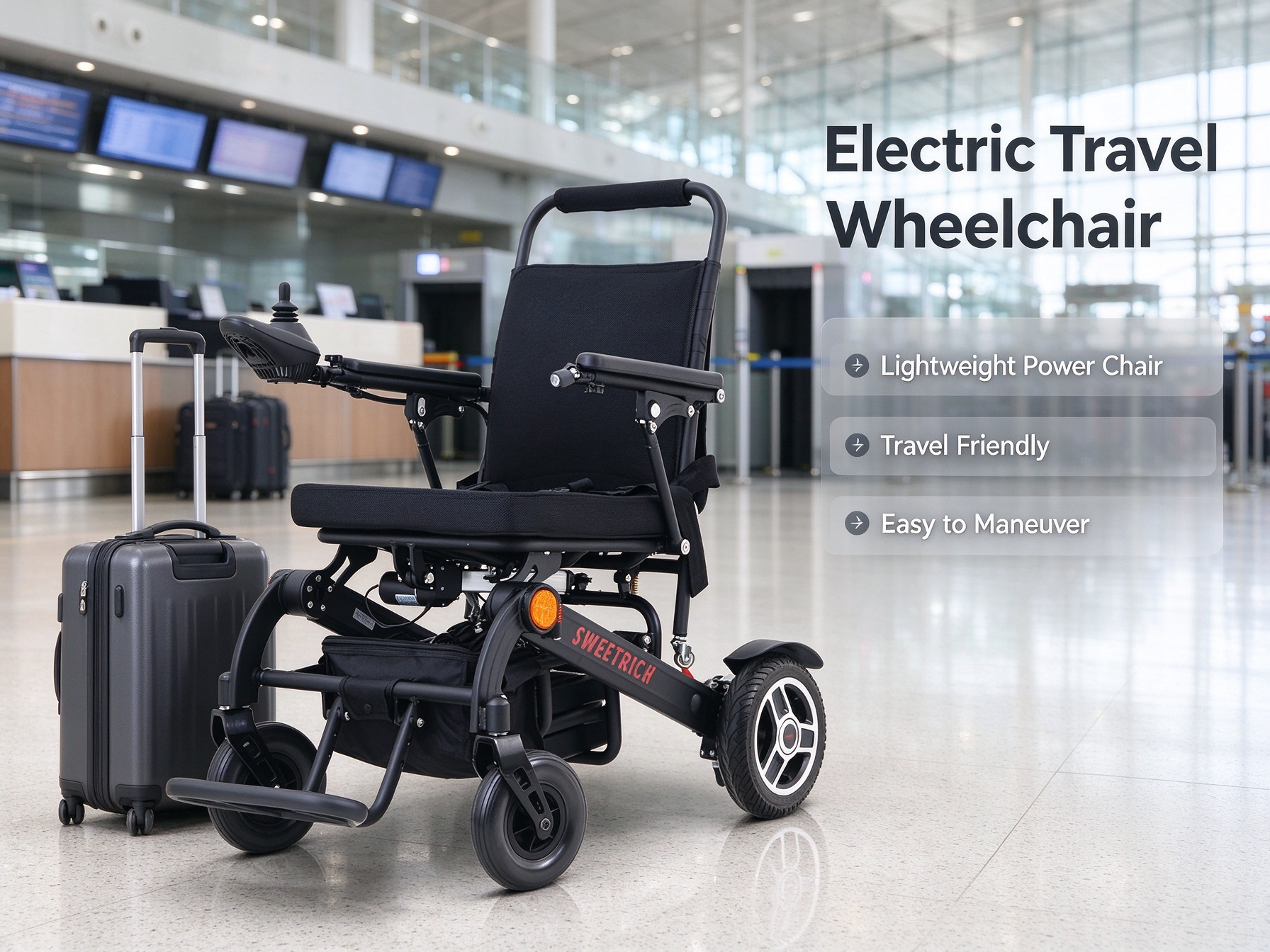
Taking an electric travel wheelchair on a plane involves more than checking whether it folds. The airline will need details about its battery, including the capacity and whether it can be removed.
For wheelchair distributors, importers, and OEM buyers, these details are worth sorting out before a product is advertised for air travel. Manufacturers can help by providing accurate specifications and clear instructions, but the airline makes the final decision on acceptance.
Why Battery Details Matter When Flying
An electric wheelchair relies on its battery to run the motor and controls. During air transport, airlines need to know how the battery will be handled and whether its configuration meets their safety requirements.
Lithium-ion batteries are common in electric travel wheelchairs because they offer useful power without adding too much weight. Other battery types are available, and their transport requirements can differ.
When checking a wheelchair model, buyers should confirm the battery chemistry, rated capacity, installation method, and whether the battery can be removed. They should also find out whether the terminals need extra protection during transport.
A wheelchair designed for everyday use isn't automatically accepted on every flight. Getting the battery details early gives distributors time to check the requirements before a customer books a trip.
How Manufacturers Can Help Buyers Check Battery Capacity
Battery capacity is one of the key details airlines may ask about. Manufacturers should make it easy for buyers to find the battery's chemistry, voltage, ampere-hour (Ah) rating, and watt-hour (Wh) rating.
For lithium-ion batteries, the Wh figure is particularly useful when checking airline requirements. If the battery label provides voltage and ampere-hour capacity, the nominal energy can generally be calculated using this formula:
Watt-hours (Wh) = Voltage (V) × Capacity (Ah)
For example, a 24 V battery rated at 10 Ah has a nominal energy rating of 240 Wh.
If the capacity is given in milliamp-hours (mAh), divide it by 1,000 to convert it to ampere-hours. A battery rated at 10,000 mAh, for instance, has a capacity of 10 Ah.
Buyers shouldn't have to work out the specifications from a product description alone. Ask the manufacturer for a clear battery label photo and a specification sheet showing the chemistry, voltage, Ah, and Wh ratings. The battery model or part number should be included, too, so the documents can be matched to the actual product.
One detail worth remembering: motor power and driving range aren't substitutes for battery capacity. A wheelchair's advertised range tells you roughly how far it can travel under certain conditions, not the battery's rated energy.
For distributors, keeping these details with the product listing makes customer enquiries easier to handle. It also helps prevent errors when several battery options are available for the same wheelchair.
Airline Battery Limits Aren't the Same for Every Wheelchair
Buyers may come across figures such as 160 Wh and 300 Wh in aviation guidance or airline policies. These figures can be relevant to battery transport, but they shouldn't be treated as automatic approval limits for every powered wheelchair.
The rules depend on the battery type, its capacity, how it is installed, and how it will be transported. A battery that remains attached to a wheelchair may be handled differently from a spare battery packed separately. Some configurations may also require advance approval or specific handling arrangements.
This is where manufacturers can save buyers some guesswork. They should be able to explain the wheelchair's battery configuration and provide the information needed for an airline to assess it.
Before recommending a model for air travel, distributors should check a few things:
- The exact battery chemistry and Wh rating.
- Whether the battery can remain attached during transport.
- Whether the airline requires advance notification or approval.
- How a removed battery must be protected and carried.
- Whether connecting flights involve different operating airlines.
Passengers should contact the airline operating each flight and provide the exact wheelchair and battery details. A general statement from a manufacturer that a wheelchair is suitable for travel doesn't guarantee acceptance on every route.
Is the Battery Easy to Remove?
A removable battery can be useful when an airline requires it to be separated from the wheelchair. But the word "removable" doesn't tell buyers whether the process will be straightforward.
Can a user access the battery without dismantling the chair? Are the connectors clearly marked? Does removal require a special tool or technical assistance?
These details matter when someone is preparing for a flight, especially if they have limited time at the airport.
Manufacturers should provide instructions explaining where the battery is located, how to disconnect it, and how to reinstall it safely. The instructions should also cover terminal protection and any parts that must be secured during transport.
During product evaluation, have someone follow the removal instructions exactly as written. If the process is confusing, difficult, or requires tools that aren't supplied, that's something to resolve before the wheelchair reaches customers.
Buyers should also check whether removing the battery affects other electrical connections or controls. A user shouldn't need to guess how to reconnect the system after landing.
Passengers must follow the wheelchair manufacturer's instructions and the airline's directions. Forcing a connector or removing the battery incorrectly can damage the equipment and create safety risks.
What Documents Should Buyers Request?
A suitable battery configuration is only part of the picture. Buyers also need documents that clearly identify the battery supplied with the wheelchair.
Missing information can delay airline checks. Mismatched documents can be just as troublesome, particularly when a manufacturer offers several battery options or changes suppliers during production.
|
Document |
What buyers should check |
|---|---|
|
Battery specification sheet |
Chemistry, voltage, Ah capacity, and Wh rating |
|
Battery label |
Whether the model and electrical details match the documents |
|
UN 38.3 test summary, where applicable |
Whether relevant lithium battery transport test documentation is available |
|
Battery removal instructions |
How the battery should be disconnected and handled |
|
Wheelchair user manual |
Model-specific safety and transport guidance |
|
Packaging instructions |
How a removed battery should be protected when required |
UN 38.3 covers transport testing for lithium cells and batteries. Where applicable, buyers should request the relevant documentation for the battery actually supplied. A general claim that a wheelchair is safe for air travel doesn't replace battery-specific records.
It's also important to keep the paperwork current. Suppose a manufacturer changes the battery supplier or introduces a higher-capacity option. The product listing, user manual, label details, and supporting records should all reflect the configuration being sold.
For importers and private-label buyers, this deserves attention during repeat orders. Keep the approved documents on file and ask whether any battery changes have been made before production starts. Otherwise, the documents could describe a different battery from the one arriving with the goods.
Don't Overlook the Wheelchair's Design
Battery rules aren't the only consideration when preparing an electric travel wheelchair for a flight. Its folded size, weight, removable components, and handling instructions can affect how easily it is transported.
Manufacturers should provide accurate information about folded dimensions, total weight, weight without the battery, and any recommended lifting points. These details help buyers answer customer questions and allow passengers to discuss handling arrangements with the airline.
Before buying a wheelchair, try folding it and getting it ready for transport. Is the locking mechanism easy to use? Can the battery be removed without a struggle? Will the joystick or connectors need extra protection? Check whether the footrests have to come off, too.
These details matter when a passenger arrives at the airport and ground staff need to handle the chair. Clear instructions can save a lot of confusion, especially for someone travelling with a wheelchair for the first time.
A compact design helps, but it doesn't guarantee that the wheelchair can be stored on every aircraft. Passengers should check handling arrangements with their airline, particularly when changing planes along the way.
Help Customers Prepare Before They Fly
Customers may not know what information an airline needs, so distributors can help by providing the wheelchair's details before the trip. They don't need to figure out every airline's policy themselves; they just need to make sure customers have the right information to ask.
Before travelling, customers should check which airlines they're flying with, share the exact wheelchair and battery details, and ask whether they need approval in advance. They should also find out if the battery can stay attached, how spare batteries must be packed, and where the wheelchair will be handed over and returned.
It's much easier to sort these questions out at home than at the check-in desk.
Manufacturers can help by putting the relevant paperwork together for each model and battery option. A battery specification sheet, a clear label photo, removal instructions, and applicable transport documents give customers something useful to share with the airline.
This paperwork doesn't guarantee the wheelchair will be accepted, but it saves customers from chasing the factory for basic information at the last minute.
What Should Buyers Ask the Manufacturer?
When ordering electric travel wheelchairs, don't focus only on weight, folded size, and driving range. Check whether the supplier can also answer battery questions and provide the documents customers may need.
Ask which battery options are available and whether users can remove them without special tools. Find out whether the factory can supply the relevant battery specifications and transport test records, where applicable. It's also worth confirming that bulk orders will use the same battery as the approved sample.
One detail that's easy to overlook is what happens if the manufacturer changes battery suppliers. Will buyers be told? Will the product documents be updated? These changes can affect the information distributors give their customers, so they shouldn't go unnoticed.
For OEM and private-label orders, make sure the battery listed in the catalogue matches the one supplied with the wheelchair. The label, manual, and technical documents should all describe the same setup.
If the supplier can't confirm the battery specifications or provide the necessary paperwork, resolve that before marketing the wheelchair for air travel.
Check the Details Before Adding a Wheelchair to Your Range
A folding frame and a compact battery don't automatically make a wheelchair suitable for every flight. Buyers need to know which battery is supplied, whether it can be removed, and what instructions and documents come with the product.
Manufacturers can make things easier by keeping this information accurate and up to date. Distributors can then pass it on when customers ask about flying with their wheelchair.
Ultimately, the airline decides whether a particular wheelchair and battery can be accepted on a specific journey. Before selling a model for air travel, make sure the manufacturer can provide the necessary details. Customers should confirm the current requirements directly with their airline before departure.