 info@sweetrich.cn
  +86-(0)512-82283871
Content
- 1 How Does Wide Wheelbase Design Affect Turning and Maneuverability
- 2 What Makes Wide Wheelbase Design Suitable for Different Users
- 3 How Does Wheelbase Design Compare to a Portable 3 Wheel Scooter
- 4 What Wheelbase Features Support Travel-Friendly Design
- 5 Why Has Wide Wheelbase Design Become More Common
Wheelbase describes the distance between a vehicle's front and rear axles. For a scooter, a wider wheelbase basically means the rear wheels sit farther apart from each other. That measurement ends up affecting how the scooter handles turns, stops, rough surfaces underneath it — more than people might expect.
Two related but distinct measurements matter here, worth keeping separate in your head. Wheelbase proper refers to that front-to-back length between axles. Track width, on the other hand, refers to the side-to-side distance between wheels on the same axle. Both play into stability, sure, but for a Wheel Scooter, the track width of the rear wheels specifically plays a pretty significant role in how balanced the ride actually feels once you're moving.
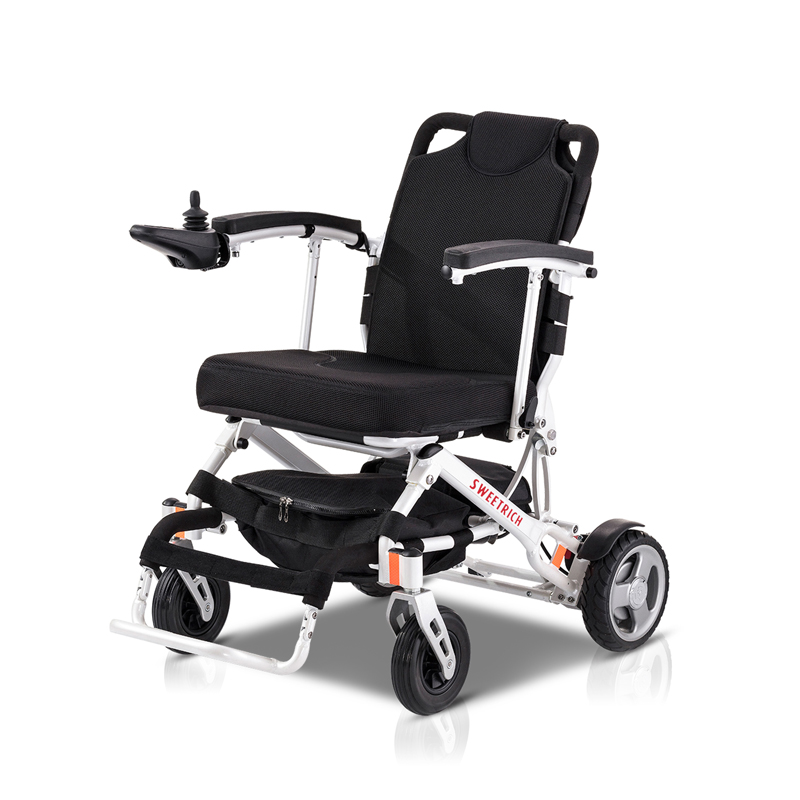
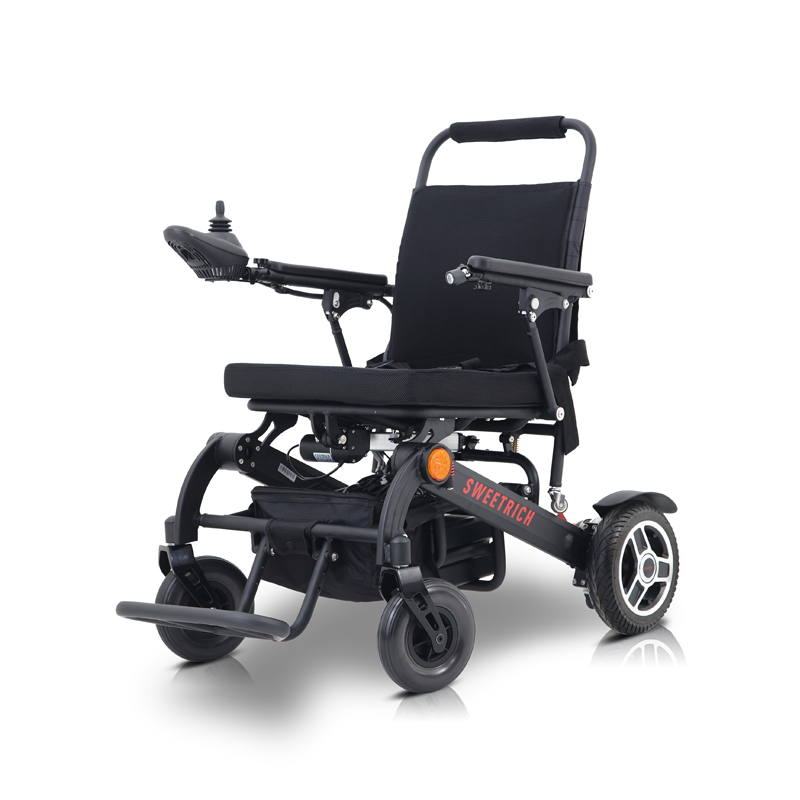
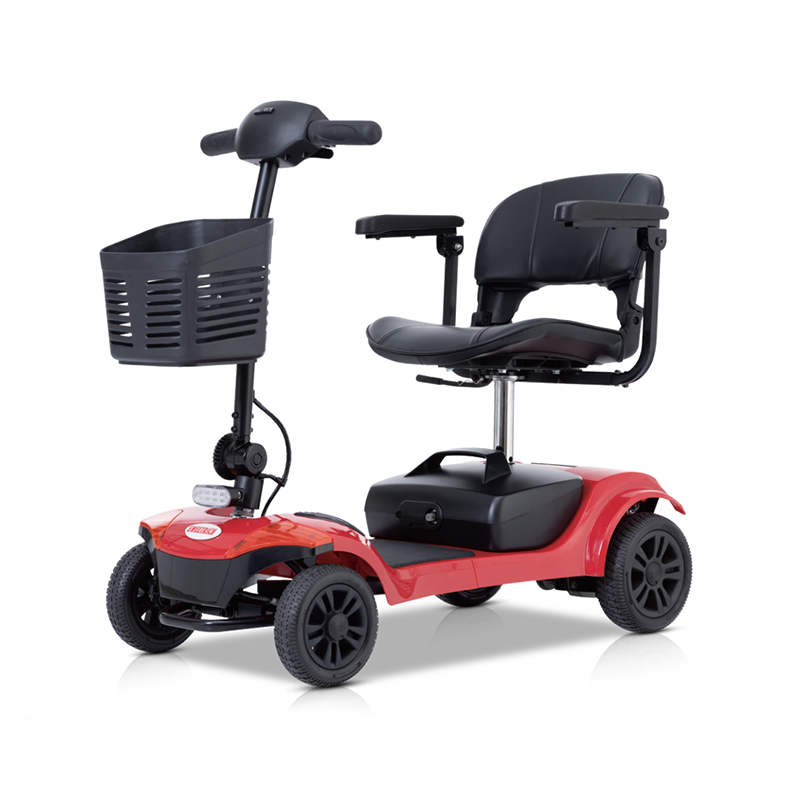
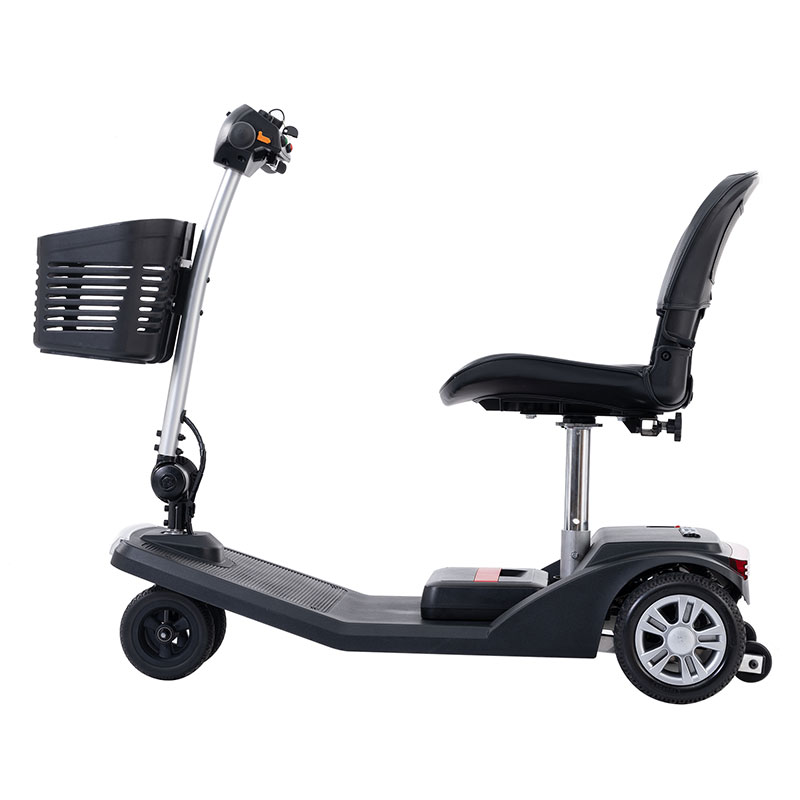
A Travel 3 Wheel Scooter runs a single front wheel with two rear wheels behind it. Those rear wheels form the real stability base here. The space between those two rear wheels basically determines how wide the scooter's stance ends up being. A wider stance gives greater support against tipping whenever the scooter leans to one side or another.
A wide wheelbase cuts down the chance of tipping pretty noticeably. When a scooter turns, weight shifts to one side naturally. A narrow wheelbase puts the scooter's center of gravity closer to the edge of its support base, which just makes tipping easier. A wide wheelbase keeps that center of gravity farther away from the tipping point instead.
Wider rear wheel spacing spreads the rider's weight more evenly across the base. Load distributes over a larger surface area, which cuts down pressure on any single point. That even distribution really helps the scooter handle bumps and dips without losing balance mid-ride.
A wide wheelbase paired with a low center of gravity tends to give pretty stable handling overall. The low center of gravity keeps weight down close to the ground. The wide base resists tipping forces on its own. Put together, they create a scooter that just feels secure to ride, session after session.
Stability really matters during turns and stops, more than anywhere else. A scooter that tips easily mid-turn creates a real risk for the rider involved. A wide wheelbase keeps the scooter level through corners instead. The rider feels more secure this way, can focus on the path ahead rather than worrying about balance the whole time.
How Does Wide Wheelbase Design Affect Turning and Maneuverability
A wider wheelbase can affect turning radius, worth noting here. A scooter with widely spaced rear wheels ends up with a larger turning circle than one running narrower spacing. That extra width just means the scooter needs more room to complete a turn.
The trade-off between stability and turning radius is real, sure, but good designs manage to balance both needs reasonably well. A Travel 3 Wheel Scooter with a wide wheelbase still manages a practical turning radius in daily use. The scooter navigates pretty much the same spaces a standard scooter would handle without much trouble.
Wheelbase width and turning radius are related, though not quite the same thing. The wheelbase affects how far the scooter leans during a turn. The turning radius determines how much space the scooter actually needs to turn around in. A well-designed Travel 3 Wheel Scooter provides stability without making the scooter a hassle to maneuver day to day.
| Wheelbase Feature | Stability Effect | Maneuverability Effect |
|---|---|---|
| Wide rear wheel spacing | Higher stability | Moderate turning radius |
| Narrow rear wheel spacing | Lower stability | Tighter turning radius |
| Wide front-to-back length | Higher straight-line stability | Less agile in tight spaces |
| Short front-to-back length | Lower straight-line stability | More agile in tight spaces |
What Makes Wide Wheelbase Design Suitable for Different Users
Heavier riders gain real benefit from a wide wheelbase, honestly. The extra support distributes weight more effectively across the base, putting less strain on the scooter frame while giving a noticeably more stable ride overall. The rider doesn't really feel the scooter leaning or shifting during normal operation.
New or more cautious riders tend to appreciate the added stability too. A wide wheelbase just makes the scooter feel more planted underneath them. The rider doesn't need to actively think about maintaining balance, since the scooter provides that support on its own. That confidence gained from a stable ride tends to encourage regular use going forward.
Users dealing with balance concerns benefit here as well. Conditions that affect balance can make any movement on wheels feel pretty uncertain otherwise. A stable scooter cuts down that uncertainty considerably. The rider gets to move around with a lot less worry about tipping over unexpectedly.
The link between wheelbase and rider confidence is pretty straightforward, at the end of the day. A scooter that feels stable is one that actually gets used regularly. One that feels tippy tends to end up sitting unused in a corner somewhere. Wide wheelbase design really supports confidence by delivering a secure, predictable ride every time out.
How Does Wheelbase Design Compare to a Portable 3 Wheel Scooter
A Portable 3 Wheel Scooter and a Travel Wheel Scooter serve slightly different purposes, but they share the same basic layout of one front wheel and two rear wheels. The differences show up in how each design prioritizes portability versus stability.
A Portable 3 Wheel Scooter focuses on lightweight construction and easy disassembly. The frame uses thinner tubing. The wheels run smaller. The whole scooter breaks down into pieces that fit into a car trunk. Those choices make the scooter easier to carry and store, but they can reduce stability. The narrower wheelbase that comes with a more compact frame means less resistance to tipping.
A travel 3 wheel scoter keeps portability in mind but puts more emphasis on ride quality. The wheelbase runs wider. The frame uses stronger materials. The scooter still disassembles for transport, but the components have more substance. The result is a scooter that feels more stable during use while still fitting into a vehicle.
The weight trade-offs tell part of the story. A Travel Wheel Scooter weighs more than a portable scooter because it has more material in the frame and a wider stance. The extra weight stays on the ground, which also helps with stability. A heavier scooter does not get pushed around by bumps or side slopes the way a lighter one does.
What Wheelbase Features Support Travel-Friendly Design
A Travel Wheel Scooter carries a wide rear wheelbase, but the overall width stays manageable. The scooter fits through standard doorways and moves through store aisles without difficulty. The width that provides stability does not create access problems.
Disassembly remains a key feature of the travel scooter. The frame separates into sections that pack into a car or storage space. Despite the wide wheelbase, the scooter breaks down into pieces that one person can handle. The design keeps the stable ride while allowing practical transport.
Ground clearance works together with wheelbase width. A scooter with good ground clearance clears small obstacles without scraping. The wide wheelbase keeps the scooter level when one wheel goes over a bump. The combination allows the scooter to handle different surfaces without losing stability.
Durability supports the travel-friendly design. A scooter that gets taken apart and put back together repeatedly needs strong connections at the assembly points. The wide wheelbase design uses sturdy materials at those connection points, so the scooter stays solid through many cycles of assembly and disassembly.
Why Has Wide Wheelbase Design Become More Common
User feedback has pushed scooter manufacturers toward wider wheelbase designs. Riders wanted scooters that felt more stable and secure. Manufacturers responded by widening the rear wheel spacing while keeping the overall dimensions practical for travel.
The balance between stability and portability has improved over time. Early travel scooters sometimes sacrificed stability to save weight and space. Newer designs achieve both goals. The wide wheelbase gives the stable ride, and the disassembly features provide the portability.
A Travel 3 Wheel Scooter now offers a stable ride and easy transport in the same package. The wide wheelbase design has become a standard feature rather than an option. Riders expect the scooter to feel solid when they use it and to fit in the car when they transport it.
Design evolution has improved the user experience. Each generation of travel scooters has refined the wheelbase design based on real-world use. The wide wheelbase has emerged as a proven way to improve balance without sacrificing the features that make the scooter practical for travel.
A few ways wide wheelbase design has improved travel scooters:
- More stable ride during turns and stops
- Better handling on uneven surfaces
- Greater rider confidence, especially for new users
- Reduced tipping risk without increasing overall width significantly
- Compatibility with standard doorways and store aisles
The wide wheelbase has become a standard part of travel scooter design because it works. Riders get the stability they need for confident use and the portability they need for practical transport. The design balances the competing demands of stability and travel-friendliness in a way that serves real user needs. A scooter that feels secure and fits in the car is more likely to get used regularly.