 info@sweetrich.cn
  +86-(0)512-82283871
Content
- 1 Product Positioning: A Practical Outdoor Power Wheelchair
- 2 Key Specifications
- 3 Front-Wheel Drive: Why It Matters Outdoors
- 4 Performance for Daily Travel
- 5 Comfort Features That Improve the User Experience
- 6 Safety-Oriented Systems
- 7 Battery System and Charging Practicality
- 8 Folding Convenience and Transport Planning
- 9 Advantages Over Common Competitor Designs
- 10 Manufacturing Strength Behind the Product
- 11 Advanced Manufacturing Processes and Quality Thinking
- 12 Research, Development, and User-Oriented Design
- 13 Reliability in Real-World Use
- 14 Applications and Suitable Use Scenarios
- 15 Dealer and Distributor Value
- 16 Design Balance: Power, Comfort, and Practicality
- 17 Ownership Tips for Best Performance
- 18 Frequently Asked Questions
- 18.1 What type of user is this power wheelchair designed for?
- 18.2 What makes it better for outdoor use than many lightweight folding chairs?
- 18.3 How fast can it travel?
- 18.4 What is the expected driving range?
- 18.5 What battery system does it use?
- 18.6 Does the chair have a braking system?
- 18.7 Can it climb slopes?
- 18.8 Is the seat adjustable?
- 18.9 Why does front-wheel drive matter?
- 18.10 Is this product easy to store?
- 18.11 What is the weight capacity?
- 18.12 What manufacturing strengths support this product?
- 19 Conclusion
- 20 References
- 21 Product: iPower Sport FWD Certificated power suppier used battery electric wheelchair foldable for out door use
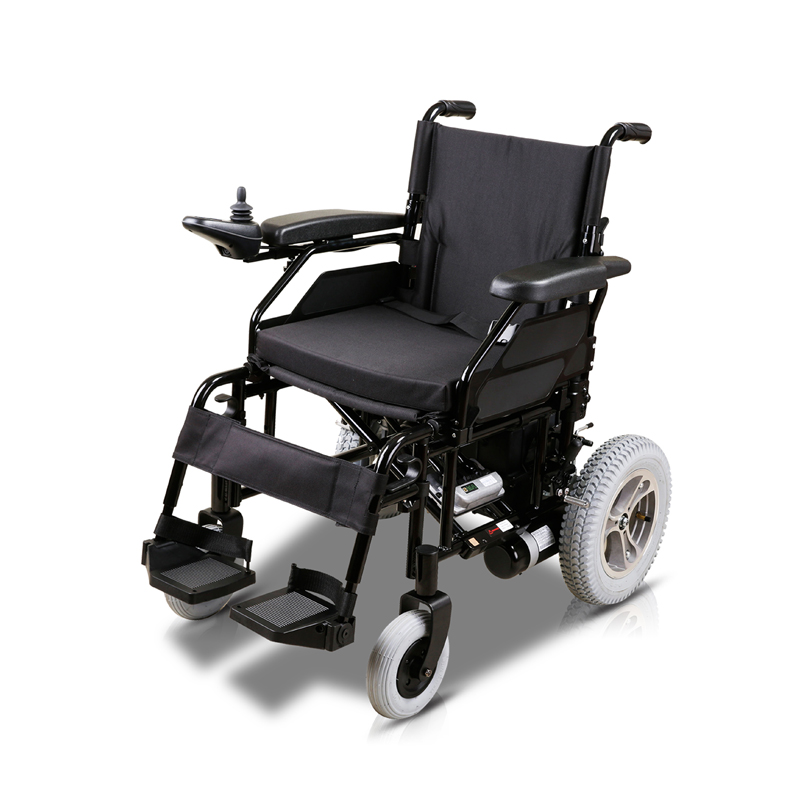
Modern mobility is not only about moving from one place to another; it is about maintaining independence, participating in family life, handling errands with confidence, and enjoying outdoor environments without unnecessary physical strain. A heavy duty front-wheel-drive electric wheelchair designed for outdoor use answers these needs by combining a stable chassis, high-traction pneumatic tires, intelligent electronic braking, strong dual motors, and a comfort-oriented seating system. This article presents a detailed product-focused overview of a foldable power wheelchair built for users who want dependable mobility across daily routes, paved outdoor spaces, gentle gradients, and longer-distance travel.
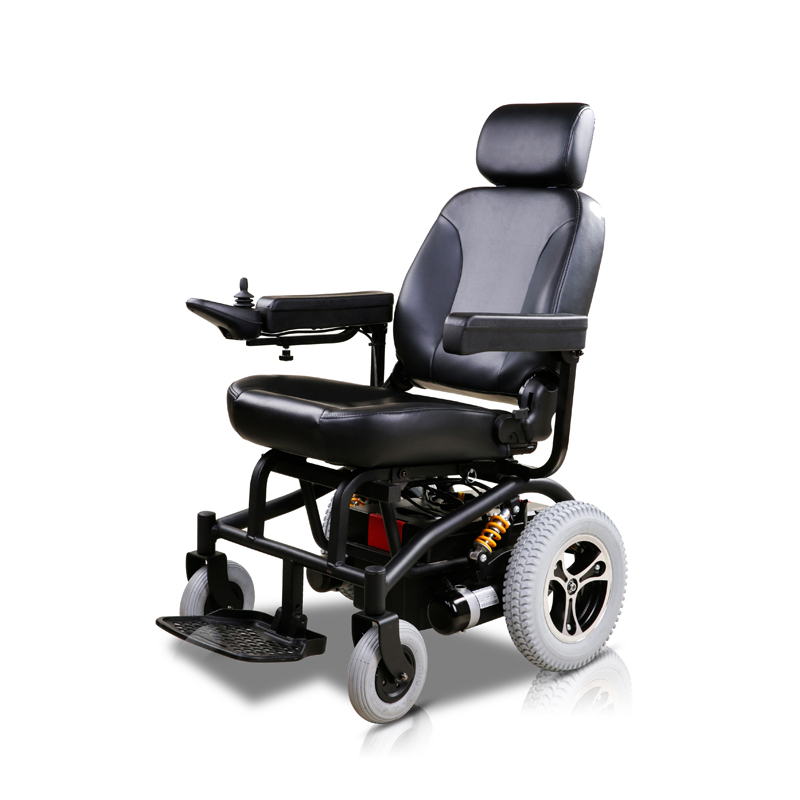
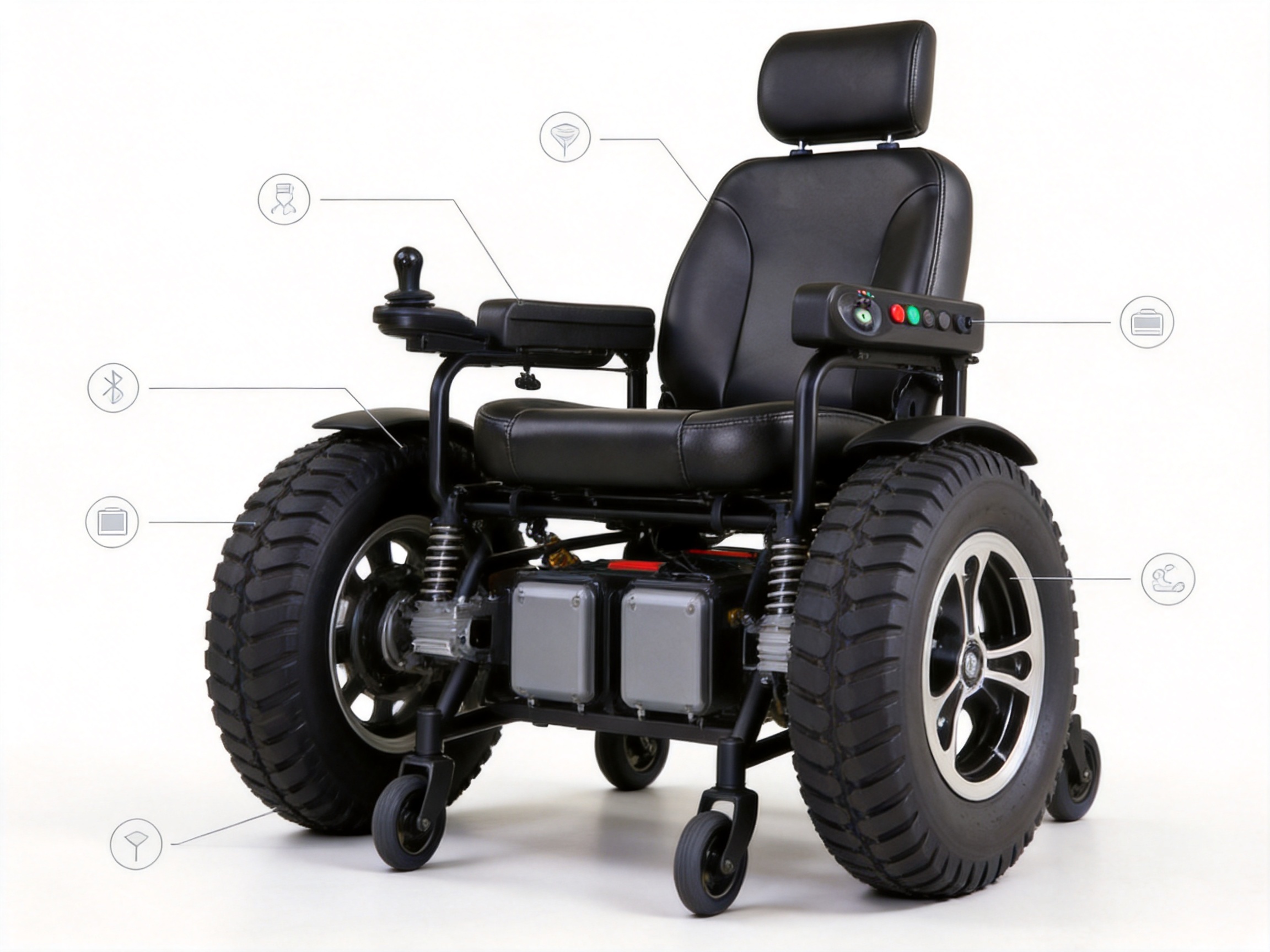
The product belongs to the category of heavy duty electric wheelchairs and is also closely related to mobility scooters and travel-smart personal mobility solutions. It is designed as a non-medical device for the United States market, meaning that its purpose is personal mobility assistance rather than clinical treatment. The machine is especially suitable for seniors, users with limited walking endurance, and people who require a more supportive electric mobility platform for outdoor movement. With front suspension, large pneumatic front tires, anti-tip wheels, an adjustable seat back, lead-acid batteries, electromagnetic braking, and a powerful motor-controller combination, it delivers a balance of ride comfort, practical range, and stable handling.
At the center of its value is a thoughtful combination of specifications. The chair measures 980 mm in length, 600 mm in width, and 1180 mm in height, giving it a full-size structure while still remaining narrower than many bulky outdoor mobility vehicles. It reaches a maximum forward speed of 8 km/h, or approximately 5 mph, which is well suited for controlled outdoor mobility. Its maximum driving gradient is 10 degrees, offering the ability to handle ramps and moderate slopes when used according to safety guidance. The listed driving range of 30 to 40 km, or approximately 19 to 25 miles, is an important advantage for users who need more than short indoor movement. A weight capacity of 120 kg, or 265 lb, supports many daily users while preserving the stability expected from a heavy duty design.
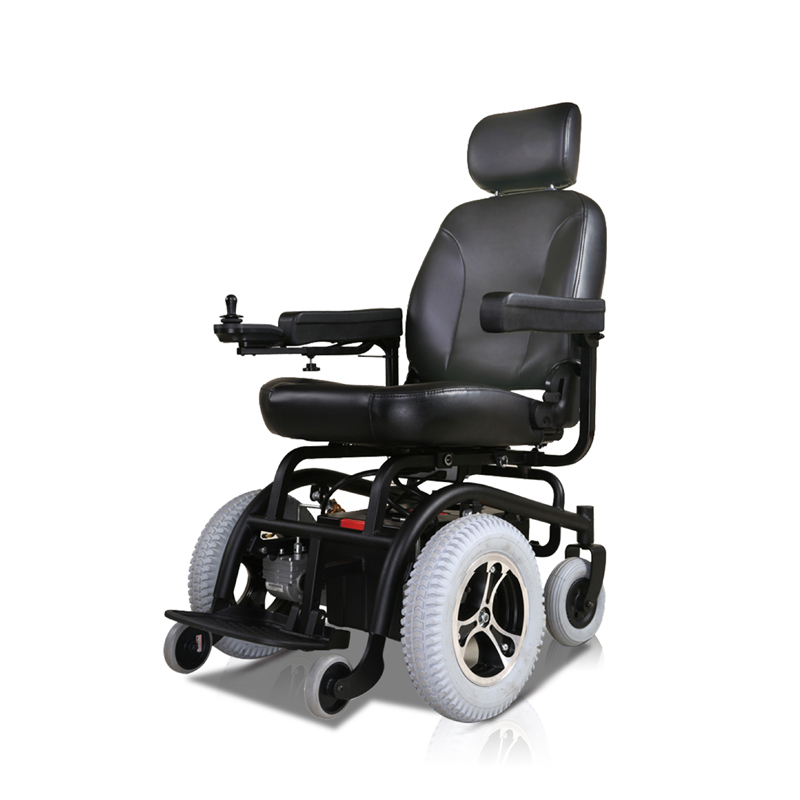
iPower Sport FWD Certificated power suppier used battery electric wheelchair foldable for out door use
Product Positioning: A Practical Outdoor Power Wheelchair
This power wheelchair is positioned between compact indoor power chairs and larger mobility scooters. Compact indoor chairs often prioritize a small turning radius and lightweight transport, but they may have smaller tires, less suspension, lower outdoor comfort, and a shorter range. Large mobility scooters can offer comfort and battery capacity, but they may be less convenient in tighter environments and can feel less chair-like for users who prefer joystick control and wheelchair-style seating. This model addresses the gap by offering a heavy duty wheelchair structure with outdoor-focused components.
Its front-wheel-drive configuration is especially meaningful. Front-wheel-drive power wheelchairs often provide a sense of pulling traction, helping the chair move steadily over surfaces where the front tires need to engage first. When paired with large 14-inch by 3-inch pneumatic front tires, the design can absorb small surface irregularities more effectively than narrow solid tires. The rear tires, sized at 8 inches by 2.5 inches, support the rear of the chair while maintaining a manageable overall profile. Together, the tire arrangement supports an outdoor-first personality without turning the chair into an oversized vehicle.
Another central positioning advantage is the foldable concept. Users and families often want a mobility product that can be stored more easily than a fixed-frame heavy chair. A foldable structure helps reduce space demands in storage areas, transport planning, and everyday living environments. While users should always follow official folding and lifting procedures, the ability to reduce the chair’s storage footprint is a significant advantage over non-folding outdoor power chairs.
The product also offers a leather-like cushion seat and an adjustable seat back. These details matter because mobility products are not simply machines; they are places where users may sit for extended periods. A chair that is powerful but uncomfortable is not a complete solution. Comfort-focused seating reduces fatigue, helps users maintain a better posture, and improves the overall ownership experience. The adjustable seat back adds flexibility for different body types and personal preferences.
Key Specifications
The following table summarizes the listed product information in a clear format for comparison and evaluation.
Specification |
Details |
Product Type |
Heavy Duty Electric Wheelchair |
Intended Market Note |
Non-medical device for the United States market |
Dimensions |
980 mm L × 600 mm W × 1180 mm H |
Maximum Forward Speed |
8 km/h, approximately 5 mph |
Maximum Driving Gradient |
10 degrees |
Maximum Driving Range |
30 to 40 km, approximately 19 to 25 miles |
Weight Capacity |
120 kg, approximately 265 lb |
Suspension |
Front suspension |
Tire Sizes |
14 in × 3 in front tires; 8 in × 2.5 in rear tires |
Brake System |
Electromagnetic brake |
Batteries |
Two 12 V 40 Ah lead-acid batteries |
Charger |
DC 24 V 5 A, AC 115 V to 230 V input |
Charging Time |
6 to 8 hours |
Motor |
Two 24 V 320 W motors |
Motor Controller |
24 V 50 A controller |
Comfort Features |
Leather-like cushion seat and adjustable seat back |
Safety Support Features |
Anti-tip wheels and electromagnetic braking |
Front-Wheel Drive: Why It Matters Outdoors
Front-wheel drive is an important feature for a heavy duty electric wheelchair intended for outdoor travel. In many indoor chairs, rear-wheel drive or mid-wheel drive can be preferred for maneuverability or familiar pushing behavior. However, outdoor movement creates different priorities. Users may encounter driveway transitions, textured paving, mild slopes, curb cuts, brick walkways, and uneven paths. In these situations, the front wheels meet the surface challenge first. Large powered front wheels can help the chair engage the surface with confidence.
The 14-inch front pneumatic tires are one of the most visible advantages of this model. Larger tires can roll over small irregularities better than smaller wheels. Pneumatic construction also adds a cushioning effect because air inside the tire absorbs vibration before it reaches the frame and user. This can improve comfort when traveling over rough pavement, outdoor joints, and slightly uneven surfaces. Compared with many competitor chairs that use smaller solid tires, this model offers a more forgiving ride profile.
The front suspension reinforces this advantage. Tires alone cannot create a complete comfort system. Suspension helps manage the energy transferred from the ground to the frame. By placing suspension at the front, where the large drive tires contact obstacles first, the design targets one of the most important areas for ride quality. This is especially useful for outdoor users who may travel longer distances and experience more repeated vibration than a strictly indoor user.
Anti-tip wheels add another layer of stability. Outdoor travel includes changes in slope and momentum. While all users must follow proper safety practices and avoid unsafe terrain, anti-tip wheels are valuable because they support stability during ordinary operation and help reduce risk during transitions. A heavy duty wheelchair should not only be powerful; it should also provide confidence. The inclusion of anti-tip support reflects the product’s practical focus.
Performance for Daily Travel
The maximum speed of 8 km/h, or about 5 mph, fits the practical pace of personal mobility. It is faster than a slow indoor-only chair but still controlled enough for sidewalk use, neighborhood movement, campus-style environments, parks, residential communities, and routine errands. Speed is not only about going fast; it is about choosing an appropriate pace. A mobility device with reasonable top speed gives users flexibility when moving through open areas while still encouraging safe operation in crowded locations.
The driving range of 30 to 40 km is one of the product’s strongest practical advantages. Range anxiety is common among users of electric mobility products. If a chair can only travel a short distance, users may avoid longer outings, reduce social participation, or depend more heavily on caregivers. A 19 to 25 mile range, under appropriate conditions, supports more ambitious daily plans. This can include visiting nearby shops, moving around large facilities, traveling through outdoor areas, or completing multiple errands before recharging.
The 10-degree maximum driving gradient also increases everyday usefulness. Many environments include ramps, sloped sidewalks, parking areas, and driveway entrances. A chair that cannot handle moderate slopes may limit where the user can go. This model’s gradient rating indicates an ability to manage many common incline situations when used responsibly and within the recommended load, battery, and surface conditions. Users should avoid wet steep slopes, loose gravel, and unsafe surfaces, but the specification provides a helpful level of practical capability.
The dual 24 V 320 W motor configuration gives the product a strong foundation. Two motors allow independent drive control for the left and right sides, supporting turning and traction management. A 24 V 50 A controller manages the relationship between user input, motor response, braking behavior, and power delivery. A quality controller is essential because power without control can feel jerky or unsafe. Smooth acceleration, predictable deceleration, and responsive steering are all tied to the control system.
Comfort Features That Improve the User Experience
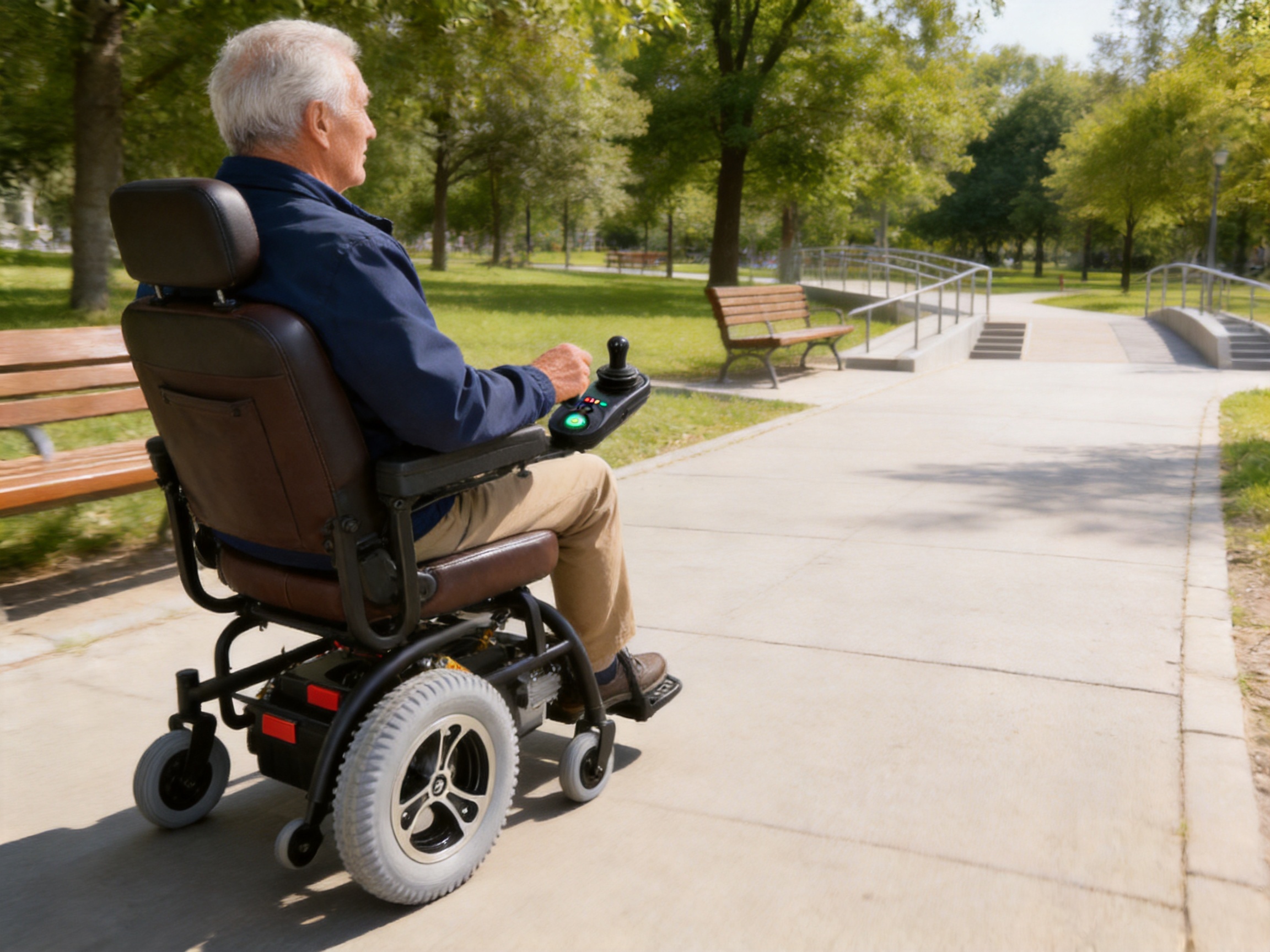
For many users, comfort is not an optional luxury. It determines whether the wheelchair is used confidently every day or avoided after short trips. This model includes a leather-like cushion seat that supports a more pleasant sitting experience. The material choice can also be easier to maintain than some fabric surfaces, depending on use conditions. A cushion-style seat helps reduce the harshness of long outings and gives the product a more finished, passenger-oriented feel.
The adjustable seat back is another key detail. Users vary in height, posture, torso support needs, and preferred recline feel. An adjustable seat back allows the chair to adapt more effectively to individual comfort. This is a major advantage over low-cost competitor models with fixed seating positions. A fixed seat back may work for one user but feel uncomfortable for another. Adjustable support expands the range of suitable users and improves long-term satisfaction.
The combination of pneumatic tires, suspension, cushion seating, and adjustable back support creates a layered comfort system. Each feature plays a different role. Tires reduce sharp ground vibration, suspension manages larger surface changes, the seat cushion supports the body, and the back adjustment helps posture. Competitors may include one or two of these features but omit others to reduce cost. This product’s advantage is the integration of several comfort-oriented elements into one heavy duty outdoor platform.
Comfort also influences safety. A user who feels stable and supported is more likely to operate the chair calmly and predictably. Poor seating can cause fatigue, shifting, or distraction. Excessive vibration can make users tense and reduce confidence. By improving ride quality, the product can support better control and a more relaxed mobility experience.
Safety-Oriented Systems
Safety in electric mobility products depends on design, components, user training, and maintenance. This model includes several important hardware features that support safe operation. The electromagnetic brake system is one of the most critical. Electromagnetic brakes are widely used in electric mobility devices because they can engage automatically when the control input is released, helping the chair come to a controlled stop. They also support holding behavior on slopes within the rated capability.
The anti-tip wheels are another visible safety feature. These wheels are designed to help reduce tipping risk during certain operating conditions, especially during changes in slope or movement over transitions. They should not encourage unsafe driving, but they provide an important protective layer when the chair is used properly. In a heavy duty outdoor wheelchair, anti-tip support is especially valuable because users are more likely to encounter ramps and uneven approaches.
The product’s width of 600 mm provides a balance between stability and access. A wider chair can feel more planted, but excessive width may create difficulty in indoor passages, elevators, or storage spaces. A narrower chair improves access but can reduce perceived stability. At 600 mm wide, this model maintains a practical footprint while supporting a full-size outdoor structure. This balance is one reason it can appeal to users who want outdoor performance without moving into the size class of large scooters.
The maximum weight capacity of 120 kg indicates that the product is built for substantial support. Weight capacity should always be respected because it affects braking, range, hill climbing, tire wear, and structural durability. When used within its rating, the chair can provide reliable operation for many users. This capacity helps distinguish it from lighter travel chairs that may focus on minimal frame weight rather than heavy duty performance.
Battery System and Charging Practicality
The chair uses two 12 V 40 Ah lead-acid batteries to create a 24 V power system. Lead-acid battery technology remains common in heavy duty mobility devices because it is cost-effective, widely understood, and capable of delivering dependable energy for daily use. While lithium batteries are popular in lightweight travel products, lead-acid batteries can offer value, stable performance, and easier replacement availability in many markets.
The listed charging time of 6 to 8 hours supports overnight charging. For many users, the simplest routine is to operate the chair during the day and charge it overnight. The charger accepts AC input from 115 V to 230 V, making it adaptable to different electrical environments with the appropriate plug and compliance arrangements. The DC 24 V 5 A output is matched to the system’s battery configuration.
The range of 30 to 40 km depends on several real-world factors. User weight, terrain, temperature, tire pressure, driving speed, stops and starts, battery age, and slope frequency all affect range. However, the listed range is a strong indicator that the chair is designed for more than short indoor movement. For comparison, many compact chairs offer less range because they use smaller batteries to reduce weight. This heavy duty model accepts the tradeoff of larger lead-acid batteries in exchange for practical endurance.
Battery maintenance is important. Lead-acid batteries should be charged regularly, protected from deep discharge, and stored in suitable conditions. Users should follow the official instructions for charging, inspection, and replacement. Proper care helps preserve range and reduces the chance of unexpected power loss. Dealers and service partners should also educate users on charging routines, especially for those new to powered mobility.
Folding Convenience and Transport Planning
A foldable design makes the product more flexible for households, care facilities, dealers, and transport arrangements. Heavy duty power wheelchairs are not always easy to store. A folding mechanism can reduce the amount of space required when the chair is not in use. This matters for apartments, small garages, assisted living facilities, vehicle storage areas, and retail inventory management.
It is important to understand that folding convenience does not make a heavy duty power wheelchair equivalent to an ultralight travel chair. Lead-acid batteries, large tires, motors, suspension, and a strong frame contribute to the product’s capability but also add weight. Users should not assume that every family member can lift the chair easily. Instead, the folding feature should be viewed as a space-saving and transport-supporting advantage. Lifting, loading, and handling should always be planned according to actual weight and user capability.
Compared with non-folding outdoor power chairs, this model can be more convenient in storage and logistics. Compared with very lightweight folding chairs, it offers stronger outdoor performance, larger tires, suspension, and longer range. This is the core tradeoff: it is not designed to be the smallest possible chair, but to be a more capable folding outdoor wheelchair. For many users, that is exactly the right balance.
Dealers can use this positioning to explain the product clearly. Customers often ask for a chair that is lightweight, long range, comfortable, stable outdoors, inexpensive, and powerful. No product can maximize every one of those attributes at the same time. This model prioritizes outdoor durability, ride quality, and range while still providing folding functionality. That honest positioning helps customers make better decisions and reduces mismatch after purchase.
Advantages Over Common Competitor Designs
When compared with compact indoor power wheelchairs, this model offers better outdoor capability. Smaller indoor chairs often use small wheels that can struggle on rough pavement and transitions. They may have limited suspension and shorter range. This heavy duty model uses large pneumatic front tires, front suspension, and a stronger battery capacity, making it more appropriate for users who spend meaningful time outdoors.
When compared with lightweight folding electric wheelchairs, it offers more ruggedness and comfort. Many lightweight folding chairs are designed primarily for travel and vehicle loading. They often use compact lithium batteries, smaller motors, thin tires, and simplified seating. Those features can be excellent for portability, but they may compromise ride comfort and hill performance. This model’s dual 320 W motors, large pneumatic tires, and front suspension create a more confident outdoor ride.
When compared with large mobility scooters, it offers a wheelchair-style seating and control experience. Scooters can be useful, but they often require tiller steering and more forward reach. Some users prefer joystick control, a chair-like seating position, or a more compact width. This product gives outdoor performance without requiring the user to shift into a scooter format. That can be valuable for users who want the familiarity and posture of a power wheelchair.
When compared with low-cost power wheelchairs that use minimal electronics, this model benefits from a capable motor-controller arrangement. The controller is central to smooth operation. Inexpensive systems may feel abrupt, inconsistent, or less refined. A strong 24 V 50 A controller paired with dual motors supports controlled power delivery. For daily users, smooth operation is not a small detail; it affects confidence, safety, and satisfaction.
When compared with fixed-frame heavy duty chairs, the folding structure is a clear practical advantage. Fixed-frame chairs can be sturdy but may create storage and transportation challenges. Folding capability increases flexibility, especially for families and distributors. It allows the product to serve users who want outdoor capability but cannot accommodate a permanently large frame in their living space.
Another competitive advantage is the balanced dimension profile. The chair is full size enough to feel substantial, but its 600 mm width keeps it practical. Many heavy duty outdoor products become so wide that access becomes inconvenient. By maintaining a moderate width, this model supports daily usability in more environments.
Manufacturing Strength Behind the Product
A mobility product is only as reliable as the company and manufacturing system behind it. The manufacturer of this product is a high-tech enterprise located in Suzhou Industrial Zone, Jiangsu, China. Established in 2011, the company has more than ten years of experience in the research, development, and production of mobility scooters and power wheelchairs. The company operates on a site covering 60 acres and maintains a factory area of approximately 30,000 square meters.
This manufacturing background matters because electric wheelchairs require the coordination of multiple disciplines: mechanical design, welding, frame strength, electronics, battery integration, motor control, seating comfort, braking systems, assembly accuracy, and quality inspection. A company with long-term focus on mobility scooters and power wheelchairs develops practical knowledge through production, feedback, service, and market experience. That knowledge is reflected in details such as component matching, frame geometry, tire selection, and user comfort features.
The company focuses on improving the well-being and convenience of elderly and disabled people. This mission shapes the design philosophy of its products. Instead of creating mobility devices only as technical equipment, the company emphasizes independence, dignity, comfort, and safe operation. A heavy duty folding power wheelchair with outdoor capability is a natural result of this mission because it supports users who want to remain active beyond indoor spaces.
The company owns intellectual property rights for its electric scooters and power wheelchairs. Intellectual property ownership indicates that the company is not merely assembling generic products; it invests in its own design and development. This is important for distributors and buyers because product consistency, technical support, and future improvements depend on original engineering capability. A manufacturer with its own development resources can refine designs, respond to market feedback, and manage component integration more effectively.
Advanced Manufacturing Processes and Quality Thinking
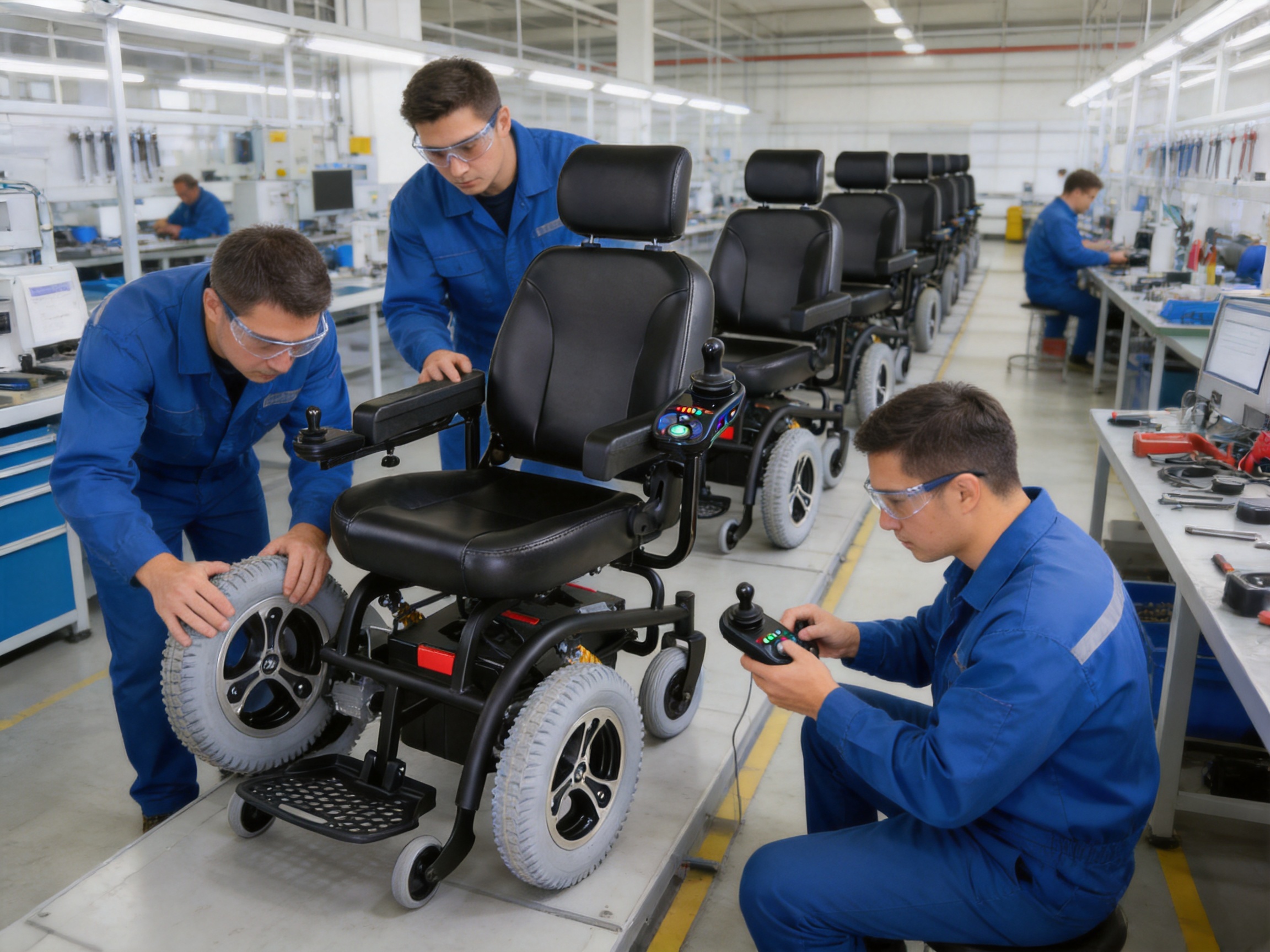
High-quality mobility products require disciplined manufacturing processes. The production of a heavy duty electric wheelchair typically begins with product design and engineering validation. Engineers must consider structural strength, center of gravity, motor placement, battery position, seating geometry, folding behavior, cable routing, and service accessibility. Each choice affects the user experience. For example, placing batteries too high may affect stability, while poor cable routing can create maintenance problems. A professional manufacturer manages these details before mass production.
Frame production is a critical step. Heavy duty wheelchairs must support repeated loading, movement over uneven surfaces, and long-term vibration. A strong frame depends on material selection, precise cutting, forming, welding, and surface treatment. Welding consistency is especially important because weak or uneven welds can reduce durability. In a mature factory environment, production teams follow controlled procedures to maintain repeatability from one unit to the next.
Surface finishing also contributes to product quality. Mobility equipment is exposed to hand contact, outdoor moisture, dust, and daily wear. Proper surface treatment helps improve appearance and corrosion resistance. A product that looks good at delivery but deteriorates quickly does not meet the needs of long-term users. Manufacturing processes must therefore combine appearance standards with functional protection.
Electrical assembly requires careful attention. Motors, controllers, brakes, batteries, chargers, wiring harnesses, connectors, and joystick controls must work together safely. A well-built power wheelchair is not simply a collection of components; it is an integrated electrical system. Proper assembly reduces faults, improves serviceability, and supports consistent driving performance. Component verification, wiring inspection, and functional testing are essential parts of responsible production.
Battery installation and charging system compatibility must also be controlled. Two 12 V 40 Ah lead-acid batteries must be connected correctly to support the 24 V system. Charging performance must match the batteries and safety requirements. Incorrect battery integration can affect range, charging time, and reliability. A manufacturer with experience in mobility products understands the importance of battery compartment design, secure mounting, ventilation considerations, and service access.
Final assembly includes mechanical adjustment, seating installation, tire inspection, brake verification, controller testing, and general quality checks. A responsible production system evaluates whether the chair accelerates smoothly, stops correctly, folds properly, and meets visual standards. The company’s stated principle of quality first, credit above, and customer supreme aligns with these process requirements. In the mobility industry, quality is not only a business slogan; it directly affects user confidence and daily independence.
Research, Development, and User-Oriented Design
The product reflects a user-oriented design approach. Its features answer specific mobility challenges. Large pneumatic tires answer the challenge of outdoor vibration and surface variation. Front suspension answers the need for ride comfort. Anti-tip wheels answer the need for stability support. A leather-like cushion seat answers the need for comfort and easier care. An adjustable seat back answers the need for posture flexibility. Dual motors answer the need for power and controlled movement. Folding answers the need for storage and transport practicality.
Research and development in mobility products is not only about creating new appearances. It is about understanding how real users behave. Seniors and people with limited mobility often use electric wheelchairs in mixed environments. They may move from a living room to a hallway, from a doorway to a sidewalk, from a parking area to a shop entrance, and from level ground to a ramp. The product must handle transitions smoothly. Design decisions must account for stability, turning, braking, comfort, battery range, and maintenance.
The company’s accumulated experience in export markets also strengthens product development. Products sold to America, Europe, Japan, Australia, the Middle East, Russia, and other markets must meet diverse user expectations and environmental conditions. Feedback from multiple regions helps a manufacturer understand practical differences in roads, homes, regulations, distributor requirements, and customer preferences. This global experience can lead to more mature design choices.
Advanced control technology and driving systems are emphasized in the company’s product philosophy. For a power wheelchair, the control system is the bridge between the user’s intention and the chair’s movement. A refined system helps the chair respond naturally to joystick input, reducing the learning burden for users. Good control can make the difference between a chair that feels mechanical and one that feels intuitive.
Reliability in Real-World Use
Reliability is one of the most important purchasing factors for electric wheelchairs. Users depend on their mobility devices for daily life. A product failure may prevent a user from leaving home, attending appointments, or completing essential tasks. Therefore, reliability must be designed into the product from the beginning and protected through manufacturing discipline.
The motor selection contributes to reliability by providing adequate power for the intended use. Underpowered chairs may operate near their limits too frequently, which can increase wear and reduce performance on slopes. Dual 320 W motors give this model a capable power foundation. The controller rating also matters because it must handle the electrical demands of acceleration, turning, and climbing within the system design.
The tire and suspension system contributes to reliability by reducing harsh impact transfer. When a chair repeatedly encounters rough surfaces, vibration affects not only user comfort but also hardware longevity. Pneumatic tires and suspension can reduce some of this stress. Proper tire pressure and maintenance remain necessary, but the design itself is more suitable for outdoor conditions than chairs with very small, hard tires.
The lead-acid battery system can also be reliable when maintained properly. Lead-acid technology is familiar to service technicians and widely available. Replacement planning is straightforward in many markets. For users and dealers who value predictable service pathways, this can be an advantage over specialized battery systems that may be harder to source.
Reliability also depends on clear user education. Users should learn safe operating speeds, slope limits, charging routines, tire care, braking expectations, and folding procedures. Dealers and caregivers can support reliability by helping users operate within the intended design conditions. A strong product and good user habits work together.
Applications and Suitable Use Scenarios
This heavy duty folding power wheelchair is suitable for users who need a capable outdoor mobility solution but still want the seat style and control characteristics of an electric wheelchair. It can serve seniors with reduced walking endurance, people who need assistance over longer distances, users in residential communities, and individuals who want greater independence in everyday outdoor environments.
Common use scenarios include neighborhood travel, paved park paths, community centers, shopping areas, large buildings, senior living campuses, and family outings. The range makes it suitable for extended use, while the speed supports efficient movement in open spaces. The width and folding feature help maintain practicality in storage and transport planning.
It is not intended for reckless off-road use, steep hills beyond rating, wet slippery slopes, deep gravel, sand, or medical treatment purposes. Users should operate it as a personal mobility device within appropriate conditions. Responsible use preserves safety and product longevity. The product’s outdoor capability should be understood as enhanced performance for everyday outdoor environments, not as a replacement for an all-terrain vehicle.
Care facilities may also find the product useful for residents who need powered mobility across larger properties. Long corridors, courtyards, outdoor sitting areas, and parking transitions can be tiring for users with limited mobility. A chair with comfort features and adequate range can improve participation in facility life. Dealers may position it as a premium practical model for customers who find lightweight chairs too limited and scooters too large.
Dealer and Distributor Value
For distributors, the product offers several selling points that are easy to explain. The large pneumatic front tires are visible and understandable. Customers can immediately recognize that they are more outdoor-capable than tiny wheels. The front suspension is another clear feature. The electromagnetic brake system, dual motors, and long range add technical credibility. The foldable design increases appeal for families who worry about storage.
The manufacturer’s experience and factory scale provide additional confidence for business partners. A company with a 30,000-square-meter factory and more than a decade of industry experience is better positioned to support consistent supply than a small assembler with limited production resources. Export experience also matters because distributors need documentation, packaging, product consistency, and communication. Long-term cooperation depends on more than a single product; it depends on the manufacturer’s ability to support customers over time.
The company states its commitment to qualified products, considerate service, and reasonable prices. This combination is important in the mobility market because end users are often budget-conscious but cannot afford unreliable equipment. Dealers need products that offer strong value without sacrificing essential quality. A heavy duty folding wheelchair with outdoor features can occupy an attractive middle-to-premium position.
After-sales support is also influenced by product design. Products using recognizable systems such as lead-acid batteries, electromagnetic brakes, and dual-motor drive arrangements are familiar to many service technicians. Practical serviceability helps distributors reduce downtime and maintain customer satisfaction. The chair’s component choices therefore benefit not only users but also the business network that supports them.
Design Balance: Power, Comfort, and Practicality
The strongest characteristic of this product is balance. It does not chase one specification at the expense of all others. It is not the lightest possible chair, because it includes large tires, suspension, lead-acid batteries, and a heavy duty structure. It is not the fastest possible mobility vehicle, because speed is controlled at a practical 8 km/h. It is not a full scooter, because it retains wheelchair-style seating and control. Instead, it combines the most relevant features for users who want dependable outdoor electric mobility.
This balanced design helps the product stand out in a crowded market. Many competitor products are highly specialized. Some are ultra-light and travel-oriented but uncomfortable outdoors. Some are large and powerful but difficult to store. Some are inexpensive but lack suspension and range. Some are stylish but underpowered. This product’s advantage is that it addresses the everyday realities of users who need comfort, range, stability, and practical storage in one machine.
The front-wheel-drive layout, large pneumatic tires, front suspension, anti-tip wheels, adjustable back, and cushion seat create a user experience that is more complete than a specification sheet alone can show. When a user travels over uneven pavement, the tire and suspension system matter. When a user sits for a long outing, the cushion and back support matter. When a user approaches a slope, the motors, brakes, and anti-tip support matter. When a family stores the chair, folding matters. The product succeeds because it considers these moments.
Ownership Tips for Best Performance
Owners can improve performance and product life by following a few practical habits. First, charge the batteries regularly and avoid leaving them deeply discharged. Lead-acid batteries perform best when maintained with consistent charging routines. Overnight charging after daily use is often practical, but users should follow the official manual and charger instructions.
Second, check tire condition and pressure. Pneumatic tires improve comfort, but they require care. Low tire pressure can reduce range, affect handling, and increase tire wear. Damaged tires should be serviced promptly. Because the front tires are part of the powered drive system, their condition is especially important.
Third, respect the 120 kg weight capacity and the 10-degree gradient rating. Overloading or operating on excessive slopes can reduce safety and shorten component life. Users should also avoid unsafe surfaces, including loose gravel, deep mud, sand, icy areas, and steep wet ramps.
Fourth, keep the chair clean and inspect visible parts. Outdoor use exposes the chair to dust and moisture. Regular cleaning helps preserve appearance and makes it easier to notice loose parts, tire damage, or cable issues. Users should not spray sensitive electrical areas with high-pressure water.
Fifth, schedule service checks through qualified personnel when needed. Motors, brakes, controller behavior, battery health, folding mechanisms, and seating hardware should be maintained according to official guidance. Preventive care is better than emergency repair.
Frequently Asked Questions
What type of user is this power wheelchair designed for?
It is designed for users who need a heavy duty electric wheelchair with stronger outdoor performance than compact indoor models. It is suitable for seniors, people with limited walking endurance, and users who want a stable, comfortable, foldable power wheelchair for everyday mobility. It is identified as a non-medical device for the United States market.
What makes it better for outdoor use than many lightweight folding chairs?
Its outdoor advantages include large 14-inch pneumatic front tires, front suspension, anti-tip wheels, dual 320 W motors, electromagnetic braking, and a practical driving range of 30 to 40 km. Many lightweight folding chairs prioritize low weight and compactness, while this model prioritizes ride comfort, range, and outdoor confidence.
How fast can it travel?
The maximum forward speed is listed as 8 km/h, or approximately 5 mph. This speed is suitable for controlled daily movement in outdoor and community environments.
What is the expected driving range?
The listed maximum range is 30 to 40 km, or approximately 19 to 25 miles. Actual range depends on user weight, terrain, slope, temperature, tire condition, battery age, and driving style.
What battery system does it use?
It uses two 12 V 40 Ah lead-acid batteries, forming a 24 V system. The charging time is listed as 6 to 8 hours with a DC 24 V 5 A charger that accepts AC 115 V to 230 V input.
Does the chair have a braking system?
Yes. It uses an electromagnetic brake system. This type of braking is commonly used in powered mobility equipment because it supports controlled stopping and holding behavior when used within the product’s rated conditions.
Can it climb slopes?
The maximum driving gradient is listed as 10 degrees. Users should operate within this rating and avoid unsafe surfaces such as wet steep ramps, loose gravel, mud, or other unstable terrain.
Is the seat adjustable?
The product includes an adjustable seat back and a leather-like cushion seat. These features help improve comfort and allow the chair to better suit different user preferences.
Why does front-wheel drive matter?
Front-wheel drive allows the powered front tires to engage the surface first, which can be helpful in outdoor environments with ramps, transitions, and uneven pavement. Combined with large pneumatic front tires and front suspension, it supports a more confident outdoor ride.
Is this product easy to store?
The foldable structure helps reduce storage space compared with many fixed-frame heavy duty power wheelchairs. However, because it includes heavy duty components and lead-acid batteries, users should plan lifting and transport carefully.
What is the weight capacity?
The listed weight capacity is 120 kg, or approximately 265 lb. Users should not exceed the rated capacity, because overload can affect range, braking, stability, and durability.
What manufacturing strengths support this product?
The manufacturer is a high-tech company established in 2011 with a 60-acre site and a 30,000-square-meter factory. It has more than ten years of experience in the research, development, and production of mobility scooters and power wheelchairs, owns intellectual property rights for its products, and exports to multiple global markets.
Conclusion
This heavy duty front-wheel-drive folding power wheelchair is a strong choice for users who want outdoor confidence, daily comfort, and practical range in a wheelchair-style platform. Its large pneumatic front tires, front suspension, anti-tip wheels, electromagnetic brakes, dual motors, adjustable seat back, cushion seat, and 30 to 40 km driving range make it more capable than many compact or lightweight alternatives. At the same time, its foldable structure offers better storage flexibility than many fixed-frame outdoor power chairs.
The product’s value is strengthened by the manufacturing background behind it. A company with more than a decade of focus on mobility scooters and power wheelchairs, a large factory base, intellectual property capability, global export experience, and a quality-first philosophy provides important support for product reliability and long-term cooperation. In the personal mobility market, the best product is not simply the one with the largest motor or the lowest price. It is the one that combines engineering, comfort, safety, manufacturing discipline, and real user needs.
For seniors, disabled users, families, care providers, dealers, and distributors seeking an outdoor-capable foldable power wheelchair, this model offers a practical and well-balanced solution. It delivers the essential qualities that matter most in daily life: dependable movement, comfortable seating, controlled handling, useful range, and confidence beyond the doorway.
References
Product specification sheet for heavy duty front-wheel-drive folding electric wheelchair, including dimensions, speed, range, gradient, battery, motor, tire, and braking information.
Manufacturer company profile describing production history, factory scale, research and development focus, export markets, and product philosophy.
General engineering principles for powered mobility devices, including motor control, electromagnetic braking, battery maintenance, tire selection, and suspension design.
Common user guidance for electric wheelchairs and personal mobility devices, including safe slope operation, charging routines, tire inspection, and maintenance practices.