 info@sweetrich.cn
  +86-(0)512-82283871
Content
- 1 Product Overview
- 2 Core Specifications
- 3 Designed for Travel Smart Mobility
- 4 Performance Built for Everyday Independence
- 5 Lithium Battery Advantage
- 6 Electromagnetic Braking for Confident Control
- 7 Four-Wheel Stability and Tire Design
- 8 Portability and Storage Convenience
- 9 Comfort and User Experience
- 10 Advantages Over Common Competing Products
- 11 Manufacturing Strength Behind the Product
- 12 Research and Development Capability
- 13 Quality Control and Production Management
- 14 Component Selection and Reliability
- 15 Non-Medical Device Positioning for the U.S. Market
- 16 Applications in Daily Life
- 17 User-Centered Safety Considerations
- 18 Why the Scooter Fits Modern Market Demand
- 19 Competitive Value for Dealers and Buyers
- 20 Design Balance: Compact but Capable
- 21 Maintenance and Ownership Experience
- 22 Company Strength and Customer Commitment
- 23 Q&A Section
- 23.1 What type of user is this scooter designed for?
- 23.2 What makes this scooter different from many competing travel scooters?
- 23.3 How fast can the scooter travel?
- 23.4 What is the driving range?
- 23.5 What battery does the scooter use?
- 23.6 How long does charging take?
- 23.7 What is the maximum weight capacity?
- 23.8 Does the scooter have a brake system?
- 23.9 Can it climb slopes?
- 23.10 Is it suitable for travel?
- 23.11 Why is the manufacturer’s background important?
- 23.12 Is this a medical device?
- 24 Conclusion
- 25 References
- 26 Product: SW 1000F Ready to ship mobility scooter 9 inch 4 wheels scooters
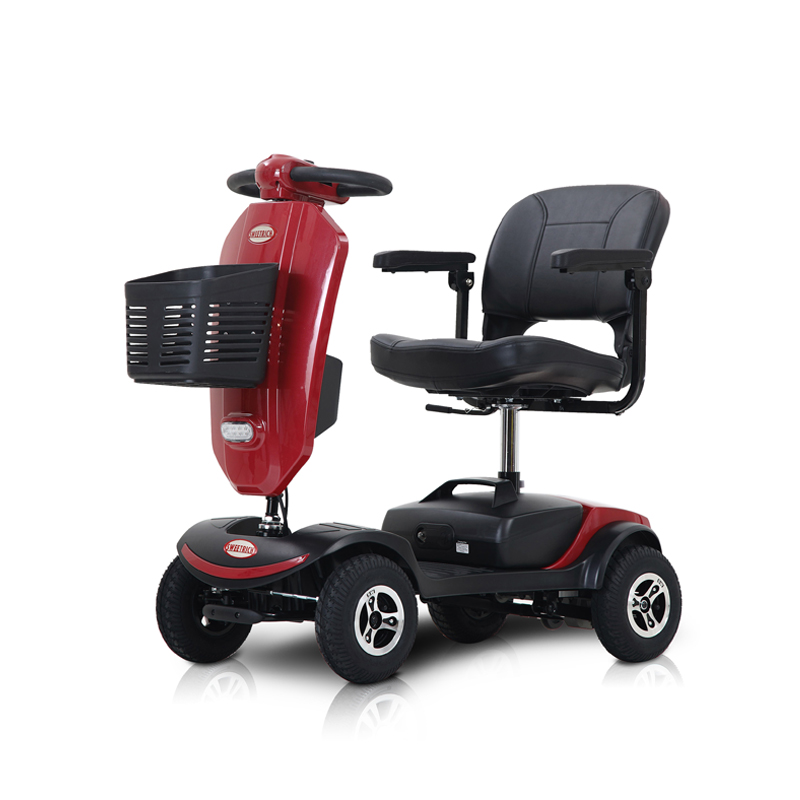
Modern personal mobility is no longer defined only by getting from one place to another. It is defined by confidence, convenience, safety, portability, and the ability to maintain an active lifestyle with less dependence on others. The SW 1000F ready-to-ship mobility scooter is designed for users who want a compact four-wheel scooter that is easy to manage, practical for daily travel, and suitable for the Travel Smart scooter category.
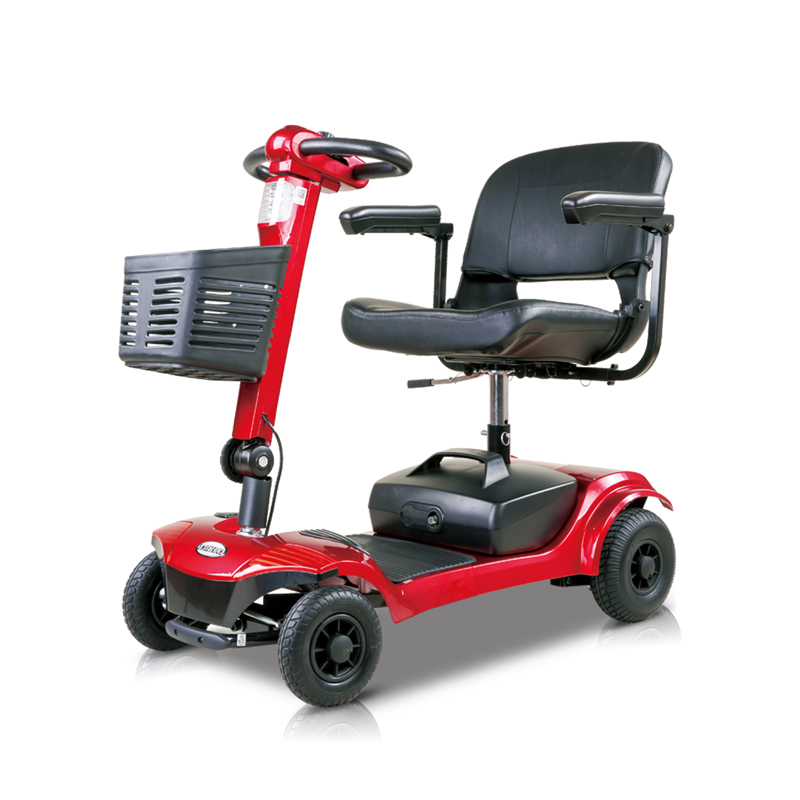
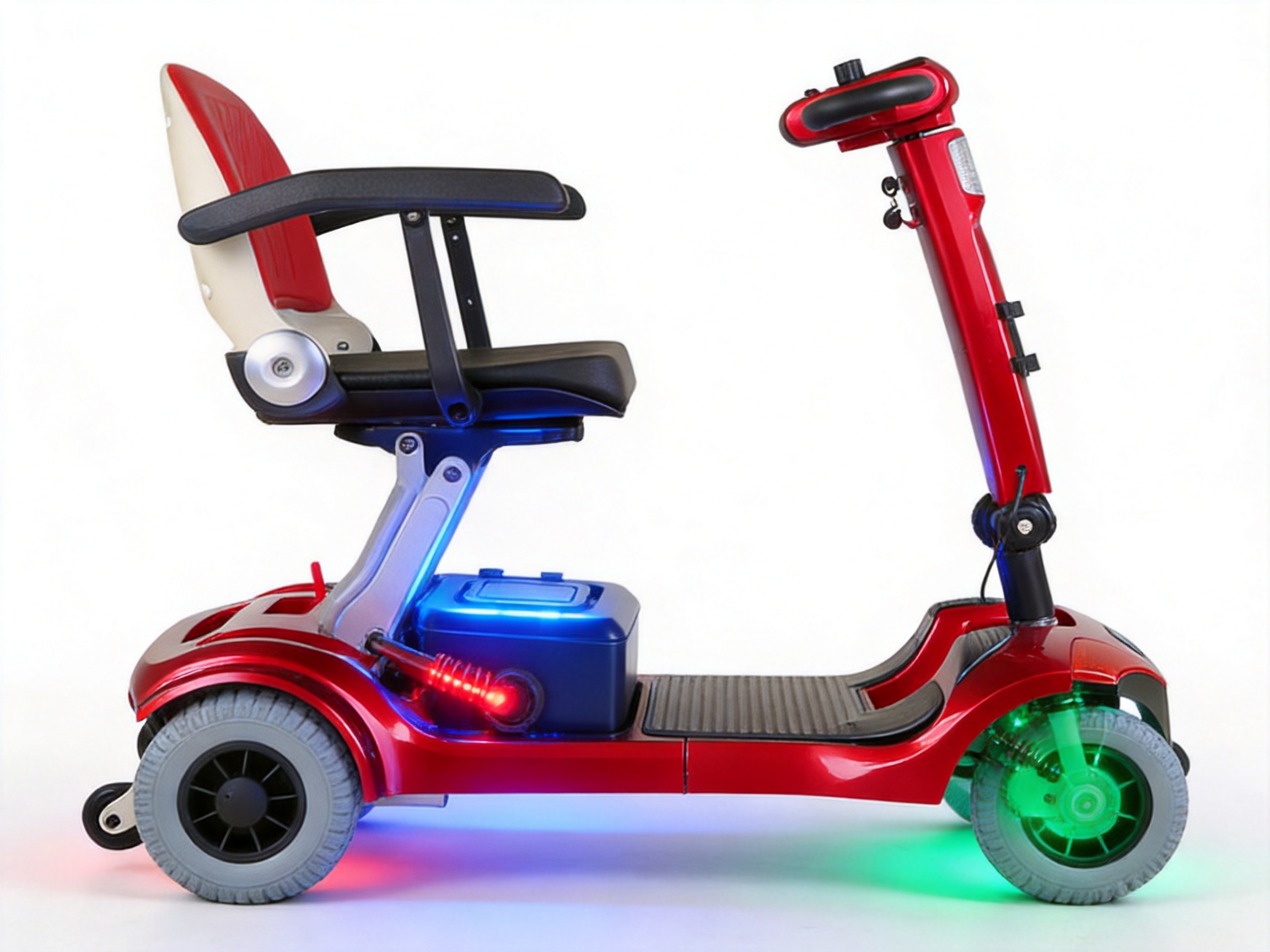
SW 1000F Ready to ship mobility scooter 9 inch 4 wheels scooters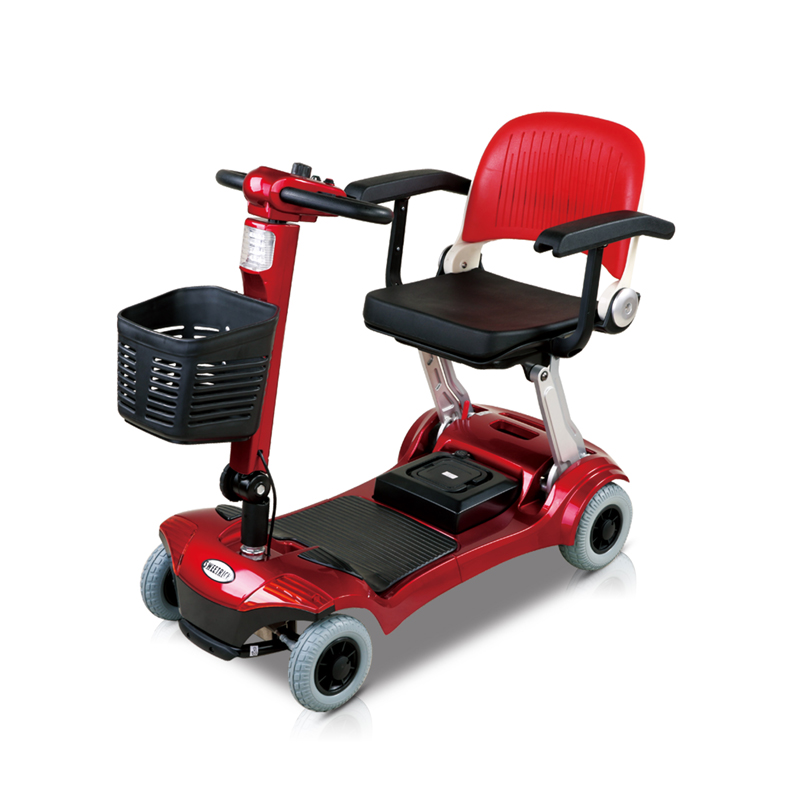
This scooter combines a compact body, lithium battery power, electromagnetic braking, a reliable 24V motor system, and a travel-friendly structure. It is positioned as a non-medical device for the U.S. market, making it suitable for personal mobility support in everyday environments such as residential communities, shopping areas, parks, sidewalks, campuses, and travel destinations where compact transportation is useful.
The product is especially attractive to elderly users, people with limited stamina, travelers who need a convenient short-distance mobility solution, and families looking for a dependable scooter that is easier to store than many larger models. With four wheels, a 300 lb weight capacity, and a maximum forward speed of 5 mph, the scooter offers a balance of stability, comfort, and control.
Unlike bulky mobility scooters that may be difficult to transport or store, this model emphasizes practical dimensions and a foldable travel concept. It is compact enough for many home and travel scenarios while still providing meaningful range and load capacity. The result is a scooter that supports independence without overwhelming the user with unnecessary size or complexity.
Product Overview
The SW 1000F is a four-wheel travel mobility scooter developed for users who value simplicity, portability, and dependable performance. Its overall dimensions are 1000 x 525 x 920 mm, giving it a compact footprint suitable for everyday use. The scooter is not oversized, yet it provides the essential features expected from a serious personal mobility product.
Its maximum forward speed is 8 km/h, or approximately 5 mph. This speed range is well matched to pedestrian environments, allowing the user to travel at a comfortable pace without feeling underpowered. The scooter can support a maximum driving gradient of 10 degrees, which helps when navigating mild slopes, ramps, and uneven outdoor paths.
One of its key advantages is its lithium 24V/20Ah battery system. Compared with many traditional lead-acid battery scooters, lithium battery technology can help reduce weight, improve convenience, and support more efficient charging and handling. The scooter offers a maximum driving range of approximately 15 to 25 km, or 9.5 to 15.5 miles, depending on user weight, terrain, speed, battery condition, and operating environment.
For users who want independence in a compact package, this range is practical. It supports daily errands, neighborhood movement, leisure travel, and short-distance transportation. For many users, range anxiety is reduced because the scooter provides enough capacity for regular daily activity without requiring constant charging after every short trip.
The scooter also includes an electromagnetic brake system, which is a major safety-related feature. Electromagnetic brakes are widely used in mobility products because they help provide controlled stopping performance and reduce the need for manual braking effort. When paired with a capable motor controller, the scooter can deliver smooth operation and responsive control.
Core Specifications
Specification |
Details |
Product Type |
Four-wheel travel mobility scooter |
Dimensions |
1000 x 525 x 920 mm |
Maximum Forward Speed |
8 km/h, approximately 5 mph |
Maximum Driving Gradient |
10 degrees |
Maximum Driving Range |
15 to 25 km, approximately 9.5 to 15.5 miles |
Weight Capacity |
136 kg, approximately 300 lb |
Front Tire Size |
7 x 2.5 inches |
Rear Tire Size |
8 x 3 inches |
Brake System |
Electromagnetic brake |
Battery |
Lithium 24V/20Ah |
Charger |
DC24V2A, AC100-240V input |
Charging Time |
8 to 10 hours |
Motor |
24V/270W motor |
Motor Controller |
24V/50A controller |
Heaviest Part |
36.3 kg, approximately 80 lb |
Designed for Travel Smart Mobility
The Travel Smart category is about more than compact dimensions. A successful travel scooter must be convenient before, during, and after the journey. It should be easy to understand, simple to charge, manageable to store, and strong enough for real-world daily use. This product aims to meet those needs by combining four-wheel stability with compact travel practicality.
Many users face a difficult choice between a lightweight scooter and a stable scooter. Very lightweight products can sometimes feel less secure, while heavy-duty scooters may be too large for transportation or home storage. This model addresses that middle ground. It offers a stable four-wheel structure, a 300 lb capacity, and a manageable footprint for users who need reliable support without excessive bulk.
Its compact dimensions make it practical for users living in apartments, retirement communities, assisted living environments, suburban homes, or urban neighborhoods. The scooter’s width of 525 mm supports maneuverability in many indoor and semi-indoor spaces, while the overall length of 1000 mm helps reduce storage difficulty.
The four-wheel format is particularly valuable for users who want a more planted riding feel than some three-wheel travel scooters. While three-wheel models may offer tight turning, four-wheel scooters often provide a greater sense of balance and stability. For users who prioritize confidence, especially when riding outdoors or on mixed surfaces, the four-wheel layout is a meaningful advantage.
Performance Built for Everyday Independence
Performance in a mobility scooter should not be measured only by speed. The most important performance factors are predictable control, adequate climbing ability, dependable braking, sufficient range, and long-term reliability. The SW 1000F focuses on these practical characteristics.
The 8 km/h maximum speed is appropriate for everyday personal mobility. It is fast enough for efficient movement but moderate enough for controlled travel in shared pedestrian spaces. Users can keep pace in many community environments without feeling rushed or unsafe.
The 10-degree maximum driving gradient helps the scooter handle mild inclines commonly found around buildings, driveways, ramps, parks, and shopping areas. This is an important advantage compared with scooters that may struggle on small slopes or require users to avoid certain routes. While actual climbing performance depends on load, battery charge, terrain, and surface conditions, the rated gradient provides useful capability for daily operation.
The 15 to 25 km range supports practical independence. For many users, this distance covers shopping trips, neighborhood visits, social activities, and movement through larger facilities. A scooter with too little range can restrict user confidence, while a scooter with excessive battery size may become unnecessarily heavy. This model offers a balanced range suitable for travel smart applications.
The 24V/270W motor provides enough output for the intended class of scooter. It is not designed as a high-speed recreational vehicle; instead, it is engineered for controlled mobility support. This distinction matters because mobility scooter users typically want smooth acceleration, stable low-speed movement, and predictable handling more than aggressive speed.
Lithium Battery Advantage
The lithium 24V/20Ah battery system is one of the scooter’s most important product strengths. Traditional scooters often use sealed lead-acid batteries, which can be heavy and less convenient for travel-oriented products. Lithium battery technology supports a more modern approach, helping reduce unnecessary weight while maintaining useful capacity.
For users, the advantages of a lithium battery can include easier handling, improved energy density, and more convenient daily use. The battery supports a range of approximately 9.5 to 15.5 miles, which is suitable for short to medium daily trips. Because the scooter is intended for travel smart use, a battery system that supports both portability and range is essential.
The charger accepts AC100-240V input, which improves flexibility for customers in different markets. The DC24V2A charging output provides a controlled charging process, with a typical charging time of 8 to 10 hours. This means users can charge the scooter overnight and prepare it for the next day’s activities.
In competitive terms, the lithium battery gives this scooter an edge over many entry-level travel scooters that still rely on heavier batteries. Lower battery weight can improve the overall user experience, especially when the scooter needs to be transported, repositioned, stored, or handled by a caregiver or family member.
Electromagnetic Braking for Confident Control
Safety and control are central to mobility scooter design. The electromagnetic brake system helps users stop smoothly and confidently. Unlike simple mechanical braking systems that may require manual effort or frequent adjustment, electromagnetic braking is widely used in powered mobility equipment because it supports automatic and reliable stopping behavior.
For elderly users or users with reduced hand strength, braking convenience is extremely important. A scooter should not demand excessive physical effort to stop safely. Electromagnetic braking helps make operation easier and more predictable.
This feature is particularly valuable in public environments where users may need to slow down frequently, stop near pedestrians, pause on ramps, or navigate tight areas. A controlled braking system can improve user confidence and reduce stress during daily use.
When combined with the scooter’s motor controller, the braking system contributes to smooth operation. Competitors that rely on less refined control systems may feel abrupt, inconsistent, or less reassuring. A well-matched motor, controller, and brake system can create a more comfortable ride experience.
Four-Wheel Stability and Tire Design
The four-wheel design gives the scooter an important advantage in perceived and practical stability. Users who may feel uncertain on smaller mobility products often appreciate the extra contact points and balanced stance of a four-wheel scooter. Stability is not only a technical feature; it directly affects user confidence.
The front tires are 7 x 2.5 inches, while the rear tires are 8 x 3 inches. This tire arrangement supports a practical balance between maneuverability, traction, and comfort. Larger rear tires can help provide stability and support under load, while the front tires contribute to steering responsiveness.
For real-world use, tire size matters because users often travel over transitions such as doorway thresholds, sidewalk joints, paved paths, and slightly uneven surfaces. While this scooter is not intended for rugged off-road riding, its tire configuration is suitable for many everyday environments.
Compared with compact scooters that use very small wheels, this model’s tire sizing provides a more capable feel. The result is a product that remains travel-oriented but does not compromise too much on daily practicality.
Portability and Storage Convenience
A travel scooter must fit into the user’s life. This means it should not take up excessive space, require complicated handling, or demand large storage areas. With dimensions of 1000 x 525 x 920 mm, the scooter is compact enough for many homes and storage settings.
The heaviest part is listed as 36.3 kg, or approximately 80 lb. This figure is important for users and caregivers who need to understand handling requirements before purchase. While 80 lb may still require caution and assistance for some users, the weight is reasonable within the context of a stable four-wheel scooter with battery power and a 300 lb capacity.
Many competing scooters are either too light to feel solid or too heavy to be practical for travel. This model offers a balanced compromise. It is built for users who value stability and durability but still need a product that belongs in the travel scooter category.
Portability is not just about lifting. It is also about how easily the scooter can be stored in a corner, moved through a doorway, charged in a home, and prepared for the next outing. The compact footprint and practical electrical system make the product suitable for daily routines.
Comfort and User Experience
A mobility scooter must feel approachable. Many users are not looking for complex electronics or advanced driving modes; they want a product that is simple, reliable, and comfortable enough for daily travel. The SW 1000F is designed with this type of user in mind.
The scooter’s controlled speed, stable wheelbase, and electromagnetic braking contribute to a smooth riding experience. The user can focus on the journey rather than worrying about complicated operation. This simplicity is an important advantage, especially for elderly users who may prefer intuitive controls and predictable movement.
The product’s size supports comfortable use in everyday environments. It is not so large that it becomes intimidating, yet it provides enough structure to feel substantial. This balance is particularly useful for first-time scooter users who want confidence without a steep learning curve.
The 300 lb weight capacity also broadens the user group. Some compact travel scooters sacrifice load capacity to reduce weight. This product preserves a meaningful capacity while remaining compact, which gives it a competitive edge for users who need both strength and convenience.
Advantages Over Common Competing Products
The mobility scooter market includes many choices, from ultra-light folding scooters to heavy-duty outdoor models. The SW 1000F stands out because it occupies a practical middle position. It is compact and travel-oriented, yet it provides four-wheel stability, lithium battery performance, electromagnetic braking, and a strong load capacity.
Compared with heavier traditional scooters, this model is easier to store and better suited to travel smart use. Heavy scooters may provide power, but they can be difficult to transport, charge, or keep in smaller homes. This product is designed to reduce those barriers.
Compared with very small lightweight scooters, it offers stronger stability and a higher sense of security. Ultra-light models may be attractive on paper, but users often discover that comfort, tire size, and confidence are equally important. The four-wheel platform and practical tire sizing help address those concerns.
Compared with lead-acid battery scooters, its lithium battery system improves convenience and supports a more modern ownership experience. Lithium technology helps align the scooter with current expectations for portable electric mobility products.
Compared with scooters that use less refined braking technology, the electromagnetic brake system provides a more user-friendly stopping experience. This is especially important for users who need dependable braking with minimal physical effort.
Compared with products from manufacturers that focus only on assembly, this scooter benefits from a company with long-term experience in research, development, production management, and global export. Manufacturing depth matters because mobility products must remain dependable over time, not just look attractive at the point of sale.
Manufacturing Strength Behind the Product
The company behind this scooter is a high-tech mobility product manufacturer located in Suzhou Industrial Zone, Jiangsu, China. Established in 2011, it has accumulated more than ten years of experience in the research, development, and production of mobility scooters and power wheelchairs.
The company operates on a large industrial base covering approximately 60 acres, with a factory area of about 30,000 square meters. This manufacturing scale supports organized production, quality control, component management, and the ability to serve international customers.
Advanced manufacturing is not only about machines. It includes design capability, supplier management, production discipline, testing systems, workforce training, and continuous improvement. The company’s long-term focus on electric scooters and power wheelchairs allows it to build knowledge that general vehicle assemblers may not possess.
Mobility products require special attention to user comfort, safety, and durability. A small failure can greatly affect the user’s daily life. Therefore, strict production management and scientific product design are central strengths. The company emphasizes quality first, credit above, and customer supreme, which reflects a commitment to long-term cooperation rather than short-term sales.
Its products are exported to markets including America, Europe, Japan, Australia, the Middle East, Russia, and other regions. This global presence indicates experience with diverse customer expectations, packaging requirements, product documentation, and market preferences.
Research and Development Capability
Product design in the mobility sector must consider human factors, mechanical reliability, electrical control, safety, and manufacturability. The company owns intellectual property rights for its electric scooters and power wheelchairs, which shows that it is not merely copying existing concepts but developing its own mobility solutions.
Research and development capability is visible in the way the SW 1000F balances specifications. The scooter is compact, but not fragile. It is travel-oriented, but not underpowered. It uses lithium battery technology, but still delivers practical range. It offers a four-wheel platform, but remains manageable in size.
Effective engineering requires these trade-offs to be made carefully. If the scooter is too small, comfort and stability suffer. If it is too large, travel convenience disappears. If the battery is too small, range becomes limiting. If the battery is too large, weight and cost increase. The product’s specification profile suggests careful attention to practical user needs.
The motor and controller selection also reflects a performance-focused design approach. A 24V/270W motor paired with a 24V/50A controller provides the foundation for controlled acceleration and dependable operation. In mobility products, component matching is essential. A good motor without a suitable controller may not deliver smooth performance, and a good controller without a reliable motor cannot compensate for weak mechanical output.
Quality Control and Production Management
Quality control for mobility scooters should begin before assembly. It starts with material selection, supplier qualification, incoming inspection, and component traceability. Important parts such as frames, motors, controllers, batteries, chargers, brakes, wiring, tires, and control interfaces must meet defined requirements before they enter production.
During manufacturing, processes such as frame preparation, assembly alignment, wiring installation, brake integration, battery system installation, controller calibration, and final inspection need to be standardized. A scooter must not only pass a visual inspection; it must function correctly under real use conditions.
The company’s factory scale supports process control and repeatability. A 30,000-square-meter production environment allows production lines, storage areas, testing areas, and inspection stations to be managed more efficiently. Organized facilities help reduce production variation and improve delivery reliability.
For global customers, consistent quality is often more important than a single impressive prototype. Buyers need products that perform reliably batch after batch. The company’s long experience and strict production management help support this requirement.
Final quality checks may include functional testing, braking inspection, charging verification, electrical system inspection, controller response checks, surface finish review, packaging inspection, and confirmation of key accessories. These steps help ensure the scooter reaches customers in usable and dependable condition.
Component Selection and Reliability
Reliable mobility products are built from reliable components. The SW 1000F uses a 24V/270W motor and a 24V/50A motor controller. The product information identifies the motor as sourced from Taiwan and the controller as a PG controller, which are notable details for customers who care about component quality.
In a mobility scooter, the controller is the brain of the drive system. It manages power delivery, acceleration, deceleration, and interaction with the braking system. A high-quality controller helps create smoother driving behavior and reduces abrupt movement. This is especially important for elderly users or users who may be sensitive to sudden starts and stops.
The motor must provide enough torque for practical movement while maintaining efficiency and durability. The 270W rating is appropriate for a compact travel scooter designed for controlled personal mobility. It supports daily use without pushing the scooter into an unnecessary high-power category.
The electromagnetic brake adds another layer of reliability. Because braking is central to user confidence, it should be integrated into the scooter’s electrical and mechanical design rather than treated as an afterthought.
The charger’s AC100-240V input is also practical for international distribution and customer convenience. Users and distributors in different regions can benefit from broader input compatibility, depending on the final plug and local compliance configuration.
Non-Medical Device Positioning for the U.S. Market
The product is identified as a non-medical device for the U.S. market. This positioning is important because mobility scooters can be used in different regulatory and commercial contexts. A non-medical personal mobility product is intended to support convenience and mobility, but it should not be presented as a device for diagnosis, treatment, cure, or prevention of disease.
Clear positioning helps customers understand the product correctly. It is a personal mobility scooter designed to improve travel convenience, independence, and daily movement. It can be used by elderly people, people with reduced stamina, or individuals seeking practical short-distance electric mobility, but marketing and user communication should avoid unsupported medical claims.
This distinction also supports responsible distribution. Dealers, retailers, and end users should understand the intended use and limitations of the product. Proper user instructions, safety guidance, charging recommendations, and maintenance information remain essential.
Applications in Daily Life
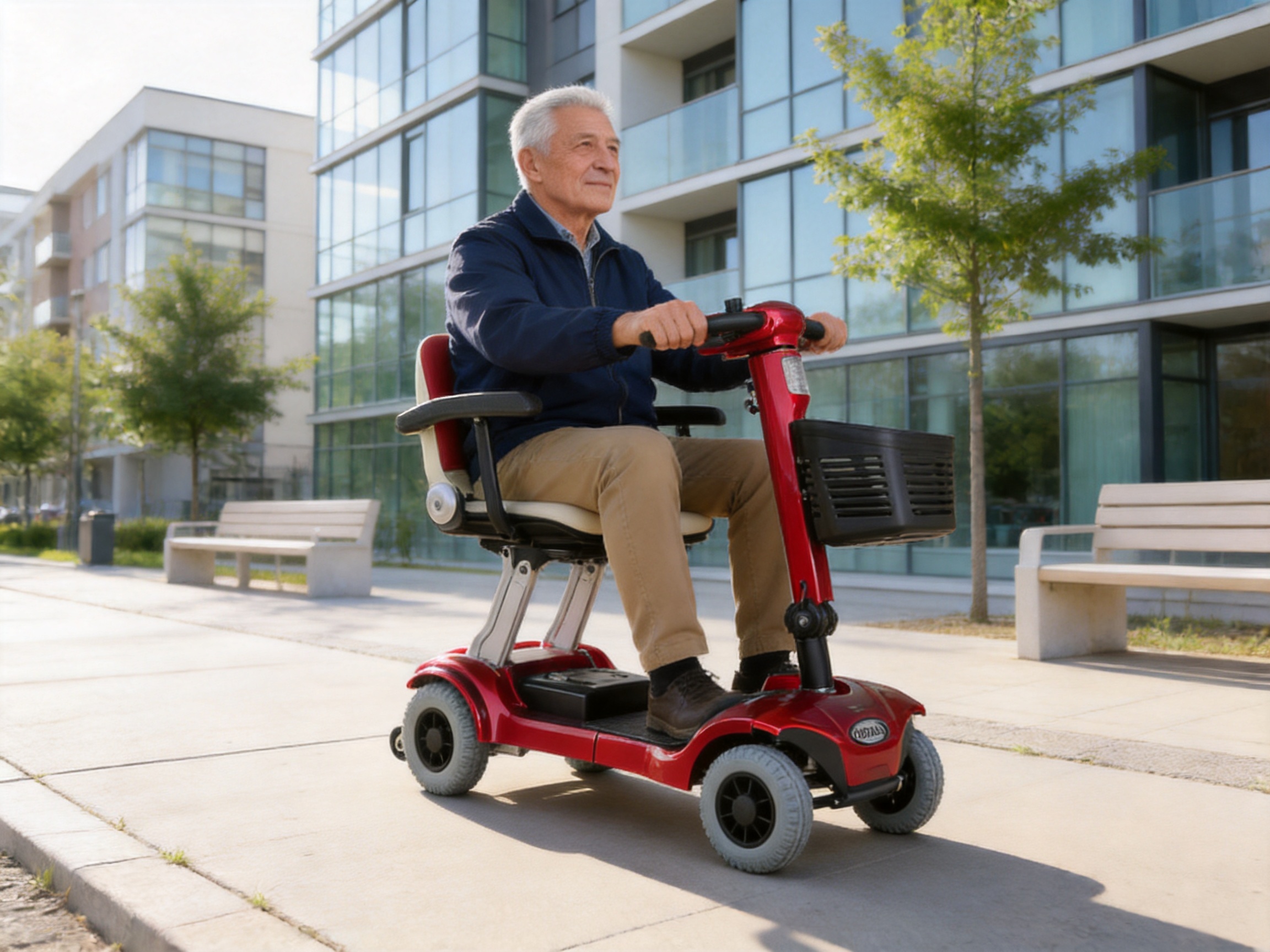
The scooter is suitable for many everyday mobility situations. A user may take it around a residential community, visit a nearby shop, travel through a park, attend social activities, or move around a large property. Its compact size makes it practical for settings where a larger scooter might feel excessive.
For elderly users, the scooter can reduce fatigue during outings. Walking long distances may become difficult with age, even when a person remains active and independent. A compact scooter gives the user the option to conserve energy and participate more fully in daily life.
For families, the scooter can provide reassurance. Relatives often worry when an elderly family member struggles with distance or fatigue. A dependable mobility scooter can make outings easier and reduce the need for constant physical assistance.
For travel scenarios, the scooter’s compact structure and lithium battery system are valuable. Users should always check transportation rules before taking any battery-powered scooter on public transit, aircraft, cruise ships, or other transport services, but the product’s travel smart design makes it more suitable for these discussions than many larger scooters.
For retirement communities and senior living environments, the scooter can support social engagement. Mobility affects participation. When users can move comfortably from one area to another, they are more likely to attend events, visit friends, and maintain a more active routine.
User-Centered Safety Considerations
Although the scooter is designed for practical safety and control, responsible use is essential. Users should read the manual, understand the controls, charge the battery correctly, avoid unsafe slopes, reduce speed in crowded areas, and inspect the scooter regularly.
The 10-degree gradient rating should be treated as a maximum capability under suitable conditions, not an invitation to ride aggressively on steep slopes. Wet, loose, icy, sandy, or uneven surfaces can reduce traction and should be approached with caution.
The 300 lb weight capacity should not be exceeded. Carrying heavy loads, hanging bags improperly, or adding unauthorized accessories can affect balance and performance. Users should keep weight distributed safely and avoid sudden turning at higher speeds.
The electromagnetic brake supports stopping performance, but users should still maintain awareness of surroundings. No braking system can overcome unsafe driving behavior. Smooth control, lower speed in tight areas, and careful path selection remain important.
Battery safety is also essential. Users should charge with the supplied or approved charger, avoid damaged cords, keep charging areas dry and ventilated, and follow storage recommendations. Lithium batteries are convenient and efficient, but they require proper care.
Why the Scooter Fits Modern Market Demand
The global demand for mobility scooters is shaped by aging populations, increased focus on independent living, and the desire for compact electric mobility solutions. Users today want products that fit into real life. They do not want equipment that is difficult to store, intimidating to use, or unreliable after purchase.
This scooter fits modern demand because it combines practical specifications with user-friendly design. The speed is moderate, the range is useful, the battery is modern, the braking system is dependable, and the structure is compact. These characteristics align with the needs of users who want independence without unnecessary complexity.
Retailers and distributors also benefit from a product that is ready to ship and supported by experienced manufacturing. In competitive markets, delivery reliability and product consistency matter. Customers expect clear specifications, dependable packaging, and stable supply.
The company’s export experience supports international cooperation. Serving customers in America, Europe, Japan, Australia, the Middle East, Russia, and other regions requires adaptation, communication, and quality discipline. This experience adds value beyond the physical scooter itself.
Competitive Value for Dealers and Buyers
For dealers, the SW 1000F offers a strong combination of features that are easy to explain to customers. The key selling points are compact four-wheel design, lithium battery power, 300 lb capacity, electromagnetic braking, practical range, and experienced manufacturing support.
These features help dealers address common customer questions. Is it stable? It has four wheels. Is it portable? It is a travel smart scooter with compact dimensions. Does it have enough range? It offers up to approximately 15.5 miles depending on conditions. Is it safe to stop? It uses electromagnetic braking. Is the battery modern? It uses a lithium 24V/20Ah battery.
For end users, the value lies in independence and convenience. A scooter is not only a product; it is a daily companion. It helps users decide whether they can go out, visit friends, shop comfortably, or enjoy outdoor time. The right scooter can make routine movement feel simpler and more enjoyable.
For procurement teams, the manufacturing background is also important. A supplier with a dedicated factory, long industry experience, intellectual property, and global market presence is better positioned to provide stable cooperation than a short-term trading operation.
Design Balance: Compact but Capable
The most impressive aspect of the scooter is its balance. Compact scooters often compromise capacity, comfort, or stability. Heavy scooters often compromise portability and storage. The SW 1000F aims to deliver a practical blend of both sides.
Its 1000 mm length and 525 mm width keep it compact. Its 920 mm height supports a normal scooter profile. Its 300 lb capacity makes it useful for a broad range of users. Its four-wheel layout improves confidence. Its lithium battery helps reduce the burden associated with older battery technologies. Its electromagnetic brake supports easier stopping. Its motor and controller configuration provides controlled electric drive performance.
This balance gives the scooter a strong market position. It is not trying to be the smallest product, the fastest product, or the heaviest-duty product. Instead, it focuses on the most important everyday requirements: reliable movement, manageable size, useful range, and user confidence.

Maintenance and Ownership Experience
A good scooter should remain convenient after the first day of use. Ownership includes charging, cleaning, storage, inspection, and occasional service. The SW 1000F is designed around a practical electric system that supports routine use with manageable maintenance expectations.
Users should keep the scooter clean and dry, especially around electrical connectors and control areas. They should inspect tires for wear, check that the brake operates correctly, confirm the charger is functioning, and avoid storing the battery in extreme temperatures.
Charging after regular use helps maintain readiness. Because charging time is typically 8 to 10 hours, overnight charging is convenient for many users. The battery should not be neglected for long periods without care, and users should follow the recommended storage and charging instructions.
Dealers can improve customer satisfaction by providing clear delivery guidance, demonstration, and basic maintenance education. Many user problems can be prevented through proper instruction at the time of purchase.
Company Strength and Customer Commitment
The manufacturer’s mission focuses on improving the well-being and convenience of elderly and disabled people, helping users live more independently and with greater dignity. This mission is reflected in products that emphasize comfort, advanced control technology, and safe driving systems.
With more than ten years of accumulated experience, the company has developed a practical understanding of mobility product requirements. Its production is supported by strict management and scientific design principles. It aims to provide qualified products, considerate service, and reasonable prices.
Long-term partnerships are important in the mobility industry. Customers need stable supply, reliable quality, responsive communication, and ongoing product improvement. The company’s global export activity shows its willingness to cooperate with customers worldwide and adapt to different market needs.
Manufacturing strength also reduces risk for distributors. When a product is backed by an experienced factory, there is greater confidence in repeat orders, spare parts planning, quality documentation, and production continuity.
Q&A Section
What type of user is this scooter designed for?
It is designed for users who need a compact, practical, four-wheel personal mobility scooter for daily travel. It is suitable for elderly users, people with reduced stamina, and individuals who want convenient short-distance electric mobility. It is positioned as a non-medical device for the U.S. market.
What makes this scooter different from many competing travel scooters?
Its main advantages include a four-wheel stable platform, lithium 24V/20Ah battery, electromagnetic brake system, 300 lb weight capacity, practical 9.5 to 15.5 mile range, compact dimensions, and experienced manufacturing support. It offers a strong balance between portability and capability.
How fast can the scooter travel?
The maximum forward speed is 8 km/h, approximately 5 mph. This speed is suitable for controlled movement in pedestrian and community environments.
What is the driving range?
The maximum driving range is approximately 15 to 25 km, or 9.5 to 15.5 miles. Actual range depends on user weight, terrain, speed, battery condition, temperature, and riding habits.
What battery does the scooter use?
It uses a lithium 24V/20Ah battery. Lithium battery technology is a key advantage because it supports modern portable electric mobility and can be more convenient than traditional lead-acid battery systems.
How long does charging take?
Charging typically takes 8 to 10 hours using the DC24V2A charger with AC100-240V input. Many users can charge the scooter overnight for use the next day.
What is the maximum weight capacity?
The scooter supports up to 136 kg, approximately 300 lb. Users should not exceed this limit, as overloading can affect safety, braking, range, and product life.
Does the scooter have a brake system?
Yes. It uses an electromagnetic brake system, which supports controlled and user-friendly stopping performance.
Can it climb slopes?
The scooter has a maximum driving gradient of 10 degrees under suitable conditions. Users should avoid unsafe slopes, slippery surfaces, and aggressive riding on inclines.
Is it suitable for travel?
It is part of the Travel Smart scooter category and has compact dimensions suitable for many travel-related situations. Users should always check transport rules, especially when traveling with lithium batteries on airlines, buses, trains, or cruise ships.
Why is the manufacturer’s background important?
Mobility scooters require consistent quality, safe electrical systems, reliable braking, and durable construction. The manufacturer has more than ten years of experience, a large production facility, research and development capability, intellectual property, strict production management, and global export experience.
Is this a medical device?
For the U.S. market, it is identified as a non-medical device. It is intended for personal mobility convenience and should not be marketed as a product that diagnoses, treats, cures, or prevents medical conditions.
Conclusion
The SW 1000F ready-to-ship four-wheel mobility scooter is a practical solution for users who want independence, compact size, and dependable daily performance. It is designed around the real needs of mobility scooter users: stable movement, manageable speed, useful range, reliable braking, and simple ownership.
Its lithium 24V/20Ah battery, electromagnetic brake, 24V/270W motor, 24V/50A controller, 300 lb capacity, and compact 1000 x 525 x 920 mm dimensions create a strong combination for the Travel Smart scooter category. It is not merely a small scooter; it is a carefully balanced product that offers portability without ignoring stability and capability.
The scooter’s advantages over many competitors come from this balance. It is more travel-friendly than many large scooters, more stable than many ultra-light compact models, and more modern than many lead-acid battery products. Its braking system and component selection further strengthen its value.
Behind the product is an experienced manufacturer with a large factory, long-term research and development experience, strict production management, intellectual property, and international market presence. These strengths matter because a mobility scooter must be reliable not only in specification sheets but also in everyday life.
For users, families, dealers, and distributors seeking a compact four-wheel mobility scooter with practical performance and strong manufacturing support, this model presents a compelling option. It supports the core purpose of personal mobility: helping people move with greater confidence, convenience, and dignity.
References
Product specification sheet for SW 1000F ready-to-ship four-wheel mobility scooter.
Manufacturer company profile and production capability information.
General principles of powered mobility scooter design, user safety, and battery-powered personal mobility equipment.
Industry guidance on lithium battery care, electromagnetic braking systems, and compact mobility scooter ownership.
International market practices for travel mobility scooters and non-medical personal mobility products.