 info@sweetrich.cn
  +86-(0)512-82283871
Content
- 1 Understanding the S1 Sport Travel Concept
- 2 Core Specifications at a Glance
- 3 Four-Wheel Stability for Everyday Travel
- 4 Foldability and Transport Practicality
- 5 Motor and Controller Performance
- 6 Battery Options, Range, and Charging
- 7 Braking and Control Confidence
- 8 Rear Suspension and Ride Considerations
- 9 Design Advantages Over Conventional Alternatives
- 10 Manufacturing Strengths of Sweetrich Mobility
- 11 From Product Development to Finished Scooter
- 12 Quality, Reliability, and Service Orientation
- 13 Who May Benefit from the S1 Sport?
- 14 Operating the Scooter Responsibly
- 15 Maintenance Priorities
- 16 Purchasing and Configuration Considerations
- 17 Why Specialized Manufacturing Matters
- 18 Frequently Asked Questions
- 18.1 Is the S1 Sport a medical device?
- 18.2 What is the maximum speed?
- 18.3 How far can it travel on one charge?
- 18.4 What is the scooter’s weight capacity?
- 18.5 How heavy is the heaviest part?
- 18.6 Does the scooter have four wheels?
- 18.7 Does it include suspension?
- 18.8 What type of brake system does it use?
- 18.9 What battery does it use?
- 18.10 How long does charging take?
- 18.11 What charger is supplied?
- 18.12 Can the scooter be used on steep slopes?
- 18.13 Is the S1 Sport suitable for air travel?
- 18.14 How does it compare with a larger mobility scooter?
- 18.15 How does it compare with a three-wheel travel scooter?
- 18.16 Where is the scooter manufactured?
- 18.17 What should be checked before first use?
- 19 Conclusion
- 20 References
- 21 Product: S1 Sport Easy Travel 4 Wheel Ultra Light Foldable Electric Mobility Scooter for Old People
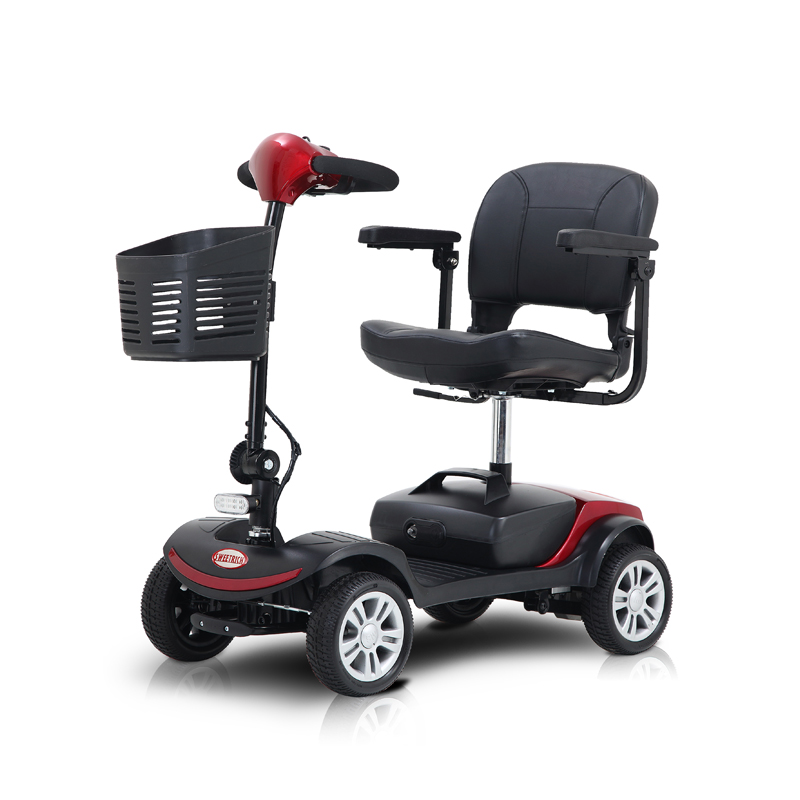
Choosing a compact mobility scooter involves more than comparing speed, battery capacity, or appearance. A travel scooter must balance portability, stability, comfort, operating simplicity, range, and dependable construction. It should be easy to prepare for a trip without becoming so light and compact that it feels fragile or unsuitable for everyday use. The S1 Sport Easy Travel Four-Wheel Ultra-Light Foldable Electric Mobility Scooter is designed around this balance.
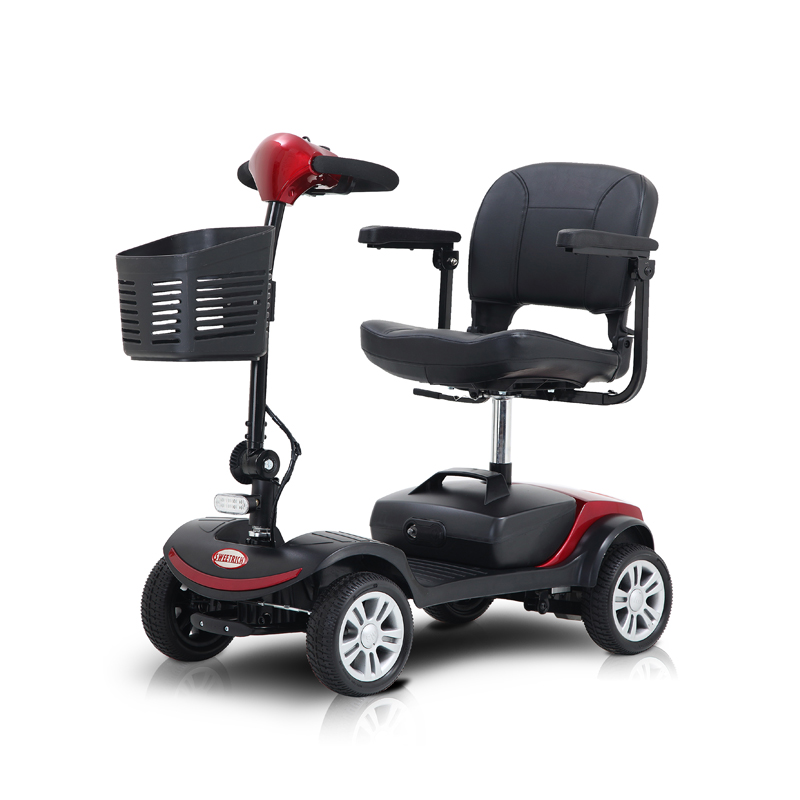
Developed for travel-smart mobility, the S1 Sport combines a four-wheel layout with a folding design, a 24-volt drive system, electromagnetic braking, rear suspension, and a relatively manageable heaviest-part weight of 27 kilograms, or approximately 60 pounds. Its compact dimensions and practical operating range make it suitable for users who want an electrically powered mobility solution for everyday personal transportation, outings, shopping trips, and travel planning.
The product is intended for the United States market as a non-medical device. It is not presented as a clinical treatment product or a substitute for professional medical advice. Instead, its purpose is to provide convenient personal mobility for users who need or prefer powered assistance while moving through appropriate indoor and outdoor environments.
Manufactured by Suzhou Sweetrich Vehicle Industry Technology Co., Ltd., the S1 Sport reflects the company’s experience in developing mobility scooters and power wheelchairs. Sweetrich operates a large production facility in Suzhou, China, with dedicated research, development, manufacturing, and quality-management capabilities. This industrial foundation is important because a folding scooter must be engineered as a complete system: the frame, hinge points, wheels, battery, controller, brakes, motor, and user controls must work together consistently.
This article examines the design, specifications, practical benefits, manufacturing strengths, operating considerations, and frequently asked questions surrounding the S1 Sport.
Understanding the S1 Sport Travel Concept
The S1 Sport is designed for people who value mobility and portability at the same time. Traditional full-size mobility scooters may offer substantial seating, larger batteries, and more extensive suspension systems, but they can be difficult to lift, store, or transport. Some smaller travel scooters solve the storage problem but may use a three-wheel layout or have limited structural support. The S1 Sport takes a different approach by combining a four-wheel configuration with a foldable, travel-oriented structure.
Four wheels provide a broad support footprint and can help the scooter feel steady during ordinary low-speed travel. This is especially useful for users who prefer a more balanced platform than a narrow three-wheel design. The four-wheel arrangement is supported by front and rear tires measuring 9 inches by 3 inches, giving the scooter a practical contact area for suitable paved surfaces and other appropriate routes.
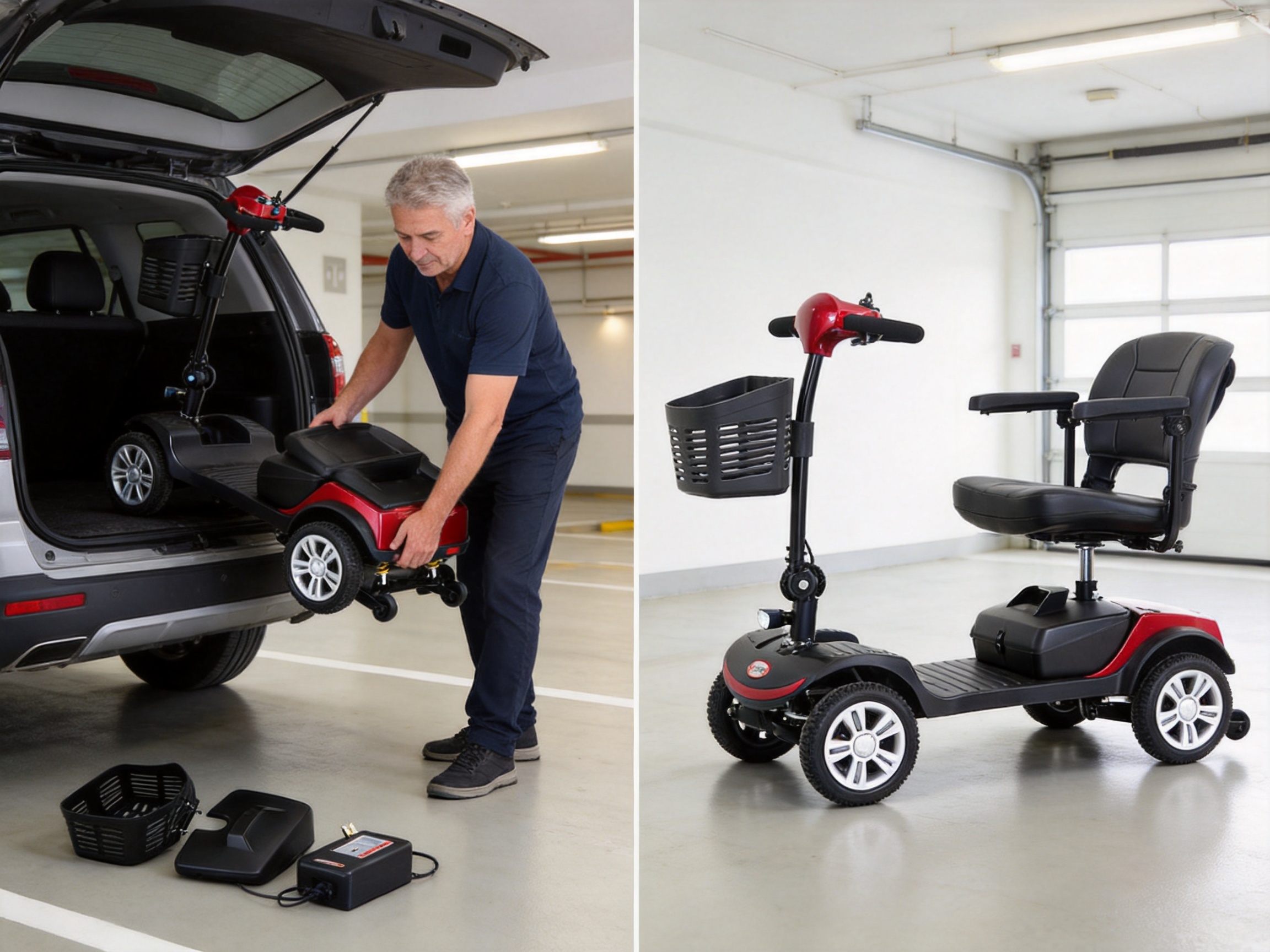
Portability is supported by the folding design and the stated heaviest-part weight of 27 kilograms. Although 27 kilograms still requires careful lifting technique and may be too heavy for some individuals to handle alone, it is more manageable than moving a fully assembled, larger mobility scooter as one piece. The ability to separate the challenge into manageable handling steps can make storage in a vehicle, home, or transport area more practical.
The scooter’s dimensions are approximately 1,110 millimeters long, 525 millimeters wide, and 920 millimeters high. This compact footprint is intended to support travel and storage without making the scooter excessively wide. A relatively narrow body can be helpful when passing through suitable doorways, maneuvering in organized indoor spaces, or positioning the scooter beside a vehicle.
Its maximum forward speed is 8 kilometers per hour, equivalent to approximately 5 miles per hour. This speed is appropriate for a compact personal mobility product intended for controlled travel rather than high-speed road use. A moderate maximum speed can also make low-speed handling easier for users who prioritize predictability and control.
The S1 Sport is therefore best understood as a travel-focused scooter rather than a heavy-duty outdoor vehicle. Its value comes from portability, simple controls, compact storage, four-wheel support, and sufficient power for many ordinary mobility situations.
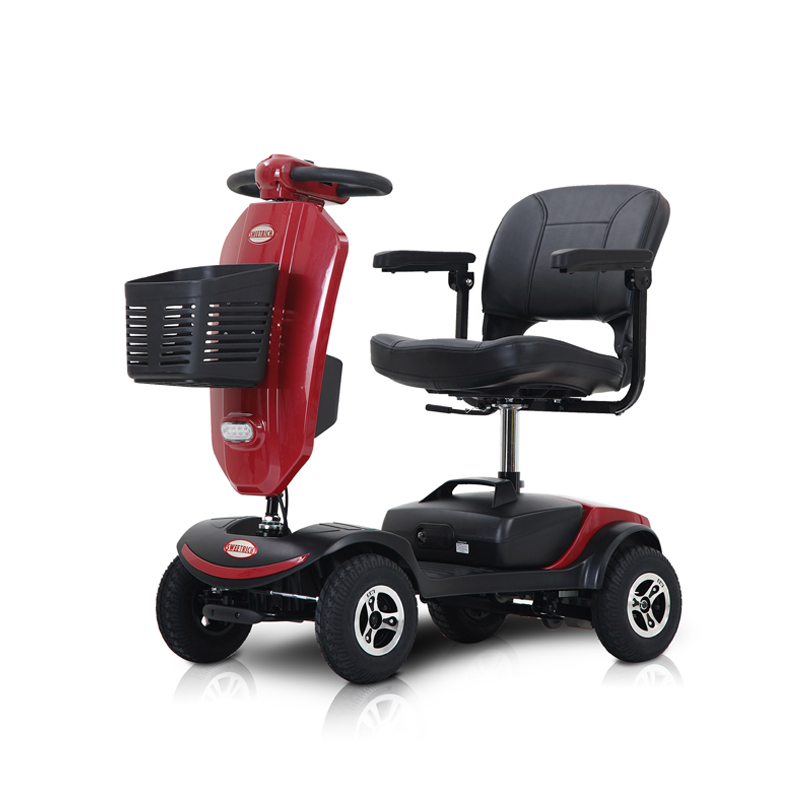
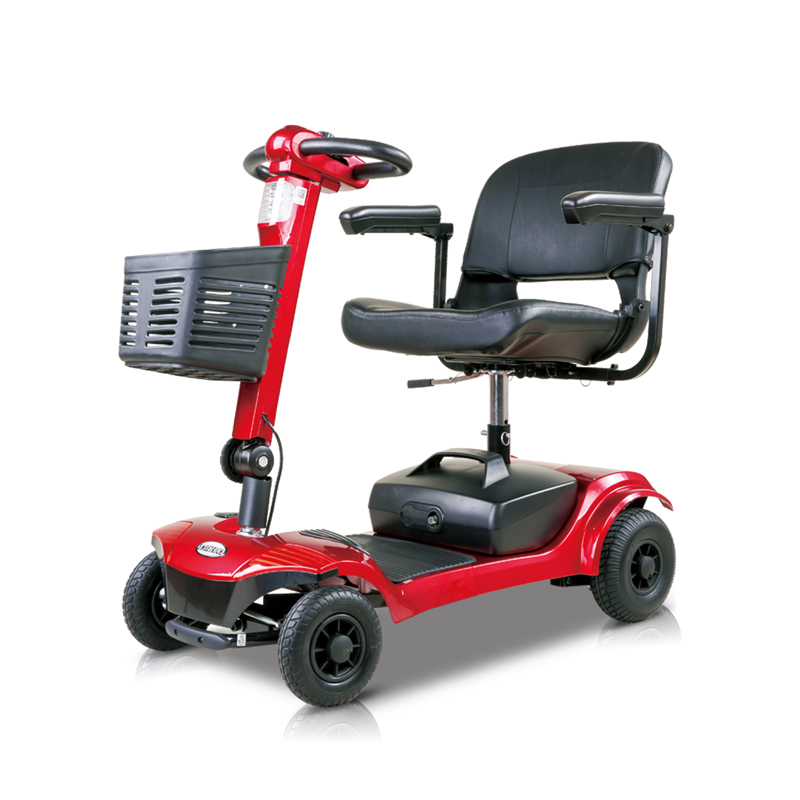
S1 Sport Easy Travel 4 Wheel Ultra Light Foldable Electric Mobility Scooter for Old People
Core Specifications at a Glance
The following table summarizes the principal specifications supplied for the S1 Sport. Actual performance can vary according to user weight, terrain, temperature, battery condition, tire pressure, driving style, and other operating conditions.
| Specification | Stated Details |
|---|---|
| Product type | Four-wheel foldable electric mobility scooter |
| Category | Travel Smart Scooters |
| Dimensions | 1,110 millimeters long × 525 millimeters wide × 920 millimeters high |
| Maximum forward speed | 8 kilometers per hour, approximately 5 miles per hour |
| Maximum driving gradient | 10 degrees |
| Maximum driving range | 15–25 kilometers, approximately 9.5–15.5 miles |
| Weight capacity | 120 kilograms, approximately 265 pounds |
| Suspension | Rear suspension |
| Tire size | 9 inches × 3 inches front and rear |
| Brake system | Electromagnetic brake |
| Battery | Two 12-volt, 12-ampere-hour lead-acid batteries; 20-ampere-hour option available |
| Charger | 24-volt, 2-ampere direct-current output; 100–240-volt alternating-current input |
| Charging time | Approximately 6 hours |
| Motor | 24 volts, 300 watts |
| Motor controller | 24 volts, 50 amperes, dynamic control |
| Heaviest part | 27 kilograms, approximately 60 pounds |
Four-Wheel Stability for Everyday Travel
One of the most important design decisions in a compact scooter is the wheel configuration. The S1 Sport uses four wheels rather than three. This arrangement can offer a reassuring sense of balance because the scooter has support at both the front and rear corners. For appropriate low-speed environments, four wheels may be particularly attractive to users who prefer a stable platform during straight travel and gentle turns.
The 9-inch front and rear tires contribute to the scooter’s practical travel profile. Larger wheels generally help a compact scooter address ordinary surface transitions more comfortably than very small caster-style wheels, although no mobility scooter should be driven carelessly over potholes, steep obstacles, loose ground, or surfaces outside its intended operating conditions.
The four-wheel structure may also benefit users who want a scooter that feels composed while entering or leaving suitable ramps, moving across smooth pavement, or traveling through organized indoor areas. The maximum gradient is listed as 10 degrees, but the safe ability to climb any slope depends on the slope surface, traction, load, battery charge, weather, and the user’s ability to maintain control. A stated maximum should never be treated as a guarantee for every real-world condition.
Compared with some highly compact three-wheel travel products, a four-wheel scooter can be appealing to users who place a higher priority on a broader support footprint. Compared with larger four-wheel scooters, the S1 Sport offers a more compact travel format. This combination is one of its main competitive advantages: it does not force the buyer to choose exclusively between portability and four-wheel support.
Foldability and Transport Practicality
Portability is central to the S1 Sport concept. A foldable mobility scooter can simplify several everyday tasks, including storing the unit at home, preparing it for vehicle transport, and reducing the space needed in a storage room. It can also be useful for users who want to take a scooter on planned trips instead of relying only on mobility equipment available at their destination.
The heaviest-part specification of 27 kilograms is particularly relevant when evaluating portability. A product’s total weight alone does not always explain how easy it is to move. If one component is significantly heavier than the others, that component determines whether a user, caregiver, or transport partner can handle the scooter safely. By identifying the heaviest part, the specification gives buyers a more practical point of reference.
Even so, 27 kilograms is not lightweight for every person. Safe handling may require two people, a vehicle loading aid, or assistance from a caregiver. Buyers should consider their lifting ability, the height of the vehicle storage area, and the distance between the storage location and the destination. The scooter’s folding function is a convenience feature, not an indication that it can be lifted safely by every user without help.
Compared with a full-size mobility scooter with a large frame, the S1 Sport is better suited to buyers who face regular storage limitations. It may fit more easily into an appropriate vehicle storage area, although users must verify the dimensions of their vehicle and the safe loading method before purchase.
Folding mechanisms also require careful engineering. Hinge areas, locking points, cables, and frame joints must remain aligned when the scooter is opened for use. Sweetrich’s experience in mobility product manufacturing is relevant here because repeatable assembly and inspection are important to the reliability of a folding design. A travel scooter must be compact when stored but secure and properly aligned when deployed.
Motor and Controller Performance
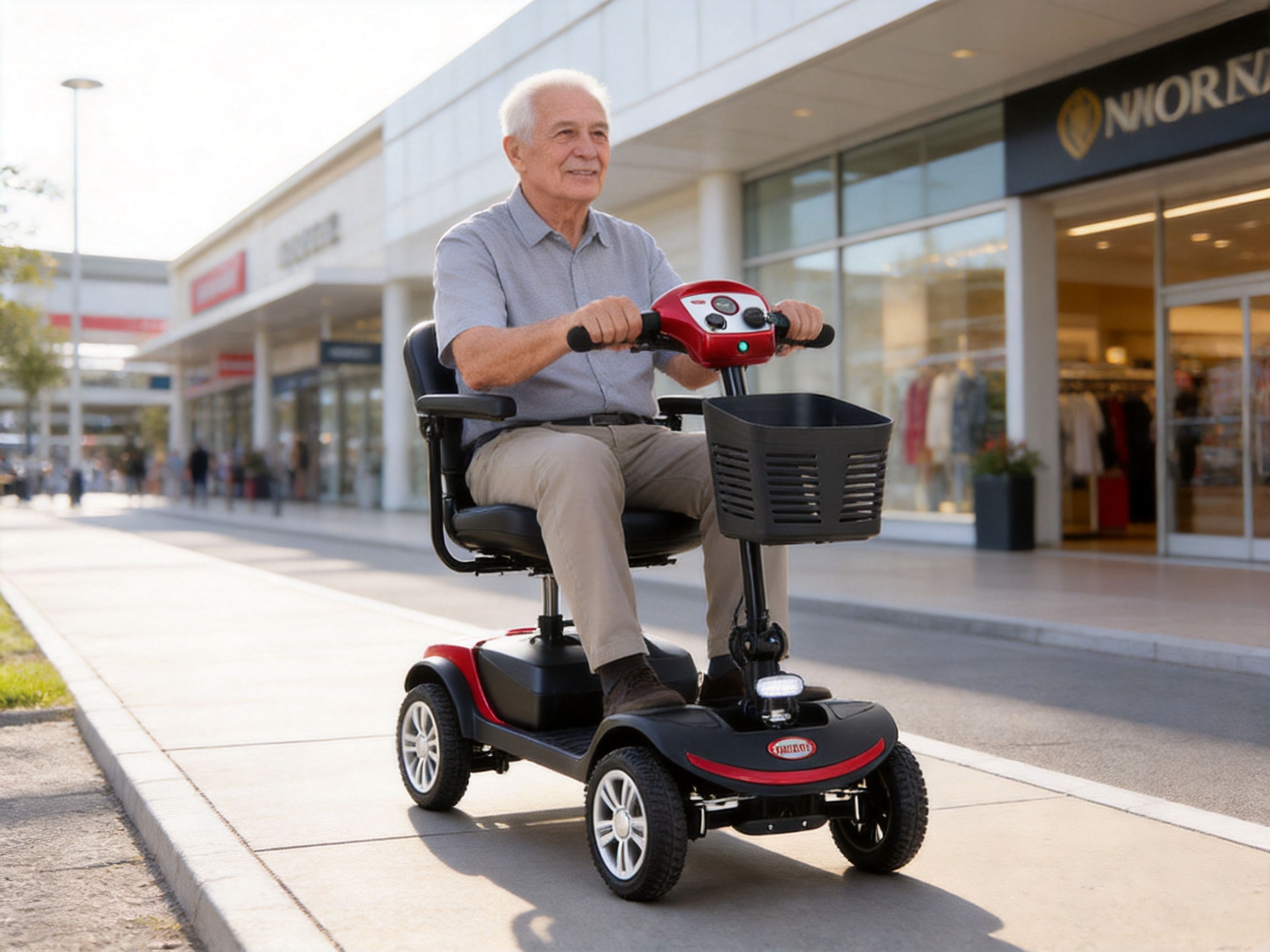
The S1 Sport uses a 24-volt, 300-watt motor. This power level is appropriate for a compact scooter intended for personal travel at a maximum speed of 8 kilometers per hour. The motor is designed to provide controlled propulsion rather than the high output associated with large outdoor scooters.
A 300-watt motor can support practical travel when matched with the scooter’s size, wheel arrangement, controller, battery system, and intended load. The product has a stated weight capacity of 120 kilograms, or approximately 265 pounds. Users should remember that carrying additional items increases the total load and can affect acceleration, range, braking distance, and hill-climbing performance.
The motor is paired with a 24-volt, 50-ampere dynamic motor controller. The controller is an important part of the drive system because it manages the relationship between the battery, user input, and motor output. A well-matched controller can help the scooter respond in a predictable manner, supporting smooth starts and controlled speed changes.
For a travel scooter, predictable response is often more valuable than aggressive acceleration. Users may operate the scooter in corridors, shopping areas, building entrances, sidewalks where permitted, and other spaces where careful speed management is necessary. The combination of a moderate maximum speed and electronic control can make the scooter more approachable for users who want straightforward operation.
Performance should always be evaluated in context. A scooter carrying a lighter user on a level, smooth surface will normally perform differently from the same scooter carrying a heavier load on a slope or uneven pavement. Cold temperatures, tire condition, battery age, and repeated starts and stops can also influence performance. Buyers should use the published specifications as a framework rather than as a promise of identical results in every environment.
Battery Options, Range, and Charging
The standard battery configuration uses two 12-volt, 12-ampere-hour lead-acid batteries. Together, they provide the 24-volt electrical system required by the motor and controller. A 20-ampere-hour battery option is also listed, allowing buyers or distributors to consider a higher-capacity configuration where additional range or operating reserve is important.
The stated maximum driving range is 15 to 25 kilometers, or approximately 9.5 to 15.5 miles. The range is presented as a range rather than a single fixed figure because battery performance depends on many variables. User weight, gradient, road surface, tire pressure, temperature, battery condition, speed, and driving frequency all influence the distance available from a charge.
For travel planning, it is sensible to maintain a reserve rather than using the entire advertised distance. A route that appears to be within the maximum range may become unsuitable if it includes hills, rough pavement, frequent stops, or extended periods of high load. Users should plan charging opportunities in advance and avoid assuming that a battery will always deliver its highest published distance.
The supplied charger is rated at 24 volts and 2 amperes on the direct-current side, with an alternating-current input range of 100 to 240 volts. This broad input range supports use with compatible electrical systems in various markets, subject to the correct plug, local electrical requirements, and applicable instructions.
The stated charging time is approximately 6 hours. Charging overnight may be convenient for some users, but the charger should be used in a suitable, dry, ventilated location and according to the manufacturer’s instructions. Battery terminals, cables, and connectors should be kept clean and inspected periodically. Damaged cables, unusual heat, swelling, leakage, or other abnormal signs should be addressed promptly by qualified service personnel.
Lead-acid batteries are a familiar and established technology in mobility equipment. They are generally serviceable through established supply channels, but they are also heavier than many newer battery chemistries. The S1 Sport’s foldable design and identified heaviest-part weight should therefore be considered together with the battery configuration when assessing transport needs.
Braking and Control Confidence
The S1 Sport uses an electromagnetic brake system. Electromagnetic braking is commonly paired with powered mobility products because it can help slow or stop the scooter when the drive control is released, subject to the design and operating instructions of the particular product.
A braking system is not only an emergency feature. It also contributes to everyday confidence when the user is starting, stopping, approaching a doorway, or positioning the scooter in a restricted space. Predictable braking behavior is especially important in a compact vehicle used around pedestrians, furniture, parked cars, and other obstacles.
Users should become familiar with the controls in a clear, open area before entering busy environments. They should practice gradual acceleration, controlled stopping, turning, and reversing if available. The scooter should never be operated by a person who is unable to understand or safely use the controls.
Braking distance depends on speed, user weight, surface condition, slope, tire traction, and mechanical condition. Wet, icy, loose, or contaminated surfaces can reduce traction. The electromagnetic brake does not eliminate the need for safe driving habits, route planning, and appropriate maintenance.
The product’s control architecture, including its dynamic motor controller and electromagnetic braking system, is designed to support an integrated driving experience. This is preferable to treating the motor, controller, and brakes as isolated components. When these parts are properly matched and inspected, the user can benefit from smoother starts and more consistent speed management.
Rear Suspension and Ride Considerations
The S1 Sport includes rear suspension. Suspension can help reduce the transmission of some vibration from the travel surface into the scooter structure and seating area. This feature is useful when moving across suitable pavement with minor surface variation.
Rear suspension does not turn a compact travel scooter into an all-terrain vehicle. Users should avoid deep potholes, loose gravel, steep side slopes, soft ground, flooded areas, and obstacles that exceed the scooter’s design limits. A compact mobility scooter performs best when operated on routes selected for its wheel size, clearance, gradient, and stability characteristics.
Suspension also contributes to handling. The rear suspension must work with the frame, tires, wheelbase, and user load. Proper tire inflation and regular inspection are important because a damaged or underinflated tire can affect both comfort and control. Any unusual noise, excessive movement, or visible damage should be inspected before continued use.
For buyers comparing compact products, the presence of rear suspension can be an advantage over basic models that rely only on rigid wheels and frame components. It is not a guarantee of a smoother ride in every situation, but it demonstrates attention to comfort and practical usability within the travel-scooter category.
Design Advantages Over Conventional Alternatives
The S1 Sport’s competitive position is based on the combination of features rather than on one isolated specification. Its four-wheel layout, foldable frame, travel-oriented dimensions, 300-watt motor, electromagnetic brake, rear suspension, and battery options create a balanced package for personal mobility.
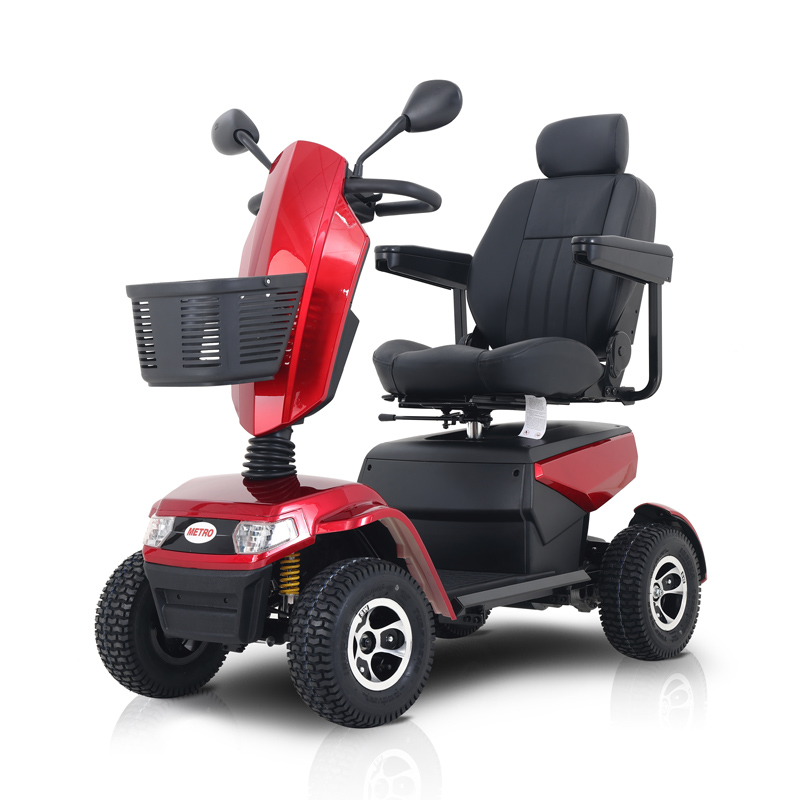
Compared with larger conventional scooters, the S1 Sport is easier to consider for users with limited storage space. Its width of approximately 525 millimeters and foldable format may simplify placement in appropriate indoor or vehicle storage areas. Larger scooters may provide additional seating features or greater outdoor capability, but they can be less convenient for frequent transport.
Compared with very small three-wheel travel scooters, the S1 Sport offers four-wheel support. This may appeal to buyers who prioritize a broader base and a more balanced feel. The trade-off is that a four-wheel design may not turn as tightly as some three-wheel layouts. Buyers should consider the intended environment and check maneuvering space before purchase.
Compared with products that focus only on low weight, the S1 Sport retains a useful range of structural and functional features. Rear suspension, electromagnetic braking, a 300-watt motor, and a 120-kilogram capacity indicate that the product is designed as a practical mobility system rather than simply a folding frame with minimal propulsion.
Compared with scooters that offer only one battery configuration, the listed 12-ampere-hour standard battery and optional 20-ampere-hour configuration provide a degree of choice. The correct option depends on the expected route length, charging access, transport requirements, and local product configuration.
These advantages should be understood fairly. No compact scooter is ideal for every user or every route. The S1 Sport is most compelling for buyers seeking a portable, four-wheel, electrically powered travel solution with moderate range and a practical feature set.
Manufacturing Strengths of Sweetrich Mobility
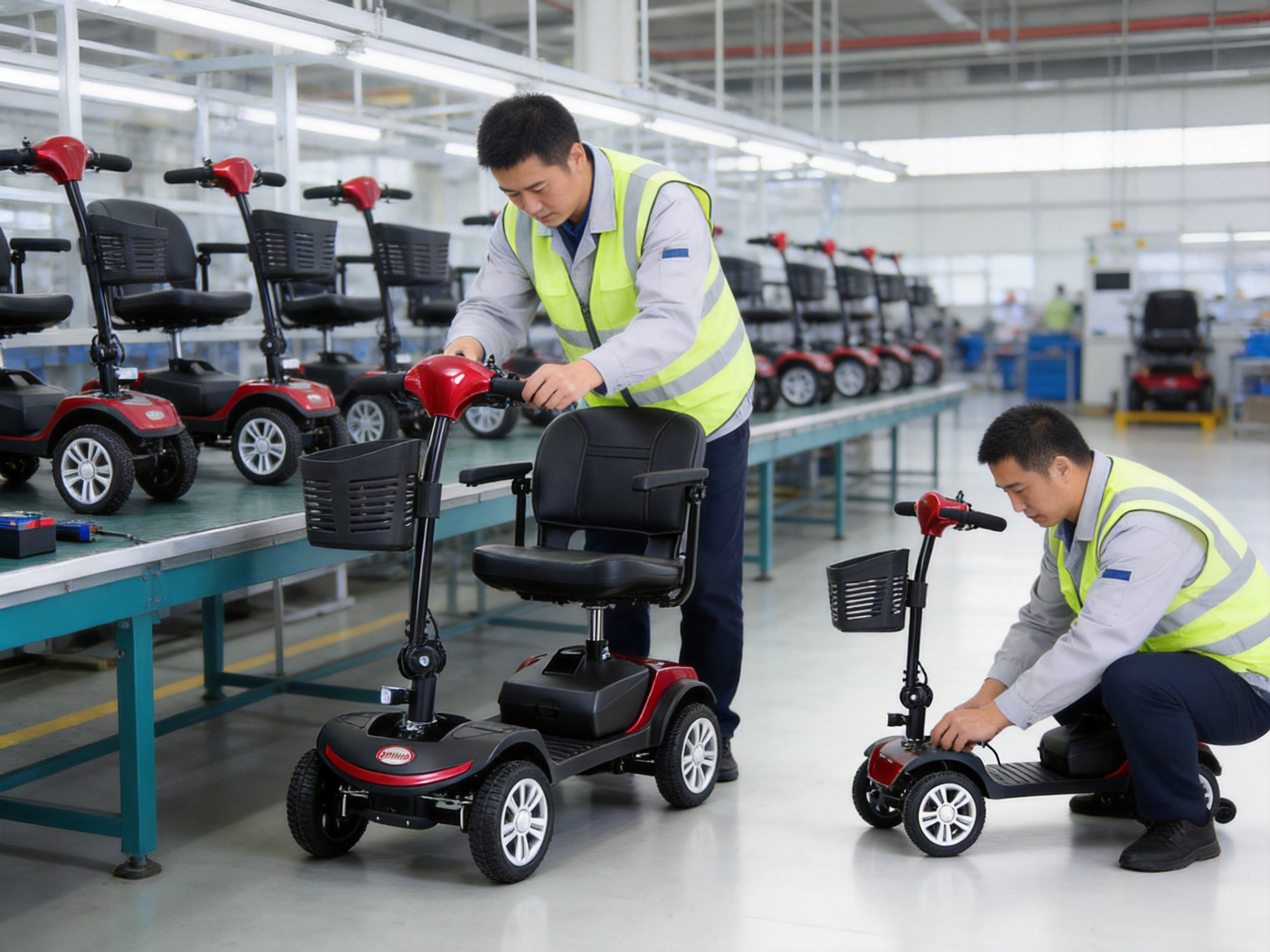
The company behind the S1 Sport, Suzhou Sweetrich Vehicle Industry Technology Co., Ltd., was established in 2011 and is located in Suzhou Industrial Zone in Jiangsu, China. The company reports a facility covering approximately 60 acres, including a 30,000-square-meter factory. This scale provides a substantial foundation for product development, component integration, assembly, testing, and export preparation.
Sweetrich specializes in mobility scooters and power wheelchairs. Such specialization is valuable because mobility products require more than general vehicle-production knowledge. Engineers and production teams must consider low-speed stability, user controls, seating comfort, braking response, battery safety, maneuverability, folding structures, and long-term maintenance.
The company states that it has accumulated more than ten years of experience in research, development, and production. This experience can support continuous refinement of product structures, electrical systems, manufacturing procedures, and quality controls. Over time, manufacturers learn how components perform under repeated use and how production processes can be adjusted to improve consistency.
Sweetrich also reports ownership of intellectual property related to its electric scooters and power wheelchairs. Intellectual property can reflect investment in original product development, structural solutions, control systems, and user-focused design. For buyers and distribution partners, a company’s ability to develop and protect its own products may be a sign of long-term commitment to the mobility sector.
The company describes its products as incorporating advanced control technology and driving systems intended to support smooth and safe operation. In the S1 Sport, the 24-volt motor controller, electromagnetic brake, and battery system function as part of that integrated approach. Product quality depends not only on selecting individual components but also on ensuring that they are correctly matched, assembled, calibrated, and inspected.
Manufacturing strength also includes production management. The company emphasizes strict production management and scientific product design. For a folding mobility scooter, production discipline is especially important. Frame alignment, fastener installation, electrical routing, battery connections, wheel installation, brake operation, and folding-lock engagement must be handled consistently from one unit to the next.
From Product Development to Finished Scooter
A capable mobility scooter manufacturer typically begins with product requirements rather than isolated parts. The intended user, travel environment, capacity, desired range, storage format, and operating controls all influence the design. For the S1 Sport, the travel-smart objective affects the dimensions, folding structure, motor output, battery arrangement, wheel size, and overall weight distribution.
During engineering development, the frame must be designed to support the stated user load while remaining compact enough for folding and transport. The folding points need sufficient strength and must be positioned so that the scooter opens into a stable operating configuration. Components such as the seat, tiller, wheels, battery tray, motor, and controller must fit within the available structure without compromising usability.
Electrical integration is another major stage. The battery system must supply the motor controller, charger compatibility must be verified, and wiring must be routed to reduce the risk of abrasion or accidental damage during folding. Connectors need to be properly installed, and controls must communicate with the controller in a predictable manner.
Assembly quality affects the finished product directly. Correct torque on fasteners, accurate wheel alignment, secure brake connections, and careful battery installation can all influence performance. Manufacturing teams also need procedures for identifying defects before a scooter leaves the factory.
Quality assurance may include visual inspection, dimensional checks, electrical testing, charger checks, brake verification, motor operation, folding-function inspection, and road or roller testing where appropriate. The precise internal procedures used for an individual production batch depend on the manufacturer’s quality system and applicable market requirements, but systematic inspection is essential for a mobility product.
Export experience can also strengthen manufacturing coordination. Sweetrich reports that its products are exported to America, Europe, Japan, Australia, the Middle East, Russia, and other markets. Serving different regions requires attention to documentation, packaging, electrical compatibility, product configuration, distributor communication, and local market expectations.
Quality, Reliability, and Service Orientation
Reliability begins with design but continues through production, delivery, and after-sales support. A scooter may have a suitable specification sheet, yet long-term satisfaction also depends on the quality of assembly, the availability of replacement components, the clarity of operating instructions, and the responsiveness of the supplier or distributor.
Sweetrich identifies quality, credit, and customer service as important business principles. The company’s stated goal is to provide qualified products, considerate service, and reasonable prices while developing long-term cooperation with customers around the world. For mobility equipment, long-term cooperation is particularly relevant because dealers and users may require technical support, battery guidance, replacement parts, or maintenance information after the initial purchase.
Manufacturers serving business customers also need to support consistent product supply. A distributor may require stable specifications, packaging information, product images, manuals, and shipment coordination. A large factory and specialized product focus can help a supplier manage these needs more effectively than a small, non-specialized trading operation, although buyers should still confirm current production, warranty, certification, and service arrangements before ordering.
Reliability should not be confused with maintenance-free operation. Tires, batteries, brakes, fasteners, folding joints, and electrical connectors require inspection. The scooter should be kept clean and dry, stored according to battery requirements, and operated only within its intended limits. Responsible maintenance protects both performance and user safety.
Who May Benefit from the S1 Sport?
The S1 Sport may be suitable for older adults and other users who want powered mobility for appropriate daily activities. It can be considered by people who need support for longer distances than they comfortably walk, users who want to reduce fatigue during shopping or travel, and individuals who value a scooter that can be folded and transported with suitable assistance.
It may also be useful for families or caregivers who need a compact mobility option for occasional outings. The folding structure can reduce storage demands, while the four-wheel layout can provide a familiar and balanced platform for controlled travel.
Travelers should evaluate the complete journey rather than only the scooter. They should consider vehicle loading, airport or carrier policies, charging access, destination surfaces, weather, ramps, doorway widths, and the availability of assistance. Battery transport rules and carrier policies may vary, so travel arrangements should be confirmed in advance.
The S1 Sport may be less suitable for users who need a heavy-duty scooter for extensive off-road use, very long distances, high-speed travel, or steep and challenging terrain. It may also be unsuitable for individuals who cannot safely operate the controls, transfer into the seat, or manage the scooter’s weight during loading without assistance.
Professional advice may be appropriate when a user has significant posture, balance, strength, vision, or cognitive limitations. A qualified mobility specialist can help determine whether the seating position, controls, capacity, and operating method are appropriate.
Operating the Scooter Responsibly
Before first use, the scooter should be inspected for shipping damage, loose parts, correct wheel installation, battery connection, tire condition, and proper folding-lock engagement. The battery should be fully charged according to the supplied instructions. The user should identify the speed control, forward and reverse functions if provided, horn or warning control, battery indicator, and braking behavior.
Initial practice should take place on a level, open, dry surface away from traffic and pedestrians. The user should practice starting gradually, stopping smoothly, making wide turns, reversing carefully, and positioning the scooter near a table or doorway. Confidence should be developed step by step rather than immediately entering a crowded environment.
Seat belts or other supplied safety features should be used as instructed. Loose clothing, bags, or objects should be kept away from wheels, folding joints, and control mechanisms. The user should maintain a stable seated position and avoid carrying loads that exceed the rated capacity.
When approaching a slope, the user should assess the gradient, surface, width, and available stopping distance. The published 10-degree maximum driving gradient should not be treated as permission to climb every slope of that angle. A wet or uneven slope may be unsafe even if its measured angle appears acceptable.
Curbs, steps, drainage channels, and other obstacles should be avoided unless the scooter is specifically designed and approved for them. The user should not drive through water deep enough to reach electrical or battery components. Visibility should be maintained in low-light conditions, and local regulations regarding sidewalk, road, pedestrian, and mobility-device use should be followed.
Maintenance Priorities
Routine maintenance helps preserve the scooter’s function and reduces the likelihood of avoidable problems. Tires should be checked for damage, excessive wear, and proper inflation. Uneven tire wear may indicate alignment or mechanical issues that require inspection.
The electromagnetic brake should be checked regularly in a safe area. If the scooter rolls unexpectedly when the control is released, stops inconsistently, or produces an unusual sound, it should be removed from service until examined by an appropriately qualified technician.
Battery terminals and cables should remain secure and free of corrosion. Lead-acid batteries should be charged with the correct charger and stored in accordance with the manufacturer’s requirements. Users should avoid improvised chargers or electrical modifications because incorrect voltage or current can damage the battery system and create safety risks.
Folding areas should be kept free of dirt and foreign objects. The frame should be inspected for cracks, distortion, loose fasteners, or damage following an impact. The scooter should be fully unfolded and locked before operation. If the folding mechanism does not engage correctly, the scooter should not be used.
Cleaning should be performed with appropriate methods. Electrical components should not be exposed to excessive water, pressure washing, or corrosive chemicals. After use in damp conditions, the scooter should be dried before storage or charging.
Purchasing and Configuration Considerations
Buyers should confirm the exact configuration before placing an order. The standard battery is listed as two 12-volt, 12-ampere-hour lead-acid batteries, while a 20-ampere-hour option is available. The chosen battery can influence range, weight, charging needs, and transport convenience.
It is also important to confirm the complete package, including charger type, seat configuration, controls, warranty terms, manuals, spare parts, and delivery condition. Product specifications may vary by market, production batch, or distributor package. The published specifications should therefore be checked against the purchase quotation and final documentation.
Vehicle compatibility should be considered carefully. Buyers should measure the vehicle’s cargo opening, interior height, storage depth, and available lifting capacity. A folding scooter may be compact once prepared for transport, but the lifting process still requires a safe plan.
Users should also measure common routes at home. Doorway width, turning space, table clearance, elevator dimensions, ramp angle, and storage location can affect the real-world usefulness of the scooter. A compact product is most valuable when it fits the user’s actual environment.
Why Specialized Manufacturing Matters
A mobility scooter is a personal transportation device with direct consequences for user independence and confidence. Specialized manufacturing experience can help a company understand the importance of low-speed stability, intuitive controls, battery management, braking, seating, and serviceability.
Sweetrich’s focus on electric scooters and power wheelchairs allows its engineering and production activities to remain centered on mobility applications. Its reported factory scale, research and development experience, intellectual property, and export history form a foundation for developing products such as the S1 Sport.
The company’s stated emphasis on scientific product design and strict production management also aligns with the requirements of a foldable scooter. Travel products must withstand repeated folding, storage, loading, unloading, charging, and daily operation. This creates a need for coordinated design and manufacturing rather than a simple assembly of unrelated components.
The S1 Sport illustrates how a manufacturer can combine practical specifications with a clear user-focused purpose. The product is not built around maximum size or maximum speed. Instead, it concentrates on a usable mix of compact dimensions, four-wheel support, moderate range, electrical control, braking, suspension, and transport-oriented construction.
Frequently Asked Questions
Is the S1 Sport a medical device?
The supplied product information identifies it as a non-medical device for the United States market. It is intended as a personal mobility scooter. Buyers should review local requirements and consult a qualified professional if they need help determining whether the product is appropriate for their individual mobility needs.
What is the maximum speed?
The maximum forward speed is listed as 8 kilometers per hour, or approximately 5 miles per hour. Actual speed can depend on user weight, battery condition, terrain, controller settings, and operating conditions.
How far can it travel on one charge?
The stated maximum driving range is 15 to 25 kilometers, or approximately 9.5 to 15.5 miles. This is an estimated range and can vary according to load, slope, surface, temperature, tire pressure, speed, battery age, and driving style. Users should plan trips with a reserve.
What is the scooter’s weight capacity?
The stated weight capacity is 120 kilograms, or approximately 265 pounds. The total load should include the user and any items carried on the scooter. Exceeding the rated capacity can affect stability, braking, range, and mechanical durability.
How heavy is the heaviest part?
The heaviest part is listed as 27 kilograms, or approximately 60 pounds. This specification helps users and caregivers plan loading and storage. Some individuals may still require assistance or a suitable loading aid.
Does the scooter have four wheels?
Yes. The S1 Sport uses a four-wheel design with 9-inch by 3-inch tires at both the front and rear. The four-wheel layout provides a broad support arrangement for appropriate low-speed travel.
Does it include suspension?
Yes. The product includes rear suspension. Suspension may help reduce some vibration on suitable surfaces, but the scooter is not intended to be treated as an all-terrain vehicle.
What type of brake system does it use?
The S1 Sport uses an electromagnetic brake system. Users should become familiar with its braking response in a clear area and follow all operating and maintenance instructions.
What battery does it use?
The listed standard configuration uses two 12-volt, 12-ampere-hour lead-acid batteries. A 20-ampere-hour option is also available. The final battery configuration should be confirmed with the supplier before purchase.
How long does charging take?
The stated charging time is approximately 6 hours. Charging time can vary depending on battery condition, remaining charge, charger operation, and environmental conditions.
What charger is supplied?
The listed charger provides 24 volts and 2 amperes on the direct-current side and accepts a 100–240-volt alternating-current input. Buyers should confirm the plug and regional electrical configuration for their market.
Can the scooter be used on steep slopes?
The maximum driving gradient is listed as 10 degrees. This figure should be treated as a technical reference, not a guarantee of safe operation on every slope. Surface condition, traction, load, battery charge, weather, and stopping distance must all be considered.
Is the S1 Sport suitable for air travel?
Airline and carrier policies vary, particularly for products using lead-acid batteries. Travelers must contact the carrier in advance and confirm requirements for battery handling, packaging, dimensions, and transport approval. The scooter’s foldable design may assist with handling, but it does not automatically make the product acceptable for every carrier.
How does it compare with a larger mobility scooter?
The S1 Sport emphasizes portability and storage convenience. A larger scooter may offer more space, higher capacity, greater suspension travel, or improved outdoor performance. The S1 Sport is better suited to users who prioritize a compact, foldable format for appropriate travel and daily mobility.
How does it compare with a three-wheel travel scooter?
The S1 Sport uses four wheels, which may appeal to users who prefer a broader support footprint. A three-wheel scooter may offer a tighter turning circle in some situations. Buyers should select the configuration that best matches their balance preferences, available space, and intended routes.
Where is the scooter manufactured?
The S1 Sport is manufactured by Suzhou Sweetrich Vehicle Industry Technology Co., Ltd. in Suzhou, Jiangsu, China. The company operates a reported 30,000-square-meter factory and focuses on mobility scooters and power wheelchairs.
What should be checked before first use?
Users should inspect the scooter for shipping damage, confirm that the frame is fully opened and locked, check the wheels and tires, verify battery connections, charge the battery with the correct charger, test the controls and brakes in a safe area, and read the supplied instructions.
Conclusion
The S1 Sport is designed to address a clear mobility challenge: how to provide powered personal transportation without the storage and transport burden associated with a full-size scooter. Its four-wheel structure, foldable format, compact dimensions, rear suspension, electromagnetic braking, 300-watt motor, and moderate travel range create a balanced solution for suitable everyday and travel-related use.
Its principal advantage over many conventional alternatives is the way these features work together. The product is not simply small; it is designed to retain meaningful mobility functions within a travel-oriented form. The four-wheel configuration supports users who prefer a broad base, while the folding structure and 27-kilogram heaviest part address practical transport concerns.
The S1 Sport also benefits from the manufacturing background of Sweetrich Mobility. The company’s specialized focus, factory capacity, research and development experience, intellectual property, production management, and international market exposure provide a strong foundation for producing mobility equipment. These strengths are particularly relevant to a folding electric scooter, where frame design, electrical integration, braking, battery management, and quality inspection must be coordinated carefully.
For the right user, the S1 Sport can offer a convenient way to support personal independence during appropriate trips, shopping activities, building access, and planned travel. Buyers should evaluate capacity, range, terrain, lifting requirements, battery configuration, local regulations, and professional suitability before purchase. Used within its intended limits and maintained responsibly, it represents a practical and thoughtfully configured option in the travel mobility scooter category.
References
Suzhou Sweetrich Vehicle Industry Technology Co., Ltd. Product specification sheet for the S1 Sport Easy Travel Four-Wheel Foldable Electric Mobility Scooter.
Suzhou Sweetrich Vehicle Industry Technology Co., Ltd. Corporate information concerning research, development, manufacturing, product focus, factory facilities, and international markets.
Mobility scooter operating principles covering electric motors, motor controllers, electromagnetic braking, lead-acid batteries, suspension, and routine inspection.
General travel-planning guidance for portable mobility equipment, including vehicle loading, battery handling, carrier policies, and route assessment.
General user-safety principles for low-speed personal mobility devices, including capacity limits, slope evaluation, braking distance, surface conditions, and responsible operation.