 info@sweetrich.cn
  +86-(0)512-82283871
Content
- 1 Comparing Mechanical and Electronic Braking Approaches
- 2 Structural Elements Supporting EPB Performance
- 3 Importance of Speed Reduction Components
- 4 Everyday Functionalities That Add Value
- 5 Maintenance Practices and System Longevity
- 6 Impact on Rider Experience
- 7 Contribution to Sustainable Operation
- 8 Factors to Consider When Selecting a Scooter
- 9 Emerging Trends in Braking Development
- 10 Why choose Sweetrich transportation
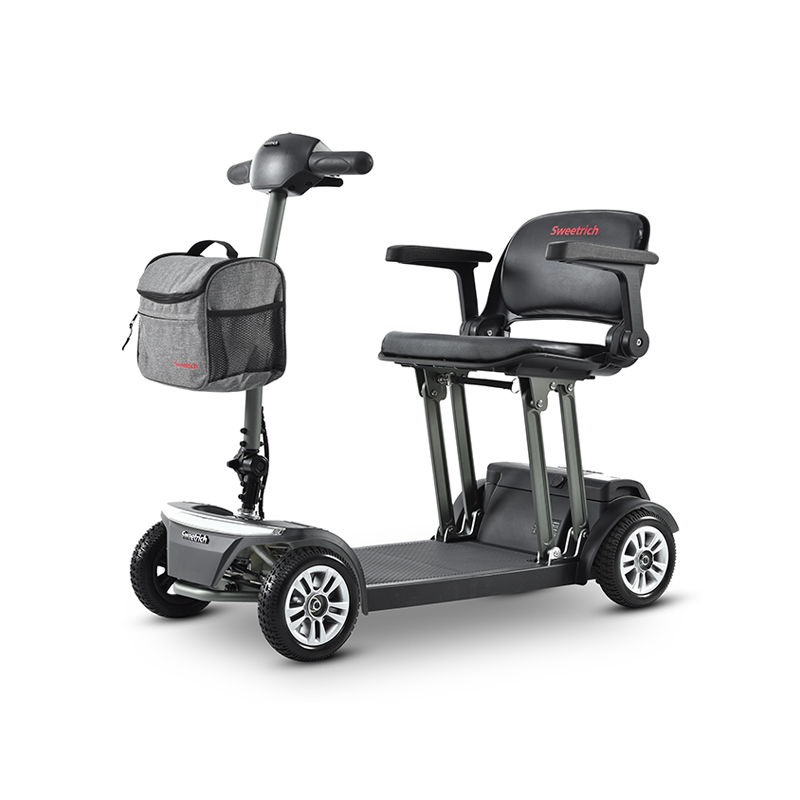
Mobility scooters continue to serve as a valuable option for personal transportation, particularly for those seeking convenient ways to handle daily tasks in urban and suburban settings. With growing attention to traffic reduction and environmental responsibility, these vehicles from Mobility Scooter Factory provide a lightweight and efficient alternative for short journeys. Users appreciate their ease of use, compact design, and ability to navigate spaces where larger vehicles cannot. As technology advances, various components receive updates to improve performance, reliability, and safety. Among these, the braking system stands out as a critical element that directly influences rider security and comfort.
Early designs relied heavily on mechanical methods, while contemporary systems increasingly incorporate electronic features. One notable development is the integrated electronic brake system, commonly referred to as EPB. This approach combines electronic controls with mechanical components to deliver responsive and adaptable stopping power.
Comparing Mechanical and Electronic Braking Approaches
Mechanical braking systems remain common in many mobility scooters. These setups typically feature hand levers that connect through cables or hydraulic lines to brake pads or drums.
- The rider applies force directly to engage the brakes.
- Stopping strength corresponds to the pressure exerted on the lever.
- Components experience gradual wear, requiring periodic checks and adjustments.
Such systems offer straightforward operation and have proven dependable for general use. However, they depend primarily on the rider's input and timing, with limited ability to adjust automatically to changing conditions.
Electronic brake systems, including EPB, introduce a different method. The electronic control unit (ECU) processes inputs from the brake switch and coordinates the response.
- Sensors provide data on speed, surface conditions, and other relevant factors.
- The ECU evaluates this information to determine suitable braking force.
- Force application occurs dynamically, supporting controlled deceleration.
This integration allows for more nuanced performance, where the system can adapt to the immediate environment.
| Aspect | Mechanical Braking | Electronic Braking (EPB) |
|---|---|---|
| Control Method | Manual lever with cables or hydraulics | ECU-controlled via brake switch |
| Force Application | Depends on rider input | Automatically regulated by system |
| Response Adjustment | Fixed, limited adaptability | Dynamic, adapts to conditions |
| Key Components | Levers, cables, pads, drums | Sensors, ECU, electronic actuators |
| Maintenance Needs | Periodic wear checks and adjustments | System diagnostics and software checks |
| Use Characteristics | Simple, familiar operation | Smoother, more controlled deceleration |
Structural Elements Supporting EPB Performance
A frequent design choice in EPB involves the use of dual motors for braking functions.
- Workload division between motors simplifies individual management.
- Engagement happens quickly, facilitating prompt speed reduction.
- Power needs remain moderate, contributing to overall energy conservation.
Compact construction characterizes these systems. Electronic modules work alongside precise mechanical parts to create lightweight assemblies.
- Minimal added weight preserves scooter maneuverability.
- Neat integration maintains a clean vehicle profile.
- Manufacturing efficiencies help keep costs accessible.
Importance of Speed Reduction Components
Effective speed management forms a core part of braking. Mechanisms like planetary gear setups often complement EPB designs.
- Central and orbiting gears operate within a surrounding ring.
- Torque transfers efficiently in a confined area.
- Mechanical operation minimizes energy loss.
- The arrangement supports load requirements while staying compact.
Incorporating such components helps balance performance with the need for a lightweight, agile vehicle.
Everyday Functionalities That Add Value
EPB systems frequently include practical enhancements.
- Hill-hold prevents unintended movement on inclined surfaces during pauses.
- Anti-lock features maintain wheel rotation under sudden applications, aiding traction.
- Ongoing modulation ensures consistent behavior across varying scenarios.
These additions make the scooter suitable for diverse routes, including those with stops, turns, or gentle slopes.
Maintenance Practices and System Longevity
Electronic braking generally involves simpler upkeep routines.
- The ECU tracks operational status and can display alerts for attention needs.
- Reduced reliance on wearable cables or frequent pad replacements extends service gaps.
- Built-in diagnostics streamline professional assessments when required.
Users benefit from performing basic visual inspections regularly, particularly following exposure to dirt, water, or extended operation.
Impact on Rider Experience
Improved braking directly affects daily usability.
- Smooth stopping reduces sudden jolts for greater comfort.
- Adaptive responses accommodate different surfaces and weather.
- Dependable performance fosters confidence during outings.
Individuals using mobility scooters for shopping, recreational walks, or community visits gain from this reliability, supporting independent lifestyles.
Contribution to Sustainable Operation
EPB aligns with the efficiency goals of electric vehicles.
- Conservative energy use during braking helps maintain range.
- Lower draw on batteries supports extended intervals between charges.
- Overall light design aids power optimization.
As electric mobility options expand, systems that enhance resource management play a supportive role in environmental considerations.
Factors to Consider When Selecting a Scooter
Prospective buyers evaluate multiple aspects during decision-making.
- Review expected travel patterns, such as route types and stop frequency.
- Hands-on testing reveals braking characteristics in real conditions.
- Studying provided materials clarifies operational details.
Aligning features with personal requirements leads to satisfactory long-term use.
Emerging Trends in Braking Development
Research and engineering efforts continue to refine these technologies.
- Material advancements improve resilience against daily wear.
- Control software updates enhance data processing and timing.
- Potential links with additional vehicle systems could enable broader safety coordination.
Such progress aims to make braking increasingly seamless and effective.
| Focus Area | Key Direction | Practical Impact |
|---|---|---|
| Materials | Improved wear-resistant components | Longer service life, steadier performance |
| Control Software | Faster data processing and timing accuracy | Smoother, more predictable braking response |
| System Integration | Connection with other vehicle systems | Enhanced overall safety coordination |
Electronic brake systems like EPB demonstrate meaningful evolution in mobility scooter technology. By merging electronic intelligence with dual-motor setups, efficient speed reduction mechanisms, and user-oriented features, these systems provide enhanced control, safety, and convenience. Riders benefit from adaptable performance that suits varied conditions, while the designs support energy-efficient and lightweight construction. Maintenance simplicity and diagnostic capabilities further add practical value.
Why choose Sweetrich transportation
Sweetrich is a professional manufacturer specializing in electric mobility scooters, dedicated to integrating advanced technologies such as electronic braking systems to enhance rider safety and convenience. Sweetrich's commitment to innovation, quality certification, and user-centric solutions makes it an ideal choice for providing electric mobility scooters equipped with modern electronic braking systems, enabling users to travel more independently and safely in various environments.