 info@sweetrich.cn
  +86-(0)512-82283871
Content
- 1 What Design Features Influence Outdoor Performance
- 2 How Does the Three-Wheel Configuration Handle Uneven Surfaces
- 3 What Role Does Suspension Play on Rough Outdoor Terrain
- 4 How Does Motor and Drive System Affect Terrain Capability
- 5 What Does Maneuverability Look Like on Outdoor Paths
- 6 What Considerations Apply to Portability and Outdoor Use
- 7 What Do Users Notice When Taking a Lightweight 3 Wheel Scooter Outdoors
- 8 What Environmental Factors Influence Outdoor Performance
- 9 What Should Be Considered When Choosing a Travel 3 Wheel Scooter for Outdoor Use
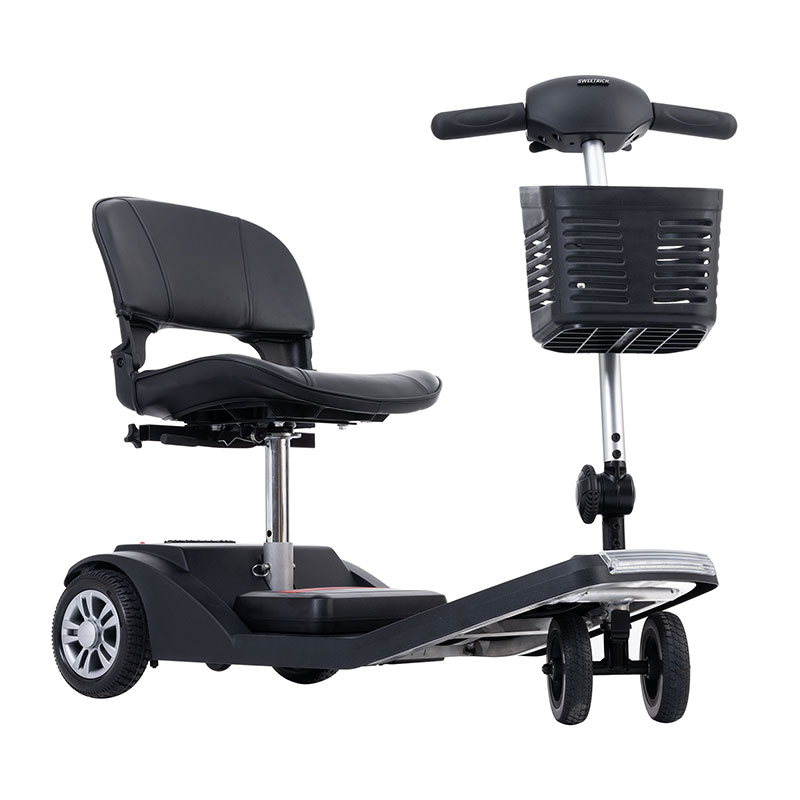
A Travel 3 Wheel Scooter that handles nicely on kitchen tiles or supermarket floors does not always deliver the same experience once it rolls outdoors. The world beyond doorways presents surfaces that vary constantly. Sidewalk slabs settle at different heights. Tree roots push through asphalt. Gravel paths shift under weight. Each of these conditions changes how the scooter moves and how the rider feels during the ride.
People who take their scooters on outdoor trips discover quickly that smooth pavement is not guaranteed. Even well-maintained sidewalks have expansion joints, and parks often include sections of unpaved trail. The scooter needs to manage these variations without making every outing uncomfortable. A machine that performs adequately on flat, hard floors may transmit every crack and pebble to the rider when used outside.
Comfort matters over longer distances. A short ride to a nearby shop might not reveal how a scooter handles rough ground, but a trip of several blocks or a day out running errands will. The cumulative effect of repeated small shocks wears on the rider. Understanding terrain performance ahead of time helps users choose appropriate routes and set realistic expectations.
What Design Features Influence Outdoor Performance
Several physical characteristics determine how a Travel 3 Wheel Scooter copes with the varied surfaces found outdoors. Some of these features are obvious, while others become apparent only during use.
Wheel size makes a measurable difference. A larger wheel rolls over cracks and small obstacles with less effort. The wheel drops into a gap and climbs out with minimal disturbance to the scooter's motion. Smaller wheels, by contrast, drop farther into the same gap and require more energy to climb back out. Riders notice this difference when crossing sidewalk joints or moving from pavement to grass.
Tire tread contributes to how much grip the scooter has on different surfaces. A smooth tire provides good contact on dry pavement, but that same tire loses traction on damp grass, loose gravel, or mud. Tread patterns with deeper channels help the tire push aside soft material and reach firmer ground underneath.
Ground clearance affects whether the scooter can cross raised obstacles without scraping. A low underside catches on speed bumps, curb edges, and stones that a higher clearance would clear easily. Raising the ground clearance, however, moves the center of gravity upward, which changes how the scooter feels during turns.
Other points worth noting:
- Tire width changes how much the tire sinks into soft ground.
- Wheelbase length affects straight-line stability but tightens turning space.
- Handlebar design influences how much leverage the rider has when steering over rough patches.
How Does the Three-Wheel Configuration Handle Uneven Surfaces
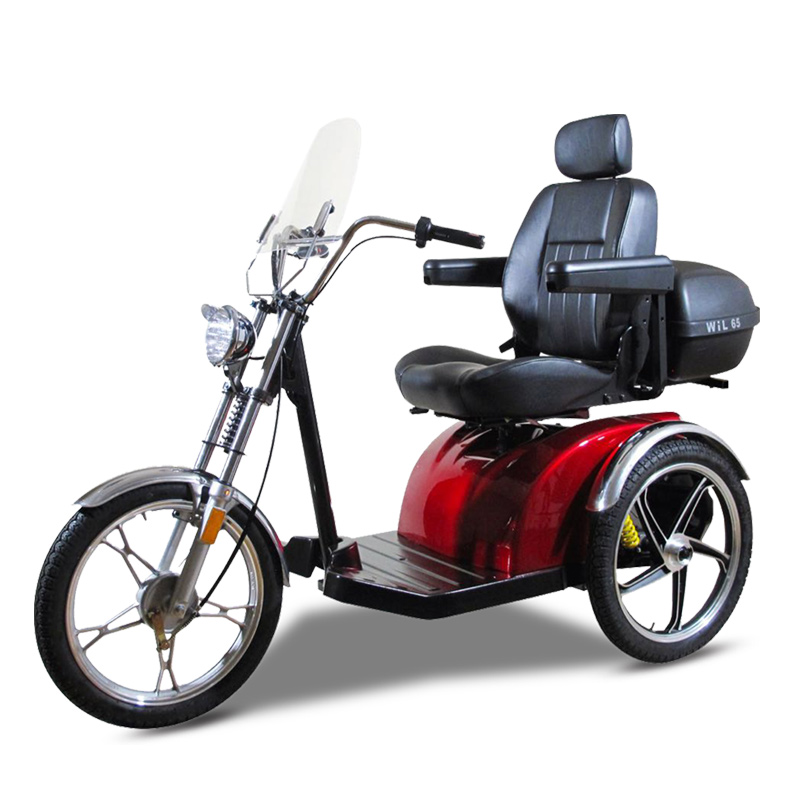
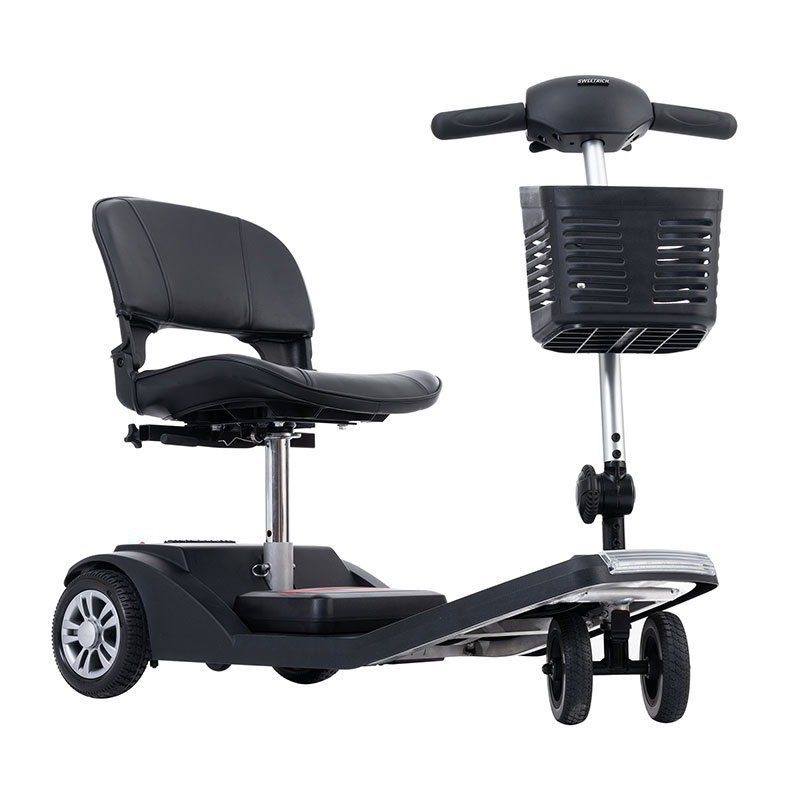
The three-wheel layout places the scooter's weight over three contact points. That geometry creates certain behaviors on tilted or irregular ground that differ from what users might expect from a four-wheel vehicle.
Weight shifts when the scooter encounters a slope. Two wheels on the downhill side carry more load, and the uphill wheel carries less. The wider the track—the distance between the two rear wheels—the more stable the scooter remains during such shifts. A narrow track lets the center of gravity move closer to the tipping line, so the scooter feels less secure on cambered roads.
An obstacle striking one wheel causes the scooter to tilt. When a pothole catches only the right rear wheel, the left rear and front wheels stay on firm ground, and the scooter tilts toward the hole. The rider feels this tilt and often makes small steering corrections to maintain direction. A four-wheel scooter would have three wheels on firm ground in the same situation, reducing the tilt angle. The three-wheel design requires the rider to be more attentive to uneven surfaces during travel.
Cornering on rough ground adds another dimension. A turn on a side slope combines centrifugal force pulling outward with gravity pulling downhill. The single front wheel must maintain grip while the rear wheels follow. Loose surfaces reduce that grip, making the turn feel less controlled. Slower speeds and wider turns help manage this condition.
What Role Does Suspension Play on Rough Outdoor Terrain
Suspension systems change how a scooter responds to impacts. A scooter without suspension delivers the full force of every bump directly to the rider's hands, seat, and feet. A scooter with suspension absorbs some of that energy and releases it over a longer period, reducing the peak force felt by the rider.
Not all Travel 3 Wheel Scooter models include suspension. Some have only front suspension, typically a spring-loaded fork under the handlebars. Others add rear suspension, with spring units or elastomer blocks near the rear axle. Full suspension models include spring and damper elements at both ends, providing more consistent absorption across both wheels.
The suspension travel—how far the wheel moves upward to absorb an impact—determines how large a bump the scooter can handle without bottoming out. More travel suits riders who frequently encounter broken pavement or dirt paths. Less travel works for those who stay on maintained sidewalks and paved trails.
Suspension affects more than ride comfort. A scooter that dives forward when braking because the front suspension compresses too easily changes its steering geometry during stopping. A scooter that squats rearward under acceleration alters its balance during starts. Balanced suspension keeps the scooter's geometry stable across different riding conditions.
How Does Motor and Drive System Affect Terrain Capability
The motor and drive system determine how the scooter converts stored power into forward motion on challenging surfaces. Not all motors perform the same way on inclines or loose ground.
Torque—the turning force delivered to the wheels—matters more than top speed for outdoor performance. A motor with good torque gets the scooter moving on a hill or pulls it through a patch of gravel. A motor with lower torque may struggle on the same terrain, requiring the rider to assist or choose a different route.
Power delivery characteristics also affect traction. A system that feeds power smoothly allows the wheels to maintain grip on slippery surfaces. An abrupt surge of power can cause wheel spin, especially on wet grass or loose stones. The rider feels this as a loss of forward motion while the wheel turns underneath.
Factors that play into terrain capability:
- Motor placement affects how weight sits over the drive wheel.
- Geared drive systems often provide better low-speed torque than direct drive.
- Controller response times influence how quickly power reaches the wheel.
The scooter's ability to maintain consistent speed across changing surfaces affects user confidence. When the motor slows noticeably on a slight upgrade or soft ground, the rider may question whether the scooter can handle more demanding routes.
| Feature | Practical Effect Outdoors | User Takeaway |
|---|---|---|
| Larger wheels | Smoother ride over cracks and small obstacles | Fewer jolts during sidewalk travel |
| Aggressive tire tread | Better grip on grass, gravel, and damp surfaces | More confident on mixed terrain |
| Higher ground clearance | Scrapes less on speed bumps and rocks | More route options available |
| Full suspension | Absorbs shocks and reduces fatigue | More comfortable over longer outings |
| Higher motor torque | Better hill climbing and soft-ground performance | Handles inclines without speed loss |
| Wider rear track | More stability on side slopes | Feels more secure on cambered paths |
What Does Maneuverability Look Like on Outdoor Paths
Steering a Travel 3 Wheel Scooter across a smooth indoor floor takes almost no thought. The surface stays flat, the wheels roll straight, and the rider just points the handlebars where they want to go. Outdoors, that simplicity disappears. Paths slope from one side to the other. Gravel shifts under the front wheel. Narrow trails demand turns that the scooter may not want to make.
Turning radius matters more on outdoor routes than many buyers realize. A path through a park often bends around trees or follows the curve of a hillside. A scooter that turns tightly handles these sections easily. One with a wider turning circle forces the rider to plan ahead, sometimes stopping to reposition before completing the turn. The single front wheel on a three-wheel scooter generally allows a smaller turning radius than four-wheel designs, because there is no second front wheel tracking alongside to resist the turn.
Steering effort increases on tilted surfaces. Roads and paths often slope toward the edge for water drainage. That slope pulls the scooter sideways, and the rider must hold the handlebars at a slight angle just to go straight. Over a mile or two, that constant correction adds up. Arms get tired. Shoulders feel the strain.
Rough ground changes how the front wheel behaves. On smooth pavement, the wheel follows the rider's input without argument. On broken pavement or loose stones, the wheel bounces and wanders, pulling the handlebars left and right. The rider grips tighter and makes more frequent corrections. The same path that takes five minutes of relaxed riding on smooth pavement may take ten minutes of focused effort on rough ground.
What Considerations Apply to Portability and Outdoor Use
People choose Travel 3 Wheel Scooters partly because they fold up or break down for car trunks and train compartments. That convenience comes with compromises.
Weight affects how the scooter rides on rough ground. Lighter machines lift easily, but they also bounce more on uneven surfaces. Heavier scooters sit more firmly, staying planted when the ground gets rough. A light scooter on gravel feels skittish; a heavier one rolls through with more composure. The difference is noticeable after a few hundred yards on a loose surface.
Folding mechanisms introduce joints into the frame. Those joints need to stay rigid while riding, yet release easily for folding. Rough ground puts stress on these connections. A well-made folding joint locks solidly and stays that way. A looser one develops play over time, making the scooter feel less precise when steering.
Outdoor exposure brings dust, moisture, and temperature swings that indoor use never sees. Tires wear faster on rough pavement. Suspension parts collect grit. Electrical contacts may corrode in damp conditions. A few design choices help:
- Sealed bearings keep moisture out better than open ones.
- Coated or painted frames resist rust longer.
- Covered compartments protect stored items from light rain.
Users who ride outdoors regularly pay attention to these details because they affect how long the scooter stays reliable.
What Do Users Notice When Taking a Lightweight 3 Wheel Scooter Outdoors
Specifications tell part of the story, but actual use reveals the rest. People who take a Lightweight 3 Wheel Scooter onto outdoor paths notice patterns that help others form realistic expectations.
Ride quality changes with surface type. Paved paths feel smooth, with only small vibrations from joints and minor imperfections. Gravel introduces noise and a bumpier feel; small stones sometimes get trapped in the tread. Packed earth sits somewhere between, comfortable when dry but less predictable when wet.
Speed matters more on rough ground than on smooth. Going slower lets the tires and suspension handle bumps more gradually, producing a calmer ride. Pushing faster reduces the time available to absorb impacts, so more shock reaches the rider. Many users find that dropping speed by a small amount on rough sections improves the experience without adding much time to the trip.
Recovery from unexpected events—a hidden dip, a sudden turn, a patch of loose sand—depends on how quickly the rider can regain control. A scooter that responds predictably to steering inputs makes recovery straightforward. One that feels vague or delayed in its responses increases the chance of going off course.
Users also notice how the scooter behaves when stopping on slopes. Braking on a downhill section requires more distance than on flat ground. Wet surfaces extend that distance further. Riders who learn these tendencies adjust their stopping habits accordingly.
What Environmental Factors Influence Outdoor Performance
Outdoor conditions shift with weather and seasons. A Travel 3 Wheel Scooter that works well on a dry summer day may not handle the same path on a damp autumn morning.
Wet surfaces change everything. Rain makes pavement slippery and grass slick. Tires that grip fine on dry ground may slide on wet surfaces, particularly during turns or braking. Riders slow down and allow more stopping distance. Deep tire tread helps by channeling water away from the contact patch.
Temperature affects both tires and the power source. Cold rubber hardens, losing some of its ability to conform to surface irregularities. That hardening reduces grip and makes the ride feel harsher. Cold also reduces battery output, so the scooter may climb hills more slowly or cover less distance on a charge. Warm temperatures soften tires, improving grip but increasing rolling resistance and wear.
Surface composition varies in ways that matter. Hard-packed dirt with loose dust on top behaves differently from the same dirt when wet. Sand depth changes how much the tire sinks. Gravel size affects how much the wheel bounces. Riders who know what to expect on different surfaces can adjust speed and steering before problems arise.
What Should Be Considered When Choosing a Travel 3 Wheel Scooter for Outdoor Use
Choosing a Travel 3 Wheel Scooter for outdoor use means deciding which features matter. No one machine handles every surface type well, so users need to match the scooter to their actual routes.
Expected terrain guides the decision. Someone who stays on paved paths needs less suspension and less aggressive tread than someone who rides on gravel or grass. Matching capabilities to conditions prevents disappointment later.
Portability sometimes conflicts with terrain handling. Lightweight designs often compromise on suspension and tire size to save weight. Frequent travelers may accept those compromises. Users who ride mainly from home may prefer the added comfort of heavier, more capable machines.
A few questions help narrow the choices:
- What surfaces appear on the daily route?
- How far does the scooter need to go between charges?
- Does the scooter need to fit in a vehicle for transport?
- Is suspension a priority or a nice-to-have?
Setting realistic expectations keeps the experience positive. A scooter built for portability will not match the terrain performance of a larger, heavier mobility device designed for rugged use. Accepting that trade-off leads to better satisfaction with the chosen machine.