 info@sweetrich.cn
  +86-(0)512-82283871
Content
- 1 How Turning Radius Affects Movement in Tight Spaces
- 2 Why Overall Width Matters for Doorways and Hallways
- 3 What Role Weight Plays in Indoor Usability
- 4 How Ground Clearance Affects Indoor Navigation
- 5 Why a Portable 3 Wheel Scooter Prioritizes Indoor-Friendly Features
- 6 When a Travel 3 Wheel Scooter Might Still Work Indoors
- 7 What to Consider Before Choosing Between Portable and Travel Models
Two types of three-wheel scooters sit on the market, and they look similar. Both have one wheel in front and two in back. Both break down into pieces for transport. But the design priorities diverge from there.
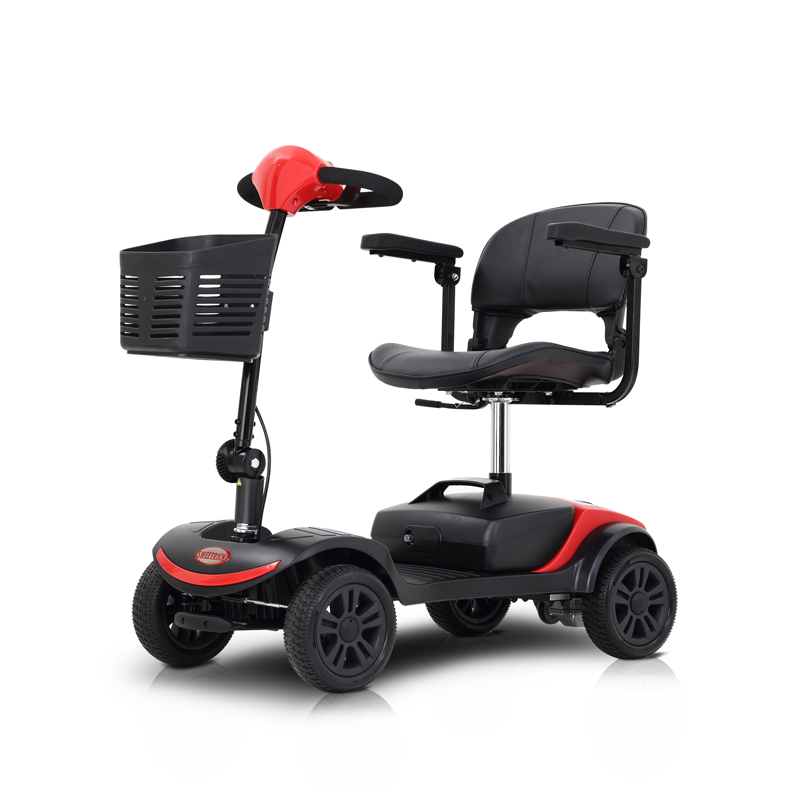
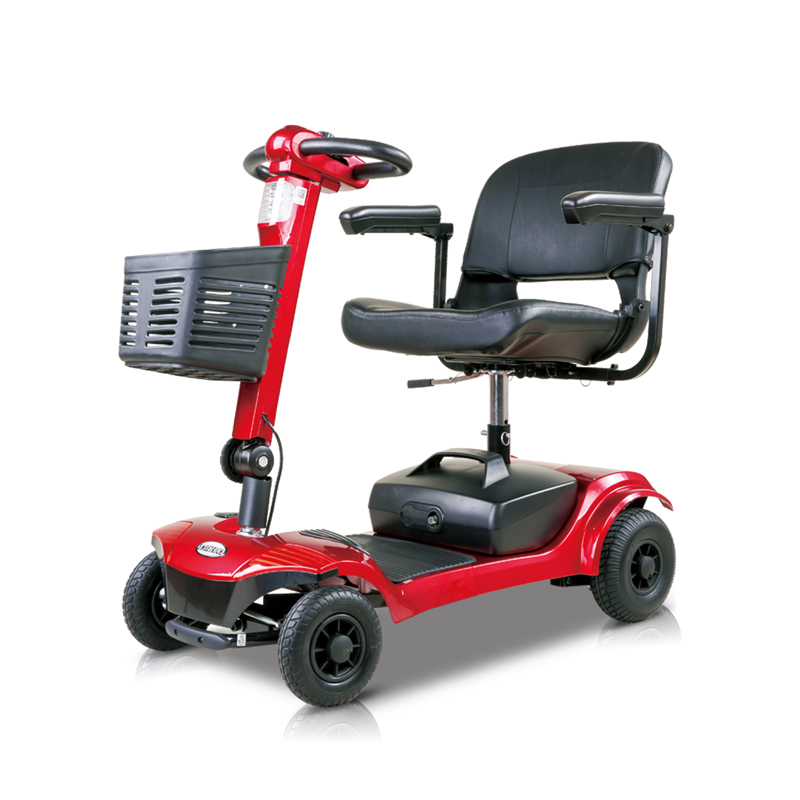
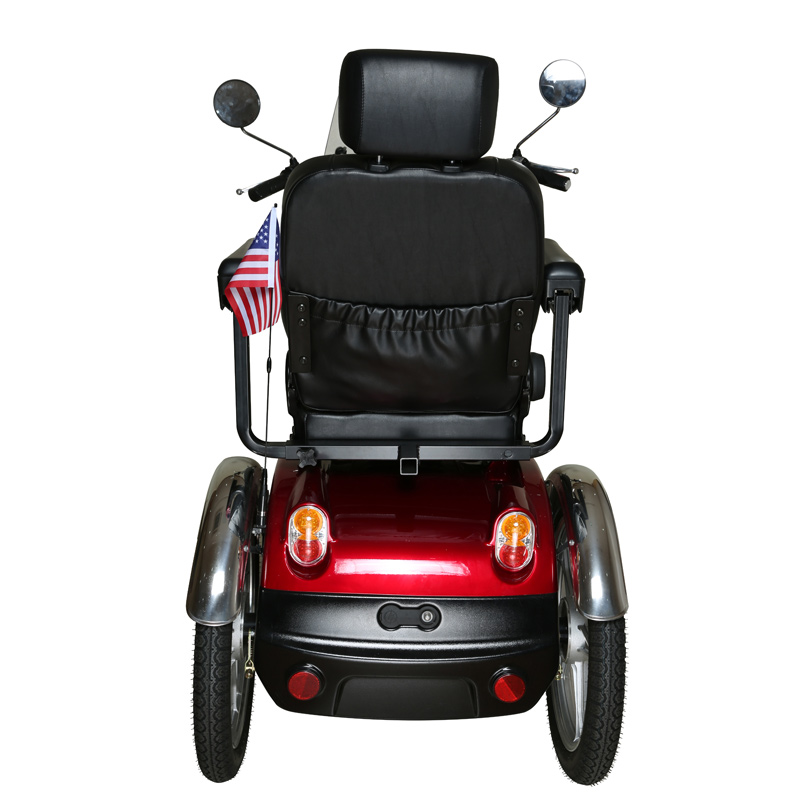
One category leans toward lightweight construction and tight turning for use inside homes, stores, and other confined areas. A Portable 3 Wheel Scooter fits this description. The frame uses lighter materials, and the turning radius runs tighter. The scooter can pivot in spaces where other models would struggle.
The other category puts more emphasis on range and carrying capacity. A Travel 3 Wheel Scooter sacrifices some maneuverability to gain longer battery life and the ability to handle heavier riders. The frame runs heavier, the turning circle widens, and the overall footprint grows. These features serve outdoor use well but create challenges indoors.
How Turning Radius Affects Movement in Tight Spaces
Turning radius determines how much room a scooter needs to change direction. A smaller radius means the scooter can turn in less space. That matters in narrow hallways, crowded stores, and rooms with furniture placed close together.
Models designed for indoor use typically turn in about 32 to 33 inches. The scooter rotates around a tight pivot point, making it possible to navigate doorways without backing up. The user can move through a house or apartment without having to plan each turn in advance.
The travel-oriented models turn in about 36 to 39 inches. Those extra inches mean the scooter needs more room to complete a turn. In a narrow hallway, the difference becomes noticeable. The rider may need to stop, adjust position, and try again to get through a doorway or around a corner.
| Model Type | Typical Turning Radius | Typical Overall Width | Weight Range |
|---|---|---|---|
| Indoor-focused model | 32–33 inches | 20–22 inches | 45–95 lbs |
| Travel-oriented model | 36–39 inches | 22–23 inches | 85–150 lbs |
Why Overall Width Matters for Doorways and Hallways
The width of a scooter determines whether it fits through standard doorways. Many interior doors measure between 30 and 32 inches wide. A scooter that passes through without scraping the frame makes everyday movement easier.
Indoor-focused models measure about 20 to 22 inches across. The width leaves several inches of clearance on each side when passing through a standard doorway. The user does not need to slow down or approach at a precise angle.
The travel-oriented models run about 22 to 23 inches wide. The difference of an inch or two does not sound like much, but in a narrow hallway or a tight doorway, that extra width can cause problems. The user may need to line up carefully before passing through and may still scrape the door frame.
The effect shows up in daily use. A scooter that fits easily through doors encourages the user to move freely around the home. One that requires careful alignment may make the user avoid certain rooms or passages.
What Role Weight Plays in Indoor Usability
Weight affects how easily the user can move the scooter when not riding. A lighter scooter can be lifted into a car trunk, carried over a threshold, or shifted out of the way. The effort required stays manageable for many users.
The models designed for indoor use typically weigh between 45 and 95 pounds. The lighter weight means the user can reposition the scooter without assistance. That matters in a home where space changes throughout the day, like moving a scooter to make room for a table or clearing a path for someone else.
The travel-oriented models weigh 85 to 150 pounds. The added weight provides stability on uneven outdoor surfaces and supports heavier riders, but the extra pounds make the scooter harder to lift and move. Users with limited upper body strength may find it difficult to load a heavier scooter into a vehicle or shift it around the house.
Ground clearance measures the distance between the bottom of the scooter and the floor. Lower clearance keeps the scooter stable on flat indoor surfaces. Higher clearance helps the scooter roll over bumps and uneven ground outside.
Indoor-focused models sit lower to the ground. The reduced height makes the scooter more stable during turns and stops. The rider feels secure moving across smooth floors and carpets. Lower clearance also means the scooter is easier to get on and off.
Travel-oriented models raise the deck higher off the ground. The added clearance protects the undercarriage from rocks, curbs, and rough pavement. That feature works well outdoors, but the higher stance can feel less stable indoors. The rider sits slightly higher, and the center of gravity shifts upward.
The trade-off between clearance and stability shows up in everyday use. A scooter that sits low feels planted and predictable inside the home. A scooter that sits high may feel less secure when turning in tight spaces.
Why a Portable 3 Wheel Scooter Prioritizes Indoor-Friendly Features
Every design choice involves some give and take. The scooter built for indoor use makes specific trade-offs to serve that environment well. Quick disassembly stands out as a key feature. The scooter breaks down into pieces that fit in a car trunk or a closet.
Weight reduction runs through the design. Lighter frames, smaller batteries, and thinner materials all contribute to a lower overall weight. The scooter becomes something the user can handle without help.
The smaller footprint makes placement easier. A scooter that fits in a corner or beside a bed takes up less of the limited floor space in a home. The user does not have to rearrange furniture to accommodate the scooter.
These features come with a cost. The scooter has a shorter range and lower top speed than travel-oriented models. But for indoor use, those limitations matter less than the benefits of compact size and light weight.
A few indoor-friendly features found on a Portable 3 Wheel Scooter:
- Quick disassembly for compact storage
- Lightweight components for easier handling
- Narrow profile for door clearance
- Tight turning radius for room navigation
- Low step-in height for easy mounting
When a Travel 3 Wheel Scooter Might Still Work Indoors
Not every home presents the same challenges. Some houses have wide doorways, open floor plans, and generous hallways. A travel-oriented scooter may navigate those spaces without difficulty. The added size does not create the same problems it would in a smaller home.
Some travel-oriented models offer features that support mixed-use. Wider wheelbases provide stability. Higher weight capacities serve larger riders. Longer ranges reduce the frequency of charging. For users who need these features, the extra size may be worth the trade-off.
Examples of mixed-use scooter features:
- Wider doorways in the home may accommodate larger models
- Outdoor use as the primary purpose with occasional indoor navigation
- Heavier frames that provide outdoor stability
- Higher weight capacity for larger riders
What to Consider Before Choosing Between Portable and Travel Models
Indoor use frequency should drive the decision. A scooter used in the home every day needs tight turning and narrow width.
Doorway and hallway dimensions in the home set limits on what will fit. A tape measure provides a more reliable answer than a guess. Measuring the narrowest passage in the home gives a clear picture of what width the scooter must not exceed.
Lifting and transport needs affect the choice. A user who needs to lift the scooter into a vehicle frequently will benefit from a lighter frame. One who rarely moves the scooter may not mind the extra weight.
Range and battery life matter for outdoor use. A scooter that runs out of charge halfway through a trip creates frustration. A scooter with enough range to cover the user's typical outdoor routes makes the trip enjoyable.
A few questions worth asking before making a choice:
- How many hours per day will the scooter run indoors?
- What is the width of the narrowest doorway in the home?
- Does the user need to lift the scooter into a vehicle often?
- How far does the user typically travel on outdoor trips?
- Does the user require a higher weight capacity?
The choice between scooter types should reflect the user's actual needs rather than a general preference. A scooter that fits the home and the lifestyle will get used more often and serve the user better over time. The right scooter makes daily movement easier, and that is what matters.