 info@sweetrich.cn
  +86-(0)512-82283871
Content
- 1 Why the Rear Brake Matters for Scooter Handling
- 2 Materials That Keep Braking Steady Over Time
- 3 Layout Choices That Spread Force Evenly
- 4 Features That Let Riders Adjust Braking Force
- 5 Smooth Signal Transfer for Prompt Engagement
- 6 Contact Area and Friction Build-Up
- 7 Automatic Adjustment for Pad Wear
- 8 Rider Control and Feedback
- 9 Routine Care That Keeps Performance Steady
- 10 Typical Issues and Fixes
- 11 Evolving Approaches in Brake Design
- 12 Environmental and Riding Conditions
- 13 Rider Habits That Extend Brake Life
- 14 Sweetrich Mobility
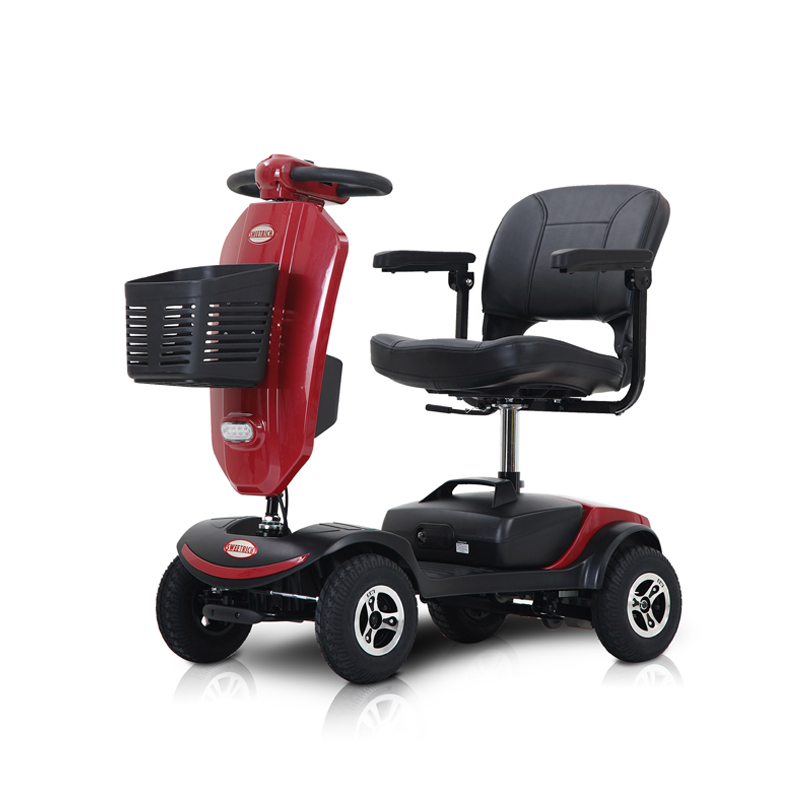
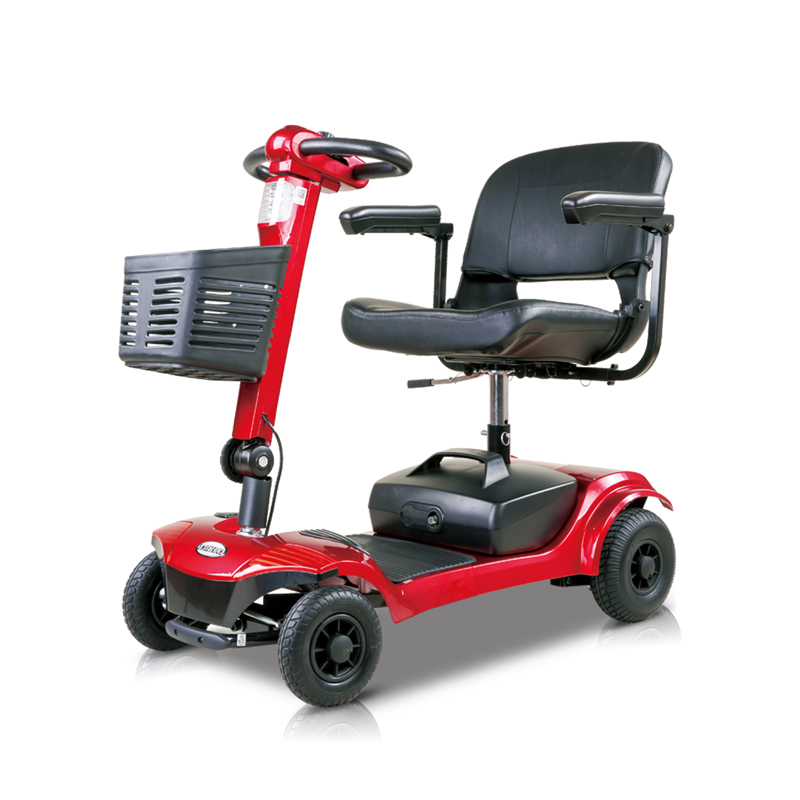
The rear brake system forms a vital part of safety and control on a four-wheel scooter from Foldable Scooter Factory. Riders count on it to slow the vehicle in a smooth, predictable way and bring it to a complete stop when needed. How well this system delivers balanced deceleration and immediate response shapes the overall sense of security during rides, whether on flat paths, gentle inclines, or in crowded areas.
Stability in braking means the scooter comes to rest in a straight line without sudden sideways movement or wheel lock-up. Sensitivity refers to the speed and accuracy with which the brakes engage once the rider activates the lever or pedal. Together, these qualities allow the rider to adjust speed confidently and react promptly to changing conditions.
Why the Rear Brake Matters for Scooter Handling
Four-wheel scooters provide natural balance compared with two-wheel designs, but that balance still depends on effective speed control. The rear brake manages a significant share of the stopping effort because body weight shifts backward when deceleration begins. If the rear system applies force unevenly or with noticeable delay, the scooter can pitch forward, lose grip on one wheel, or drift off the intended path.
Stable braking keeps the vehicle traveling straight during stops. Force reaches both rear wheels in a balanced way, so the scooter does not twist or skid. Sensitive braking means the friction material presses against the wheel almost the instant the rider moves the control. This rapid engagement shortens stopping distance and helps avoid hazards or sudden obstacles.
Both characteristics lower the chance of unexpected loss of control. Beginners, younger riders, and people with reduced grip strength gain particular benefit from brakes that behave in a consistent, easy-to-predict manner. Experienced riders also rely on dependable performance when carrying extra weight or traveling over uneven ground.
Materials That Keep Braking Steady Over Time
The friction material that contacts the wheel—whether a pad, shoe, or block—must endure repeated use without losing its ability to grip or wearing away too quickly. Compounds chosen for rear brakes resist abrasion so they hold their shape and effectiveness after many thousands of stops. At the same time, they need to produce reliable friction across a range of operating temperatures.
Heat rises quickly during repeated stops or when slowing from higher speeds. Materials that retain grip when warm help prevent a sudden drop in braking power. Certain compounds include reinforcing fibers that keep the pad intact under load, while others add small amounts of lubricant to quiet engagement and smooth the feel.
The backing plate or shoe that supports the friction material resists bending or warping from sustained pressure and heat. Steel or aluminum alloys often serve this purpose because they maintain shape and help move heat away from the contact surface. Cables, outer housings, pivot pins, and return springs also require durable construction. Stainless steel strands inside cables resist stretching and corrosion. Low-friction liners inside housings keep movement smooth. These material decisions together help the brake deliver steady force without abrupt changes in behavior.
| Component | Primary Material(s) | Key Benefits / Functions |
|---|---|---|
| Backing plate / Shoe | Steel or aluminum alloys | Resists bending & warping; Dissipates heat; Maintains shape under pressure & heat |
| Brake cable (inner) | Stainless steel strands | Resists stretching and corrosion |
| Cable outer housing | (Housing + low-friction liner) | Low-friction liner ensures smooth cable movement |
| Pivot pins | Durable construction | Ensures reliable, long-term operation |
| Return springs | Durable construction | Maintains consistent brake behavior |
Layout Choices That Spread Force Evenly
The physical arrangement of rear brake parts helps create balanced deceleration. Many designs position friction elements on opposite sides of the wheel so clamping force acts symmetrically. This even pressure reduces the chance of the scooter pulling to one side during firm stops.
Mounting arms and brackets hold the pads or shoes in precise alignment with the braking surface. Misalignment can cause one pad to touch or press more heavily, to vibration, noise, or directional pull. Rigid connections between the brake assembly and the scooter frame limit flex that might otherwise shift pad position under load.
In disc-style brakes, the caliper straddles the rotor and presses pads from both sides. The caliper body often floats or slides slightly so equal force reaches each pad. Drum-style brakes use expanding shoes inside a rotating drum, with springs and adjusters that keep the shoes centered and balanced. Both layouts aim to distribute force uniformly across the contact area.
Wheel hubs and axles also play a part in balance. Strong, precisely machined hubs resist deflection that could alter the gap between the braking surface and the friction material. A wheel that runs true keeps pad-to-surface clearance consistent, supporting even braking.
Features That Let Riders Adjust Braking Force
Most rear brake systems include ways for riders or technicians to tune the amount of force applied. Cable tensioners allow setting the resting gap between pads and the wheel. This gap affects how quickly the brakes engage when the lever moves.
Some designs offer mechanical advantage adjustments at the lever or pedal. Shifting the pivot point or linkage ratio changes how much force reaches the pads for a given hand or foot effort. Riders with smaller hands or less strength can increase leverage for easier activation without reducing stopping power.
In hydraulic systems, master cylinder size and piston ratios serve a similar purpose. Larger bores move more fluid per lever stroke, resulting in faster pad movement. These adjustments let riders match the brake feel to their weight, riding style, and typical surfaces.
Periodic adjustment forms part of routine care. As pads wear, clearance grows unless compensated. Tightening cables or bleeding hydraulic lines keeps the system responsive and balanced.
Smooth Signal Transfer for Prompt Engagement
The rider's command needs to reach the brake pads or shoes without delay or wasted effort. Cable systems depend on a smooth-running inner wire inside its outer sleeve; low-friction sleeves and well-sealed cable ends cut resistance so even a gentle squeeze moves the friction material right away. Routing keeps the cable away from sharp turns that would pinch or stretch it, and properly placed clips and guides protect it from damage while allowing free movement. Light, regular lubrication at every pivot point prevents sticking and keeps the action crisp. Hydraulic brakes use fluid to carry pressure from the hand lever straight to the caliper or wheel cylinder, giving almost immediate response with virtually no lag. The flexible hoses handle suspension travel and steering movement without adding drag or losing pressure. Whether cable or hydraulic, the goal is zero lost motion. Any stretch, slack, or air bubble lengthens the lever pull and blunts the feel, so careful setup and adjustment deliver precise, immediate control over how hard the brakes bite.
Contact Area and Friction Build-Up
Braking power builds fastest when a large, well-matched surface area presses the friction material against the wheel or rotor. More contact area means more grip for the same amount of force, letting the rider achieve strong deceleration without squeezing hard. Pads and shoes are usually contoured to fit the curve of the rim, disc, or drum closely, spreading pressure evenly across as much surface as possible. In disc brakes the pads cover a generous portion of the rotor; in drum brakes the shoes arc tightly against the inside of the drum. The choice of friction material is critical—compounds that bite reliably when cold and stay effective as heat builds provide steady, predictable response. The braking surface itself must remain smooth, clean, and undistorted so contact stays uniform. Even pressure distribution across the entire pad face avoids hot spots, glazing, or rapid localized wear.
Automatic Adjustment for Pad Wear
Friction material gradually wears thinner with every stop, which would normally increase the gap and force the rider to pull the lever farther before anything happens. Most rear brake setups include self-adjusting mechanisms that quietly take up this extra clearance to keep lever travel short and response quick. Mechanical adjusters often rely on ratchets, star wheels, or spring-loaded cams that sense the extra travel on each application and advance the shoes or pistons a tiny amount. Hydraulic systems commonly use self-centering pistons in floating calipers or automatic piston seals that maintain a consistent small running gap as pads thin. These adjusters have to work reliably day after day; if they seize or slip, the pedal or lever becomes long and mushy. A quick visual check during routine service confirms the mechanism is still advancing smoothly and holding position.
Rider Control and Feedback
The brake lever or pedal is where the rider feels and controls everything. A good design gives clear, progressive feedback—light initial bite that grows stronger and more definite as the lever is pulled farther—so the rider can fine-tune stopping power easily. Adjustable lever reach fits hands of different sizes, and comfortable grips or pedal shapes reduce fatigue on longer rides. This direct, understandable feedback is especially helpful when descending hills, stopping in traffic, or making small speed corrections, letting the rider apply exactly the right amount of brake without overdoing it.
Routine Care That Keeps Performance Steady
Regular attention keeps the brakes sharp and dependable. Simple visual inspections reveal pad thickness, cable wear, hose cracks, fluid condition, and any corrosion or damage. Cleaning away dust, road grime, or brake dust prevents it from reducing grip or jamming moving parts. Cables and pivot points benefit from light lubrication to stay smooth, while hydraulic fluid should be checked for proper level and contamination. Periodic adjustments verify correct clearance and even braking force on both sides. Pads or shoes should be replaced before they wear down to the danger point to protect the rotor, drum, or rim from scoring. Following the recommended service schedule—especially after riding through rain, mud, dust, or salted roads—catches small problems early and maintains safety.
Typical Issues and Fixes
Squealing, grinding, or chatter usually comes from contamination, glazed pads, or slight misalignment. Cleaning the braking surfaces and lightly roughening glazed friction material often quiets things down. Dull or delayed response frequently points to a stretched cable, air trapped in hydraulic lines, or a stuck adjuster. Replacing the cable, bleeding the system, or freeing the adjuster restores quick, firm engagement. If the scooter pulls to one side during braking, the cause is often uneven pad wear or a misaligned caliper; correcting the clearance or replacing worn parts on the weak side fixes the imbalance.
A pulsing or vibrating sensation typically means a warped rotor or out-of-round drum—resurfacing (when possible) or replacement eliminates the feedback.
Evolving Approaches in Brake Design
Brake technology for scooters keeps moving forward. Some newer models include electronic brake-force distribution or anti-lock features that use wheel-speed sensors to prevent lock-up on slick surfaces and maintain steering control.
Advanced lightweight materials reduce rotating and unsprung weight for quicker, more responsive feel. Improved friction compounds deliver stronger wet-weather grip, quieter operation, and less dust buildup. Onboard diagnostics in some scooters now notify the rider—through warning lights, displays, or smartphone alerts—when pads are getting low or when another service issue appears, helping keep the brakes in top shape with less guesswork.
Environmental and Riding Conditions
The riding environment shapes brake requirements. Wet roads demand friction materials that still grip effectively when soaked. Dusty or sandy trails accelerate wear, so sealed components and better dust shields become important. Heavy payloads, steep hills, or frequent hard stops create high heat loads, calling for larger surface areas, better ventilation, or heat-resistant materials to resist fade.
| Riding Environment | Key Challenge | Brake Requirement / Solution |
|---|---|---|
| Wet roads | Reduced grip when soaked | Friction materials with strong wet-weather performance |
| Dusty or sandy trails | Accelerated wear & contamination | Sealed components + enhanced dust shields |
| Heavy payloads | Increased heat & load | Larger surface areas + heat-resistant materials |
| Steep hills | High heat from prolonged braking | Better ventilation + fade-resistant compounds |
| Frequent hard stops | Rapid heat buildup | Larger contact area + heat-dissipating design |
Scooters built for varied or tough conditions benefit from brakes that stay consistent across rain, heat, cold, and changing loads without sudden changes in feel or power.
Rider Habits That Extend Brake Life
Thoughtful riding habits make a big difference in how long brakes last and how well they perform. Using both front and rear brakes together—in proper balance—spreads the workload, reduces the chance of skidding, and evens out pad wear. Anticipating stops and applying gradual, controlled pressure improves modulation and avoids harsh, unnecessary wear.
Taking time to practice braking in a safe area helps the rider develop a clear sense of how the system responds. Sticking to the manufacturer's maintenance and adjustment recommendations ensures the brakes continue to work the way they were designed to.
Sweetrich Mobility
Sweetrich Mobility brings that same level of thoughtful engineering to its four-wheel scooters, where dependable rear brakes form the foundation of safe, everyday independence. Riders who choose these models experience braking that responds instantly and predictably, whether navigating a quiet neighborhood path, handling a gentle incline, or making a quick stop at the store. The combination of precise signal transfer, consistent friction, and automatic adjustments means less worry about performance fading over time, letting users focus on the freedom and confidence that comes with reliable mobility.
For anyone seeking practical, well-built scooters designed with real-world needs in mind, Sweetrich continues to deliver braking systems that support active, comfortable days without compromise.