 info@sweetrich.cn
  +86-(0)512-82283871
Content
- 1 Why Safety Belt Design Matters In A Portable 3 Wheel Scooter
- 2 How Safety Belt Structure Supports Everyday Riding
- 3 Which Materials Improve Safety Belt Performance
- 4 How Safety Belt Design Works With The Seat
- 5 How Belt Adjustment Influences Rider Stability
- 6 Why Safety Belt Design Becomes More Critical In A Lightweight 3 Wheel Scooter
- 7 How Daily Inspection Helps Maintain Safety Belt Performance
- 8 Which Design Considerations Continue To Shape Safety Belt Development
Design priorities in personal mobility equipment have gradually shifted from simple transportation toward everyday usability. A rider may travel only a short distance, although posture changes continuously from departure to arrival. Entering a doorway, passing over a pavement joint, slowing before a crossing, or making a gradual turn all create small body movements that repeat throughout normal use. None of those actions appears dramatic on its own, although together they influence riding stability far more than many people expect.
A safety belt becomes part of that movement instead of acting as an isolated component. Once properly positioned, restraint follows natural changes in body posture while helping reduce unnecessary displacement inside the seating area. Comfort and protection grow from steady support rather than excessive restraint, making overall design dependent on how individual components interact throughout an ordinary journey.
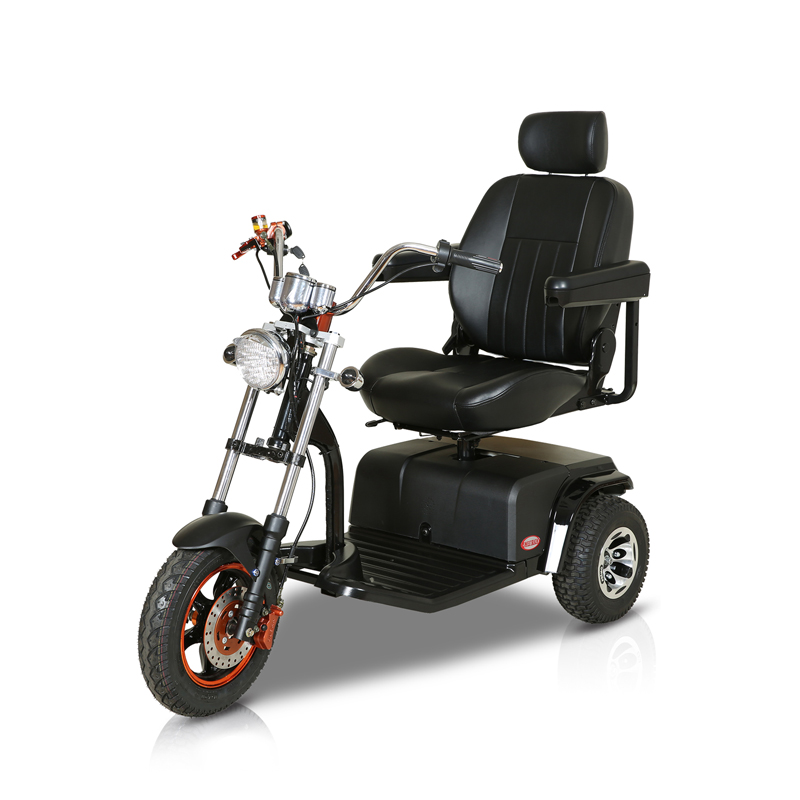
Development of the Portable 3 Wheel Scooter increasingly reflects that philosophy. Seat geometry, belt routing, attachment locations, and riding posture are now considered during the same design process because each element influences the others long after manufacturing has finished.
Why Safety Belt Design Matters In A Portable 3 Wheel Scooter
Body position rarely remains unchanged during travel. Small variations appear whenever direction changes, speed decreases, or surface conditions vary. Gradual movement from side to side or slightly forward may seem insignificant, although repeated shifts slowly affect riding comfort and seating stability.
Safety belts are intended to manage movement rather than eliminate it. Natural posture still requires freedom to adjust, especially during ordinary travel where riders frequently reach for controls, turn their heads, or reposition their arms. Excessive restraint may reduce comfort, while insufficient restraint allows larger body movements that influence seating stability.
Engineers often describe rider restraint as part of weight management rather than body restriction. Keeping body mass closer to its intended position allows seat support and steering controls to perform under more predictable conditions. Such an approach reduces continuous posture correction during routine travel, allowing attention to remain focused on surroundings instead of body balance.
- Supporting stable sitting posture.
- Limiting unnecessary upper-body displacement.
- Allowing comfortable everyday movement.
- Encouraging consistent restraint use.
- Maintaining reliable positioning throughout ordinary travel.
Attention usually remains focused on achieving balance between restraint and mobility instead of increasing holding force alone.
How Safety Belt Structure Supports Everyday Riding
Visual simplicity often hides considerable design work. Belt webbing, stitching, buckle construction, adjustment hardware, and mounting locations each influence rider support from a different direction.
Webbing responds continuously as body posture changes. Flexible construction allows gradual movement without creating concentrated pressure across one section of the torso. Twisting or uneven tension becomes less likely when material follows body contours naturally during ordinary operation.
Attachment geometry shapes restraint behaviour long before a rider notices it. Mounting points positioned along suitable angles allow force to spread across a broader area instead of collecting near one edge. Distribution becomes especially noticeable during turning or gentle braking where body weight changes direction rather than magnitude.
Buckle placement affects everyday habits as much as structural performance. Fastening becomes easier when access remains convenient from a seated position. Releasing restraint after travel should require little effort while remaining secure throughout normal operation.
None of those details attracts immediate attention individually. Combined together, they determine whether restraint feels natural after repeated daily use.
Which Materials Improve Safety Belt Performance
Material selection begins with ordinary use rather than laboratory conditions. Repeated fastening, changing clothing, seasonal temperature variation, and continuous adjustment all influence long-term behaviour, making durability only one part of material evaluation.
Flexible fibres generally adapt more easily to changing body posture while maintaining consistent contact across a wider surface. Pressure spreads more evenly, allowing restraint to remain comfortable during longer periods of use without encouraging frequent repositioning.
Stitching contributes more than structural connection. Sewing quality influences how webbing keeps its original shape after repeated adjustment. Distortion developing along stitched sections may gradually affect belt alignment, even though surrounding materials remain unchanged.
Seat covering also participates in rider restraint. Surface texture determines how clothing moves across the cushion before the safety belt begins carrying additional load. Balanced interaction between both materials allows body position to remain relatively stable during ordinary riding.
| Material Characteristic | Influence During Everyday Operation |
|---|---|
| Flexible webbing | Follows changing body posture |
| Smooth surface texture | Improves long-term comfort |
| Consistent stitching | Helps maintain belt alignment |
| Stable fibre structure | Supports repeated adjustment |
| Suitable interaction with seat covering | Reduces unnecessary body movement |
Reliable restraint rarely depends on one material alone. Consistency develops from how every material responds after assembly rather than from individual properties considered separately.
How Safety Belt Design Works With The Seat
Seat and restraint gradually become one functional system after a rider sits down. Cushion shape determines body position, while belt routing helps maintain that position throughout normal travel. Separation between both elements exists mainly during manufacturing because everyday use combines their functions almost immediately.
Support begins around the lower body where posture naturally develops. Once body weight settles into a stable position, restraint requires fewer corrections during braking, turning, or travelling across uneven surfaces. Smaller posture changes allow movement to remain smooth without producing unnecessary tension across the belt.
Routing deserves equal attention during product development. Straight paths between mounting locations reduce twisting while allowing adjustment to remain consistent from one journey to another. Even tension also helps distribute contact across a broader area instead of concentrating restraint near one point.
Cushion firmness influences body movement before restraint becomes fully engaged. Excessively soft seating permits greater displacement, while a rigid surface may reduce riding comfort during extended use. Moderate support allows natural posture without encouraging unnecessary sliding inside the seating area.
Rather than treating seat and safety belt as separate assemblies, many development teams evaluate both together during early design stages, allowing rider posture, seating comfort, and restraint performance to evolve as parts of one coordinated structure.
How Belt Adjustment Influences Rider Stability
Adjustment systems often receive less attention during early design discussions, although actual riding behaviour depends heavily on how easily restraint can adapt to different body shapes and seating positions. A belt that cannot be adjusted smoothly tends to create uneven contact points, which gradually affects how force spreads across the torso during movement.
Positioning of adjustment hardware plays a quiet role in daily use. When adjustment remains accessible from a seated posture, riders tend to correct tension more naturally before travel begins. Poor placement helps to inconsistent tightening, which later shows up during braking or turning when body movement becomes more noticeable.
Length variation also influences stability. A narrow adjustment range limits how well the restraint adapts across different riders, while an overly loose system reduces predictable support during direction changes. Balance usually sits between those two conditions, where movement remains controlled without feeling restrictive.
In a Portable 3 Wheel Scooter, adjustment consistency becomes more noticeable because frequent starts and stops create repeated posture shifts. Each small correction adds up over time, making stable adjustment design part of everyday riding comfort rather than a secondary detail.
Why Safety Belt Design Becomes More Critical In A Lightweight 3 Wheel Scooter
Reduction in structural weight changes how motion is transmitted through the scooter frame. Movement that would normally be absorbed by heavier structures becomes more visible in lighter configurations, shifting greater responsibility toward seating and restraint systems.
A Lightweight 3 Wheel Scooter often responds more quickly to rider input, which can create sharper transitions during turning or braking. Safety belt systems help moderate those transitions by keeping upper-body movement closer to the seat, reducing abrupt shifts that may occur during frequent direction changes.
Material reduction in frame construction does not automatically reduce stability, although it increases dependence on design coordination. Seat geometry, belt anchoring, and rider posture alignment begin to carry more influence over overall control feel. In many cases, restraint design becomes part of stabilisation rather than only a safety feature.
- Consistency of rider position during movement
- Controlled response during directional changes
- Predictable interaction between seat and restraint
The restraint system does not compensate for structure alone. Instead, it becomes part of how motion is managed across the entire seating area during daily travel.
How Daily Inspection Helps Maintain Safety Belt Performance
Restraint systems undergo repeated stress cycles during ordinary use, although visible wear may not appear immediately. Regular inspection often focuses on small details that influence long-term reliability more than surface appearance.
Buckle operation tends to be one of the points checked. Smooth locking and release behaviour indicates stable internal structure, while hesitation or irregular movement may suggest accumulated wear inside the mechanism. Attention at this stage helps maintain consistent function during everyday fastening.
Webbing condition also requires observation. Slight fraying along edges or changes in surface texture may affect comfort and alignment over time. Since belt material interacts directly with rider posture, even minor irregularities can influence how pressure spreads during movement.
Attachment points deserve similar attention. Connection areas between seat frame and restraint system experience repeated load transfer, especially during braking or turning. Stability in those areas supports consistent belt behaviour throughout daily use.
- Buckle responsiveness during fastening and release
- Webbing surface condition after repeated use
- Attachment stability at mounting points
- Alignment consistency when belt is tightened
- Seat connection integrity under light tension
Routine checks do not change structural design, although they help preserve expected behaviour over extended use.
Which Design Considerations Continue To Shape Safety Belt Development
Restraint design continues evolving alongside seating architecture and rider behaviour patterns. Changes are often subtle, driven by accumulated observations from everyday use rather than sudden design shifts.
Ergonomic seating remains closely connected with belt positioning. As seat shapes adapt to natural posture, restraint routing must follow those changes to maintain alignment without introducing unnecessary tension. Small adjustments in seat contour often help to corresponding changes in belt angle or mounting position.
Material development also influences restraint behaviour. Gradual improvements in fibre flexibility and stitching consistency allow belts to move more naturally with body posture, reducing stiffness during frequent use cycles.
Integration between seat and restraint systems becomes more common in modern design approaches. Instead of treating belt systems as separate components added at later stages, coordination begins earlier in the design process where seating geometry and rider movement patterns are still being defined.
- Interaction between seating shape and restraint routing
- Response of materials under repeated motion
- Balance between mobility and controlled positioning
- Adaptation to different rider postures without redesign
Development trends tend to move quietly rather than dramatically, reflecting small refinements that accumulate across design cycles.
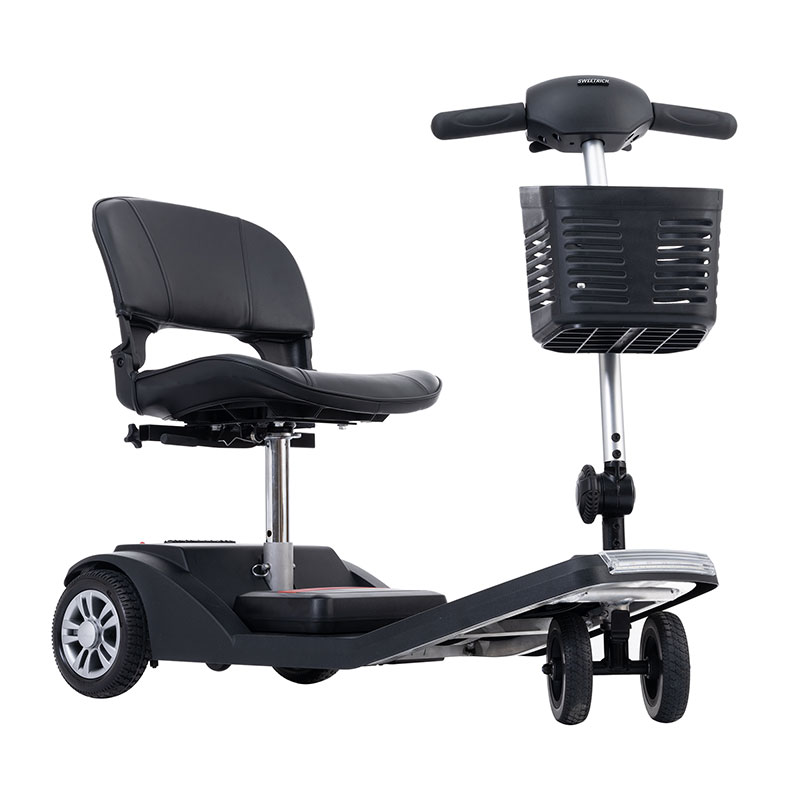
Safety belt performance in a Portable 3 Wheel Scooter emerges from how well restraint design follows natural movement rather than resisting it. Adjustment structure, material selection, seat interaction, and lightweight frame behaviour all contribute to how rider position remains stable during daily travel.
In Lightweight 3 Wheel Scooter configurations, restraint systems carry additional importance because reduced structural mass shifts more influence toward seating and rider interface design. Stability therefore depends less on individual components and more on how each part responds during continuous motion.