 info@sweetrich.cn
  +86-(0)512-82283871
Content
- 1 How to Maintain the Battery and Motor of Your Elderly Electric Folding Scooter
- 2 Why Are Battery And Motor Care Important For Daily Mobility
- 3 What Factors Gradually Affect Battery Health
- 4
- 5 How Can Proper Charging Habits Support Battery Longevity
- 6 What Storage Conditions Help Protect Battery Performance
- 7 How Does The Motor Influence Overall Riding Experience
- 8 Which Maintenance Practices Help Reduce Motor Wear
- 9 How Do Driving Habits Affect Both Battery And Motor Condition
- 10 What Warning Signs Should Users Never Ignore
- 11 How Are China Mobility Scooter Manufacturers Improving Maintenance Friendly Designs
- 12 What Maintenance Routine Can Support Long Term Reliability
How to Maintain the Battery and Motor of Your Elderly Electric Folding Scooter
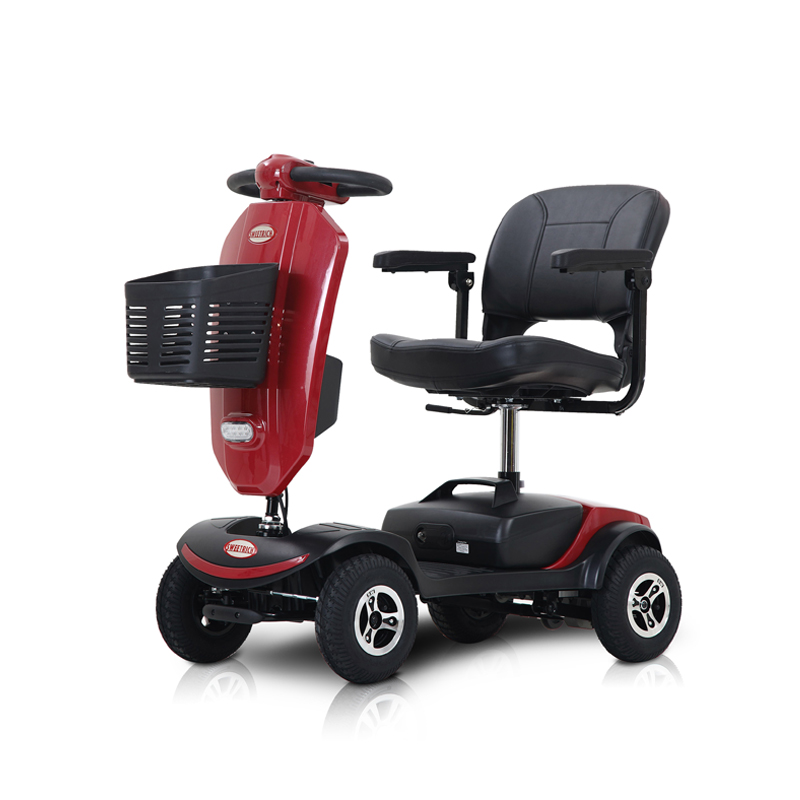
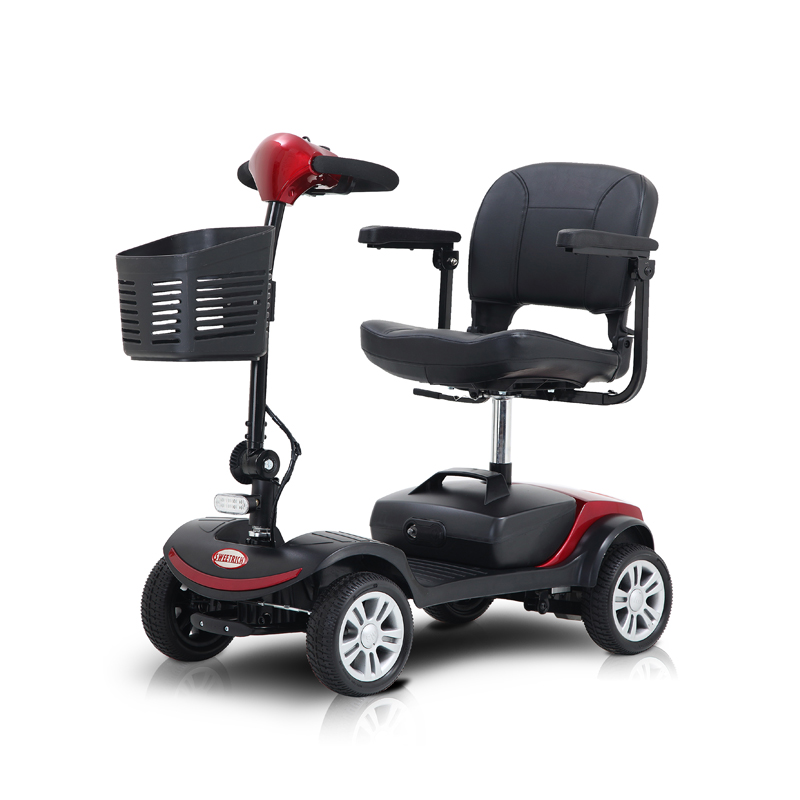
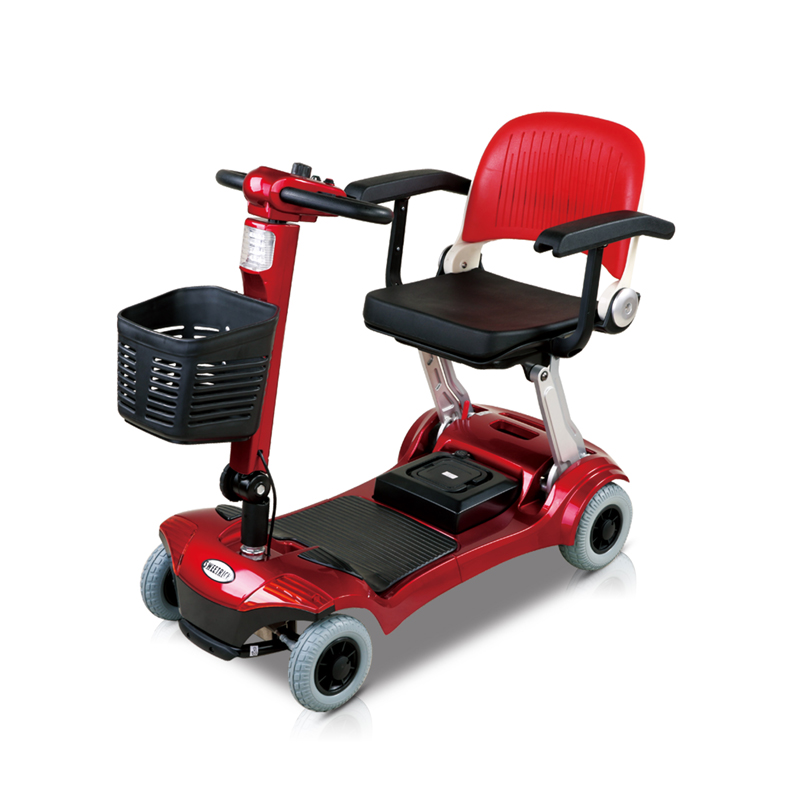
Electric folding scooters used for short distance travel usually look simple from the outside, yet the real work happens inside where power storage and motion control stay in constant coordination. The Elderly Electric Folding Scooter depends mainly on two parts, a battery that holds energy and a motor that turns that energy into movement. Once daily use becomes routine, attention slowly shifts from comfort or appearance to how stable these two parts remain after repeated charging, stopping, starting, and storage.
Inside the system, energy does not travel in a straight line without resistance. It moves from the battery, passes through control parts, and reaches the motor where it becomes motion. Every small change along this path can influence how the scooter feels during use. A slightly weaker battery output may show up as slower response, while extra resistance in the motor may pull more energy than expected. None of these changes appear suddenly in many cases. They build quietly through repetition, which is why maintenance often matters more than repair.
Why Are Battery And Motor Care Important For Daily Mobility
A folding scooter cannot move unless two conditions work together at the same time. The battery needs to release energy in a stable way, and the motor needs to turn that energy into smooth movement. When both sides remain balanced, travel feels steady even when the surface changes. Once that balance starts to shift, movement may still continue, yet it often feels less consistent.
Daily travel is rarely uniform. There are stops at crossings, slow movement in crowded areas, and faster sections on open paths. Each change forces the system to adjust. Over time, repeated adjustments create wear that is not visible. A battery that no longer releases energy evenly may cause hesitation during acceleration. A motor under constant load may respond with slight delay or vibration.
The connection between both parts is important because they affect each other continuously. If the battery output becomes less steady, the motor has to compensate during movement. If the motor begins to resist more than usual, the battery drains faster. This interaction is not something that happens once, it repeats during every ride, which explains why small issues can spread into larger changes over time.
What Factors Gradually Affect Battery Health
Battery condition does not change overnight. It shifts slowly based on how it is used, stored, and exposed to the environment. Some of these influences are easy to overlook because they do not cause immediate problems.
Temperature is one of the more noticeable influences. When the surrounding air becomes warm, internal activity inside the battery increases slightly, which can add stress over long periods. Cold environments affect it in a different way, where available energy may feel weaker during use. Moving between these conditions repeatedly does not cause instant damage, yet it can influence long-term stability.
Storage is another point that often gets ignored. Even when not in use, a battery slowly changes condition depending on its surroundings. Leaving the scooter unused for long periods without any preparation may allow gradual energy loss or uneven internal balance. Dust and moisture around connection areas can also affect performance later, even if everything appears fine on the surface.
There are some signs that often appear before real decline becomes clear:
- Charging time starts to feel less predictable
- Travel distance does not stay consistent
- Power feels slightly uneven during acceleration
- After long storage, performance feels different
- Dust or residue begins to collect near connectors
None of these signs mean immediate failure, but they usually suggest that conditions around the battery are not ideal anymore.
How Can Proper Charging Habits Support Battery Longevity
Charging is one of those routines that looks simple but has a strong influence on battery condition over time. It is not only about connecting the charger, but also about when and how often that action happens.
Allowing the battery to drop too low repeatedly can place extra stress on the next charging cycle. On the other hand, charging at very random intervals can create uneven energy flow patterns. Over time, the battery responds better to a routine that stays relatively stable, even if the timing is not exact.
Heat during and after use also plays a role. After riding, parts of the system may still carry warmth. Connecting the charger immediately is not always ideal, since energy transfer works more smoothly when conditions are stable. A short waiting period after stopping often helps reduce unnecessary strain.
Where charging takes place also matters. Areas with good airflow and low moisture tend to support more stable electrical contact. Spaces that are too humid or exposed to direct heat can slowly affect both the charger connection and surrounding parts.
Connection points are often overlooked, yet they influence charging quality more than expected. Dust or small particles can build up over time, especially when the scooter is used outdoors regularly. Once contact becomes less clean, charging may not stay as steady, even if everything else seems normal.
| Charging habit | Possible influence on battery condition |
|---|---|
| Stable routine over time | Helps keep energy flow steady |
| Charging after short rest | Reduces heat related stress |
| Clean and dry environment | Supports stable connection |
| Occasional connector cleaning | Helps avoid unstable charging |
| Irregular charging timing | May disturb energy balance |
| Long inactivity without preparation | Can slowly affect stability |
Charging care is less about strict rules and more about avoiding irregular patterns that slowly disturb internal balance.
What Storage Conditions Help Protect Battery Performance
When a scooter is not in use for a period of time, it enters a different state where external environment becomes more important than daily operation. Even without movement, slow changes continue inside the system.
Indoor storage is usually more stable than outdoor placement. Sunlight, moisture, and temperature swings can all create gradual influence on both electrical and structural parts. These effects are not immediate, but they build up over time when exposure continues.
Before storing the scooter, removing dust from the surface helps reduce buildup around sensitive areas. Dust may seem harmless, yet it can hold moisture and slowly affect surrounding materials. Checking visible connection points at the same time helps reduce the chance of unnoticed issues later.
Temperature changes during storage also matter. Spaces that shift between warm and cold conditions can influence internal stability over time. A more consistent environment helps reduce repeated stress on internal components.
During longer storage periods, occasional checks help keep track of condition changes. It does not require detailed inspection, simple observation of dryness, cleanliness, and general appearance is usually enough.
Common storage habits include:
- Keeping the scooter in a dry indoor place
- Avoiding direct exposure to sunlight
- Reducing contact with humid air
- Maintaining basic cleanliness before storage
- Checking condition from time to time
Storage care often feels simple, yet it quietly supports long-term stability of both battery and overall structure.
How Does The Motor Influence Overall Riding Experience
The motor is the part that turns stored energy into movement, which means every change in motion during travel is directly linked to how it behaves. Acceleration, steady movement, and slowing down all depend on how smoothly it responds to energy from the battery.
When the motor runs smoothly, movement feels more controlled even when the surface changes. Uneven paths, small slopes, or frequent stops require constant adjustment. Over time, these repeated adjustments create natural wear, especially when conditions are not consistent.
Different environments place different levels of load on the motor. Rough surfaces increase resistance, frequent stopping requires repeated starts, and carrying additional weight increases demand on the system. None of these conditions cause instant problems, but repeated exposure can slowly change how the motor responds.
Motor condition often shows up in small ways. A slight vibration, a change in sound, or less responsive movement may appear gradually. Since these changes are subtle, they are often noticed only after some time has passed.
The motor also affects how much energy the battery needs to provide. When movement becomes less smooth, energy consumption may increase. This creates a close relationship between both systems, where condition of one directly influences the load on the other.
Over time, stable motor behavior helps reduce unnecessary strain across the whole system, supporting more consistent movement during everyday use.
Which Maintenance Practices Help Reduce Motor Wear
Elderly Electric Folding Scooter condition usually changes in a slow way, not through sudden failure, more often through small shifts in sound, response, or smoothness that appear after repeated use.
Dust is one of the common influences. It rarely causes immediate trouble, yet once it settles around moving or ventilation areas, airflow and heat balance may be affected. When heat is not released smoothly, internal parts tend to work under slightly heavier load. Keeping the outer area clean helps reduce that kind of pressure, especially after use on outdoor paths where fine particles are more likely to attach.
Moisture exposure is another condition that deserves attention. Light dampness from rain or wet ground may not seem serious, but repeated contact over time can influence electrical stability around connected parts. Even when internal components are protected, surrounding areas still benefit from being dried and cleaned after exposure.
Mechanical load also shapes motor wear. Frequent starts and stops, uphill movement, or carrying heavier loads can gradually increase resistance inside the system. The motor does not react immediately, but over long periods, the effort required for the same movement may slowly change.
Some simple habits often help reduce unnecessary strain:
- Allow short pauses between long continuous rides
- Avoid leaving dirt around wheel and motor zones
- Keep movement smooth rather than abrupt starts
- Check for unusual vibration during operation
- Clean outer shell after outdoor travel
These actions do not change the structure of the motor, yet they influence the environment it works in, which often matters more than complex adjustments.
How Do Driving Habits Affect Both Battery And Motor Condition
Every movement pattern during use leaves a small impact on both battery and motor at the same time. Even when the scooter feels stable, internal load changes constantly depending on how it is operated.
Sudden acceleration requires more energy in a short time. The battery releases power quickly, while the motor responds with higher torque output. Repeating this pattern often may increase internal stress on both sides. A smoother start tends to distribute that load more evenly.
Frequent stopping and restarting also plays a role. Each restart forces the system to rebuild motion from zero, which takes more energy than maintaining steady movement. Over time, this cycle may influence how efficiently energy is used.
Surface conditions matter as well. Flat and smooth paths place less resistance on the motor, while uneven ground increases mechanical demand. The battery reacts by supplying more energy, which gradually changes overall consumption behavior.
Load distribution is another factor that is sometimes overlooked. Carrying additional weight increases resistance during movement, which affects both energy output and motor workload. The effect is not immediate, but repeated exposure changes long-term performance balance.
A simple comparison of usage behavior shows how different habits influence both systems:
| Movement behavior | Effect on battery | Effect on motor |
|---|---|---|
| Smooth acceleration | Stable energy use | Lower mechanical strain |
| Sudden starts | Higher energy demand | Increased load stress |
| Constant stop and go | Uneven discharge | Repeated torque changes |
| Steady speed travel | Balanced usage | Stable operation |
| Rough surface travel | Faster drain | Higher resistance |
Driving habits often matter more than technical adjustments because they repeat every day, shaping long-term condition through routine behavior rather than isolated events.
What Warning Signs Should Users Never Ignore
Changes in performance rarely appear all at once. They usually develop slowly, and the early stage often feels like a small difference that is easy to overlook during normal use.
Movement changes can also provide useful clues. A scooter that once felt steady may begin to show slight hesitation during acceleration. In some cases, speed may feel less consistent even on familiar paths. These changes are not always dramatic, but they tend to repeat once they appear.
Sound is another indicator. A motor that runs smoothly usually produces a consistent tone. When that sound becomes uneven or slightly louder under normal conditions, it often suggests that internal resistance has changed.
Vibration is worth paying attention to as well. Small vibrations during operation may increase gradually over time. While occasional vibration can be normal depending on surface conditions, a steady increase without changes in environment may point to developing wear.
Some warning signs that tend to appear over time include:
- Charging pattern becomes irregular without clear reason
- Movement feels less stable during acceleration
- Slight vibration appears during flat surface travel
- Motor sound changes during normal operation
- Performance feels different after short storage periods
None of these signs confirm immediate failure, yet they usually suggest that internal conditions are no longer the same as before. Observing these changes early often helps reduce further strain.
How Are China Mobility Scooter Manufacturers Improving Maintenance Friendly Designs
Design approaches within the Elderly Electric Folding Scooter field have gradually shifted toward making everyday care less complicated. In many modern structures, attention is placed not only on performance during use but also on how easily key parts can be checked, cleaned, or maintained without technical support.
Battery placement is one area where changes can be seen. Instead of hidden or difficult-to-reach structures, more accessible layouts allow simpler inspection of connection points. This helps reduce the chance of unnoticed dust accumulation or loose contact over time.
China Mobility Scooter Manufacturers design also follows a similar direction. Enclosed structures help protect internal components from dust and moisture, while still allowing heat to dissipate under normal conditions. This balance between protection and airflow is important for long-term stability during frequent use.
Wiring and connection systems are also arranged in a more organized way in many modern designs. Clear routing reduces the chance of friction between components and makes visual inspection easier during routine checks. Even without technical tools, general condition can often be observed quickly.
Some design trends focus on maintenance accessibility:
- Easier access to charging and connection areas
- More compact protection around sensitive components
- Clear separation between moving and electrical parts
- Improved sealing against dust and moisture
- Simplified inspection points for routine checks
These changes do not remove the need for maintenance, yet they reduce the difficulty of carrying it out. When structure supports easier care, routine habits become more likely to continue over time.
What Maintenance Routine Can Support Long Term Reliability
Long-term stability is usually built through repeated simple actions rather than occasional detailed inspection. A routine that fits naturally into daily use tends to be more effective than complex schedules that are difficult to maintain.
Daily attention often focuses on visible condition. A quick check of the outer surface, wheel area, and connection points helps identify obvious changes such as dust buildup or moisture. Nothing detailed is required, only general awareness of condition before and after use.
Weekly habits may include slightly deeper cleaning and checking of charging areas. Removing dust around connectors and ensuring that surfaces remain dry helps maintain stable energy transfer. Small efforts like this reduce the chance of irregular charging behavior over time.
Occasional inspection during longer periods of use may focus on movement behavior. Changes in sound, vibration, or responsiveness often appear gradually, so comparing current feel with previous experience becomes a useful reference.
A simple routine often includes:
- Light daily visual check before use
- Regular cleaning of outer surfaces
- Periodic attention to charging connections
- Observation of movement changes over time
- Keeping storage area clean and dry
Reliability over time is less about strict maintenance rules and more about consistency in small habits. When battery care and motor care follow the same steady rhythm, the Elderly Electric Folding Scooter tends to maintain more stable performance during everyday movement, even as natural wear slowly progresses.