 info@sweetrich.cn
 +86-(0)512-82283871

A mobility scooter has to stay predictable when turning, stopping, climbing a slope, or threading through a crowd. For someone with limited mobility, an unexpected movement or a delayed response can turn a routine trip into a problem—especially on unfamiliar ground.
Four-wheel scooters already sit on a relatively stable base, but safety goes well beyond wheel count. Braking, speed control, battery protection, lighting, diagnostics: all of it shapes how the vehicle behaves. These features now matter to manufacturers, distributors, and anyone choosing a scooter for daily use.
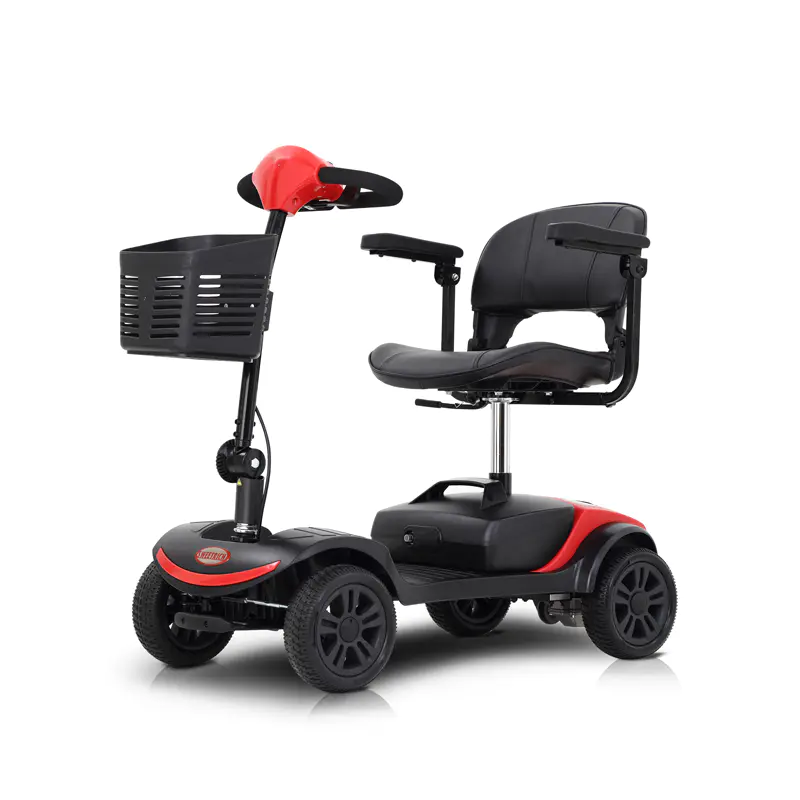
Anti-Tip Design and Stability Engineering Reduce Rollover Risks
Four wheels give you a wider support base, but they don't make a scooter impossible to overturn. Sharp turns, uneven ground, excessive loads, steep slopes—stability can still suffer.
Manufacturers use several measures to manage that risk:
- Balanced wheelbase and center of gravity.
- Suitable weight distribution between front and rear.
- Anti-tip wheels or other stabilizing components.
- Controlled turning characteristics.
- Clearly stated slope ratings.
Anti-tip wheels can help prevent backward tipping in certain situations. How well they work depends on the scooter's overall geometry and ground clearance. Tire grip, rider weight, speed, road conditions all play a part.
Buyers should look past the presence of anti-tip wheels. Turning radius, permitted slope angles, stability test results give a clearer picture of how the scooter is designed to perform.
Electromagnetic Braking Systems Improve Stopping Control
Braking needs to be predictable—flat walkway or downhill ramp, doesn't matter. Many electric mobility scooters use electromagnetic brakes that engage when the throttle is released or power is switched off, depending on controller design.
This lets braking happen without the user operating a separate mechanical lever at every stop. Some models add manual parking brakes or extra braking components.
During evaluation, check how the scooter responds when slowing down, stopping on an incline, remaining parked. Brake condition, vehicle load, tire grip, travel speed all influence stopping performance.
Intelligent Speed Control Supports Safer Maneuvering
The speed that works on an open outdoor path isn't necessarily right inside a shopping center or busy pedestrian area. Adjustable speed controls let users pick a setting that matches their surroundings.
Modern controllers may also regulate acceleration and deceleration to avoid sudden changes. On certain models, speed can be reduced during tight turns.
These functions make the scooter easier to handle, particularly for users who have trouble coordinating rapid movements. Check how the settings work and whether the controls are easy to reach while seated.
Battery Management Systems Improve Electrical Safety
The battery powers everything, so charging or current problems can affect the whole system. Lithium-ion batteries are popular for their energy density without excessive weight. They do require suitable monitoring and protection.
A battery management system (BMS) may provide protection against:
- Overcharging.
- Excessive discharge.
- Overcurrent.
- Short circuits.
- Abnormal battery temperatures.
Protection functions depend on the battery and BMS configuration. Battery compatibility, wiring, charger specifications, enclosure design also need attention.
For buyers, battery documentation should identify capacity, charging requirements, available protection functions. Using the correct charger and following storage instructions matter just as much.
Lighting and Visibility Systems Improve Awareness
Mobility scooters share space with pedestrians, bicycles, vehicles. In poor lighting, others may not notice a scooter—particularly from the side or behind.
Common visibility and warning features include:
- Front headlights.
- Rear lights.
- Turn indicators.
- Reflectors for visibility without power.
- Horns or warning signals.
Placement matters as much as having the components. Check visibility from different angles and whether switches can be operated without difficulty.
Compare Essential Safety Technologies in Four-Wheel Scooters
| Safety technology | Main function | Buyer evaluation point |
|---|---|---|
| Anti-tip system | Helps reduce tipping risk | Stability design and ground clearance |
| Electromagnetic brakes | Supports controlled stopping | Braking response and maintenance |
| Adjustable speed control | Limits speed for different environments | Control sensitivity and settings |
| Battery management system | Monitors battery operating conditions | Protection functions and documentation |
| LED lighting | Improves visibility | Light coverage and signal operation |
| Horn and indicators | Communicates movement and warnings | Accessibility and functionality |
| Diagnostic alerts | Identifies certain system faults | Alert clarity and service support |
Electronic Diagnostics Help Identify Technical Problems
Some scooters have built-in diagnostics that monitor parts of the electrical system. Depending on the controller, these may flag problems with the motor, battery, throttle, or wiring.
When a fault occurs, the scooter may show an error code, warning light, or audible alert. That gives users and technicians a starting point instead of pure guesswork.
The information only helps when the manufacturer explains what each warning means. Distributors should ask for error-code references, repair instructions, replacement-part information. Without those, even a simple electrical fault can take longer to diagnose.
Ergonomic Controls and Safety Interlocks Reduce Operating Errors
Safety also depends on how easily someone can operate the scooter. Poorly positioned switches or confusing controls lead to mistakes, especially for users with limited hand movement or coordination.
Adjustable tillers, accessible throttles, readable displays, clearly arranged switches make everyday operation easier. Some scooters use safety interlocks to prevent movement during charging or when certain operating conditions haven't been met.
Selected models may include seat-position sensors or automatic speed adjustments. These aren't standard across all scooters, so check the actual configuration rather than relying on general product descriptions.
Evaluate Safety Features Before Selecting a 4 Wheel Power Scooter
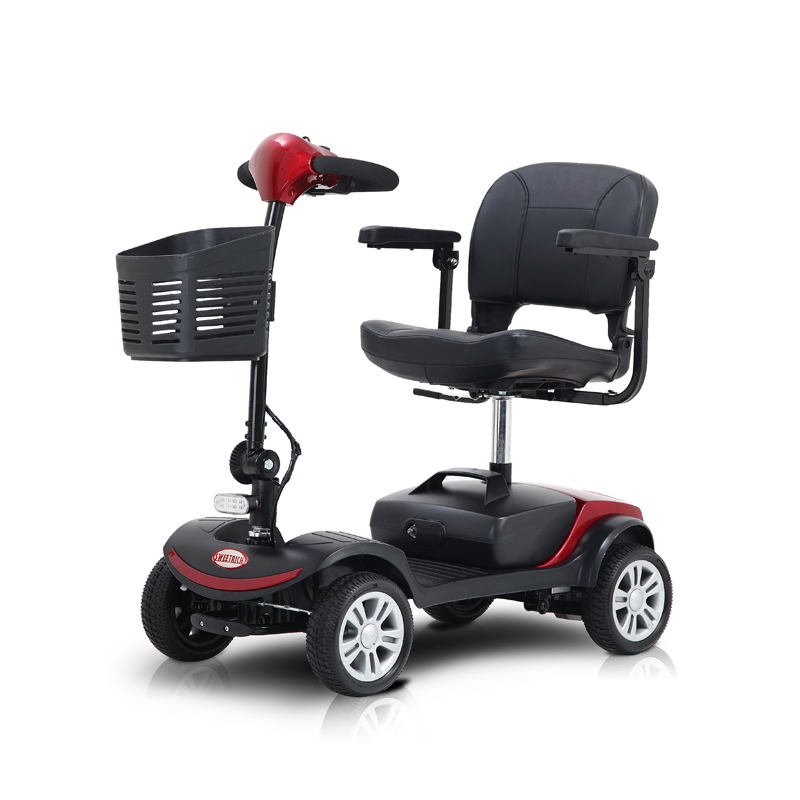
A 4 Wheel Power Scooter depends on several systems working together. Stable construction, responsive brakes, suitable speed controls, battery protection, clear visibility all contribute to safe operation. One good feature doesn't compensate for weaknesses elsewhere.
Before purchasing, check load capacity, slope limits, braking performance, battery specifications, maintenance requirements. Test reports and clear operating instructions help when comparing suppliers. For distributors, access to technical support and replacement parts matters once scooters reach customers.