 info@sweetrich.cn
  +86-(0)512-82283871
Content
- 1 What Are Anti Tip Wheels Designed to Do?
- 2 Why Can a Heavy Mobility Scooter Become Unstable?
- 3 How Do Anti Tip Wheels Help During Inclines?
- 4 What Happens When the Scooter Crosses Uneven Ground?
- 5 How Does Wheel Position Affect Stability?
- 6 Why Is Ground Clearance Important for Anti Tip Wheels?
- 7 What Should Be Checked During Routine Maintenance?
- 8 How Are Anti Tip Wheels Considered in Scooter Design?
- 9 What Should China Mobility Scooter Manufacturers Consider?
- 10 How Do Anti Tip Wheels Fit Into Everyday Scooter Safety?
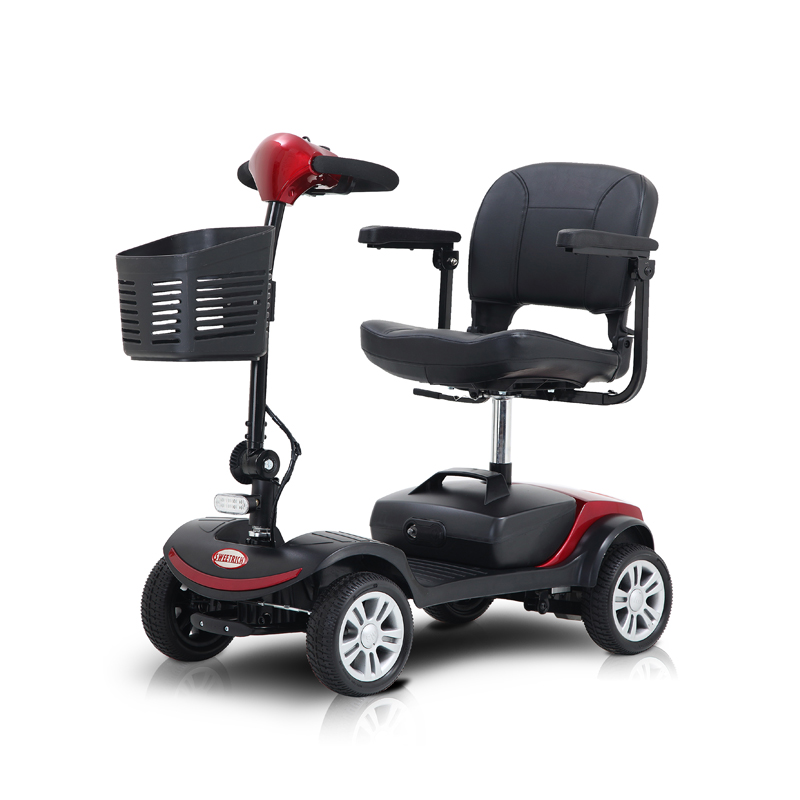
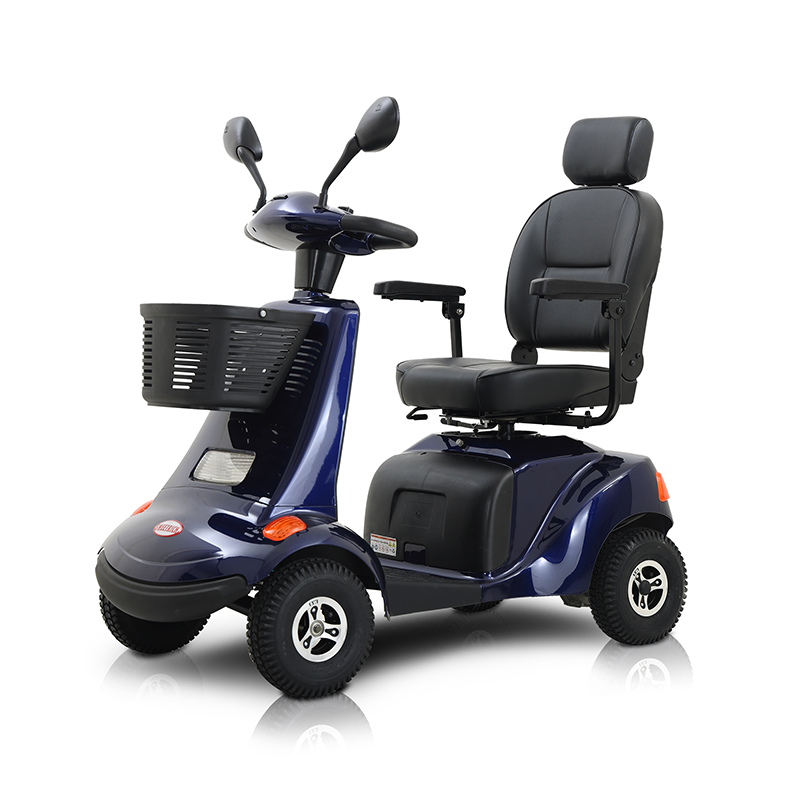
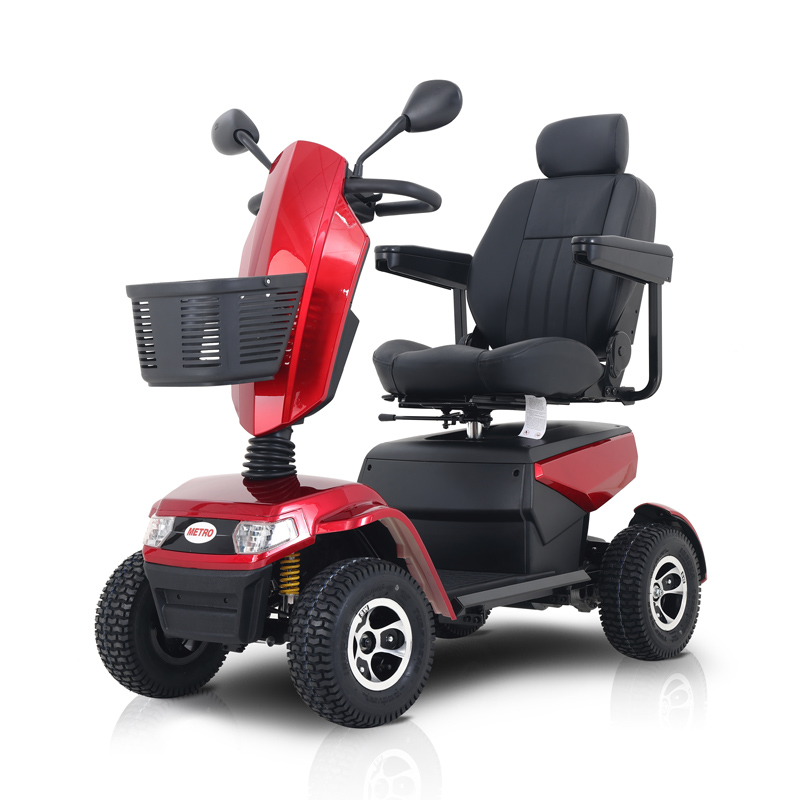
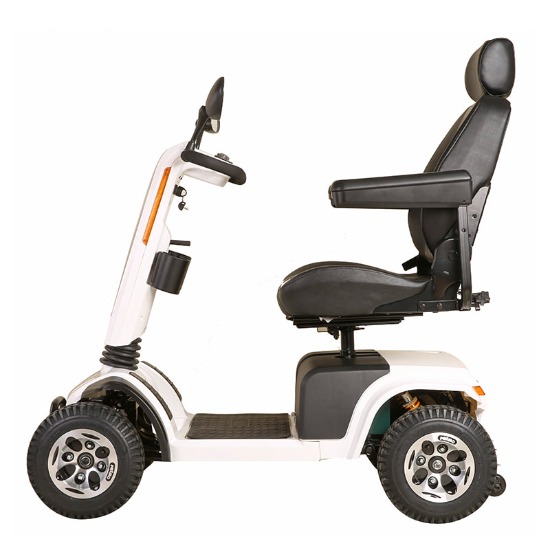
A Heavy Duty Electric Mobility Scooter may be used across more than smooth indoor floors. Outdoor paths, driveways, ramps, pavement edges, and uneven surfaces can all change how the wheels meet the ground. Because of this, stability depends on more than the size of the frame or the strength of the motor.
Wheel placement also has an important role. The main wheels support the scooter during normal movement, while smaller auxiliary wheels can provide additional support when the body moves beyond its usual position. Anti Tip Wheels are commonly placed toward the rear for this purpose. They may remain away from the ground during ordinary travel, but can come into contact with the surface when the scooter tilts backward.
Their role is relatively simple, yet it becomes relevant when a scooter encounters changing ground conditions. Looking at how these wheels work also helps clarify why their position, clearance, mounting method, and maintenance need to be considered together.
What Are Anti Tip Wheels Designed to Do?
Anti Tip Wheels are intended to provide an additional point of contact when a mobility scooter moves into a position where its main wheels may no longer provide enough support. They do not normally carry the scooter during regular travel. Instead, they remain part of the supporting structure and become useful when the rear of the scooter rises or the body angle changes.
The location of these wheels is important. They are usually positioned behind the main rear wheels, creating a secondary support point. When the scooter moves over an incline or encounters an obstacle, the rear section may change its angle. A properly positioned auxiliary wheel can then touch the ground and limit further backward movement.
Several factors influence this behavior:
- Mounting position affects when the wheel reaches the ground.
- Wheel size affects how it moves across small changes in surface height.
- Frame connection affects how firmly the wheel remains in place.
- Ground clearance affects whether the wheel stays clear during normal movement.
The purpose is therefore not simply to add another wheel. Its position needs to work with the rest of the scooter structure. A poorly positioned support wheel may touch too early, too late, or interfere with normal movement.
This makes anti-tip design closely connected with the conditions in which the scooter operates. A flat floor presents a different situation from a sloped driveway or an uneven pavement edge.
Why Can a Heavy Mobility Scooter Become Unstable?
A larger mobility scooter carries a substantial combination of frame, battery, seat, drive components, and rider load. The distribution of that weight changes how the scooter responds when moving, stopping, turning, or climbing.
On level ground, the load is generally spread across the supporting wheels. The situation changes when the scooter travels onto a slope. The body angle changes, and the relationship between the load and the wheels changes with it.
Movement can also affect stability. Sudden acceleration may shift the load toward the rear, while braking can move the load in the opposite direction. Turning introduces another change because the wheels no longer follow the same path.
Uneven surfaces add another layer. One wheel may rise slightly while another remains lower. A curb edge or shallow depression can also change the contact between the wheels and the ground. The scooter body then needs to respond to a surface that is no longer level.
| Riding condition | Possible effect on the scooter |
|---|---|
| Level surface | Relatively even wheel contact |
| Inclined surface | Changes body angle and load distribution |
| Sudden acceleration | May shift load toward the rear |
| Braking | May move load toward the front |
| Uneven ground | Can create different wheel heights |
| Turning | Changes the direction of wheel movement |
Anti-tip support becomes relevant because these changes do not always occur separately. A slope may also contain an uneven edge. A turn may begin while the scooter is crossing a surface transition. Stability is therefore influenced by the combined relationship between movement, load, and ground contact.
How Do Anti Tip Wheels Help During Inclines?
Inclines are one of the situations where rear support becomes easier to understand. As a scooter travels upward, the body and seat position change relative to the ground. The rear section can become lighter in certain conditions, particularly when movement and surface angle work together.
An auxiliary rear wheel provides another point where the scooter can meet the ground if the rear structure moves upward. Once contact occurs, it can limit further backward rotation.
The effect depends heavily on the layout of the scooter. The wheel must be placed far enough behind the main wheels to provide useful support, while still allowing normal movement over the ground. Its mounting height also affects when contact occurs.
The surface itself matters as well. A smooth ramp behaves differently from a rough outdoor path. Small changes in the ground can cause the auxiliary wheel to touch and leave the surface repeatedly.
For this reason, anti-tip wheels should not be viewed as a replacement for careful operation on slopes. Speed, turning direction, surface condition, and load placement still influence the way a scooter behaves.
A useful design approach is to consider the entire rear structure rather than the auxiliary wheel alone. The frame, main wheels, seat position, and rear support all interact when the scooter moves uphill.
What Happens When the Scooter Crosses Uneven Ground?
Uneven ground can create short changes in wheel contact that are easy to overlook during normal travel. A shallow hole may cause one wheel to drop, while an edge in the pavement can lift another. The scooter body then changes position in response to the surface.
The main wheels normally handle these changes, but their contact with the ground may become uneven. In such moments, an additional rear wheel can provide another supporting point when the body angle moves outside its usual range.
The benefit is not limited to large obstacles. Small surface transitions can also affect the way the frame moves. Repeated contact with uneven ground places attention on the mounting structure, wheel rotation, and clearance around the rear assembly.
A suitable arrangement allows the auxiliary wheel to move with the scooter rather than becoming an obstruction. It needs enough clearance for ordinary travel, while remaining close enough to the ground to provide support when the rear section rises.
That balance leads naturally to another design question: where the wheel is placed can be just as important as the wheel itself.
How Does Wheel Position Affect Stability?
Wheel position changes how a scooter responds when the ground or riding direction changes. The main wheels, front wheels, and rear support wheels work within the same frame, so moving one part can affect the behavior of the others.
A rear auxiliary wheel placed farther behind the main wheels can provide support when the scooter moves backward. However, its position also affects how the scooter passes over uneven ground. A mounting point that is too far back may reduce clearance around obstacles, while a position that is too close to the main wheels may provide less useful support when the rear frame rises.
The width between the supporting wheels also matters. A wider arrangement can change the way the scooter responds during turns, while a narrower layout may interact differently with uneven surfaces. Wheel placement therefore needs to suit the overall frame rather than being selected separately.
Seat position, battery location, drive components, and frame shape also influence the distribution of weight. When these parts are changed during product development, the rear support arrangement may need to be reviewed as well.
For a Heavy Duty Electric Mobility Scooter, stability is therefore connected with the relationship between several structural parts. A small change in one area can alter how the wheels contact the ground.
Why Is Ground Clearance Important for Anti Tip Wheels?
Ground clearance determines when an auxiliary wheel begins to touch the surface. During ordinary movement, the wheel generally needs enough space to remain clear of the ground. When the rear of the scooter rises, the gap becomes smaller until the wheel makes contact.
Too much clearance can delay this contact. Too little clearance may cause the wheel to touch during situations where additional support is not needed.
The mounting height should also work with the expected movement of the frame. A scooter traveling over a small surface change may move differently from one climbing a slope. The auxiliary wheel needs to remain useful across these conditions without creating unnecessary contact.
Wheel diameter has a similar effect. A larger wheel can change how the rear assembly passes over surface transitions, while a smaller wheel may respond differently to edges and shallow depressions. Neither choice can be considered separately from the mounting location.
Clearance also needs to be checked after maintenance. A loose mounting point or a changed component can alter the position of the wheel. Even when the wheel itself appears normal, its relationship with the ground may no longer be the same.
What Should Be Checked During Routine Maintenance?
Anti-tip assemblies are relatively simple, but they still experience repeated movement and contact. Regular inspection can help identify changes before they affect normal operation.
The wheel surface should be checked for visible wear or damage. Rotation should also remain smooth, without unusual resistance or noise. A wheel that does not move freely may respond differently when it needs to contact the ground.
The mounting structure deserves attention as well. Bolts, brackets, axles, and connection points can become loose through repeated use. Deformation around the mounting area may also change the wheel position.
A practical inspection can include:
- checking whether the wheel rotates normally;
- looking for cracks or visible damage;
- checking the mounting point for looseness;
- confirming that the wheel remains aligned;
- checking whether the gap from the ground has changed;
- inspecting nearby frame parts for signs of contact.
These checks are useful because anti-tip support depends on both the wheel and its connection to the frame. Replacing a worn wheel without checking the mounting structure may leave another problem unnoticed.
Maintenance also connects with riding conditions. Scooters used across rough outdoor surfaces may experience different forms of contact from those used mainly on smooth floors. Inspection should reflect the environment in which the equipment operates.
How Are Anti Tip Wheels Considered in Scooter Design?
Anti-tip support is usually considered as part of the complete scooter layout. The frame needs to provide a suitable mounting location, while the wheel arrangement needs to work with the drive system, seat position, battery placement, and overall body shape.
Designers also need to consider how the scooter moves when the rear section rises. The support wheel should become useful at the appropriate point without affecting ordinary travel.
There is also a practical balance between stability and movement. A support wheel that remains in frequent contact with the ground may affect the way the scooter passes over small surface changes. A wheel with too much clearance may provide limited support when the rear frame moves upward.
Assembly accuracy matters as well. Even when the basic design is suitable, differences in mounting position can change the relationship between the wheel and the ground. Consistent assembly helps keep the intended wheel position across units.
Material selection also has a role. The wheel, axle, bracket, and frame connection need to withstand repeated movement without making the rear structure unnecessarily complicated.
This is why anti-tip components are better viewed as part of the scooter's supporting system rather than as an isolated attachment.
What Should China Mobility Scooter Manufacturers Consider?
For China Mobility Scooter Manufacturers, anti-tip wheel design involves more than selecting a suitable wheel. Different scooter layouts may require different mounting positions, wheel sizes, and connection structures.
The intended riding environment is an important consideration. A model designed around indoor surfaces may have different rear clearance requirements from one expected to travel across outdoor paths, ramps, and uneven pavement.
Production and assembly also influence the final result. The wheel needs to remain in the intended position after installation, and the mounting structure needs to remain secure during repeated use.
Several areas can be considered during development and production:
- the relationship between the rear wheel and main wheels;
- the position of the support bracket;
- clearance between the wheel and ground;
- strength of the connection area;
- ease of inspection and replacement;
- compatibility with the complete frame structure.
Testing across different surface conditions can also reveal issues that are difficult to identify from the frame design alone. A wheel that appears correctly positioned on a flat floor may behave differently when the scooter moves onto a slope or across an uneven transition.
Production decisions therefore need to connect with real operating conditions. The anti-tip system should remain consistent with the intended structure and movement of the finished scooter.
How Do Anti Tip Wheels Fit Into Everyday Scooter Safety?
Anti-tip wheels are one part of a larger stability system. Their role is to provide additional rear support when the scooter reaches a position where the main wheels may not provide enough contact.
They do not remove the influence of speed, turning, surface condition, or load distribution. A scooter can still behave differently when moving across a slope, crossing an edge, or making a turn on uneven ground.
The practical value of rear support comes from the way it works together with the rest of the structure. Wheel position, frame geometry, ground clearance, and mounting strength all affect when the support wheel becomes active.
For a Heavy Duty Electric Mobility Scooter, this relationship becomes especially relevant because the equipment may encounter a wider range of surfaces and operating conditions. A carefully considered rear support arrangement can form part of the overall approach to stability without being treated as an independent safety measure.
The same principle applies during maintenance and production. A wheel can only perform its intended role when its mounting position, surrounding structure, and clearance remain appropriate. Regular checks and consistent assembly help preserve that relationship as the scooter continues to be used.