 info@sweetrich.cn
  +86-(0)512-82283871
Content
- 1 How Does Speed Control Affect a Portable 3 Wheel Scooter's Operation
- 2 What Makes a Medium Mobility Scooter Suitable for Mixed Environments
- 3 How Do Speed Control Systems Improve Safety in Pedestrian Areas
- 4 Where Does a Portable 3 Wheel Scooter's Turning Radius Matter Most
- 5 What Role Does Adjustable Speed Play in User Confidence
- 6 How Does Speed Control Support the Needs of Different User Groups
- 7 Why Has Speed Control Technology Become More Refined
Walk through any busy shopping center or street market, and the movement around you never really stops. People stop dead in their tracks without warning. Kids dart between adults out of nowhere. Carts and strollers seem to appear out of thin air. For someone riding a mobility scooter, these spaces bring a pretty different kind of challenge than open sidewalks do.
The unpredictability of foot traffic makes speed management genuinely important here. A scooter moving too fast just can't stop in time when someone steps into its path unexpectedly. One that starts or stops abruptly can startle people nearby, or even throw the rider off balance. The user's got to navigate around whatever obstacles pop up while still keeping a steady pace that matches the flow of everyone else walking around.
Maneuverability plays a big role in how confident someone feels in crowded settings too. A scooter that responds predictably to controls gives the rider a real sense of control over the situation. One that lurches or hesitates just creates uncertainty instead — and that means the rider ends up spending more mental energy worrying about the scooter's behavior, less time actually watching what's happening around them.
The relationship between speed and safety really comes down to control, at the end of the day. A scooter moving at walking pace can stop within a short distance if it needs to. One moving faster needs a lot more room to stop safely. In crowded areas where space is already tight, slower speeds just give a wider margin of safety to work with.
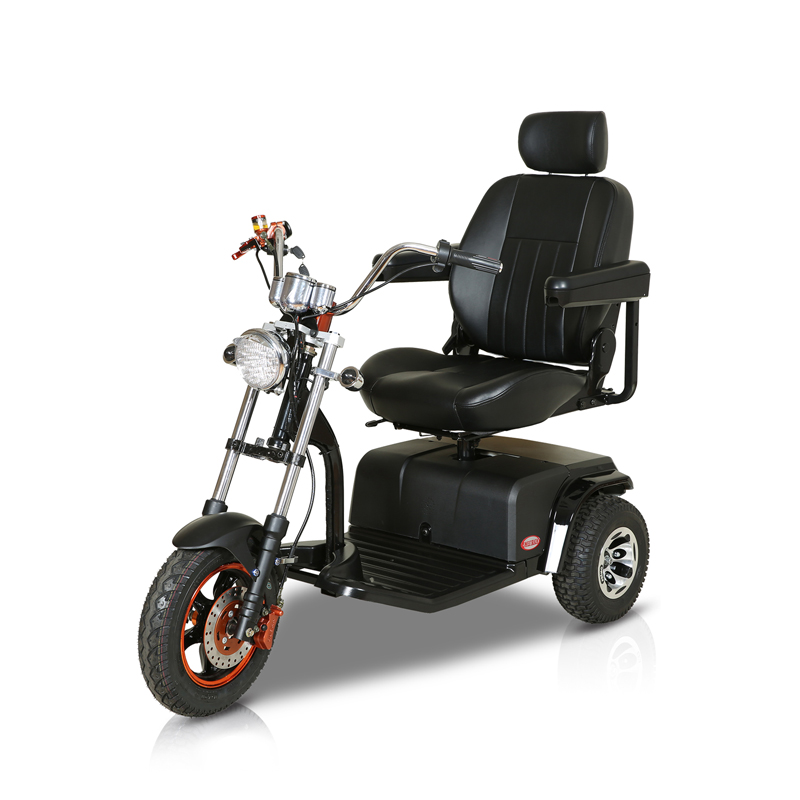
How Does Speed Control Affect a Portable 3 Wheel Scooter's Operation
The throttle handles speed here. Press it, the scooter moves forward. Let go, it slows down. How the throttle responds — sensitive or not — shapes how smoothly the whole thing operates. A sensitive throttle reacts to even slight pressure changes. A less sensitive one needs more deliberate movement before speed actually shifts.
Speed limiters keep things from exceeding a set maximum. That limiter's usually tuned to whatever's appropriate for the environment at hand. Indoor settings call for lower max speeds, generally. Outdoor open areas can afford to allow more. Being able to switch between speed settings gives the user real control over how the scooter behaves moment to moment.
Different settings suit different environments, unsurprisingly. A low setting works well indoors, where aisles get tight and pedestrians are everywhere. A medium setting fits outdoor areas with moderate traffic passing through. A high setting might come into play in open spaces with few obstacles around. The user just picks whatever setting actually fits the situation they're in.
Gradual acceleration and deceleration make a real difference in how the ride feels overall. A scooter that eases into motion feels a lot more natural to ride. One that jerks forward or stops abruptly tends to startle both rider and nearby pedestrians alike. The speed control system really needs to deliver smooth transitions between speeds, not jarring jumps.
What Makes a Medium Mobility Scooter Suitable for Mixed Environments
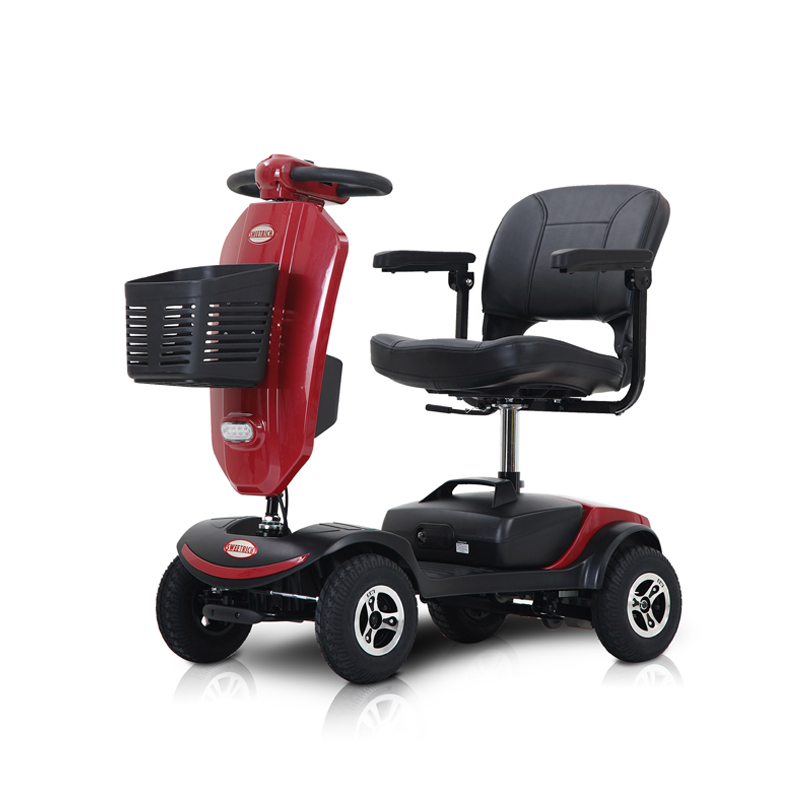
A Medium Mobility Scooter strikes a balance between portability and stability. Small enough to transport without much fuss, yet large enough to still deliver a stable ride once you're on it. The size fits through standard doorways, into elevators — the everyday spaces people actually need to move through. And the weight stays manageable enough to load into a vehicle without needing serious heavy lifting.
Wheel size shapes how the scooter handles different surfaces too. Larger wheels roll over cracks and small obstacles a lot more easily. Smaller wheels give a tighter turning radius but can catch on uneven ground more readily. A Medium Mobility Scooter tends to land somewhere in between — wheel sizes chosen to balance maneuverability against ride comfort.
Turning radius decides how tightly the scooter can actually turn. A smaller radius lets it navigate narrow aisles and tight corners without much trouble. This really shapes where the scooter can go in practice — one that can't turn sharply enough might not fit through certain doorways or around tight obstacles at all.
| Characteristic | Portable 3 Wheel Scooter | Medium Mobility Scooter | Heavy Duty Scooter |
|---|---|---|---|
| Weight | Light | Moderate | Heavy |
| Turning radius | Tight | Moderate | Wide |
| Portability | High | Moderate | Low |
| Stability | Moderate | Good | High |
| Best use environment | Indoor, mixed | Mixed, outdoor | Outdoor |
How Do Speed Control Systems Improve Safety in Pedestrian Areas
A speed control system that avoids sudden lurches genuinely makes things safer. The scooter eases into motion once the throttle's pressed, rather than jumping forward. That smooth start doesn't startle the rider or anyone nearby, and it cuts down on the chance of losing balance too.
Sticking to a walking pace in crowded environments keeps the scooter moving with the flow of foot traffic, rather than against it. A scooter moving faster than walking speed tends to disrupt things — it might pass people too closely, or force others to step out of the way unexpectedly. Matching walking speed just keeps everything moving together more naturally.
Predictable movement patterns make life easier for everyone else around too. A scooter holding a steady speed and stopping smoothly is just easier to read. Pedestrians can judge where it's headed and adjust their own path accordingly. That predictability, more than anything else, is what actually cuts down on accidents.
Speed control systems also make things workable for riders across every experience level. A first-time rider can dial in a slower speed while getting comfortable with the controls. An experienced rider can bump things up in the right settings once they're confident. The speed control system really just adapts to wherever the user happens to be, comfort-wise.
Where Does a Portable 3 Wheel Scooter's Turning Radius Matter Most
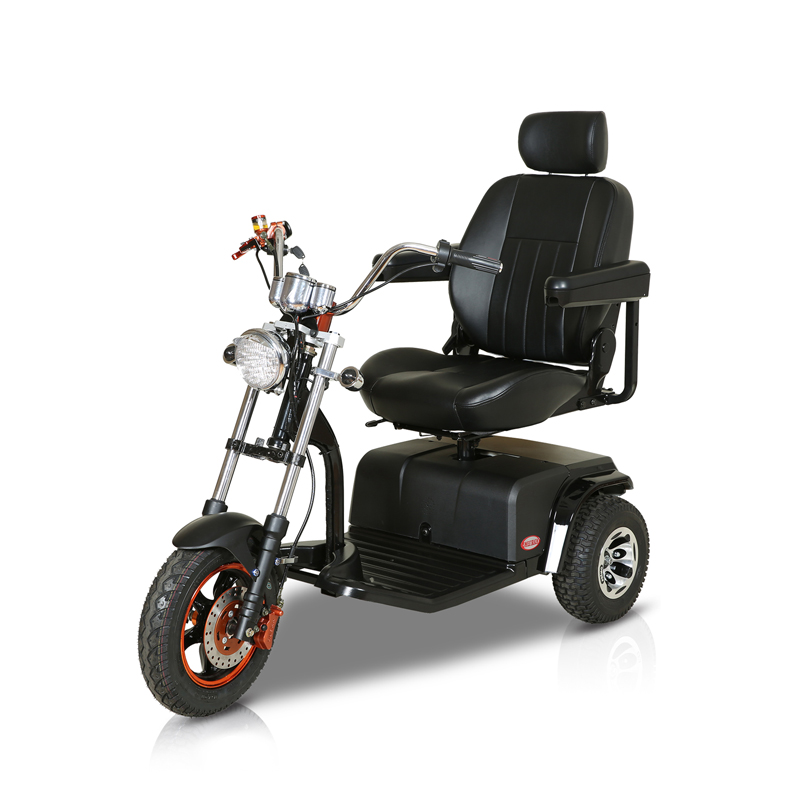
Narrow store aisles and doorways create tight spots for pretty much any scooter to work through. A Portable 3 Wheel Scooter with a small turning radius can handle these confined areas without needing to back up or shuffle position around multiple times. The rider just moves through the space smoothly, without holding up other shoppers or getting in anyone's way.
Shopping centers and public spaces throw constant turns at you too. A rider's always working around displays, benches, whatever else happens to be in the path. A scooter that turns tightly opens up more options for navigating — the rider can actually pick a route that dodges congestion, rather than being stuck following whatever the main path happens to be.
The relationship between turning radius and maneuverability isn't complicated, honestly. Smaller radius means the scooter turns in less space. Larger radius needs more room to complete that same turn. In crowded areas where space is already limited, a smaller radius gives a real, practical advantage over the alternative.
Tight turning also cuts down on collision risk. A scooter that turns quickly can dodge obstacles that show up suddenly, without warning. The rider changes direction without needing extra room to do it. Being able to stop and turn in a small footprint just makes crowded spaces a lot more manageable overall.
What Role Does Adjustable Speed Play in User Confidence
A new rider learning the controls benefits a lot from slower speeds early on. That lower speed buys time to actually respond — to the scooter's behavior, to whatever's happening in the environment around them. The rider gets to practice turning, stopping, navigating without feeling rushed through any of it.
Different terrains call for different speeds too. A smooth indoor floor allows for higher speeds than a rough outdoor surface would. Adjustable speed lets the rider match pace to conditions on the ground. Control stays in the rider's hands because the scooter's speed actually fits whatever terrain they're crossing.
Speed adjustability also lets riders match their own comfort level. Someone feeling a bit nervous can keep speed low and steady. Someone feeling confident can push it higher once they're in open areas. Either way, the rider stays in control since speed can shift as needed, moment to moment.
The link between control and independence really matters here too. A scooter that responds to what the rider actually wants supports genuine independent movement. The rider gets to go where they want to go, without leaning on someone else for help along the way.
How Does Speed Control Support the Needs of Different User Groups
First-time users need cautious speed settings to start with. A scooter set too fast right out of the gate can feel intimidating fast. A slow setting lets a new user learn the controls, build confidence gradually. Speed can go up as comfort grows over time.
Experienced users, on the other hand, might want faster speeds once they're in open areas. A scooter that can't keep pace with what the rider actually wants tends to get frustrating quick. Speed control offering a real range of settings ends up serving both groups — new and experienced riders alike.
Intuitive controls make scooters more accessible for senior users too. Simple speed selection, easy-to-read displays, controls that actually respond the way you'd expect — all of it cuts down the learning curve considerably. A user who can just set the speed and go tends to have a much better overall experience.
Speed control really shapes user satisfaction more than people might assume. A scooter that does what the rider expects builds confidence steadily. One that behaves unpredictably, or boxes in the user's choices, creates frustration instead. Long-term adoption of a mobility scooter often comes down to how well the controls actually match what the user needs.
Why Has Speed Control Technology Become More Refined
Throttle response in modern scooters has come a long way. The connection between throttle movement and actual scooter speed feels a lot more direct these days. The rider gets precise control because the throttle responds consistently, run after run. That improved responsiveness just makes the whole scooter feel more natural to operate day to day.
Braking systems have developed right alongside throttle systems too. Electromagnetic braking delivers smooth stops without any sudden jerking. The braking engages gradually, easing the scooter to a stop rather than lurching into it. That smooth stop matters a lot in crowded areas especially, where sudden stops can throw off everyone nearby.
User feedback has driven a lot of this improvement over time. Manufacturers have listened to what riders actually experience and made adjustments based on that. These incremental changes have added up, making speed control noticeably more refined compared to earlier versions.
A few improvements worth pointing out in speed control technology:
- More responsive throttle systems
- Electromagnetic braking for smoother stops
- Easier-to-use speed selection controls
- Better integration between speed, braking, and steering
- Control systems that adapt to different users and environments
These refinements have made navigating crowded areas feel a lot more natural overall. A rider can move through busy spaces with roughly the same ease and confidence that walking gives someone. The scooter starts to feel like an extension of the user's own movement, rather than something demanding constant attention and correction. Speed control technology will likely keep improving as user needs and expectations continue shifting over time.