 info@sweetrich.cn
  +86-(0)512-82283871
Content
- 1 Introduction
- 2 Product Overview
- 3 Four-Wheel Stability for Outdoor Mobility
- 4 Comfort-Oriented Seating Design
- 5 Powertrain and Driving Performance
- 6 Battery Capacity and Travel Range
- 7 Transport, Storage, and Handling
- 8 Advantages Compared with Basic Mobility Devices
- 9 Manufacturing Experience and Company Strengths
- 10 Quality Considerations for Dealers and Distributors
- 11 Routine Maintenance and Responsible Use
- 12 Who May Benefit from This Product?
- 13 Technical Specification Table
- 14 Frequently Asked Questions
- 14.1 Is the iPower Sport intended mainly for indoor or outdoor use?
- 14.2 What is the maximum user weight?
- 14.3 How far can it travel on one charge?
- 14.4 How long does charging take?
- 14.5 Does it use lithium batteries?
- 14.6 What advantages do the large rear tires provide?
- 14.7 What is the purpose of the rear suspension?
- 14.8 What does the electromagnetic brake do?
- 14.9 Can the seat back be adjusted?
- 14.10 Is this wheelchair easy to lift into a car?
- 14.11 Is the product a medical device?
- 14.12 What should be checked before purchase?
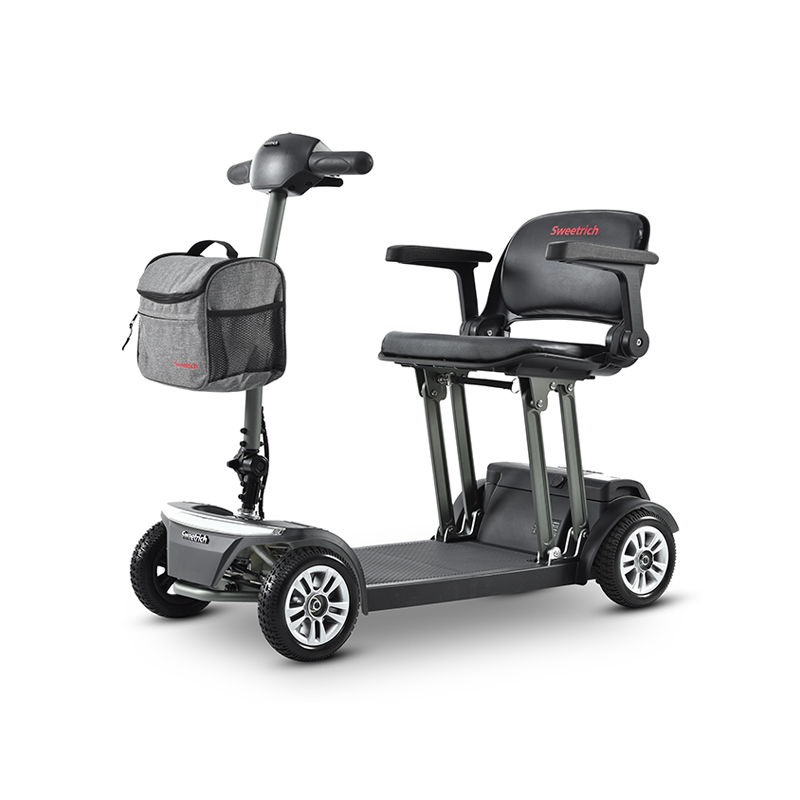
- 14.13 How does it compare with a folding travel scooter?
- 15 Conclusion
- 16 References
- 17 Product: iPower Sport Hot popular four wheels power remote electronic wheelchair in dubai
Introduction
Modern mobility equipment must do more than move from one point to another. For many older adults, people with disabilities, and users who experience limited walking endurance, a power wheelchair or mobility scooter is an important tool for independence, confidence, and everyday participation. The right product should provide dependable propulsion, comfortable seating, stable handling, useful travel range, manageable charging requirements, and practical safety features. It should also be built with sufficient strength for regular outdoor use rather than being limited to smooth indoor floors.
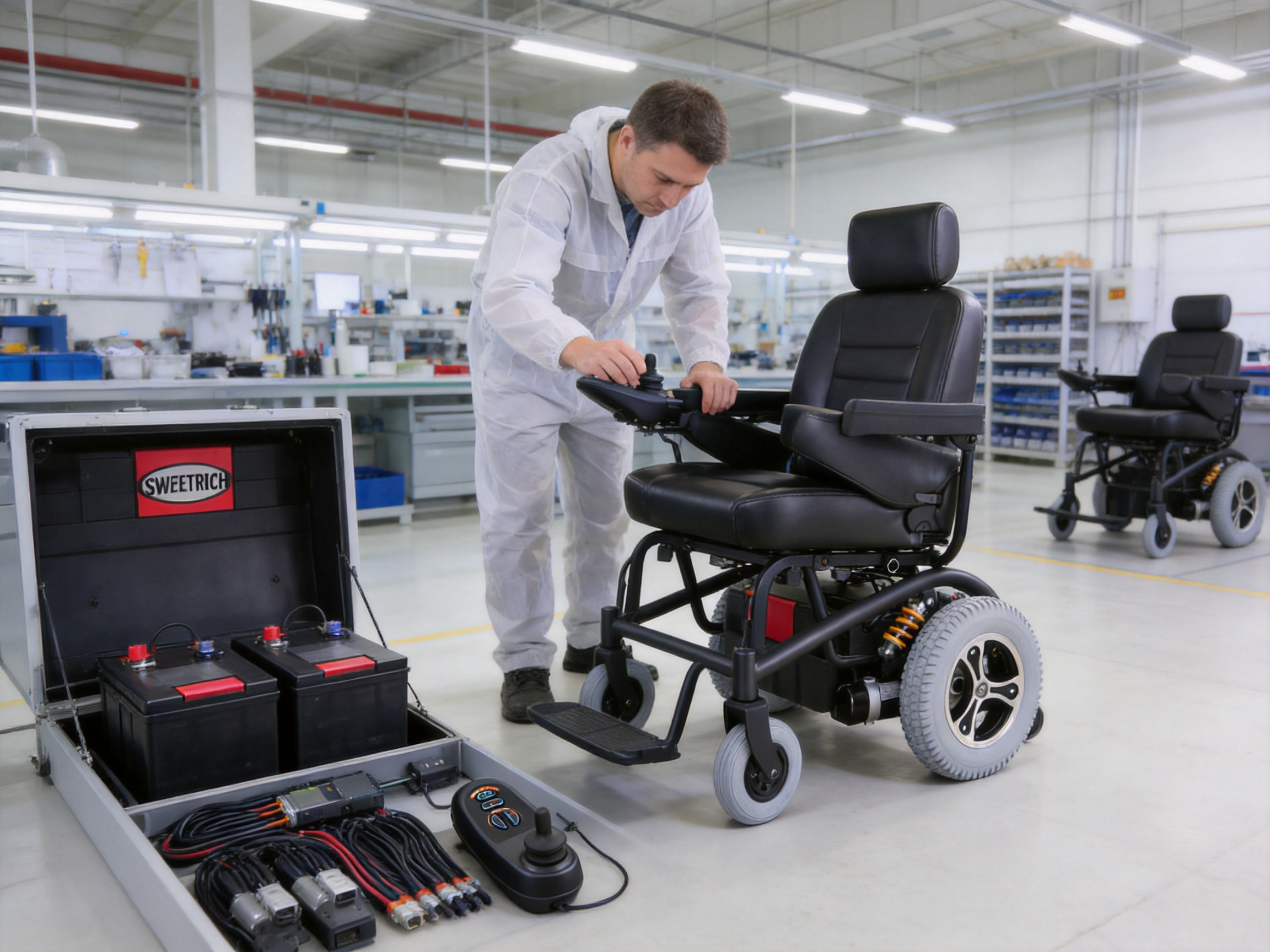
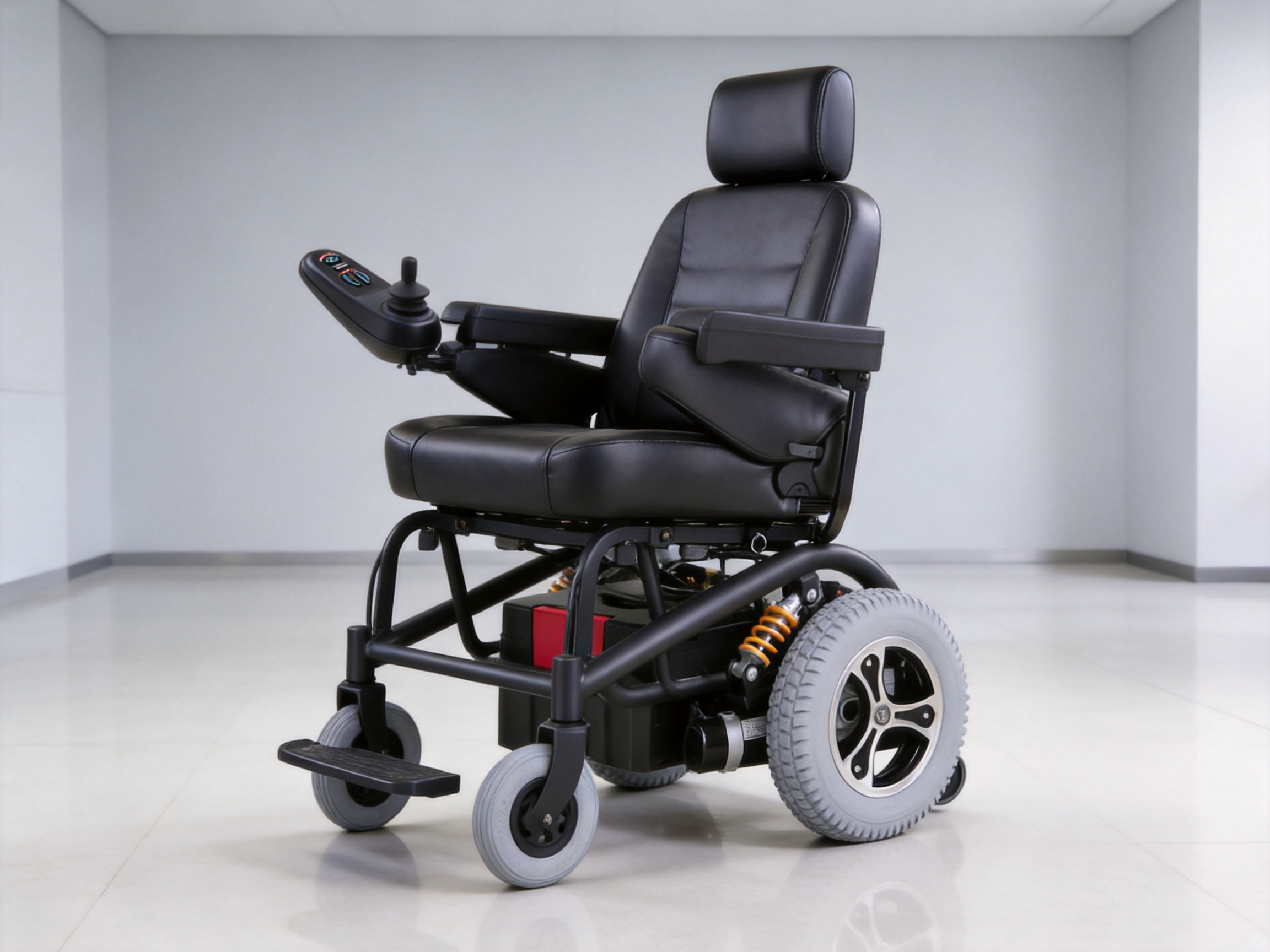
The iPower Sport is a heavy-duty four-wheel electronic wheelchair designed for users who want a combination of outdoor stability, comfort, and long-distance electric mobility. Its configuration includes large pneumatic tires, rear suspension, anti-tip wheels, a padded leather-like seat, adjustable seat-back support, electromagnetic braking, dual motors, and a high-capacity lead-acid battery system. With a maximum forward speed of 8 km/h, a stated driving range of 30–40 km, and a maximum user capacity of 120 kg, it is positioned as a practical mobility solution for daily travel and recreational use.
This article examines the product’s construction, performance characteristics, comfort features, electrical system, operating considerations, and potential advantages over more basic mobility devices. It also considers the manufacturing experience and quality-oriented approach of the company behind the product. The discussion is based on the available product specifications and company information. As the product is identified as a non-medical device for the US market, users should seek professional advice where medical, clinical, or accessibility decisions are involved.
Product Overview
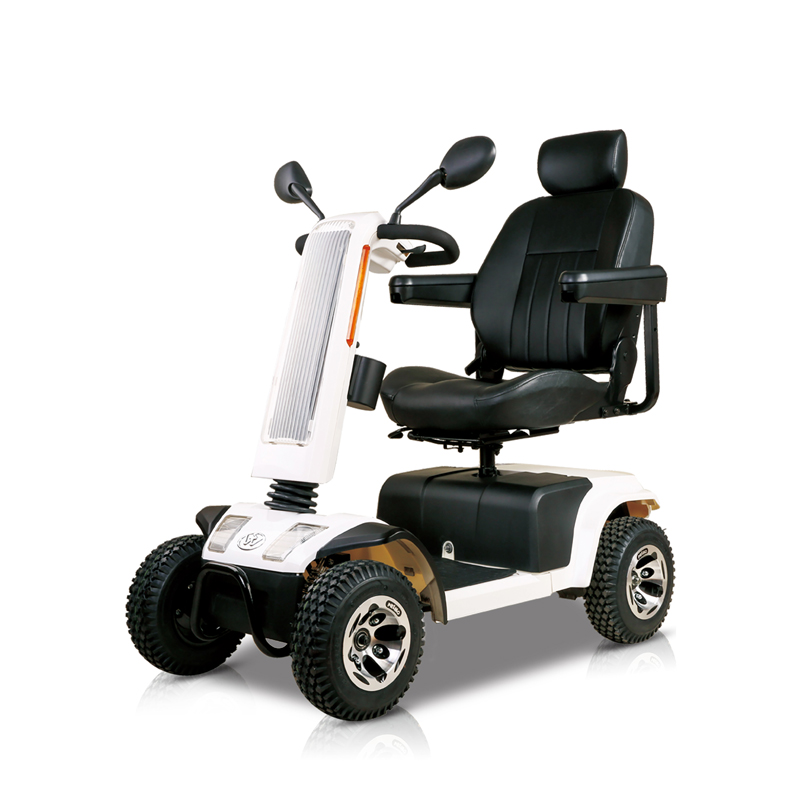
The iPower Sport uses a four-wheel platform intended to provide a broad and stable contact area with the ground. Four-wheel designs are often selected by users who prioritize directional stability and outdoor confidence. Compared with narrow three-wheel configurations, a four-wheel chassis can offer a more reassuring feel when turning at low speed, traveling across uneven surfaces, or moving over gently sloped outdoor paths.
The overall dimensions are approximately 980 mm in length, 600 mm in width, and 1180 mm in height. This gives the vehicle a substantial presence while remaining narrower than many large outdoor power chairs. The dimensions should be considered before purchase, particularly when checking doorways, elevators, ramps, vehicle loading arrangements, storage rooms, and turning areas.
The maximum forward speed is specified as 8 km/h, equivalent to approximately 5 miles per hour. This speed is suitable for many everyday outdoor journeys, residential environments, paved paths, shopping areas, and controlled recreational settings. Actual speed should always be adapted to the surface, weather, traffic conditions, visibility, and the user’s operating experience.
The product is rated for a maximum driving gradient of 10 degrees. This figure describes the stated capability under suitable conditions, but it should not be interpreted as a recommendation to climb every slope at maximum capacity. Surface grip, tire pressure, battery charge, user weight, cargo, moisture, and the transition between flat ground and a ramp can all influence performance. Safe operation requires gradual steering and speed control when approaching slopes.
The stated maximum driving range is 30–40 km, or approximately 19–25 miles. Range is affected by many variables, including user weight, temperature, terrain, gradient, tire pressure, driving speed, stop-and-go operation, battery condition, and the age of the batteries. The published range is therefore best understood as a reference value rather than a guaranteed distance for every journey.
The maximum weight capacity is 120 kg, or approximately 265 pounds. This rating includes the user and any items carried on the wheelchair. Remaining within the specified capacity helps protect stability, braking performance, motor operation, frame strength, and battery range.
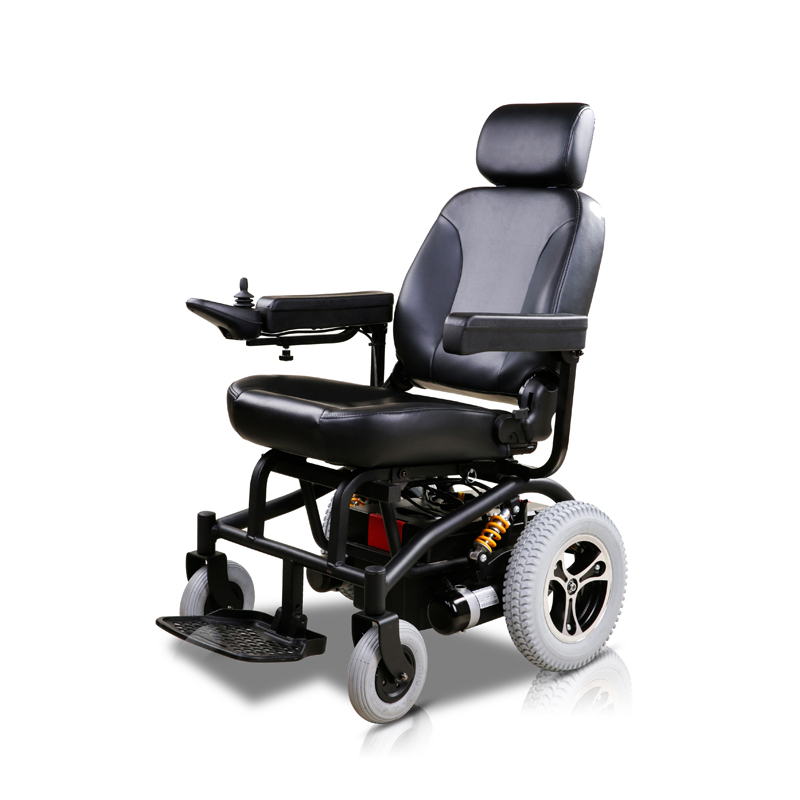
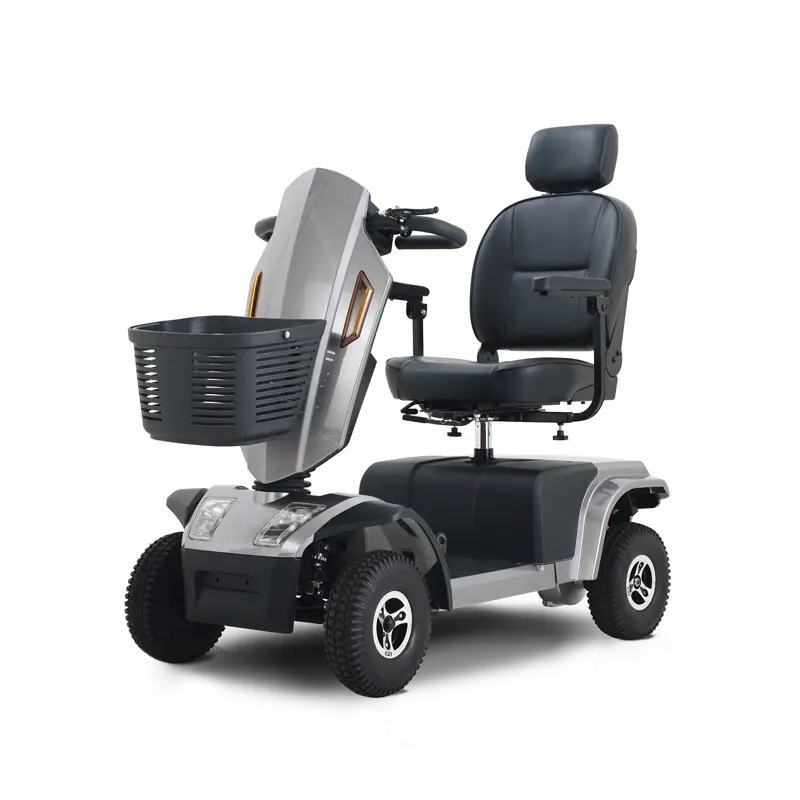
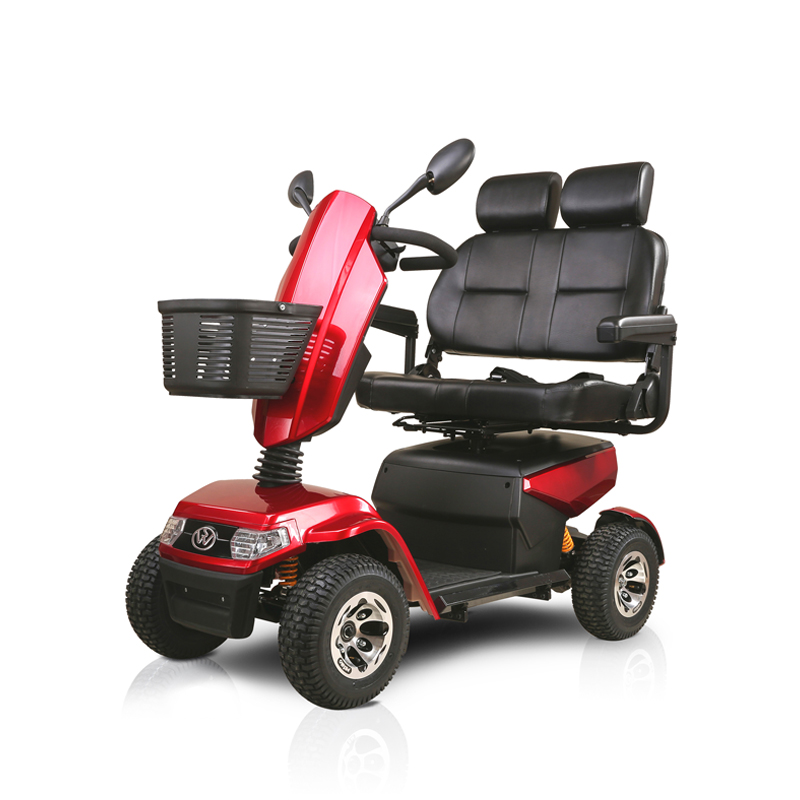
iPower Sport Hot popular four wheels power remote electronic wheelchair in dubai
Four-Wheel Stability for Outdoor Mobility
One of the product’s key advantages is its four-wheel design. A four-wheel electric wheelchair can provide a more evenly distributed footprint than a compact three-wheel mobility device. This can be particularly valuable for users who travel over outdoor surfaces such as concrete paths, paved driveways, compacted ground, or gently uneven walkways.
The front tires measure 8 inches by 2.5 inches, while the rear tires measure 14 inches by 3 inches. The larger rear tires contribute to the vehicle’s outdoor-oriented character. Larger tires can roll more easily over small surface irregularities than very small solid wheels, reducing the abrupt sensation that may occur when crossing minor cracks or transitions. They also support the product’s substantial frame and dual-motor layout.
The pneumatic tire design can provide a more forgiving ride than narrow, rigid tires when properly inflated. Air-filled tires can absorb some vibration from ordinary outdoor surfaces, which may improve comfort during longer trips. However, pneumatic tires require regular inspection and pressure maintenance. Underinflation may increase rolling resistance and reduce steering precision, while overinflation may produce a firmer ride and reduce the contact characteristics of the tire.
Anti-tip wheels are another important stability feature. These small auxiliary wheels are designed to help reduce the risk of rearward tipping under certain conditions, such as climbing a slope or accelerating from a stationary position. They are not a substitute for careful operation. Users should still avoid abrupt movements, excessive inclines, uneven drop-offs, and terrain beyond the product’s intended capability.
The rear suspension complements the larger rear wheels. Suspension can help reduce the transfer of vibration through the frame and seating system when the wheelchair moves across rougher paved surfaces. It may also improve the sense of control when the vehicle encounters small bumps. Because the specification identifies rear suspension, users should not assume that the product has a fully independent suspension system at every wheel.
In comparison with lightweight travel chairs, the iPower Sport is designed with a different priority. A compact travel model may be easier to lift, store, or place in a vehicle, but it may provide smaller tires, less suspension, a lower weight capacity, and a shorter range. The iPower Sport instead emphasizes outdoor capability, rider support, and sustained electric operation. This makes it a potentially better fit for users who need a stronger daily-use platform rather than an occasional transport chair.
Comfort-Oriented Seating Design
Comfort is essential when a wheelchair is used for extended periods. The iPower Sport includes a leather-like cushion seat designed to provide supportive padding during ordinary travel. The cushioning can help reduce pressure from the frame and contribute to a more pleasant riding experience compared with a basic flat seat.
The adjustable seat back allows the user to change the angle of back support according to personal preference and travel conditions. A more upright position may be suitable for conversation, approaching a table, or maintaining a forward-facing posture. A slightly reclined position may feel more comfortable during longer journeys. Adjustments should be made while the wheelchair is stationary and in accordance with the product’s operating instructions.
The seat design should be evaluated together with the user’s height, posture, hip width, leg position, and daily requirements. A product can have good general cushioning while still requiring an individual seating assessment for users with significant postural support needs. Where pressure management or specialized clinical positioning is necessary, a qualified healthcare or seating professional should be consulted.
The 1180 mm overall height provides a relatively elevated seating position compared with some low-profile indoor chairs. A higher position may make it easier for users to interact with people who are standing, reach certain work surfaces, or see across outdoor surroundings. At the same time, the user should consider the height of tables, counters, vehicle transfer points, and storage spaces before selecting the product.
The leather-like upholstery is also practical from a maintenance perspective. Smooth synthetic surfaces are generally easier to wipe clean than absorbent fabric. Nevertheless, cleaning products should be chosen carefully, and excessive moisture should be kept away from electrical components, control interfaces, battery compartments, and motor connections.
Powertrain and Driving Performance
The wheelchair is equipped with two 24-volt, 320-watt motors. A dual-motor arrangement can provide balanced propulsion to the two driven wheels and support consistent power delivery under normal operating conditions. The combined motor rating is suited to a heavy-duty mobility platform intended for regular outdoor travel.
Dual motors may also offer practical handling benefits compared with a single-motor configuration. Each side of the drive system can contribute to forward movement and controlled turning. This can help the chair maintain traction on ordinary paved surfaces and moderate inclines. Performance will still depend on weight distribution, tire condition, surface grip, and battery voltage.
The motors are identified as Taiwan-sourced components in the specification. Component sourcing alone does not determine total product quality, but the use of established motor and control components can support dependable system integration when matched with appropriate wiring, protection, testing, and assembly procedures.
The motor controller is rated at 24 volts and 50 amps and is identified as a PG controller from the United Kingdom. A controller regulates power between the battery system and the motors. It influences acceleration, speed control, braking coordination, and the response of the drive system to user inputs. A well-matched controller can contribute to smoother starts and more predictable low-speed maneuvering.
The controller should not be viewed in isolation. Its performance depends on the condition of the batteries, the quality of electrical connections, the motor load, the programming, and the mechanical alignment of the drive system. The product’s specification suggests a carefully selected combination of motors, controller, and battery voltage for a 24-volt vehicle.
The maximum speed of 8 km/h provides a useful balance between travel efficiency and controllability. It is faster than many indoor-only power chairs while remaining within a range that can be managed in many outdoor mobility environments. Users should reduce speed when turning, passing through congested areas, crossing door thresholds, traveling on slopes, or operating near pedestrians.
The electromagnetic brake system is a major safety-related feature. Electromagnetic brakes are designed to engage when the drive control is released or power is interrupted, helping the wheelchair stop and remain stationary. The braking system should be checked regularly, and users should never depend on the brake alone to prevent movement on a steep or unsuitable slope.
Battery Capacity and Travel Range
The product uses two 12-volt, 40-ampere-hour lead-acid batteries. Connected as a 24-volt system, the batteries provide the energy required by the dual motors and control electronics. Lead-acid batteries remain widely used in mobility products because they are familiar, comparatively robust, and available through established service channels.
The battery configuration is suitable for users who value practical range and dependable everyday use. With a stated range of 30–40 km, the wheelchair can support multiple short trips or a longer planned outing when conditions are favorable. Users should plan a reserve rather than relying on the final portion of the published range.
Battery performance gradually changes with age, charging habits, temperature, storage conditions, terrain, and usage frequency. A wheelchair that travels the full stated range when new may achieve less distance after prolonged use. Regular charging and proper storage help maintain performance. The batteries should be charged with the specified charger and should not be exposed to unnecessary heat, water, or physical damage.
The charger specification is DC 24 volts and 5 amps, with an AC input range of 115–230 volts. This broad input range can be useful for users in different electrical markets, subject to the correct plug configuration and local electrical requirements. The stated charging time is 6–8 hours. Charging overnight may be convenient, but the charger, socket, and surrounding area should be used in accordance with safety instructions.
Users should inspect the charging cable and connector for wear, heat damage, looseness, or contamination. Charging should take place in a dry, ventilated location. The battery area should not be covered in a way that traps heat. If unusual odors, excessive heat, sparks, swelling, or abnormal charging behavior are observed, use should stop until the system has been inspected by a qualified technician.
Compared with some lightweight travel wheelchairs using smaller battery packs, this model’s battery arrangement supports a more substantial range. The trade-off is added weight. Lead-acid batteries are heavier than many modern lithium alternatives, and the battery weight contributes to the product’s overall handling and transport requirements. The choice therefore reflects an emphasis on practical range and established battery technology rather than minimum transport weight.
Transport, Storage, and Handling
The heaviest part is listed as 56 kg, or approximately 123 pounds. This is an important consideration for families, caregivers, dealers, and transport providers. The product may be suitable for users who primarily drive from their home or facility, but it may require a ramp, lift, loading platform, or accessible vehicle for transportation.
The 980 mm length and 600 mm width should be compared with the interior dimensions of any intended transport vehicle. Doorway width, ramp angle, loading height, turning clearance, and tie-down points all matter. A professional mobility dealer can help identify appropriate loading equipment and confirm compatibility with a vehicle.
Storage should protect the wheelchair from extreme temperatures, direct rain, prolonged sunlight, and damaging humidity. Although the product is intended for outdoor mobility, outdoor use does not mean it should be stored permanently outdoors. Water can affect upholstery, connectors, battery terminals, control components, and metal surfaces.
When the wheelchair is parked, the user should switch off the system, remove the key or secure the control mechanism if applicable, and engage the parking brake according to the operating instructions. The chair should not be left where it blocks fire exits, ramps, pedestrian paths, or emergency access routes.
The weight of the heaviest section highlights one of the main differences between a heavy-duty outdoor chair and a folding or ultra-portable model. A folding chair may be more convenient for car travel, while the iPower Sport can provide greater structural presence, larger tires, longer range, and stronger outdoor support. Buyers should select according to their primary use rather than choosing solely on the basis of portability.
Advantages Compared with Basic Mobility Devices
The iPower Sport offers several advantages over basic indoor power chairs and entry-level mobility scooters. Its four-wheel layout provides a stable foundation, while the rear suspension and large pneumatic tires support a smoother outdoor experience. The combination is useful for users who travel beyond the controlled environment of a home, clinic, or shopping center.
Its 120 kg weight capacity gives it a stronger user-support rating than many compact travel devices. This does not mean that every user should choose a heavy-duty product, but it does provide additional capacity for users who require a more substantial frame and seating platform. The weight limit must always be respected, including personal belongings and accessories.
The 30–40 km stated range is another significant benefit. A short-range chair may require frequent charging or restrict the user to very close destinations. The iPower Sport is designed to provide more freedom for planned day trips, neighborhood travel, outdoor recreation, and extended movement across a large property or facility.
The adjustable seat back and cushioned seat distinguish the product from simpler chairs with fixed, lightly padded seating. These comfort features may be especially important for users who spend considerable time seated. The rear suspension further supports the product’s focus on ride quality rather than minimum size.
The electromagnetic braking system and anti-tip wheels contribute to a safety-conscious design. No mobility product eliminates all risks, but these features can assist users when the wheelchair is operated within its specified limits. The combination of controlled propulsion, braking, and a four-wheel chassis is well suited to users who want a predictable outdoor driving platform.
The product also offers a practical balance between performance and serviceability. Lead-acid batteries, 24-volt motors, and conventional electrical architecture are familiar to many mobility dealers and technicians. This can simplify routine inspection, battery replacement, and troubleshooting compared with highly specialized systems, depending on regional parts availability.
Manufacturing Experience and Company Strengths
The company behind the product is a high-tech vehicle manufacturer located in Suzhou Industrial Zone, Jiangsu, China. Established in 2011, it has accumulated more than ten years of experience in the research, development, and production of mobility scooters and power wheelchairs. This focus gives the company a product-centered understanding of the practical requirements associated with personal electric mobility.
The company operates on a site covering approximately 60 acres and has a factory area of about 30,000 square meters. A facility of this scale can support dedicated areas for product development, parts management, assembly, inspection, warehousing, and shipment preparation. Manufacturing capacity alone does not guarantee quality, but an established facility can provide the infrastructure needed for repeatable production and organized process control.
The company states that it owns intellectual property rights for its electric scooters and power wheelchairs. In practical terms, internal product development and intellectual property ownership can help a manufacturer refine chassis geometry, seating arrangements, control systems, and user-oriented features over time. It may also support greater consistency between product design and factory production.
Research and development are particularly important in the mobility sector because the product must integrate mechanical, electrical, ergonomic, and safety considerations. A wheelchair is not simply a motor mounted to a frame. The frame must support the user, the wheels must maintain contact, the battery must deliver power, the controller must regulate movement, and the brakes must respond appropriately. The company’s stated focus on advanced control technology and driving systems reflects the need to coordinate these elements.
Strict production management and scientific product design are identified as company priorities. For a product such as the iPower Sport, this may include consistent welding and frame assembly, correct motor alignment, secure electrical connections, proper battery installation, controller integration, brake inspection, tire checks, and final functional testing. Each of these stages can influence the user’s experience and the product’s service life.
A mature manufacturing process should also include incoming inspection of key components, assembly documentation, production traceability, and final quality checks. The available information does not provide a detailed factory audit or a complete list of certifications, so buyers should request the documents relevant to their country and intended market. Even so, the company’s long operating history and dedicated mobility-product focus are positive indicators for distributors seeking an experienced manufacturing partner.
The company exports products to America, Europe, Japan, Australia, the Middle East, Russia, and other markets. International distribution experience can help a manufacturer understand differences in customer expectations, electrical systems, packaging, documentation, after-sales service, and regulatory requirements. Regional compliance should still be verified for every specific model and destination.
The company also emphasizes quality, credibility, customer service, and long-term cooperation. These principles are important in the mobility industry because buyers often require more than a one-time shipment. Replacement batteries, chargers, controllers, tires, seating parts, and technical support may be needed throughout the product’s useful life. A manufacturer’s willingness to support distributors and end users can influence the total value of the product.
Quality Considerations for Dealers and Distributors
For distributors, the iPower Sport presents a product profile that can complement lighter folding scooters and indoor power chairs. It is suited to customers who ask for stronger outdoor performance, larger tires, greater range, and improved seating comfort. Dealers can position it as a substantial four-wheel electronic wheelchair rather than as an ultra-portable travel product.
Before placing an order, dealers should confirm model configurations, battery availability, charger specifications, regional plug types, packaging dimensions, warranty terms, spare-part support, and user documentation. They should also verify whether the supplied version includes all controls and accessories required for the intended market.
Dealer staff should be trained to explain the difference between driving range and guaranteed range, maximum gradient and recommended gradient, weight capacity and frame size, and outdoor capability and all-weather storage. Clear product education reduces misunderstandings and helps users operate the wheelchair responsibly.
Service planning should include access to compatible batteries, tires, tubes, chargers, brake components, motors, controllers, upholstery parts, and fasteners. Preventive maintenance can identify low tire pressure, loose connections, worn tires, damaged cables, and changes in braking response before they become serious problems.
Dealers should also assess whether the product is appropriate for the customer’s home environment. A demonstration can confirm whether the user can comfortably access the controls, transfer into the seat, operate the steering system, manage the seat-back adjustment, and negotiate the entrances and paths used in daily life.
Routine Maintenance and Responsible Use
Regular tire inspection is one of the most important maintenance tasks. Pneumatic tires should be maintained at the pressure recommended by the manufacturer. The tread should be checked for excessive wear, cuts, embedded objects, and uneven wear. Tires that are visibly damaged or repeatedly losing air should be repaired or replaced.
The frame, seat, arm supports, wheels, suspension components, and anti-tip wheels should be inspected periodically. Loose hardware can affect stability and comfort. Any unusual noise, vibration, pulling to one side, delayed braking, or reduction in range should be investigated rather than ignored.
The batteries should be charged according to the charger instructions. Regular use and charging can be preferable to leaving the batteries discharged for extended periods. If the wheelchair will not be used for a long time, the owner should follow the manufacturer’s storage recommendations and check the batteries periodically.
Electrical connectors should remain clean and dry. Users should not modify the wiring, substitute an incompatible charger, bypass the brake system, or install unapproved electrical components. Unauthorized modifications can create safety risks and may affect warranty coverage.
Driving should begin at a low speed until the user becomes familiar with acceleration, steering, braking, and turning behavior. Extra caution is needed near curbs, ramps, drainage channels, wet surfaces, loose gravel, road crossings, and crowded pedestrian areas. The user should keep both hands and feet in appropriate positions and avoid carrying loads that interfere with visibility or control.
Although the product is capable of outdoor travel, it should not be treated as a road vehicle unless local laws specifically permit the intended use. Requirements may vary by country or municipality and can include lighting, visibility equipment, speed restrictions, registration, insurance, or designated travel areas.
Who May Benefit from This Product?
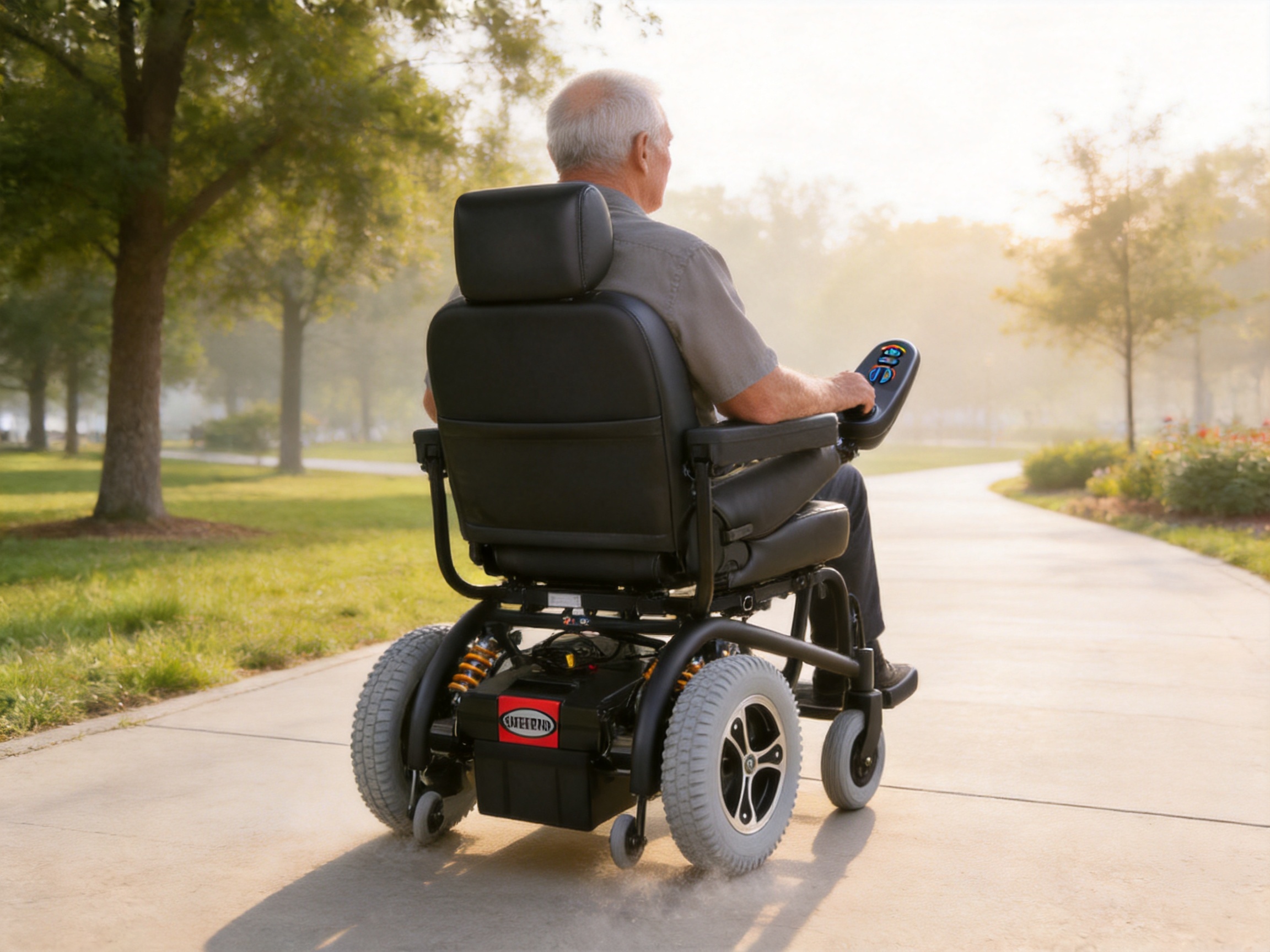
The iPower Sport may benefit adults who need powered mobility for regular outdoor movement and who value stability over minimal weight. It can be considered by users who travel around residential communities, paved parks, shopping areas, large properties, accessible campuses, and other environments with suitable surfaces.
It may also be appropriate for users who find short-range travel chairs restrictive. The combination of dual motors, 40-ampere-hour batteries, large rear tires, and rear suspension is designed for more sustained use than many compact indoor models.
Caregivers and families may appreciate the supportive seat, anti-tip wheels, electromagnetic braking, and stable four-wheel configuration. However, caregivers should ensure that the user understands the controls or receives appropriate assistance. A test drive is recommended before purchase.
The product may be less suitable for customers who need a very light folding chair, frequently lift the wheelchair into a small car, or require highly specialized clinical seating. Its heaviest part weighs 56 kg, so transportation and storage must be planned in advance.
Technical Specification Table
| Specification | Details |
|---|---|
| Product type | Four-wheel heavy-duty electronic wheelchair |
| Overall dimensions | 980 × 600 × 1180 mm, length × width × height |
| Maximum forward speed | 8 km/h, approximately 5 miles per hour |
| Maximum driving gradient | 10 degrees |
| Stated driving range | 30–40 km, approximately 19–25 miles |
| Weight capacity | 120 kg, approximately 265 pounds |
| Suspension | Rear suspension |
| Front tires | 8 × 2.5 inches |
| Rear tires | 14 × 3 inches |
| Brake system | Electromagnetic brake |
| Battery system | Two 12-volt, 40-ampere-hour lead-acid batteries |
| Charger | DC 24 volts, 5 amps; AC input 115–230 volts |
| Charging time | Approximately 6–8 hours |
| Motors | Two 24-volt, 320-watt motors |
| Motor controller | 24 volts, 50 amps; PG controller from the United Kingdom |
| Heaviest part | 56 kg, approximately 123 pounds |
| Primary design strengths | Four-wheel stability, outdoor tires, rear suspension, cushioned seat, adjustable seat back, and extended range |
Frequently Asked Questions
Is the iPower Sport intended mainly for indoor or outdoor use?
The product is better suited to outdoor and mixed-use mobility than to indoor-only operation. Its four-wheel layout, large pneumatic tires, rear suspension, and 8 km/h maximum speed support travel on suitable outdoor paths. Users should confirm that its 600 mm width and overall dimensions are compatible with indoor spaces, doorways, elevators, and corridors.
What is the maximum user weight?
The stated maximum weight capacity is 120 kg, or approximately 265 pounds. This figure includes the user and any carried items. Remaining below the rating helps preserve stability, braking response, motor performance, and range.
How far can it travel on one charge?
The stated driving range is 30–40 km, or approximately 19–25 miles. Actual range varies with terrain, user weight, temperature, tire pressure, speed, battery age, slopes, and driving style. Users should plan trips with a safety reserve and recharge before the batteries become fully depleted.
How long does charging take?
The listed charging time is approximately 6–8 hours. Charging should be performed with the specified charger in a dry, ventilated area. The charger and battery system should be inspected if unusual heat, odor, noise, or charging behavior occurs.
Does it use lithium batteries?
No. The listed battery system uses two 12-volt, 40-ampere-hour lead-acid batteries. Lead-acid batteries are widely used and serviceable, but they are heavier than many lithium battery systems. Their condition has a direct effect on range and performance.
What advantages do the large rear tires provide?
The 14-inch by 3-inch rear tires support outdoor travel by helping the wheelchair roll over small surface irregularities. Because they are pneumatic, they may also provide some cushioning when correctly inflated. They require regular pressure checks and inspection for damage.
What is the purpose of the rear suspension?
The rear suspension is designed to reduce the effect of vibration and minor bumps transmitted through the rear portion of the chassis. It can contribute to a more comfortable ride on appropriate paved and moderately uneven surfaces.
What does the electromagnetic brake do?
The electromagnetic brake is designed to engage when the drive control is released or power is interrupted. It helps the wheelchair stop and remain stationary. Users must still operate carefully, avoid unsuitable slopes, and have the braking system inspected if stopping performance changes.
Can the seat back be adjusted?
Yes. The product includes an adjustable seat back. Adjustments should be made while stationary and should be set to provide a comfortable, controlled posture for the user.
Is this wheelchair easy to lift into a car?
The heaviest part is listed as 56 kg, approximately 123 pounds. This means that many users will need a ramp, vehicle lift, loading platform, or assistance for transportation. It is not intended to compete directly with ultra-light folding mobility chairs.
Is the product a medical device?
The supplied information identifies it as a non-medical device for the US market. Buyers should review applicable local requirements and consult a qualified professional when the product is being considered for clinical positioning, rehabilitation, pressure management, or other medical needs.
What should be checked before purchase?
Buyers should confirm dimensions, user capacity, battery and charger configuration, charging requirements, transport arrangements, warranty coverage, service support, replacement parts, local regulations, and compatibility with the intended home and travel environments.
How does it compare with a folding travel scooter?
A folding travel scooter may be lighter and easier to place in a vehicle. The iPower Sport provides a more substantial four-wheel platform, larger rear tires, rear suspension, greater stated range, and a higher 120 kg capacity. The choice depends on whether portability or outdoor performance is the main priority.
Conclusion
The iPower Sport is designed for users who need more than basic indoor electric mobility. Its main strengths are the stable four-wheel chassis, large pneumatic tires, rear suspension, anti-tip wheels, cushioned seat, adjustable seat back, electromagnetic braking, dual 320-watt motors, and 30–40 km stated range. Together, these features create a practical heavy-duty platform for suitable outdoor and mixed-use environments.
The product’s 24-volt electrical system combines two lead-acid batteries with a 50-ampere controller and dual motors. This configuration emphasizes established serviceability and useful travel performance, while the 8 km/h maximum speed supports efficient movement without positioning the wheelchair as a high-speed vehicle. The 120 kg weight capacity further distinguishes it from many smaller travel products.
Its principal trade-off is portability. With a heaviest part of 56 kg, it requires more planning for transport than a folding or ultra-light model. Users should also account for pneumatic tire maintenance, battery care, charging space, and appropriate storage. These considerations are reasonable for a product focused on stability, comfort, and outdoor range.
The manufacturer’s more than ten years of experience, dedicated mobility-product focus, sizable Suzhou production facility, stated research and development capabilities, international export experience, and quality-oriented management provide a solid foundation for production and distribution. Dealers and customers should still verify market-specific documentation, service arrangements, and compliance information before purchase.
For users seeking a robust four-wheel electric wheelchair for regular travel, the iPower Sport offers a balanced combination of comfort, stability, range, and practical mechanical performance. When correctly selected, maintained, and operated within its specifications, it can support greater independence and make everyday outdoor mobility more convenient.
References
1. Product specification sheet for the iPower Sport four-wheel electronic wheelchair, including dimensions, performance, battery, motor, braking, and tire information.
2. Manufacturer-provided company profile describing research and development, production experience, factory facilities, intellectual property, export markets, and quality principles.
3. General mobility equipment maintenance principles covering pneumatic tires, lead-acid batteries, electromagnetic braking systems, suspension components, and electrical connectors.
4. General guidance for responsible operation of powered wheelchairs and mobility scooters on slopes, paved paths, pedestrian areas, and mixed-use outdoor environments.
5. General product evaluation criteria for mobility equipment, including user capacity, range, seating comfort, transport requirements, serviceability, and storage conditions.