 info@sweetrich.cn
  +86-(0)512-82283871
Content
- 1 Product Overview
- 2 Key Performance Features
- 3 Adjustability and User Comfort
- 4 Technical Specifications
- 5 Advantages Compared with Common Alternatives
- 6 Manufacturing Strengths and Product Development
- 7 Battery, Charging, and Electrical Considerations
- 8 Safety and Responsible Operation
- 9 Maintenance Recommendations
- 10 Optional Equipment and Future-Oriented Features
- 11 Who May Benefit from This Wheelchair?
- 12 Purchasing and Evaluation Checklist
- 13 Frequently Asked Questions
- 13.1 Is the iPower GTS Plus a medical device?
- 13.2 What is the maximum user weight?
- 13.3 How fast can it travel?
- 13.4 How far can it travel on one charge?
- 13.5 Can the wheelchair be used outdoors?
- 13.6 Can the joystick be installed on either side?
- 13.7 How long does charging take?
- 13.8 What type of batteries does it use?
- 13.9 Does it have suspension?
- 13.10 Is it easy to transport?
- 13.11 Does it include lights?
- 13.12 Is a power tilt and lift system available?
- 13.13 What makes the model different from a compact travel scooter?
- 14 Conclusion
- 15 References
- 16 Product: iPower GTS Plus More popular type second hand off road light power electric electronic wheelchair for the elderly
Choosing a power wheelchair for outdoor mobility requires more than selecting a motor and a seat. Users and caregivers must consider stability, driving range, maneuverability, comfort, control access, braking, serviceability, and the ability to handle changing terrain. The iPower GTS Plus is designed around these practical requirements. It combines a reinforced heavy-duty platform, dual high-output motors, large pneumatic tires, rear suspension, adjustable seating features, and a two-sided joystick arrangement in one outdoor-oriented electric wheelchair.
This article examines the product’s design, technical specifications, user benefits, manufacturing background, and suitability for different mobility needs. It also explains how the wheelchair compares with common alternatives in the same general category. The product information supplied for this article identifies the unit as a non-medical device for the United States market. It should therefore be evaluated as a mobility product rather than as a medical treatment or therapeutic device.
The model is intended for elderly users, people with limited walking ability, and individuals who need a stable powered chair for daily outdoor activities. Its design is especially relevant for users who may travel across paved paths, residential roads, compacted ground, park surfaces, ramps, and other moderate outdoor environments. As with any powered mobility device, actual performance depends on user weight, terrain, tire pressure, temperature, battery condition, driving style, and maintenance.
Product Overview
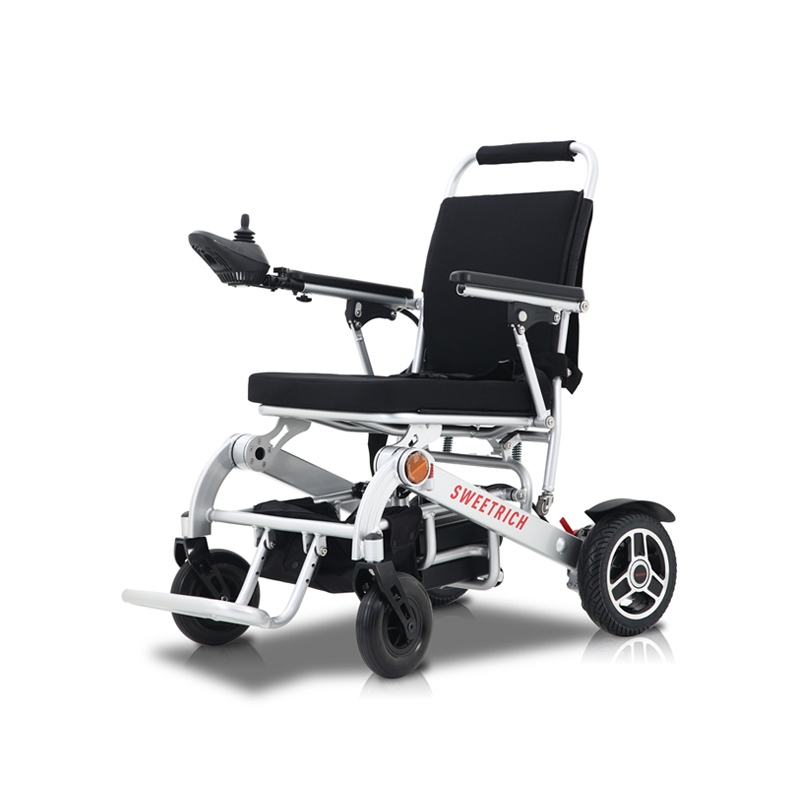
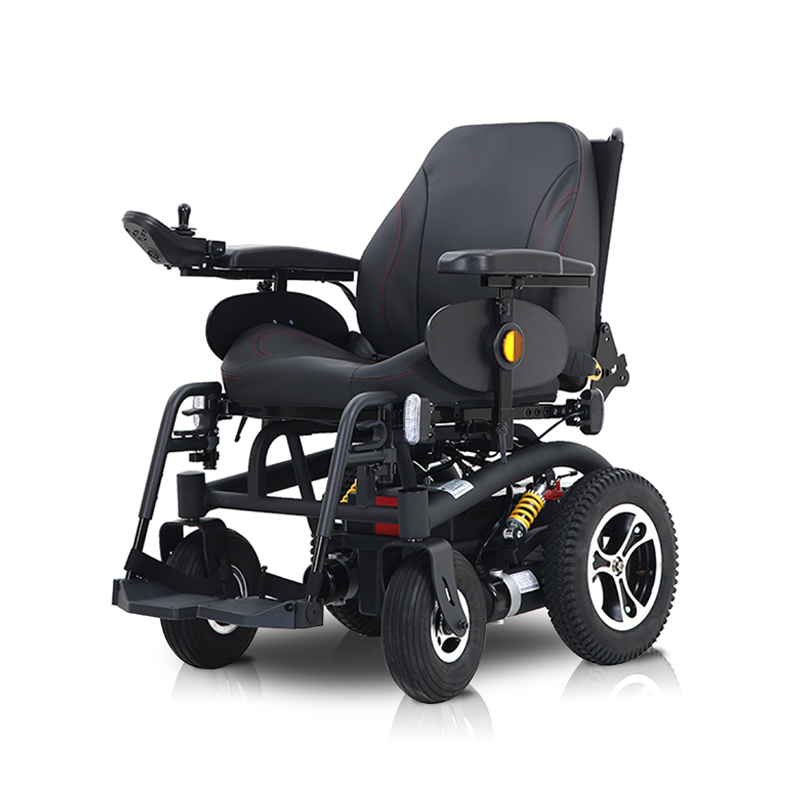
The iPower GTS Plus is a heavy-duty electric wheelchair developed with outdoor performance as a central design objective. Its two 350-watt motors provide a combined rated motor output of 700 watts. This dual-motor arrangement supports controlled movement across ordinary outdoor surfaces and gives the chair the traction characteristics expected from a larger power wheelchair.
The wheelchair has a stated maximum forward speed of 8 kilometers per hour, equivalent to approximately 5 miles per hour. Its stated maximum driving gradient is 10 degrees, while the advertised maximum range is 30 to 40 kilometers, or approximately 19 to 25 miles. These figures provide a useful reference point, although real-world range and climbing ability may vary substantially according to operating conditions.
A 136-kilogram, or 300-pound, weight capacity makes the model suitable for a broad group of users. The weight rating includes the user and should be considered together with any bags, accessories, oxygen equipment, or other items carried on the chair. Staying within the rated capacity is important for braking performance, battery endurance, stability, and long-term mechanical reliability.
The overall dimensions are listed as 1,045 millimeters in length, 625 millimeters in width, and 1,080 millimeters in height. This provides a relatively substantial outdoor platform while retaining a width that may be practical for many residential routes and access points. Before purchase, users should compare the width with doorways, elevators, ramps, vehicle lifts, storage areas, and the intended transport solution.
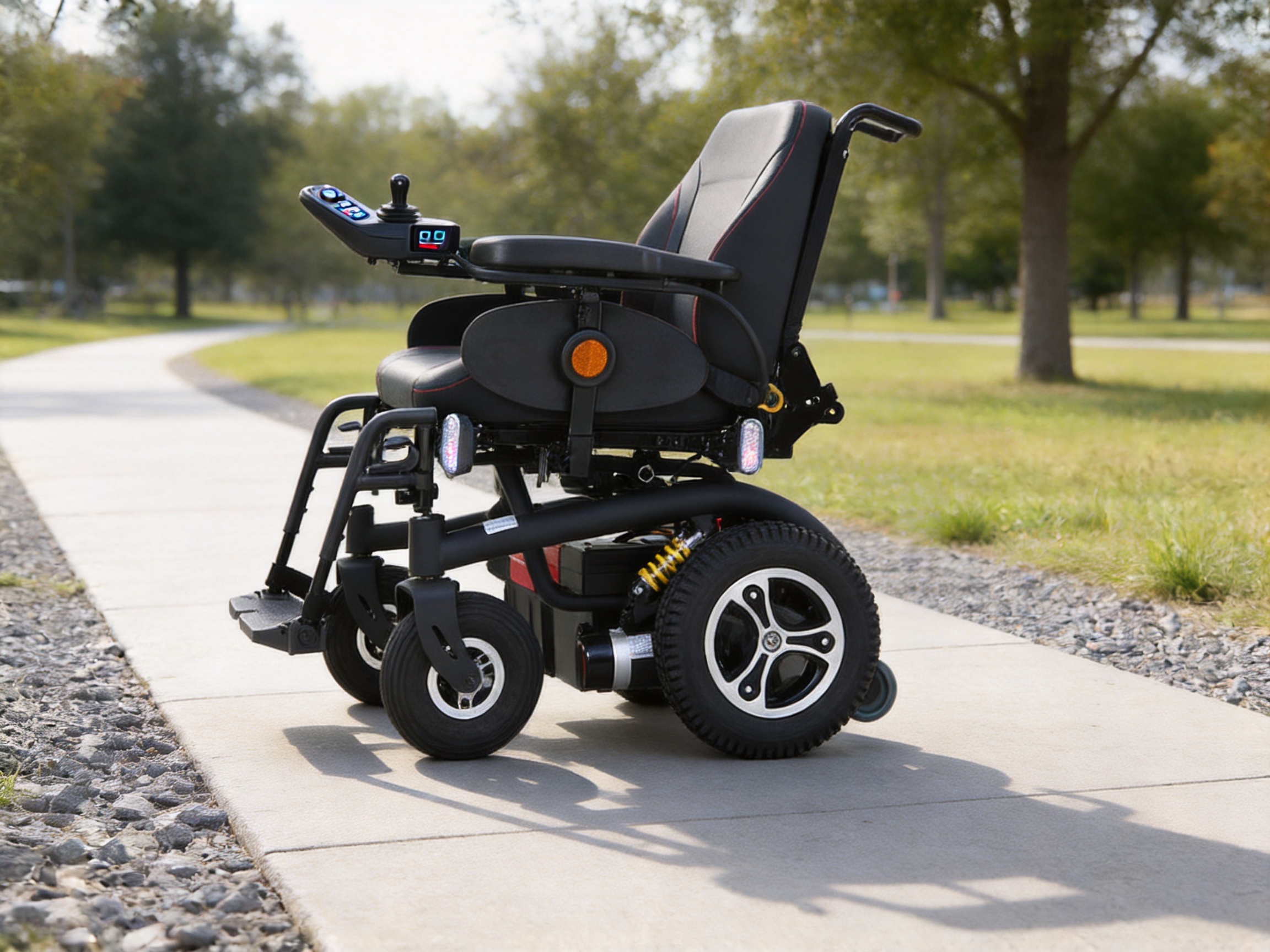
The model includes a 10-inch front wheel and 14-inch rear pneumatic tires. Larger wheels generally roll more smoothly over small changes in surface height than very small scooter-style wheels. The rear suspension further contributes to the outdoor orientation of the design by helping absorb some vibration from uneven surfaces.
iPower GTS Plus More popular type second hand off road light power electric electronic wheelchair for the elderly
Key Performance Features
Dual-Motor Power System
The wheelchair uses two 24-volt, 350-watt motors supplied as a matched drive system. Together, the motors provide a stated total output of 700 watts. A dual-motor configuration can offer several practical benefits over a low-power single-motor arrangement. It can provide more balanced drive force, support independent wheel movement during turns, and help the chair maintain progress when traveling over moderate inclines or rougher ground.
The motor system is controlled by a 24-volt, 50-amp controller specified for PG and Dynamic control systems. The controller is a critical part of the driving experience because it translates joystick commands into acceleration, deceleration, direction changes, and turning response. A suitable controller can make the chair easier to operate at low speed and more predictable when maneuvering near furniture, curbs, gates, or other obstacles.
Motor power should not be interpreted as a guarantee that the wheelchair can climb every hill or cross every surface. A 10-degree maximum gradient is a stated product specification, not a recommendation to approach slopes without caution. Surface conditions, wet grass, loose gravel, tire pressure, user weight, battery charge, and the direction of travel can all influence safe climbing performance.
Outdoor-Oriented Wheel and Tire Design
The 10-inch front wheel and 14-inch rear tires are among the most visible advantages of the design. Large pneumatic tires can provide a more forgiving ride than narrow solid tires when traveling across cracked pavement, compacted paths, and minor surface irregularities. Their larger diameter also helps the wheels roll over small obstacles with less abrupt impact.
Pneumatic tires require regular inspection and inflation. Correct pressure is important because an underinflated tire can increase rolling resistance, reduce range, affect steering, and increase the chance of sidewall damage. An overinflated tire may reduce ride comfort and decrease the tire’s ability to conform to the ground. Users should follow the manufacturer’s recommended pressure and check the tires before extended trips.
The rear suspension complements the pneumatic tires. Suspension cannot eliminate every vibration, but it can reduce the amount of shock transferred to the seat and frame when the wheelchair moves over uneven ground. This is particularly helpful for users who spend considerable time outdoors or who find repeated jolts uncomfortable.
Speed and Range
The maximum forward speed is listed as 8 kilometers per hour. This is suitable for ordinary outdoor mobility and can help users keep pace with walking companions in many situations. The appropriate operating speed should always be adjusted to the environment. Lower speeds are preferable around pedestrians, in crowded areas, on slopes, near driveways, and when visibility is restricted.
The stated driving range of 30 to 40 kilometers is based on the use of two 12-volt, 40-ampere-hour lead-acid batteries. Range figures are normally measured under controlled conditions. Actual distance may be lower when the chair is used by a heavier occupant, driven continuously uphill, operated on soft ground, exposed to cold temperatures, or used with frequent starts and stops.
Users should plan a reserve rather than treating the maximum range as the distance that can always be completed. Battery age, charging habits, storage temperature, tire condition, and terrain all influence available energy. For regular commuting or long recreational journeys, the user should identify charging locations and maintain a practical return margin.
Electromagnetic Braking
The product uses an electromagnetic brake system. This type of brake is commonly integrated into powered mobility equipment so that the drive system can automatically help hold the chair when the controls are released. It can be useful when stopping on level ground or during ordinary low-speed operation.
Electromagnetic braking does not remove the need for safe driving practices. Users should avoid steep slopes beyond the stated limit, maintain a safe distance from edges, inspect the brake response regularly, and follow local rules for powered mobility devices. The brake system should be checked by qualified service personnel if the wheelchair rolls unexpectedly, stops unevenly, or behaves differently from normal.
Adjustability and User Comfort
Adjustable Seat Width
One of the product’s useful design features is an adjustable seat width. A flexible seat configuration can make it easier to accommodate users with different body sizes and clothing requirements. It may also provide a more secure sitting position than a one-size-fits-all seat.
Seat width should be adjusted so that the user has adequate support without excessive pressure at the hips or thighs. A seat that is too narrow can cause discomfort during extended use, while a seat that is too wide may reduce lateral support and make posture control more difficult. The correct setting should allow the user to sit upright, operate the joystick comfortably, and maintain a stable position during turns.
Adjustable Armrest Height
Adjustable armrests allow the chair to be adapted to the user’s arm length, shoulder position, and preferred driving posture. Correct armrest height can reduce strain in the shoulders and neck and may make it easier to maintain a relaxed grip on the joystick.
The armrests should support the forearms without forcing the shoulders upward. Users should also confirm that the armrests do not interfere with transfers, tables, desks, or vehicle loading equipment. Caregivers should check that all adjustment mechanisms are locked before the chair is used.
Two-Sided Joystick Use
The joystick is available for use on both sides. This feature can be important for users who have limited strength, reduced coordination, or restricted movement on one side of the body. The ability to position the control on the preferred side may make daily operation more accessible and can simplify the process of adapting the wheelchair to a new user.
An optional swing-away controller mount is also available. This allows the control unit to move away from the user when approaching a table, transferring, or entering a confined position. A swing-away design can improve convenience, but users should make certain that the controller returns to a secure operating position before driving.
Joystick sensitivity and control response should be introduced gradually. New users benefit from practice in an open, level area before attempting ramps, public paths, or crowded environments. Training should cover forward and reverse movement, turning, braking, emergency stopping, and the use of the controller mount.
Technical Specifications
| Specification | Product Information |
|---|---|
| Product type | Heavy-duty outdoor electric wheelchair |
| Overall dimensions | 1,045 × 625 × 1,080 millimeters, length × width × height |
| Maximum forward speed | 8 kilometers per hour, approximately 5 miles per hour |
| Maximum driving gradient | 10 degrees |
| Stated driving range | 30 to 40 kilometers, approximately 19 to 25 miles |
| Weight capacity | 136 kilograms, approximately 300 pounds |
| Suspension | Rear suspension |
| Front tire | 10 × 3 inches |
| Rear tires | 14 × 3 inches, pneumatic |
| Brake system | Electromagnetic brake |
| Battery system | Two 12-volt, 40-ampere-hour lead-acid batteries |
| Charger | DC 24 volts, 5 amperes; AC 115 to 230 volts input |
| Charging time | Approximately 6 to 8 hours |
| Motors | Two 24-volt, 350-watt motors |
| Motor controller | 24 volts, 50 amperes; PG and Dynamic systems specified |
| Heaviest stated part | 59 kilograms in the supplied product information |
The supplied specifications identify the heaviest part as 59 kilograms and also show a parenthetical value of 37 pounds. These two values do not represent the same weight, because 59 kilograms is approximately 130 pounds. Buyers and logistics providers should confirm the correct figure with the manufacturer before arranging transport, lifting equipment, vehicle loading, or home delivery.
Advantages Compared with Common Alternatives
The iPower GTS Plus occupies a different position from lightweight indoor power chairs, compact travel wheelchairs, and standard mobility scooters. Its strongest advantages are associated with outdoor stability, motor output, adjustable fit, and control flexibility.
Compared with Lightweight Indoor Power Chairs
Lightweight indoor chairs are often designed for portability and compact turning. They may be convenient in homes, shopping centers, and smooth indoor spaces, but they may have smaller wheels, lower ground clearance, less suspension, and lower weight capacities. The iPower GTS Plus offers a more substantial platform for users who need greater outdoor capability.
The trade-off is that a heavy-duty chair may be more difficult to lift, transport, or store. The listed heaviest-part weight indicates that loading requires planning and may call for a ramp, lift, hoist, or adapted vehicle. Therefore, the product’s outdoor advantages are most valuable to users who prioritize stability and range over maximum portability.
Compared with Basic Electric Wheelchairs
Basic electric wheelchairs may use lower-powered motors and fixed seating dimensions. They can be suitable for limited daily travel, but users with changing seating requirements or a higher body weight may need more adjustability. The adjustable seat width and armrest height of this model provide a more adaptable foundation.
The dual 350-watt motors and large tires also make the product more appropriate for users who regularly encounter ramps, rough sidewalks, outdoor paths, or uneven transitions. Performance remains dependent on terrain and battery condition, but the hardware is clearly oriented toward more demanding use than a minimal indoor chair.
Compared with Travel Scooters
Travel scooters are popular because many are compact and easy to disassemble. However, some compact scooters have narrow seats, small tires, limited suspension, and lower weight capacities. The iPower GTS Plus is a wheelchair rather than a scooter and provides joystick operation, side-selectable controls, adjustable armrests, and a more supportive seated configuration.
A scooter may be preferable for a user who values quick disassembly and a tiller-style control. The electric wheelchair may be preferable for someone who needs joystick control, closer seating support, or a platform designed for heavier outdoor use. The decision should be based on posture, hand function, transfer ability, storage, and the surfaces encountered in daily life.
Compared with Single-Motor Designs
A dual-motor layout can provide a balanced drive arrangement and more consistent traction than a basic single-motor system. It can also support tighter controlled turns because the drive wheels can be managed through the controller as a coordinated pair. This is useful when navigating paths, doorways, and outdoor corners.
Two motors also mean that the system contains more drive components that require inspection. Tires, motors, wiring, connectors, brakes, and the controller should be maintained according to the manufacturer’s service schedule. The product’s advantage is therefore strongest when the owner follows a regular maintenance program.
Manufacturing Strengths and Product Development
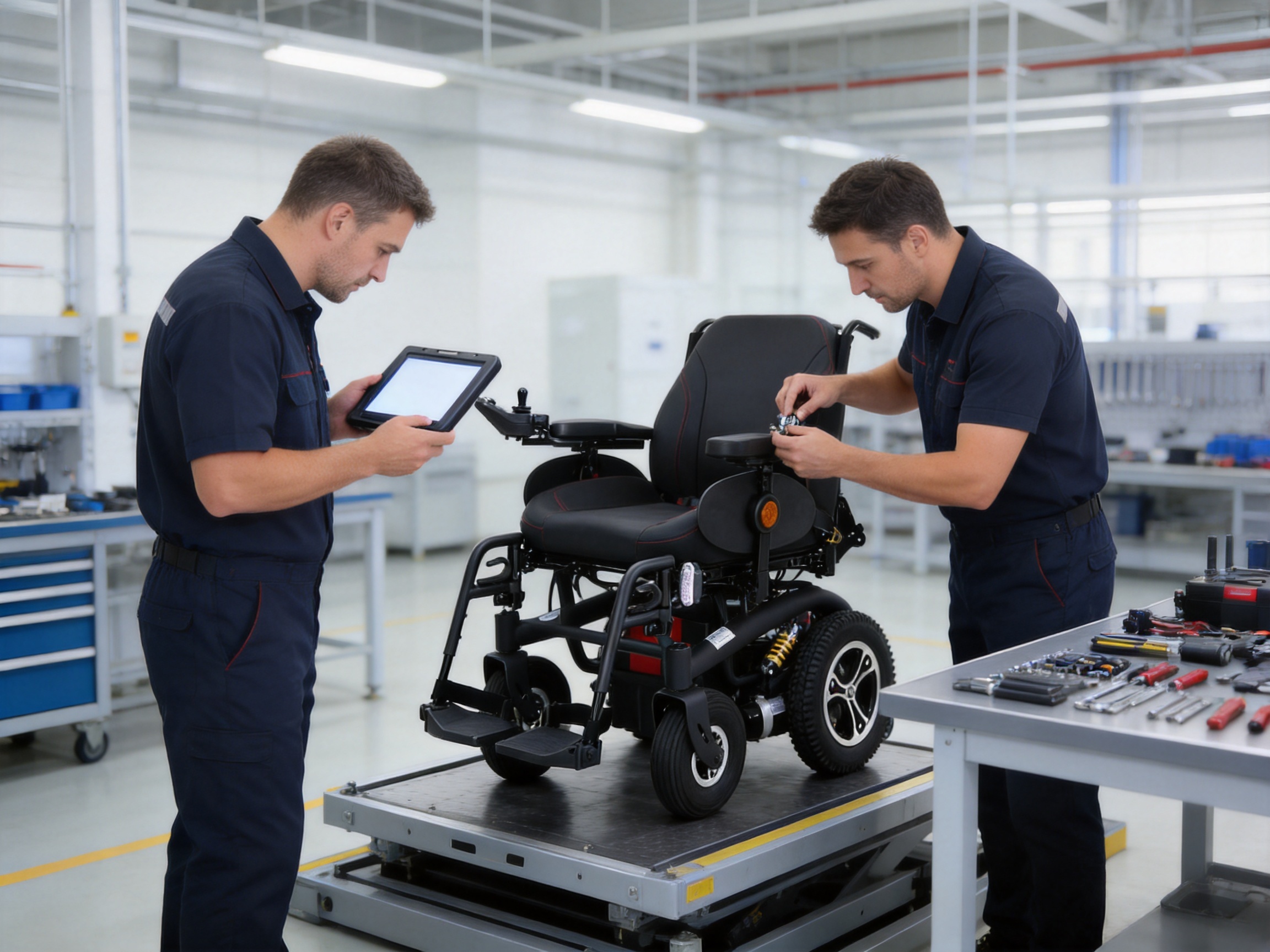
The manufacturer information describes a high-tech mobility company established in 2011 and located in Suzhou Industrial Zone, Jiangsu, China. The company operates a factory covering approximately 30,000 square meters on a site of about 60 acres. More than a decade of experience in research, development, and production provides an important foundation for designing mobility products that must combine mechanical strength, electrical control, user comfort, and safety-related reliability.
Manufacturing a heavy-duty electric wheelchair requires coordination across multiple disciplines. The frame must support the rated load while maintaining alignment between the wheels and drive components. The seating system must provide adjustment without excessive looseness. The electrical system must deliver current to the motors through a controller that responds predictably. The brake, battery, charger, and wiring must work together as a complete operating system.
The company states that it owns intellectual property rights related to its electric scooters and power wheelchairs. Proprietary design experience can help a manufacturer refine frame geometry, drive layouts, controller integration, seating adjustment, and accessory compatibility. It also allows product development teams to apply lessons from field use to subsequent models.
Research and Development
Research and development in mobility equipment should begin with actual user requirements. Elderly users and people with disabilities may need simple controls, stable seating, easy access to armrests, predictable braking, and the ability to travel beyond smooth indoor floors. The iPower GTS Plus reflects these requirements through its outdoor tires, rear suspension, joystick flexibility, adjustable seat width, and optional swing-away controller mount.
Development work also involves matching components rather than selecting them independently. The 24-volt battery system, dual 350-watt motors, 50-ampere controller, electromagnetic brakes, and charger must be compatible in voltage, current, thermal behavior, and operating logic. Proper system integration helps reduce inconsistent acceleration, electrical stress, and premature component wear.
Production Management
The company describes strict production management and scientific product design as part of its quality approach. In practical terms, a controlled production process should include incoming inspection of key components, frame and weld checks, electrical connection inspection, fastener verification, battery and charger testing, brake testing, and functional driving checks.
Quality control is especially important for mobility products because a small defect can affect daily independence. A loose connector can cause intermittent operation. Incorrect tire pressure can influence range and steering. Poorly secured seating hardware can reduce user confidence. Inconsistent controller calibration can make the chair difficult for a first-time operator. A structured inspection process helps identify these issues before delivery.
Manufacturing strength is not limited to factory size. It also includes the ability to maintain consistent specifications, document production steps, train workers, trace components, manage revisions, and support distributors after shipment. The company’s stated export activity in North America, Europe, Japan, Australia, the Middle East, Russia, and other regions indicates experience serving varied markets and customer requirements.
Integrated Product Quality
The product’s benefits are most meaningful when its components operate as an integrated system. Large tires without suitable suspension may still produce an uncomfortable ride. Powerful motors without a responsive controller may be difficult to manage. Adjustable seating without secure locking mechanisms may not provide adequate support. The model’s combination of drive, seating, control, and braking features demonstrates the importance of integrated design.
The manufacturer’s stated emphasis on quality, customer service, and long-term cooperation is also relevant to commercial buyers. Distributors, care facilities, rental operators, and mobility retailers typically require more than a single shipment. They need specification consistency, replacement parts, technical communication, and an organized response to product questions.

Battery, Charging, and Electrical Considerations
The chair uses two 12-volt, 40-ampere-hour lead-acid batteries connected to create a 24-volt system. Lead-acid batteries are widely used in mobility equipment because they are familiar, comparatively accessible, and capable of providing the current required by wheelchair motors. Their disadvantages include considerable weight, gradual capacity loss, and the need for appropriate charging and storage practices.
The charger is specified as DC 24 volts and 5 amperes, with an AC input range of 115 to 230 volts. The stated charging time is 6 to 8 hours. Users should connect the correct charger, place it in a dry and ventilated area, and avoid covering it during operation. The charger should be allowed to complete its cycle according to the manufacturer’s instructions rather than being disconnected repeatedly after only a short period.
Battery terminals and cables should be kept clean, tight, and protected from damage. A battery that appears swollen, leaks, becomes unusually hot, or produces an unusual smell should not be used until inspected by qualified personnel. Batteries should not be modified or replaced with a different chemistry or voltage without confirmation that the controller and charger are compatible.
Because lead-acid batteries are heavy, they contribute substantially to the total transport weight. They also affect the center of gravity and should remain correctly secured in their designated compartment. When replacing batteries, both batteries should generally be replaced as a matched pair unless a qualified technician confirms another procedure.
Safety and Responsible Operation
Safe operation begins with an appropriate assessment of the user. The operator should have sufficient vision, attention, upper-limb function, and understanding to control the joystick. If the user has cognitive, balance, or coordination limitations, a qualified professional or caregiver should help determine whether the device is suitable and should provide supervision when necessary.
Before the first outdoor trip, the user should practice in a clear indoor or outdoor area. Training should include starting and stopping, gentle turns, reversing, operating on a slight incline, approaching a doorway, and avoiding fixed objects. The user should learn how quickly the chair responds when the joystick is released and should avoid sudden high-speed direction changes.
Slopes require special caution. The stated maximum gradient is 10 degrees, but users should not treat this as a target operating condition. A ramp’s surface, width, wetness, cross-slope, and transition at the top or bottom can be as important as its angle. Diagonal travel across a slope can increase the risk of instability. Users should follow local accessibility guidance and avoid surfaces that exceed their confidence or the chair’s operating instructions.
Curbs and steps should not be attempted unless the product is specifically rated for them and the maneuver has been approved by the manufacturer. A large tire does not automatically mean that the wheelchair can safely climb a curb. Sudden impacts can damage the frame, wheels, suspension, motors, or seating system.
Visibility is important when driving outdoors. Reflective materials, lights, and the optional light package may improve visibility in low-light conditions, but they do not replace caution. Users should obey local traffic and pedestrian rules, use designated crossings where available, and remain alert around vehicles, bicycles, and reversing equipment.
Maintenance Recommendations
Regular maintenance protects both performance and user confidence. Before each use, the operator should inspect the tires, check for visible damage, confirm that the joystick and armrests are secure, and verify that the batteries have enough charge for the planned journey. The chair should not be used if the brake response is abnormal or if a wheel appears loose.
Tire pressure should be checked regularly, particularly before long trips. The tread and sidewalls should be inspected for cuts, embedded objects, or excessive wear. Pneumatic tires should be replaced when their condition can no longer support safe operation.
The frame and suspension should be examined for loose fasteners, unusual noise, cracks, or deformation. Moving parts should be serviced according to the manufacturer’s instructions. Unapproved lubricants or modifications can interfere with brakes, electrical components, or adjustment mechanisms.
The joystick and controller should be kept dry and protected from impact. Water exposure can damage electronic controls even when the wheelchair’s mechanical components appear unaffected. If the chair operates intermittently, moves without a clear command, or displays unusual control behavior, it should be stopped and assessed by a qualified technician.
At regular intervals, a service provider should inspect the batteries, charger output, motor connections, electromagnetic brakes, wiring harness, frame fasteners, seat adjustments, and suspension. A written maintenance record can help identify gradual changes and support warranty or service discussions.
Optional Equipment and Future-Oriented Features
The product information identifies an optional light package. Lighting can be useful for users who travel in early morning, evening, shaded areas, or locations where visibility changes quickly. The correct installation should protect wiring from abrasion and ensure that controls remain easy to reach.
An optional swing-away controller mount is available for users who need greater clearance during transfers or when approaching tables. This accessory can also help caregivers position the control unit away from the user during certain activities. It should be operated carefully, and the controller should be secured before driving.
The product information also mentions an optional power tilt and lift system as a future or forthcoming option. Because availability and specifications may change, buyers should confirm whether this feature is currently offered, what adjustment range it provides, how it affects total weight, and whether it changes the chair’s center of gravity or transport requirements.
Accessory compatibility should always be confirmed before installation. Added baskets, bags, oxygen holders, ramps, or seating components can change weight distribution and may affect stability, range, or the rated capacity. Accessories should never obstruct the joystick, brakes, tires, battery compartment, or emergency access points.
Who May Benefit from This Wheelchair?
The iPower GTS Plus may be a strong candidate for users who need a powered wheelchair for regular outdoor movement and who value stability over minimum weight. Its 300-pound capacity, dual-motor drive, large tires, rear suspension, and range specification make it relevant to users who travel beyond the immediate indoor environment.
It may also suit families and caregivers who need adjustable seating features. The adjustable seat width and armrest height can help create a more personalized fit, while the two-sided joystick arrangement may support users with different control preferences.
The model may be less suitable for users who must frequently lift the chair into a standard car without mechanical assistance. The listed dimensions, battery system, and heavy-duty construction indicate that transport planning is essential. Buyers should evaluate vehicle compatibility before purchase rather than assuming that the chair will fit in a conventional trunk.
It may also be unsuitable for users who primarily need a very compact indoor chair. In narrow apartments, small elevators, and highly confined rooms, a lighter and shorter model may be easier to maneuver. Product selection should be based on the user’s complete daily routine rather than on a single specification such as motor power.
Purchasing and Evaluation Checklist
Prospective buyers should confirm the final configuration, including seat dimensions, control-side arrangement, battery type, charger compatibility, lighting, swing-away mount, and any power seating options. They should also ask for the current user manual, warranty terms, spare-parts policy, and recommended service schedule.
It is useful to measure the home before delivery. Doorways, thresholds, corridors, lifts, ramps, charging areas, and storage spaces should all be checked. The user should also consider how the wheelchair will be transported to medical appointments, shopping areas, parks, or travel destinations.
Buyers should clarify the meaning of the stated range and maximum gradient. Questions should cover the test conditions, occupant weight, terrain, battery age, temperature, and tire pressure used to obtain the figures. These details help prevent unrealistic expectations.
Commercial purchasers should request consistent documentation for every unit. This may include serial-number records, battery specifications, electrical inspection information, packing details, replacement-part numbers, and training materials. Clear documentation supports efficient after-sales service and helps caregivers operate the equipment consistently.
Frequently Asked Questions
Is the iPower GTS Plus a medical device?
The supplied product information identifies it as a non-medical device for the United States market. It is intended to provide powered mobility and should not be described as a device that diagnoses, treats, or cures a medical condition. Users with specific clinical or postural requirements should consult an appropriate healthcare or rehabilitation professional.
What is the maximum user weight?
The stated weight capacity is 136 kilograms, or approximately 300 pounds. This rating includes the user and should also account for carried items and accessories. Remaining below the maximum capacity is recommended for comfortable, stable, and reliable operation.
How fast can it travel?
The stated maximum forward speed is 8 kilometers per hour, or approximately 5 miles per hour. The suitable speed depends on the environment, user experience, surface, visibility, and local regulations. Users should reduce speed around pedestrians, slopes, obstacles, and confined spaces.
How far can it travel on one charge?
The stated maximum driving range is 30 to 40 kilometers, or approximately 19 to 25 miles. Actual range can be lower because of user weight, hills, rough surfaces, tire pressure, battery condition, temperature, and frequent stopping. Users should plan trips with a reserve of battery power.
Can the wheelchair be used outdoors?
Yes. The product is designed with outdoor performance in mind and includes large pneumatic tires, rear suspension, dual motors, and a stated 10-degree maximum driving gradient. Outdoor operation should still be limited to surfaces and conditions suitable for the chair and user. Water, deep mud, loose gravel, steep slopes, steps, and unstable edges require particular caution.
Can the joystick be installed on either side?
The product information states that the joystick is available for both sides of use. An optional swing-away controller mount is also available. The final control configuration should be confirmed with the supplier before ordering.
How long does charging take?
The stated charging time is approximately 6 to 8 hours. Charging time may vary according to battery condition, remaining charge, temperature, and charger operation. The supplied charger should be used according to the manufacturer’s instructions.
What type of batteries does it use?
The wheelchair uses two 12-volt, 40-ampere-hour lead-acid batteries in a 24-volt system. Replacement batteries should match the required voltage, capacity, physical dimensions, terminal arrangement, and electrical specifications.
Does it have suspension?
Yes. The listed specification identifies rear suspension. The suspension works together with the large pneumatic tires to help reduce vibration on suitable outdoor surfaces.
Is it easy to transport?
The chair is a heavy-duty outdoor model rather than an ultra-light travel chair. The supplied information lists a heaviest part of 59 kilograms, although a conflicting parenthetical pound value is also shown. Buyers should verify the correct weight and plan for a ramp, vehicle lift, hoist, or other appropriate loading solution.
Does it include lights?
An optional light package is listed. Buyers should confirm whether lighting is included in the selected configuration or must be purchased separately.
Is a power tilt and lift system available?
The product information mentions an optional power tilt and lift system as a forthcoming feature. Availability, specifications, compatibility, and delivery timing should be confirmed directly with the supplier.
What makes the model different from a compact travel scooter?
The wheelchair emphasizes joystick control, adjustable seat width, adjustable armrests, dual-motor output, large tires, rear suspension, and a 300-pound capacity. A compact travel scooter may be easier to disassemble and transport, but it may not provide the same seating configuration or outdoor-oriented platform.
Conclusion
The iPower GTS Plus is a substantial outdoor electric wheelchair designed for users who need more than basic indoor mobility. Its main strengths include dual 350-watt motors, a 300-pound weight capacity, large pneumatic tires, rear suspension, electromagnetic braking, adjustable seat width, adjustable armrests, and joystick access on either side. Together, these features create a flexible platform for daily movement across suitable outdoor environments.
The product’s value is supported by the manufacturer’s stated experience in research, development, production, intellectual property, export management, and quality-focused manufacturing. A factory-scale operation and long-term industry experience can help support consistent production, component integration, technical documentation, and international customer service.
At the same time, buyers should evaluate the trade-offs carefully. The heavy-duty construction and lead-acid batteries contribute to transport weight. The advertised range depends on operating conditions. The 10-degree gradient specification should not be treated as a routine target. The conflicting heaviest-part weight information should be verified before purchasing or arranging delivery.
For users who prioritize outdoor stability, adjustable comfort, control flexibility, and strong powered performance, this model offers a compelling combination of features. Proper fitting, training, charging, maintenance, and route planning will be essential to obtaining the safest and most dependable ownership experience.
References
1. Supplied product specification sheet for the iPower GTS Plus heavy-duty electric wheelchair.
2. Supplied manufacturer profile for Suzhou Sweetrich Vehicle Industry Technology Co., Ltd.
3. General principles of powered wheelchair seating, control access, battery care, and mobility equipment maintenance.
4. General guidance on safe operation of powered mobility devices on slopes, pedestrian routes, and outdoor surfaces.