 info@sweetrich.cn
  +86-(0)512-82283871
Content
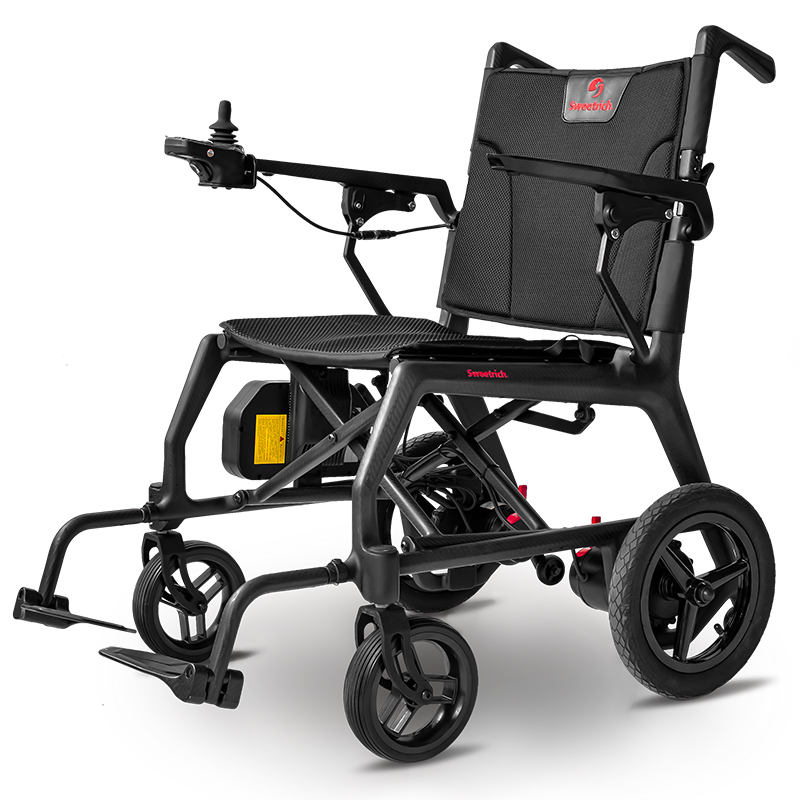
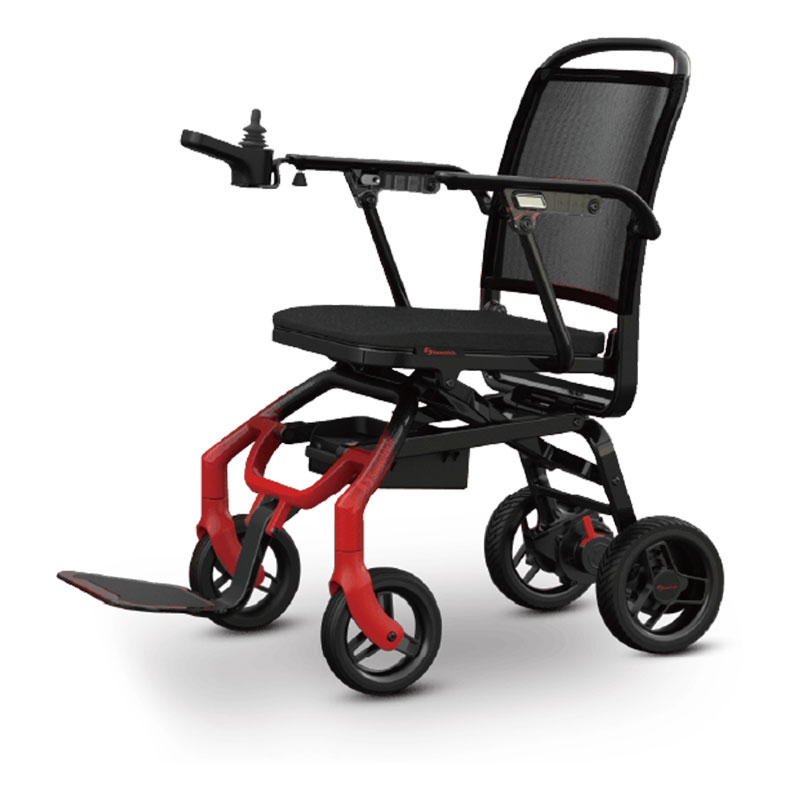
Traveling with limited mobility no longer means staying at home. A well-designed foldable power wheelchair gives users the chance to visit family, take vacations, or handle daily errands with greater ease. Its ability to collapse quickly and fit into a car trunk or airplane storage space has changed the way people plan their journeys.
Compact and Lightweight Design for Everyday Transport
One of the main reasons these wheelchairs work well for travel is their size when folded. The frame contracts to a fraction of its open dimensions, often small enough to slide into the trunk of a mid-size sedan or the cargo hold of an SUV without taking up the entire area. Manufacturers achieve this through the use of aircraft-grade aluminum or high-strength alloys that keep overall weight manageable—typically between 45 and 65 pounds including the batteries—while still supporting users up to 300–350 pounds.
The reduced weight matters both for lifting the chair into a vehicle and for staying within airline baggage allowances. Drivers and caregivers appreciate that the folded chair can usually be moved by one person without special equipment.
Quick-Release Folding Mechanism
Modern foldable power wheelchairs include simple folding systems that operate in seconds. A single lever or pull-handle releases the frame so it collapses forward or sideways. Reopening the chair is equally straightforward: lift the seat or backrest and the frame locks into place. No tools are required, and the process rarely takes more than 10–15 seconds.
This speed becomes especially helpful at airport curbside check-in, parking garages, or when transferring between a rideshare vehicle and a building entrance.
Airline-Approved Lithium-Ion Batteries
Battery regulations remain one of the biggest concerns for air travelers. Most foldable power wheelchairs now use lithium-ion batteries with capacities of 100–300 watt-hours (Wh), the range that airlines generally accept. Many models offer two smaller batteries (e.g., 120–150 Wh each) instead of one large unit, giving passengers the option to stay well under the 300 Wh limit per battery that applies worldwide.
Users should still contact the airline at least 48 hours before the flight to confirm exact requirements. Some carriers ask for the battery watt-hour rating to be clearly marked on the battery case, while others require a short technical specification sheet. Having this information ready prevents last-minute surprises at the gate.
Removable Components for Extra Space Savings
Footrests, armrests, and sometimes even the joystick controller detach in seconds on many models. Removing these parts reduces the folded dimensions further and protects delicate components during handling. A protective travel bag—often included or available as an accessory—adds an extra layer of cushioning when the chair is checked as luggage or placed in a car trunk.
Real-World Vehicle Fit
Before purchasing, measuring the trunk or cargo area of the vehicles used often helps avoid disappointment. Popular foldable models currently measure around 30–33 inches long, 24–26 inches wide, and 28–32 inches high when collapsed (figures vary by brand and configuration). These dimensions fit comfortably in many sedans, hatchbacks, and crossovers. Owners of smaller cars sometimes remove one or both batteries and store them on the rear seat to gain additional trunk space.
Planning Tips for Smooth Air Travel
Successful flights with a foldable power wheelchair usually follow the same basic steps:
- Notify the airline when booking the ticket and again 48 hours before departure.
- Arrive at the airport with extra time—90–120 minutes for domestic flights, two to three hours for international.
- Carry a printed copy of the battery specifications and the wheelchair manual.
- Request gate-checking if the folded chair fits through the jet bridge; otherwise, it will be taken at the aircraft door and returned planeside on arrival.
| Category | Optimized Details |
|---|---|
| Pre-Flight Notifications | • Inform the airline during ticket booking • Reconfirm wheelchair and battery details at least 48 hours before departure |
| Recommended Arrival Time | • Domestic flights: arrive 90–120 minutes early • International flights: arrive 2–3 hours early |
| Essential Documents to Bring | • Printed battery specifications • Printed wheelchair manual for airline staff reference |
| Check-In & Handling Guidance | • Request gate-checking if the folded wheelchair can pass through the jet bridge • If not, the chair will be collected at the aircraft door and returned planeside after landing |
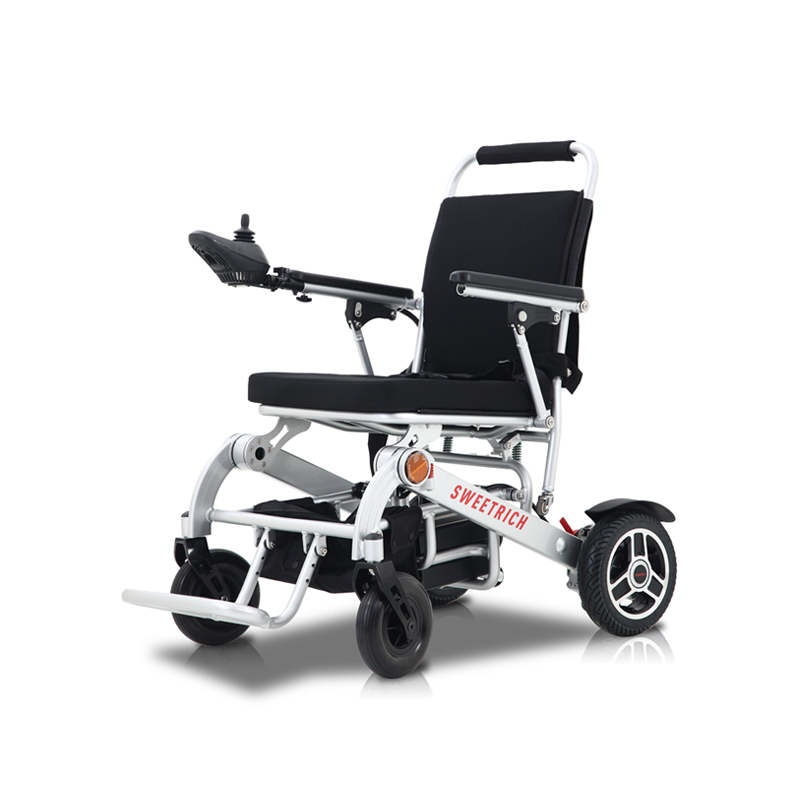
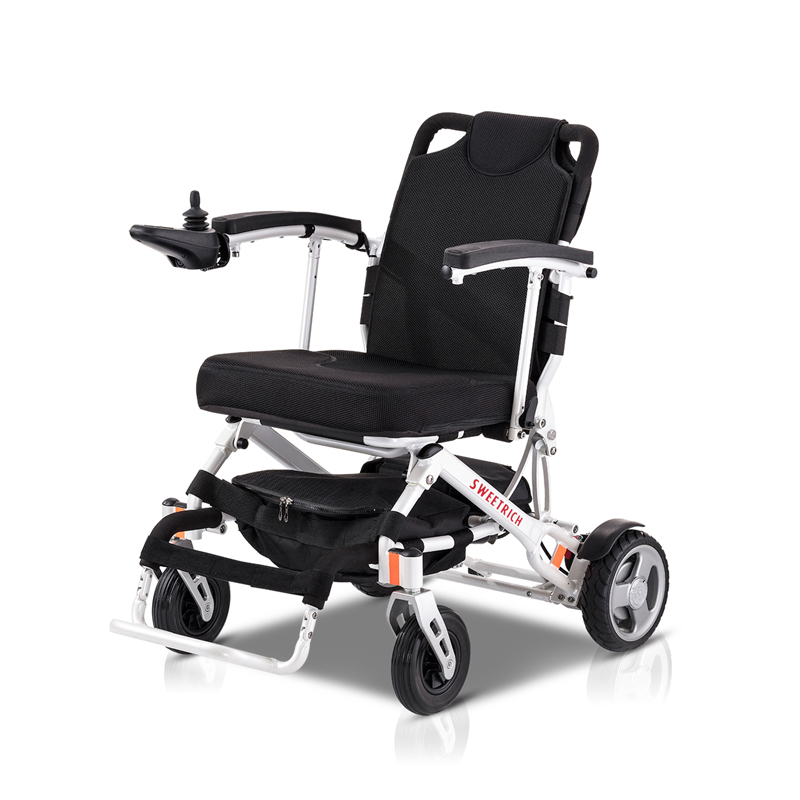
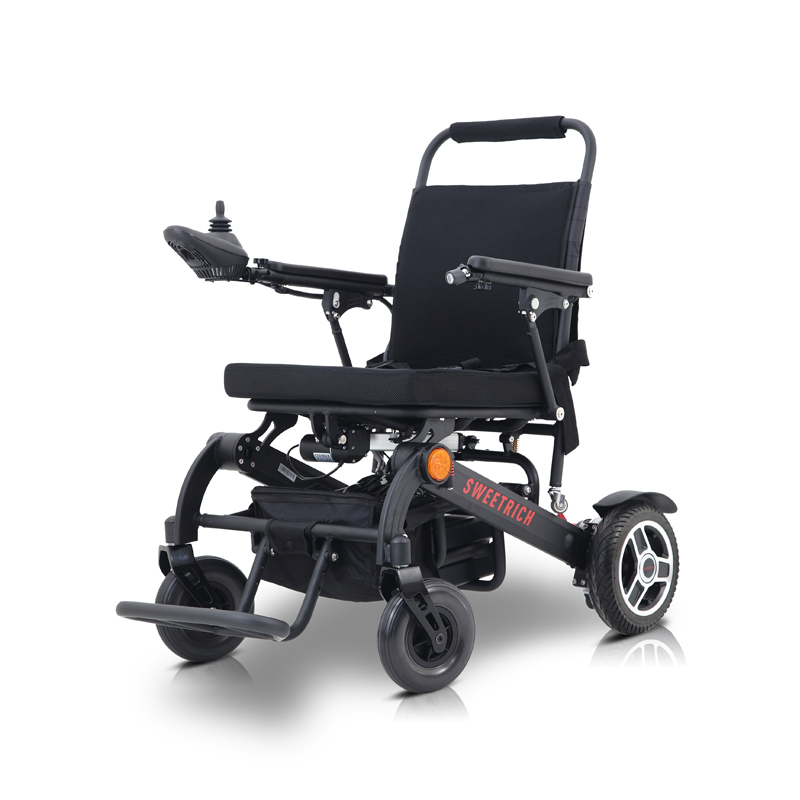
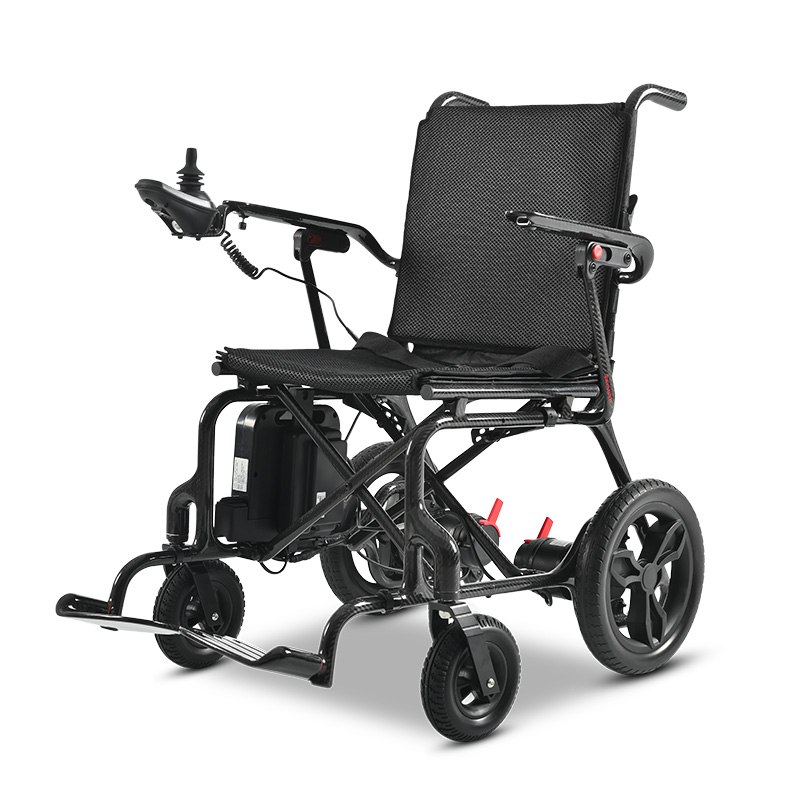
Sweetrich foldable power wheelchairs are built with these travel-friendly features in mind, helping users move confidently whether driving across town or flying across the country. Planning ahead and confirming specific airline or vehicle requirements remains the way to ensure a smooth journey.