 info@sweetrich.cn
  +86-(0)512-82283871
Content
- 1 Why Does Frame Strength Matter on a Heavy Duty Electric Mobility Scooter
- 2 How Does Frame Material Affect Structural Strength
- 3 What Should Be Checked Around Frame Joints
- 4 How Does Welding Quality Affect Frame Strength
- 5 How Does Frame Shape Distribute Load
- 6 What Role Does Wheel Position Play in Frame Stress
- 7 How Can Reinforced Areas Improve Frame Stability
- 8 How Should Frame Strength Be Compared in Daily Use
- 9 What Should Be Considered Before Choosing a Heavy Duty Electric Mobility Scooter
A Heavy Duty Electric Mobility Scooter needs a frame that can handle more than the weight placed on the seat. During ordinary travel, the frame is exposed to changes in direction, uneven pavement, braking, slopes, and repeated movement when getting on or off the seat. Each situation creates a different pattern of pressure across the structure.
Frame strength therefore cannot be judged simply by looking at a thick tube or a heavy‑looking base. Material, frame shape, connection points, welding quality, and load distribution all have a part in how a scooter behaves during regular use. A useful comparison starts with the structure itself rather than the outer body panels or added equipment.
Why Does Frame Strength Matter on a Heavy Duty Electric Mobility Scooter
A frame forms the main supporting structure of a mobility scooter. Seat supports, wheel assemblies, steering components, battery housing, and other parts are attached to or supported by it. Weight from those components eventually reaches the frame before being transferred toward the wheels.
During stationary use, the load may appear relatively simple. Once movement begins, the situation changes. Passing over a pavement joint can create a short increase in force. A turn shifts weight from one side toward another. Braking moves the load toward the front, while an incline changes how pressure is distributed along the base.
Repeated exposure to such conditions makes frame design important for long‑term structural condition. A structure that appears rigid while standing still may behave differently during movement. For that reason, comparison should include both the basic construction and the way different sections work together.
Several areas deserve attention:
- Main frame members supporting the seat and lower platform
- Front and rear sections connected to wheel supports
- Steering support areas
- Seat mounting points
- Cross supports connecting separate frame sections
- Welded or bolted joints between structural parts
A frame with a balanced load path can distribute pressure across several sections instead of placing too much force on one small area. Research into mobility scooter chassis design also considers different loading situations rather than relying on a single static condition.
How Does Frame Material Affect Structural Strength
Material has a direct effect on how a frame responds to weight and movement, although material choice alone does not tell the full story. Steel and aluminum are both used in vehicle structures, with each offering different characteristics related to weight, stiffness, fabrication, and resistance to repeated loading.
Steel generally has a relatively high structural stiffness for its size, making it suitable for frames where a solid supporting structure is required. A steel frame may also tolerate local impacts and repeated loading well when the section shape and joints are properly designed.
Aluminum can reduce overall structural weight while still providing useful stiffness when the frame is designed around its properties. A lighter material does not automatically mean a weaker frame, since tube shape, wall thickness, support placement, and connection design all influence the final structure.
A more useful comparison therefore asks several questions rather than focusing only on material names:
- How is the material shaped into the main frame?
- Where are the supporting members located?
- How are separate sections connected?
- Does the structure spread loads across several members?
- Are areas exposed to repeated pressure reinforced appropriately?
Frame design research has shown that changing the shape and arrangement of structural members can alter stress distribution without simply adding material everywhere.
A heavy frame is not automatically a strong frame. Extra material placed in a low‑stress area may add weight without solving a weakness around a joint or support. Good structural comparison looks at where material is used and what role each section performs.
What Should Be Checked Around Frame Joints
Joints deserve close attention because several structural members meet in a relatively small area. Loads traveling through different directions can converge around a connection, making joint design important to the overall behavior of the frame.
For a Heavy Duty Electric Mobility Scooter, useful inspection areas include the connection between the steering support and lower frame, the seat mounting area, wheel support sections, and points where cross members meet the main frame.
A well‑arranged joint normally allows forces to move from one structural member into another without an abrupt change in direction. Reinforcement may be added around areas that receive repeated pressure. A poorly arranged connection can create a local weak point even when the surrounding frame appears substantial.
Visual inspection can focus on several simple details:
- Uneven gaps around connected parts
- Visible cracks or unusual surface marks
- Local bending near mounting points
- Loose fasteners where bolted connections are used
- Sudden changes in frame shape around joints
- Reinforcement that appears poorly fitted or poorly aligned
Frame joints also need to work with the surrounding structure. Adding a support plate to one location does not necessarily improve the entire frame when load paths remain poorly arranged. Structural strength comes from cooperation between members rather than from one reinforced spot.
Seat mounting areas deserve particular attention because body weight is transferred through the seat into the frame. Movement during sitting down or standing up can also create changing loads rather than one constant downward force. Chassis research has specifically examined repeated sitting and standing as a frame loading condition.
How Does Welding Quality Affect Frame Strength
Welding connects many frame sections into one structural assembly, so weld quality can influence how loads move through the finished frame. A joint may look neat from a distance while still requiring closer inspection around its edges and surrounding material.
Consistent weld placement helps keep connected members aligned. Uneven welding can introduce distortion, which may change the intended position of a frame section. Heat from welding can also affect the nearby material, making production control important during frame fabrication.
| Frame Area | What to Observe | Why It Matters |
|---|---|---|
| Main Frame Joint | Smooth and consistent connection | Helps maintain a stable load path between members |
| Seat Support | Alignment and reinforcement | Carries repeated weight from the seating area |
| Steering Support | Connection with the lower frame | Receives forces during steering and direction changes |
| Wheel Support | Joint condition and alignment | Transfers movement and road pressure into the frame |
| Cross Support | Position and connection quality | Helps connect separate frame sections and distribute load |
Welding quality should not be judged only by appearance. Alignment, joint preparation, consistency, and the relationship between the weld and surrounding structure all matter. Research on scooter frame construction has also examined how frame geometry and welding arrangements affect structural behavior.
Another point concerns repeated loading. A frame does not experience only one large load during its service life. Smaller loads can occur again and again through ordinary riding. Repeated stress around a poorly formed joint can gradually affect structural condition, which makes joint quality relevant even when no immediate deformation is visible.
A sensible comparison therefore looks at the complete connection rather than asking whether a frame simply contains a lot of welds. More welding does not automatically produce a stronger structure. Placement, alignment, joint design, and surrounding support determine how useful each connection is.
How Does Frame Shape Distribute Load
Frame shape affects how pressure travels through a mobility scooter during movement. A long frame member may carry weight along one direction, while cross supports help connect separate sections and keep the structure working as a unit. Placement matters because force does not stay in one place when a scooter moves.
Seat weight normally enters the frame through the seat support area and then travels toward the lower structure and wheel supports. A well‑arranged frame gives that load several paths to move through the structure. Poor placement can concentrate pressure around a small connection, making one area work harder than surrounding sections.
Shape also affects how a frame responds to movement. A structure with suitable cross support can resist unwanted side movement more effectively than a simple open arrangement. Side pressure becomes relevant during turning, passing over uneven pavement, or moving along a sloped surface.
For comparison, several parts of the frame can be considered together:
- Main longitudinal members provide the basic supporting path.
- Cross members connect separate sides of the structure.
- Seat supports carry pressure from the seating area.
- Lower supports connect the main frame with wheel assemblies.
- Front structures handle forces associated with steering and direction changes.
Adding material to every section is not necessarily a practical answer. A carefully arranged frame can use support members where they have a structural purpose, allowing force to move through connected sections rather than collecting around one location.
Frame shape also needs to suit the way a mobility scooter is used. A structure designed around indoor movement may have different space requirements from one intended for outdoor paths, slopes, or rougher pavement. Strength and everyday handling therefore need to be considered together.
What Role Does Wheel Position Play in Frame Stress
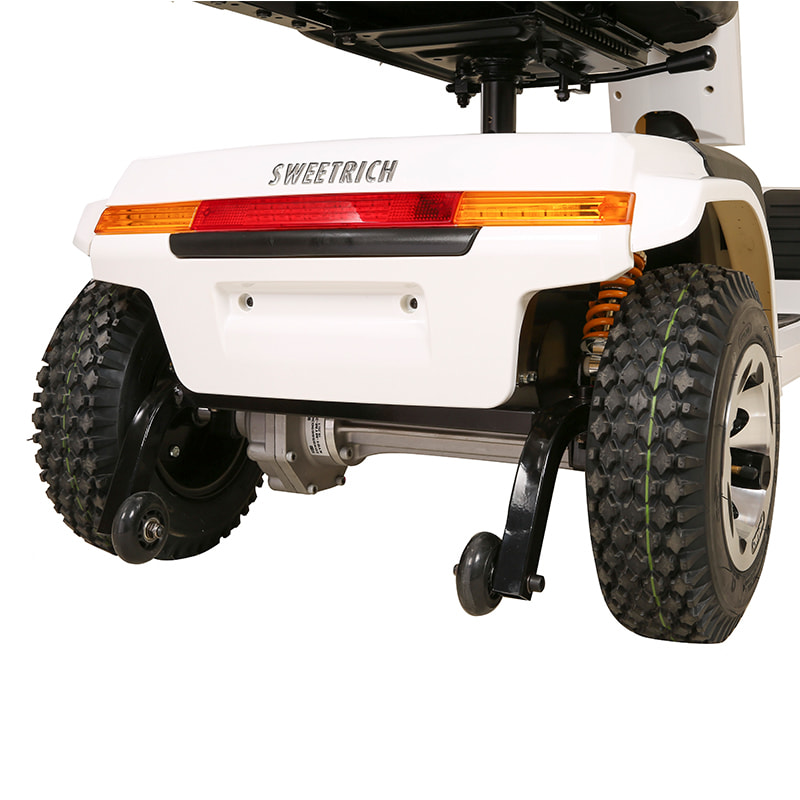
Wheel position changes how weight reaches the frame. Four wheels provide separate contact points with the ground, and each wheel connects to the frame through its supporting structure. As a scooter moves, pressure can change from one wheel area to another.
On a flat surface, weight distribution may remain relatively even. An uneven section of pavement can change the situation, especially when one wheel reaches a raised edge before another. Part of the frame may then experience a temporary increase in pressure.
Turning creates another change. During a turn, body weight and vehicle movement shift in relation to the frame. A stable frame needs to work with the wheel arrangement so that pressure does not become concentrated around one small section.
Braking also changes the load pattern. As forward movement slows, pressure moves toward the front portion of the structure. Going uphill or downhill changes the relationship between the frame, wheels, and ground as well.
Wheel position should therefore be examined together with frame construction rather than treated as a separate feature. Useful questions include:
- Where are the wheels positioned in relation to the seat?
- How are wheel supports attached to the main frame?
- Are front and rear support areas connected effectively?
- Does the frame remain well aligned when the scooter changes direction?
- Are wheel mounting areas reinforced where repeated pressure occurs?
A Heavy Duty Electric Mobility Scooter used across mixed surfaces needs a frame that can accommodate changing loads. Wheel placement cannot remove the need for sound frame construction, while suitable positioning can help the structure handle movement in a more balanced way.
How Can Reinforced Areas Improve Frame Stability
Reinforcement is commonly used around parts of a frame that experience repeated or concentrated pressure. Rather than adding extra material throughout the whole structure, support can be placed near joints, mounting points, and sections where loads change direction.
Seat mounting areas are one example. Weight enters the frame through a relatively small group of supports, so surrounding material needs to keep the connection properly aligned. Wheel mounting sections can face a similar situation because forces from the ground travel upward through the wheel supports and into the frame.
Cross members provide another form of reinforcement. A cross support can connect the left and right sides of a frame, reducing unwanted movement between them. Such a connection may also help maintain the intended shape when the scooter passes over uneven ground.
Reinforced areas may include:
- Support plates around mounting points
- Cross members between frame sides
- Additional support near wheel connections
- Braced sections around steering structures
- Strengthened areas beneath seat supports
Good reinforcement follows the path of force. A support placed away from the actual load path may add material without solving the structural issue. Excess reinforcement can also make a scooter heavier, which may affect handling, transport, and storage.
For that reason, frame comparison should focus on where reinforcement is located and what function it serves, rather than simply counting reinforced sections.
How Should Frame Strength Be Compared in Daily Use
A frame can be inspected without relying entirely on technical testing. Everyday conditions provide useful clues about how the structure behaves, especially when several areas are checked together.
Start with the scooter standing on a level surface. Look along the frame from different directions and check whether the main members appear properly aligned. Seat supports, wheel supports, and lower frame sections should form a consistent structure rather than showing obvious bending or uneven positioning.
Next, consider normal movement. Pavement joints, driveway edges, gentle slopes, and changes in surface height can place different loads on the frame. Noticeable structural movement, unusual noises, or changes in alignment may deserve closer inspection.
Turning also provides useful information. A scooter that feels settled during a normal turn indicates that the frame, wheel arrangement, and steering structure are working together. A noticeable shift or unusual movement may point toward an issue that needs checking.
Static inspection and riding observation serve different purposes:
| Checking Method | Area to Observe | Useful Indication |
|---|---|---|
| Stationary Inspection | Frame alignment | Shows visible bending or uneven positioning |
| Seat Check | Seat support and mounting area | Indicates whether the seating structure remains secure |
| Wheel Check | Wheel support connections | Helps identify loose or misaligned structural areas |
| Slow Turning | Side‑to‑side frame movement | Shows how the structure responds to direction changes |
| Uneven Surface | Lower frame and wheel supports | Reveals changes in structural movement under varied loads |
| Braking | Front frame area | Shows how the structure responds when forward movement slows |
No single riding condition gives a complete picture. A frame may feel stable on smooth pavement while responding differently on a sloped or uneven surface. Checking several ordinary situations gives a more balanced view of structural behavior.
What Should Be Considered Before Choosing a Heavy Duty Electric Mobility Scooter
Frame strength should be considered alongside the actual environment where a mobility scooter will operate. Outdoor routes with uneven pavement may place different demands on the frame than smooth indoor floors. Regular transport and storage also introduce practical requirements that have little to do with structural strength alone.
Start with the frame itself. Main members should have a clear supporting role, while joints and mounting areas should appear properly aligned. Reinforcement should be located around areas where repeated pressure is expected rather than spread randomly across the structure.
Material deserves attention as well. Steel and aluminum can both be used for mobility scooter frames, with differences in weight, stiffness, fabrication, and structural behavior. Material selection makes more sense when considered together with tube shape, support arrangement, and joint construction.
Wheel position should also remain part of the comparison. A four‑wheel layout connects the frame to the ground through separate front and rear support points, so the quality of those connections matters during turning and uneven travel.
Practical inspection can follow a simple sequence:
- Look at the main frame members.
- Check seat and wheel mounting areas.
- Inspect visible joints and welds.
- Follow the path between the seat supports and wheel supports.
- Consider how cross members connect both sides.
- Observe frame movement during ordinary turns and surface changes.
- Check whether the structure suits storage and transport conditions.
A useful comparison does not depend on one visual feature. Frame material, shape, joint construction, reinforcement, and wheel placement work together, and a weakness in one area may affect how another section carries pressure.
For a Heavy Duty Electric Mobility Scooter, structural strength is closely tied to everyday use. A sound frame needs to support seated weight, handle changes in movement, and maintain its shape through repeated ordinary loading. Looking at the complete structure makes it easier to separate meaningful construction details from features that only change appearance.
A practical approach is to consider how the frame carries weight, where forces enter the structure, how sections are connected, and how the scooter behaves across ordinary riding conditions. Such a comparison gives a clearer picture of frame construction without relying on a single material label or visual impression.