 info@sweetrich.cn
  +86-(0)512-82283871
Content
- 1 Movement across changing surfaces
- 2 How the four-wheel structure behaves
- 3 Small design details that affect ground response
- 4 On smooth indoor ground
- 5 Moving onto pavement and outdoor paths
- 6 First contact with uneven ground
- 7 Production approach behind China Mobility Scooter
- 8 When the ground starts to feel less even
- 9 Moving across slopes
- 10 How the wheels react over time
- 11 What the frame does during movement
- 12 Using the scooter across mixed routes
- 13 Wear and small changes from daily use
- 14 How production relates to real use
- 15 Approach behind China Mobility Scooter production
In everyday use, mobility scooters rarely stay on one kind of surface for long. A short trip might begin on a smooth indoor floor, continue onto pavement outside, and then pass over areas that are slightly uneven. Because of this, how a scooter handles changing ground becomes more noticeable than how it performs in a single fixed condition.
In discussions around production and design, Suzhou Sweetrich Vehicle Industry Technology Co., Ltd. is sometimes brought up when people talk about how scooters are prepared for mixed environments rather than one specific setting.
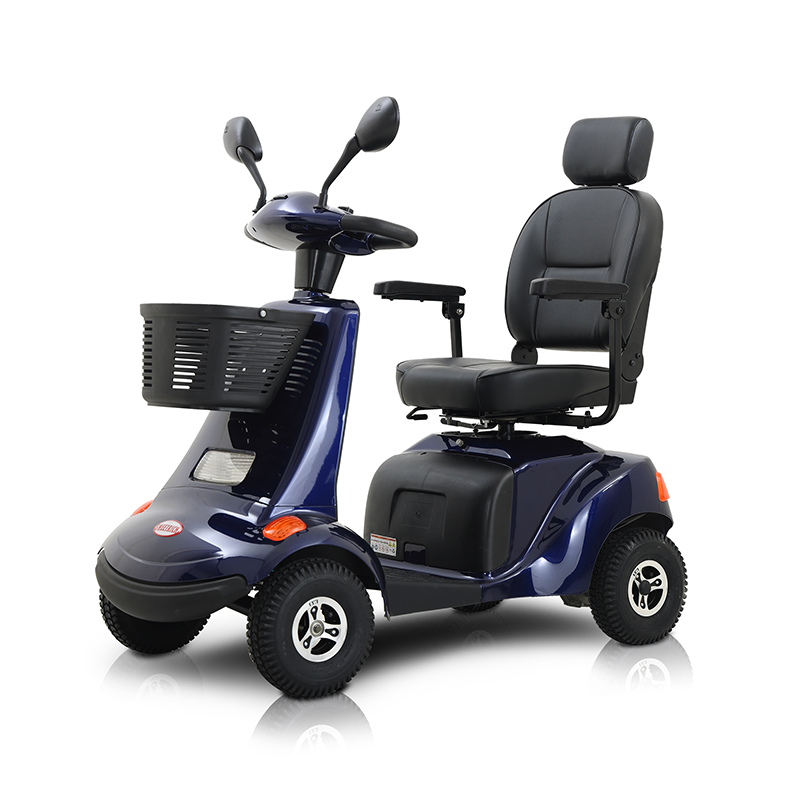
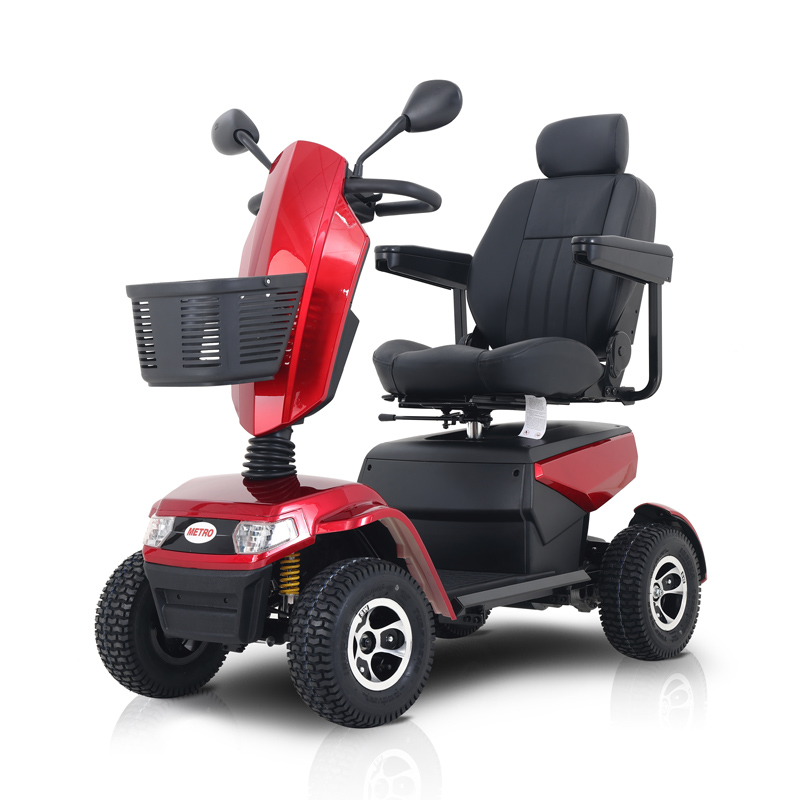
A 4 Wheels Scooter Factory usually works with this idea in mind. Instead of focusing only on smooth ground, attention is spread across different types of surfaces that may appear during daily movement.
Movement across changing surfaces
Real-world movement is rarely uniform. Even within a short distance, the surface can change several times. Indoors, the ground tends to be even and predictable. Outdoors, the same scooter may encounter rougher textures, slight slopes, or small irregular spots.
Because of this, scooters are not just expected to move forward. They are expected to stay stable while the ground underneath them keeps changing.
In many China Mobility Scooter production environments, this kind of mixed usage is already considered early on. The idea is not to remove all differences between surfaces, but to make the transition from one surface to another feel less abrupt.
How the four-wheel structure behaves
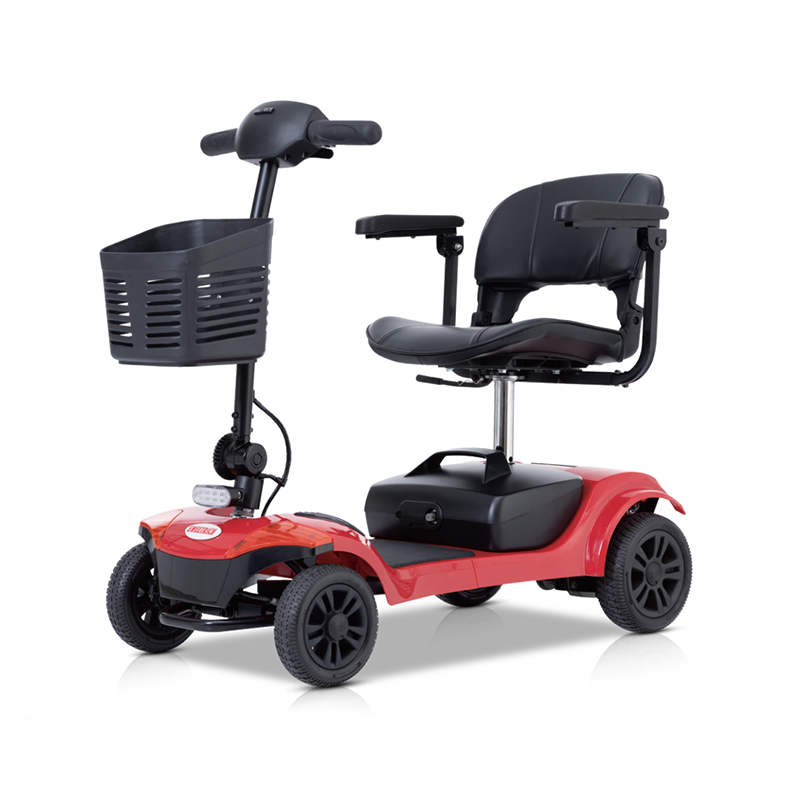
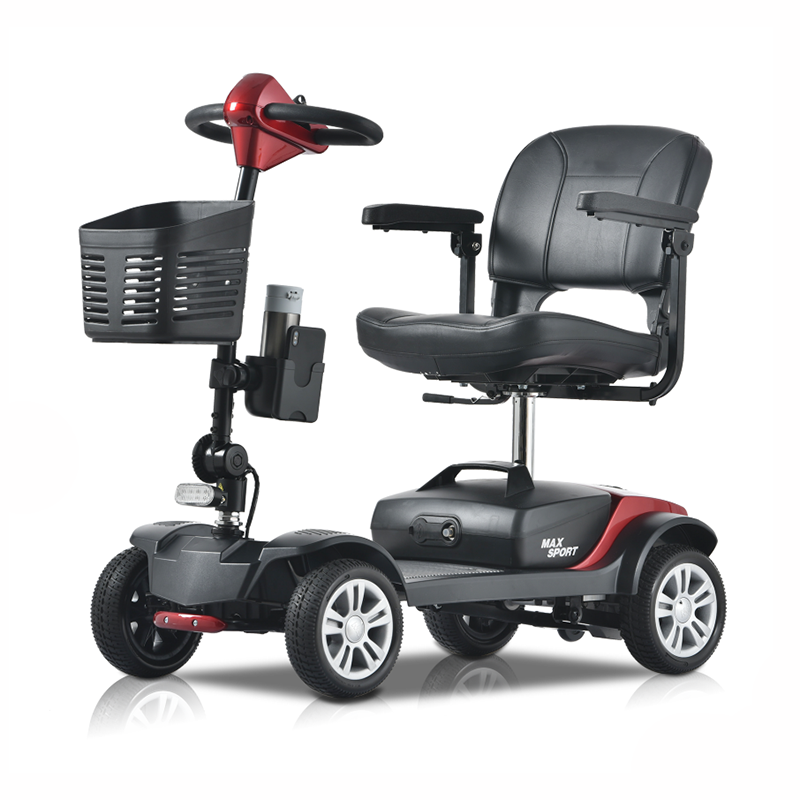
The four-wheel layout does not rely on balance from the rider. This becomes more noticeable when the ground is not perfectly even.
When moving across different surfaces, the structure helps in a few simple ways:
- it keeps the scooter from tilting too easily
- it spreads weight more evenly across contact points
- it supports steady movement during slow turns
- it reduces sudden shifts when one wheel meets a different surface
These effects are not dramatic, but they are easy to notice over time.
Small design details that affect ground response
Many parts of the scooter contribute quietly to how it behaves on different surfaces. These are not always visible during use, but they influence the overall feel.
Some of these factors include:
- how the frame holds its shape under weight
- how the wheels stay in contact with the ground
- how steering responds when the surface changes
- how the scooter reacts to small bumps or dips
Rather than acting separately, these elements work together, and their combined effect becomes clearer during longer use.
On smooth indoor ground
On flat indoor surfaces, the scooter usually moves in a straightforward way.
What stands out here is not complexity, but consistency:
- the scooter moves without noticeable resistance
- turning feels controlled and predictable
- there is little vibration from the floor
- stopping happens without sudden shift
Because the surface is stable, the structure does not need to compensate much.
Moving onto pavement and outdoor paths
When the scooter moves outside, the surface changes slightly. Pavement and concrete are not perfectly smooth, even if they look flat from a distance.
At this point, small differences begin to show:
- the movement may feel slightly less smooth
- minor vibration can be felt through the frame
- the wheels respond to texture changes
- turning still remains stable but less uniform than indoors
The transition itself is usually gradual. There is no sudden change, just a shift in how the ground feels during movement.
| Surface | Ground feel | Movement response | Stability impression |
|---|---|---|---|
| Indoor floor | Even and smooth | Consistent motion | Very steady |
| Pavement | Slightly rough | Light vibration | Steady |
| Mixed ground | Uneven in spots | Small adjustments | Moderately steady |
This kind of difference becomes clearer when the scooter is used continuously rather than for short periods.
First contact with uneven ground
When the scooter reaches areas that are less regular, such as cracked pavement or small gravel sections, the response becomes more noticeable.
Instead of smooth rolling, the movement starts to include small adjustments. The scooter does not lose function, but it reacts more actively to the surface.
In these situations, it is common to notice:
- slight shifts as the wheels pass over uneven spots
- changes in steering feel
- more visible response from the front wheels
- a natural tendency to reduce speed
These reactions are part of how the scooter adapts to the surface rather than signs of malfunction.
Production approach behind China Mobility Scooter
In many China Mobility Scooter production settings, design decisions are influenced by how scooters are actually used rather than how they appear in controlled environments.
This often leads to attention being placed on:
- how scooters handle transitions between surfaces
- how structure supports stability without adjustment
- how different ground conditions affect long-term use
The result is not a single fixed behavior, but a range of responses that stay within a stable and predictable pattern.
When the ground starts to feel less even
Once the ground is no longer flat, the change is usually felt quite early. It often begins with small details. The wheels do not roll as evenly as before, and the path ahead starts to feel a bit less predictable.
On rougher sections, the scooter still moves forward without much difficulty, but the feeling shifts. Instead of a steady glide, there is a light up-and-down motion. It is not strong, just enough to become noticeable after a short distance.
Sometimes one side of the ground feels slightly higher than the other. When that happens, the scooter adjusts in a quiet way. There is no sudden movement, but the direction may feel gently corrected on its own.
People who use it regularly often slow down a little in these areas. Not because the scooter cannot continue, but because the surface itself feels less consistent.
Moving across slopes
Moving onto a slope brings a different kind of change. The surface may still look smooth, but direction starts to play a bigger role.
Going uphill feels steady, though a bit heavier. The scooter continues forward, but the pace often becomes more controlled. Going downhill feels different again. The motion continues, but more attention goes into keeping things even rather than moving faster.
There is also a slight change in how the handle feels. It does not turn in exactly the same way as it does on flat ground. It is not difficult, just slightly different.
Starting and stopping on a slope usually takes a bit more care. The movement remains smooth, but feels more deliberate.
How the wheels react over time
The wheels show the clearest difference across surfaces. On indoor floors, they move without interruption. Outside, especially on rough ground, they respond to small variations in the surface.
After some time, these differences become familiar. It becomes easy to tell when the ground changes just from the way the scooter feels.
- smooth and quiet indoors
- a bit more texture on pavement
- more noticeable response on uneven ground
- slight change in grip depending on the surface
Nothing dramatic happens, but the feeling is not exactly the same from one place to another.
What the frame does during movement
The frame does not draw much attention on its own, but it plays a steady role in the background. When the wheels meet uneven ground, the frame helps reduce how sharp those changes feel.
Instead of passing every bump directly upward, it spreads the movement across the structure. Because of that, small impacts feel less direct.
Over time, this becomes easier to notice:
- bumps feel softer than expected
- transitions between surfaces feel less sudden
- the scooter remains steady even when the ground is not
- there is no clear shift in balance
It is not something that stands out immediately, but it becomes clearer after longer use.
A simple look at different surface responses
| Surface | What it feels like | What changes | Overall sense |
|---|---|---|---|
| Flat indoor floor | Very smooth | Almost nothing | Calm |
| Outdoor pavement | Slightly rough | Light vibration | Still stable |
| Uneven ground | Irregular | More movement | Needs attention |
| Sloped path | Directional change | Weight shifts | Controlled |
Using the scooter across mixed routes
Most routes include more than one type of surface. A short trip may pass through several without drawing much attention at first.
After repeated use, certain patterns become easier to recognize:
- Indoor areas feel steady.
- Outdoor paths feel slightly different.
- Rough spots require a bit more attention.
Slopes change how the scooter moves, even when the surface appears smooth.
These differences do not interrupt movement, but they shape how it feels along the way.
Wear and small changes from daily use
Over time, small signs of use begin to appear. They are usually subtle at first.
Dust may collect on the wheels after outdoor use. Movement might feel slightly different after repeated travel on rough ground. Steering can feel a bit lighter or heavier depending on conditions.
These changes do not happen all at once. They appear gradually and are often only noticed after some time.
How production relates to real use
From a production perspective, a 4 Wheels Scooter Factory is not designed around one single surface. The aim is to allow the scooter to move across different conditions without requiring constant adjustment.
This often comes down to keeping a balance:
- a structure that stays stable
- wheels that respond without overreacting
- steering that remains predictable
- movement that adjusts without sudden change
The result is not a fixed feeling, but a range that remains familiar during use.
Approach behind China Mobility Scooter production
In many China Mobility Scooter production environments, design choices tend to reflect everyday use rather than controlled conditions.
Movement between indoor and outdoor spaces is common. Surfaces are not always smooth, and paths are not always straight.
Because of this, the scooter is not built around a single ideal situation. It is shaped around variation.
Over time, the differences between surfaces become part of normal use. The scooter does not behave exactly the same everywhere, but it does not need to.
It keeps moving, adjusting in small ways, staying within a range that feels manageable. The ground changes, but the overall movement remains steady enough to follow without much effort.