 info@sweetrich.cn
  +86-(0)512-82283871
Content
- 1 What Makes an Automatic Folding Electric Wheelchair Practical?
- 2 Key Product Advantages
- 3 Technical Specifications at a Glance
- 4 How the iFold PLUS Compares with Conventional Alternatives
- 5 Comfort and Everyday Usability
- 6 Safety Considerations for Users and Caregivers
- 7 Battery Management and Travel Planning
- 8 Manufacturing Strengths Behind the Product
- 9 Why Manufacturing Expertise Matters to Buyers
- 10 Recommended Use Environments
- 11 Buying Guidance for Individuals and Distributors
- 12 Maintenance and Long-Term Ownership
- 13 Q&A: Common Questions About the Folding Electric Wheelchair
- 13.1 Is this wheelchair intended for travel?
- 13.2 How does the automatic folding function help the user?
- 13.3 Can the joystick be used on either side?
- 13.4 What is the maximum user weight?
- 13.5 What is the driving range?
- 13.6 Which batteries are available?
- 13.7 How long does charging take?
- 13.8 What is the maximum speed?
- 13.9 Can it climb slopes?
- 13.10 Does it have a braking system?
- 13.11 Does it have suspension?
- 13.12 Is a front light included?
- 13.13 Is the product a medical device?
- 13.14 What should buyers ask the manufacturer before ordering?
- 14 Conclusion
- 15 References
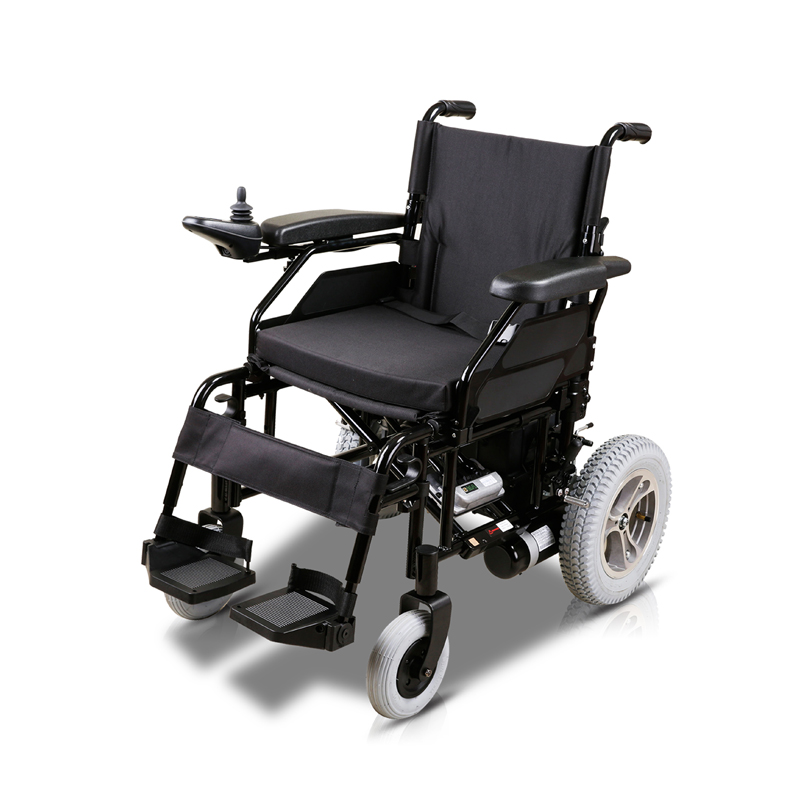
- 16 Product: iFold PLUS Automatic folding electric wheelchair with joystick controller hot sale
Choosing a powered wheelchair for travel, daily errands, and independent mobility involves more than selecting a motor and a battery. Users and caregivers must consider portability, driving control, comfort, stability, storage, charging, safety, and the reliability of the manufacturer behind the product. The iFold PLUS automatic folding electric wheelchair is designed to bring these requirements together in one practical mobility solution.
As a travel smart wheelchair, the iFold PLUS combines automatic folding, a compact transport-friendly design, dual-side joystick availability, suspension, electromagnetic braking, and lithium battery options. It is intended for the US market as a non-medical device and is developed for users who want powered mobility without giving up the convenience of a foldable frame.
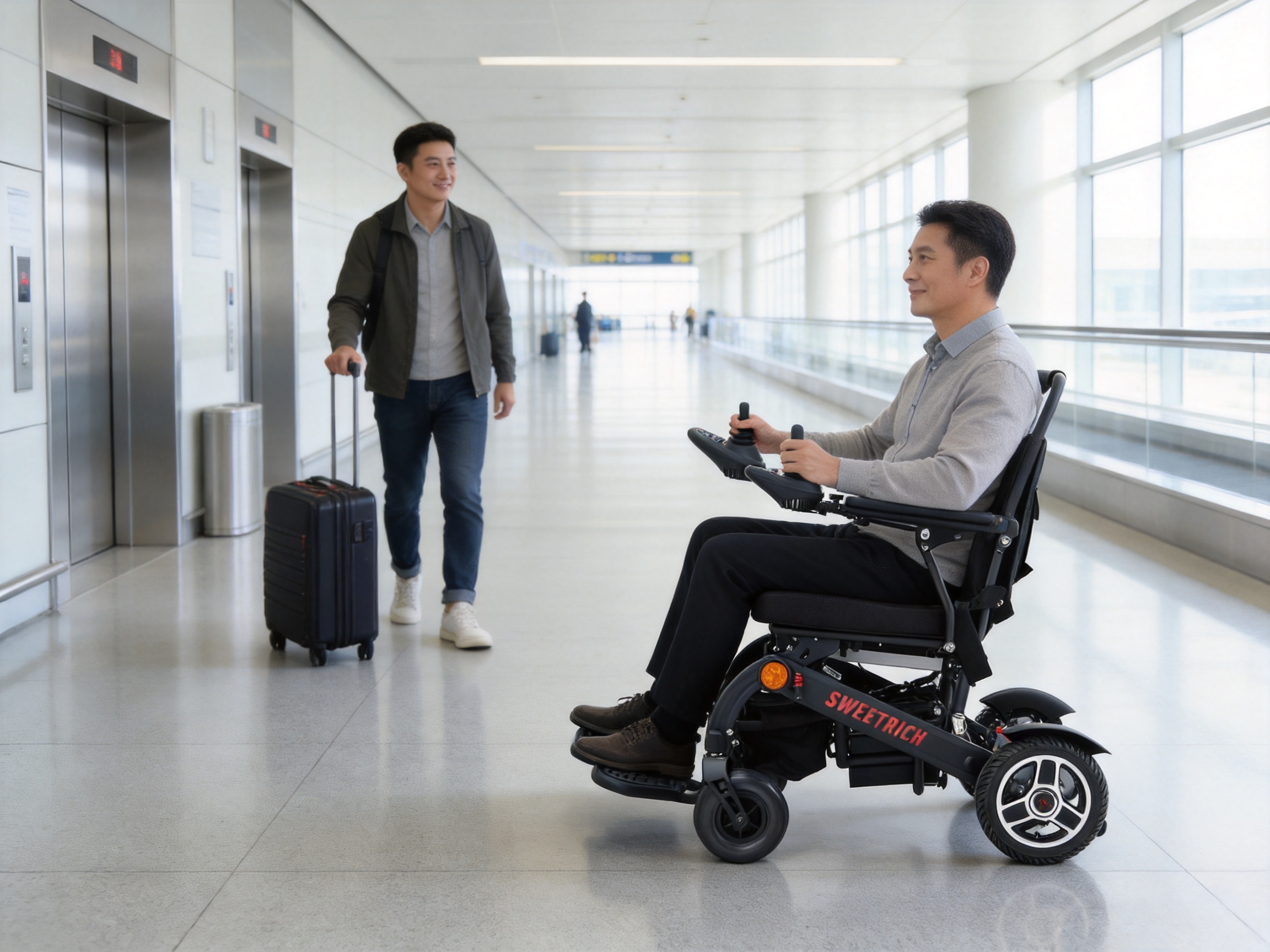
The wheelchair is especially suitable for people who need a convenient way to travel through homes, shopping areas, hotels, transport terminals, parks, and other everyday environments. Its folding mechanism helps reduce the effort required to prepare the chair for storage or transportation, while its rear-wheel drive system and suspension support smooth movement over suitable paved surfaces.
At the same time, the product should be selected according to the user’s physical needs, local regulations, terrain, and transportation arrangements. Specifications can vary according to battery configuration and regional setup. For example, the product feature description refers to speeds of up to 8.5 km/h, while the technical information lists a maximum forward speed of 6 km/h. Buyers should confirm the exact configuration and approved operating specifications with the supplier before purchase.
What Makes an Automatic Folding Electric Wheelchair Practical?
Traditional powered wheelchairs can provide dependable mobility, but some designs are difficult to transport or store. A large fixed-frame chair may require a vehicle lift, a spacious van, or assistance from another person. For users who travel frequently, live in smaller homes, or need to store their chair in a vehicle, portability can be just as important as driving performance.
An automatic folding electric wheelchair addresses this challenge by reducing the number of manual steps involved in preparing the chair. Instead of removing multiple components or lifting a complicated frame, the user can use the powered folding function to make the chair more compact. Once folded, the chair is easier to move and store than many conventional full-size powered wheelchair designs.
The iFold PLUS is designed around this practical concept. Its automatic folding function supports quick transitions between use and storage. This can be valuable when entering a car, preparing for air or rail travel, moving through a hotel, or creating additional space in a home. The foldable design also makes the chair more attractive to families who want a mobility product that can be integrated into normal travel routines.
Portability does not mean that the product is limited to occasional use. The wheelchair includes two 250-watt motors, front and rear suspension, a large foot platform, an electromagnetic brake, and a weight capacity of 120 kg, or 265 pounds. These features are intended to provide a balance between mobility, stability, and everyday convenience.
Key Product Advantages
Automatic Folding for Easier Storage
The most visible advantage of the iFold PLUS is its automatic folding capability. Manual folding can be difficult for users with limited arm strength, reduced dexterity, or joint discomfort. A powered folding mechanism reduces the physical work involved and helps create a more consistent folding process.
Automatic folding is also useful for caregivers. A family member or attendant can prepare the chair for storage without repeatedly lifting or manipulating a heavy frame. This is particularly helpful when the wheelchair is used in combination with a vehicle. The folded chair can be moved into an appropriate storage area, subject to the user’s ability to handle the product safely and the vehicle’s available space.
The chair weighs 24 kg without the battery. This is a meaningful consideration for transportation. Although the complete chair with battery may weigh more, the stated frame weight is designed to support a more manageable transport experience than many large powered mobility devices. Users should still evaluate their lifting ability and may prefer a ramp, transfer aid, or assistance when loading the product.
Compact Travel-Oriented Design
The iFold PLUS belongs to the travel smart wheelchair category because its design focuses on movement beyond the home. A compact folding structure can simplify visits to shopping centers, restaurants, airports, hotels, offices, and family residences. It also reduces the amount of dedicated storage space needed when the chair is not in use.
Travel convenience is not limited to the folded dimensions. The product also includes an under-seat storage bag, allowing users to carry personal items without depending entirely on a separate backpack or caregiver. The storage bag can be used for small daily necessities such as a wallet, medication container, mobile phone, keys, or light shopping items. Users should distribute stored items evenly and avoid exceeding any applicable storage or weight limits.
The large foot platform further supports practical daily use. A sufficiently sized foot area can make it easier for the user to position both feet securely during movement and while entering or leaving the chair. It can also be more comfortable than a narrow foot support for users who spend extended periods in the wheelchair.
Joystick Control on Either Side
Many powered wheelchair users have a preferred control side. Some may have stronger movement or better coordination on the right side, while others may need the joystick positioned on the left. The iFold PLUS offers joystick availability for use on both sides, providing greater flexibility during setup.
This design can make the chair more adaptable to individual user requirements. It may also be helpful when a user’s condition affects one arm more than the other. A correctly positioned joystick can support more comfortable steering and reduce the need to reach across the body.
The joystick controller provides intuitive control of forward, reverse, and turning movement. As with any powered mobility product, users should practice in an open, level area before operating in crowded environments or on slopes. Training should include starting, stopping, turning, reversing, parking, and responding to obstacles.
Dual 250-Watt Motor System
The wheelchair uses two 24-volt, 250-watt motors. A dual-motor configuration can provide balanced propulsion and support controlled movement across suitable indoor and outdoor surfaces. The motors are matched with a 24-volt, 50-amp motor controller, which manages the power supplied to the drive system.
Motor performance should be considered together with the wheelchair’s intended environment. The iFold PLUS is designed for everyday mobility rather than high-speed recreational driving. Users should remain on surfaces appropriate for compact powered wheelchairs, avoid deep mud and standing water, and approach uneven terrain cautiously.
The technical information lists a maximum driving gradient of 10 degrees. This figure does not mean that every user, surface, or battery condition will produce the same result. Incline performance can be affected by user weight, battery charge, tire condition, surface texture, temperature, and the direction of travel. A slope should be approached only when it is safe and permitted for the chair.
Lithium Battery Options
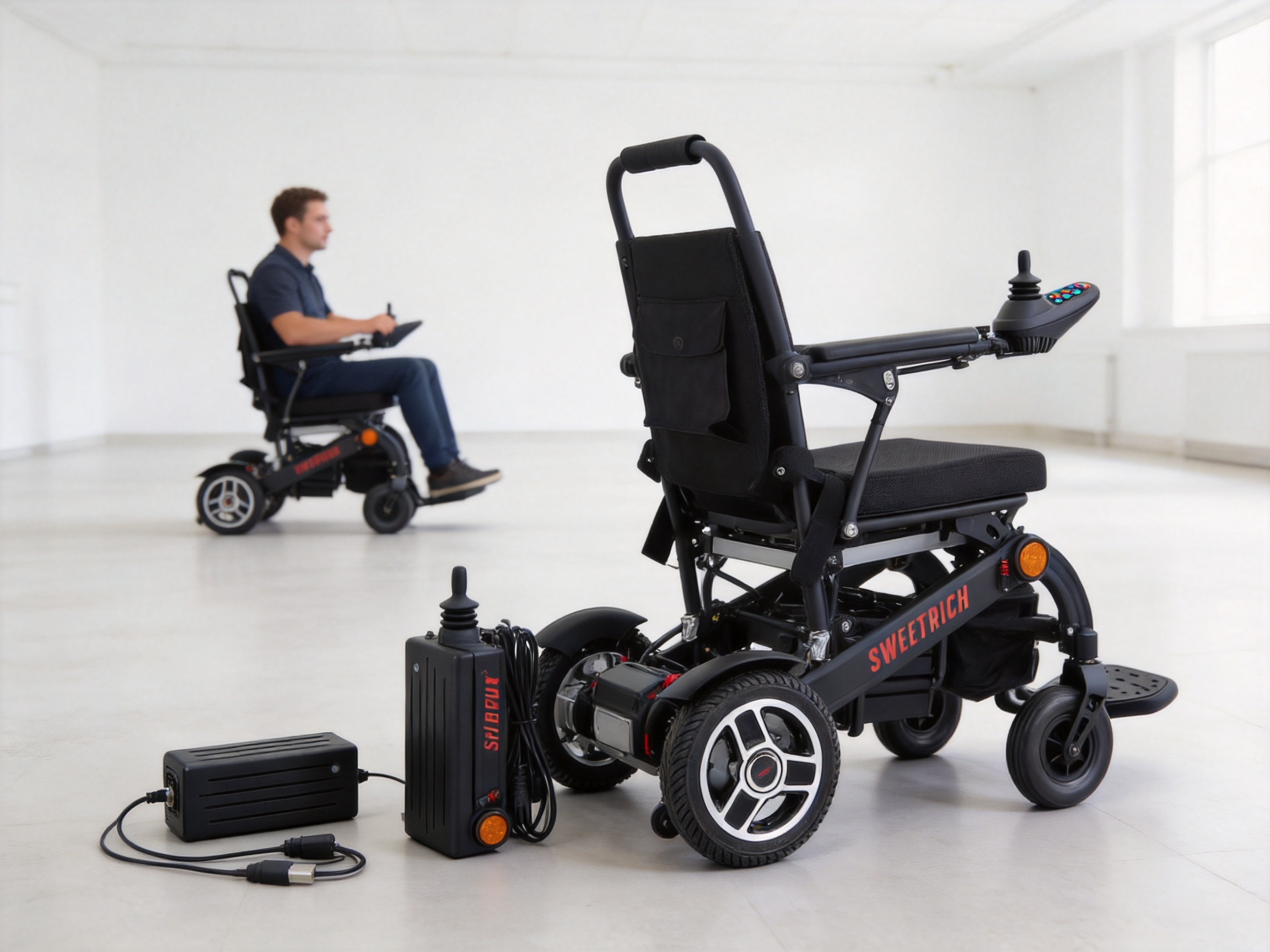
The iFold PLUS is supplied with lithium battery options listed as 24 volts and 10.2 amp-hours or 20 amp-hours. The product description also mentions an optional battery of up to 30 amp-hours for reaching a greater distance. Battery availability may depend on the configuration, market, and transportation requirements, so the selected battery should be confirmed before ordering.
Lithium batteries are valued in travel-oriented mobility products because they can offer useful energy capacity without the same level of bulk associated with some older battery technologies. A lighter battery can help preserve the portability advantages of a folding wheelchair. However, battery handling, charging, storage, and transportation must follow the manufacturer’s instructions and applicable regulations.
The stated maximum driving range is 30 plus or minus 5 kilometers. Actual range varies according to battery capacity, rider weight, speed, incline, tire pressure, temperature, terrain, and driving style. Frequent starts and stops or continuous operation on slopes may reduce the distance available from a single charge.
Suspension and Wheel Configuration
The wheelchair includes front and rear suspension. Suspension helps absorb some vibration from ordinary surface irregularities and can improve the feeling of stability and comfort during travel. It does not eliminate the need for careful driving over thresholds, broken pavement, steep transitions, or uneven ground.
The tire sizes are listed as 8 inches at the front and 10 inches at the rear. Larger rear wheels can support stable propulsion and help the chair move over suitable minor surface changes. The front wheels assist steering and maneuverability, particularly in indoor and relatively confined spaces.
Wheel size, suspension, and frame geometry work together to determine how the chair responds to a particular environment. The product is not intended to replace an off-road wheelchair or a specialized all-terrain vehicle. Users should stay within the operating recommendations and avoid hazards that could compromise balance or traction.
Electromagnetic Braking
The electromagnetic brake system is designed to help slow and hold the wheelchair when the drive control is released. This type of braking can provide convenient stopping behavior during ordinary operation and can help reduce unintended rolling when the chair is stationary.
Braking performance still depends on the surface, incline, battery condition, tire contact, and proper maintenance. Users should not rely on the brake alone when parking on a slope. Where possible, the chair should be parked on a level surface, switched off according to the operating instructions, and positioned away from traffic or other hazards.
Optional Front Lighting
A front light is available as an option. Lighting can improve visibility in dim indoor areas, building entrances, covered parking zones, and other low-light environments. It can also help other people notice the wheelchair earlier.
Lighting should be viewed as a visibility aid rather than a substitute for safe operation. Users should follow local rules regarding powered mobility devices, avoid driving in poor visibility when possible, and use reflective or additional safety accessories where appropriate.
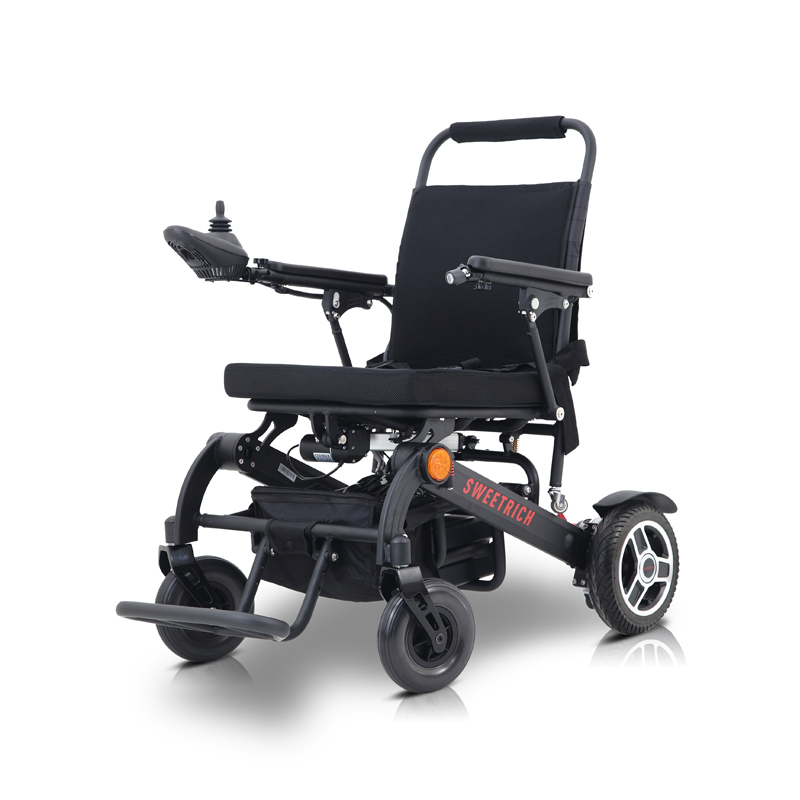
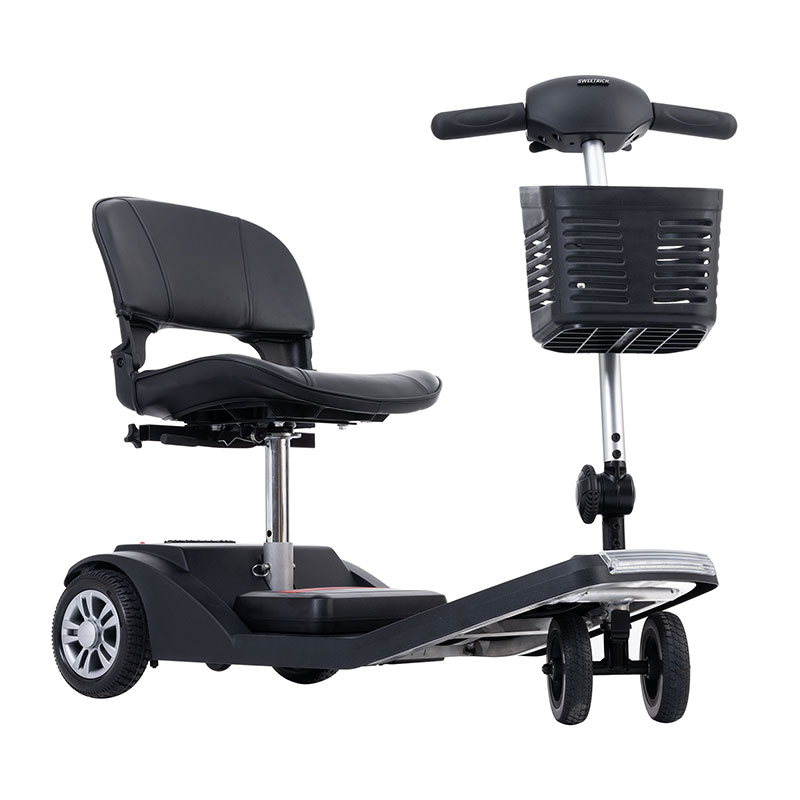
iFold PLUS Automatic folding electric wheelchair with joystick controller hot sale
Technical Specifications at a Glance
| Specification | Listed Information |
|---|---|
| Product type | Automatic folding electric wheelchair |
| Category | Travel smart wheelchair |
| Overall dimensions | 1090 × 605 × 998 mm |
| Maximum forward speed | 6 km/h in the technical information |
| Feature description speed | Up to 8.5 km/h, subject to configuration confirmation |
| Maximum driving gradient | 10 degrees |
| Maximum driving range | 30 ± 5 km |
| Weight capacity | 120 kg / 265 lb |
| Suspension | Front and rear |
| Front tire size | 8 inches |
| Rear tire size | 10 inches |
| Brake system | Electromagnetic brake |
| Battery options | Lithium 24 V / 10.2 Ah and 20 Ah; optional higher-capacity configuration may be available |
| Charger | DC 24 V, 2 A; AC 115–230 V input |
| Charging time | Approximately 5 hours |
| Motors | 24 V / 250 W × 2 |
| Motor controller | 24 V / 50 A |
| Weight without battery | 24 kg |
The table summarizes the available product information. Buyers should request a current technical datasheet before placing an order, particularly when speed, battery capacity, folded dimensions, airline transportation, or other regulatory details are important to the purchase decision.
How the iFold PLUS Compares with Conventional Alternatives
A product comparison should focus on the needs of the user rather than on a single headline specification. The iFold PLUS offers several practical advantages over conventional powered wheelchairs that use a fixed frame. Its automatic folding system can make storage and transportation simpler, while its joystick flexibility allows the chair to be configured for either side of the user.
Some portable wheelchairs use a manual folding mechanism. These products may be useful, but manual folding can require more physical effort and coordination. The automatic system of the iFold PLUS is intended to reduce that burden. This can be an important advantage for users with limited strength or for caregivers who need to prepare the chair frequently.
Other travel wheelchairs may have a very compact structure but sacrifice features such as suspension, a large foot platform, or under-seat storage. The iFold PLUS attempts to maintain everyday usability while still supporting a foldable format. Its front and rear suspension, dual motors, electromagnetic braking, and available front light create a broader feature set than a basic transport chair.
Some larger powered wheelchairs may offer more extensive seating adjustments or higher capacity, but they can be more challenging to transport. The iFold PLUS is positioned for users who value a balance between powered operation and portability. It is not intended to replace every specialized wheelchair design; rather, it serves users seeking a flexible travel-oriented solution.
Battery choice also affects the comparison. A smaller battery may help reduce transport weight, while a higher-capacity battery can support longer journeys. The availability of 10.2 Ah, 20 Ah, and potentially higher-capacity configurations allows the product to be matched more closely to the user’s travel pattern.
Comfort and Everyday Usability
Mobility devices are used for real routines, not only for short demonstrations. A user may need to move from a bedroom to a kitchen, travel across a shopping center, wait in a public area, or spend time visiting family. Everyday usability depends on the combined effect of steering, seating position, foot support, suspension, storage, and controls.
The large foot platform helps users maintain a stable foot position during movement. It may also make transfers more convenient when the platform is positioned according to the user’s needs. Users should follow safe transfer practices, switch off the drive system when appropriate, and avoid placing excessive force on the foot platform.
The joystick can be positioned for left- or right-side operation. This feature contributes to a more personalized setup. Users should ensure that the joystick is securely installed, positioned within comfortable reach, and protected from impact during folding or transportation.
The under-seat storage bag adds convenience without requiring a separate basket or rear-mounted container. Keeping small items below the seat can help maintain a compact profile in crowded spaces. Items should be stored securely so that they do not interfere with wheels, folding components, electrical connections, or the user’s feet.
Suspension at both the front and rear can reduce the harshness of ordinary pavement joints and minor surface imperfections. While suspension does not guarantee a smooth ride on every surface, it supports a more comfortable experience than a completely rigid frame may provide in comparable conditions.
Safety Considerations for Users and Caregivers
Powered wheelchair safety begins with proper training. A new user should practice at low speed in a clear area and become familiar with the joystick’s sensitivity. Practice should include straight-line driving, gradual turns, emergency stopping, reversing, and negotiating doorways.
Users should inspect the environment before moving. Look for loose rugs, wet floors, broken pavement, steep ramps, drainage channels, curbs, and obstacles that could affect the smaller front wheels. Even with suspension and rear-wheel drive, the chair should not be driven through conditions that exceed its design capability.
The published weight capacity is 120 kg, or 265 pounds. This figure includes the user and any carried items unless the manufacturer specifies otherwise. Exceeding the capacity may affect stability, braking, range, folding performance, and structural durability.
The stated maximum gradient is 10 degrees. A slope’s apparent angle can be difficult to judge, and a wet or loose surface can reduce traction. Users should approach slopes directly rather than turning across them whenever possible. They should also avoid sudden joystick movements while ascending or descending.
When the chair is folded, users should keep hands and clothing away from moving joints and folding areas. Caregivers should confirm that the frame is fully folded or fully opened before transporting or operating the chair. The locking or confirmation procedure should always follow the current product manual.
Electrical safety is equally important. The charger should be used in a dry, ventilated area and connected to a suitable power supply. Charging should be performed with the specified charger, and the battery should not be modified, opened, or exposed to heat, water, or impact. If unusual odor, excessive heat, swelling, or damage is observed, charging should stop and qualified service support should be contacted.
Battery Management and Travel Planning
Battery capacity is one of the most important factors in travel planning. The 10.2 Ah battery may be appropriate for shorter journeys or users who can recharge regularly. The 20 Ah option can support a longer operating period, while a higher-capacity option may be considered when longer distance is a priority and the configuration is approved for the intended market.
The listed charging time is approximately five hours. Actual charging time may vary according to the battery’s remaining charge, age, temperature, charger condition, and battery capacity. Allowing a complete charging cycle before a long trip is preferable to relying on a partially charged battery.
Range estimates should be treated as guidance rather than a guarantee. A route with hills, frequent stops, heavy loads, cold weather, or rough surfaces can use more energy than a flat, smooth route. Users should plan a reserve and identify possible charging locations when traveling beyond familiar areas.
Battery care can extend useful service life. Avoid leaving the battery fully discharged for extended periods, follow the recommended storage procedure, and inspect connectors for damage or contamination. For long-term storage, the battery should be maintained according to the supplier’s instructions rather than left unattended in an unsuitable condition.
Travel by air, rail, or other public transportation may involve special rules for lithium batteries and powered mobility devices. The battery’s watt-hour rating, removability, labeling, packaging, and documentation may affect acceptance. Transportation policies vary, so users should contact the carrier before departure and confirm the exact battery configuration.
Manufacturing Strengths Behind the Product
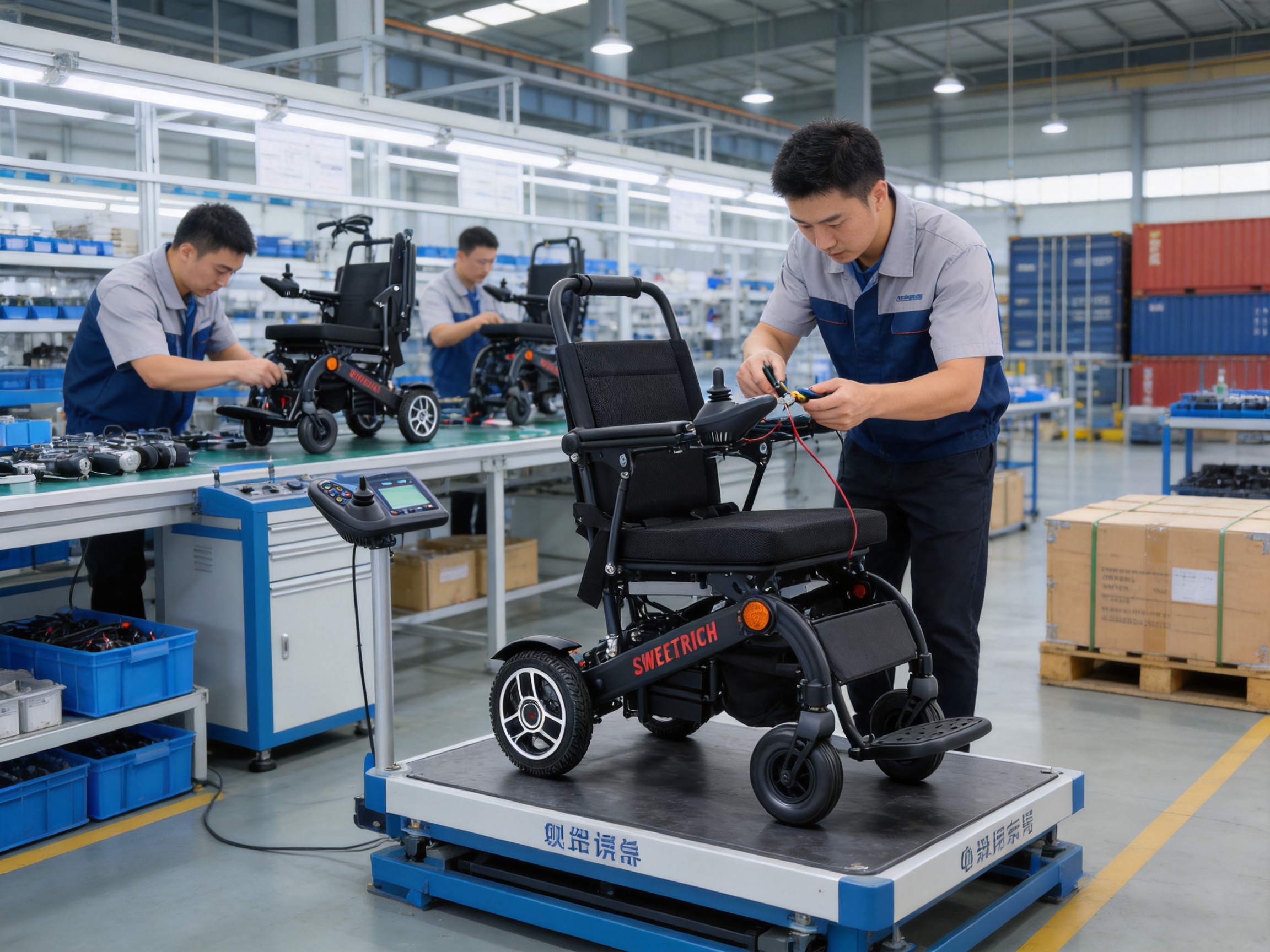
The performance of a mobility product depends not only on its visible design but also on the production systems used to build it. Suzhou Sweetrich Vehicle Industry Technology Co., Ltd. was established in 2011 and operates in Suzhou Industrial Zone, Jiangsu, China. The company reports a 60-acre site and a 30,000-square-meter factory dedicated to mobility products.
This manufacturing scale provides a foundation for coordinated research, development, assembly, testing, and quality management. A factory environment with dedicated space for production can support more consistent workflows than a small-scale assembly operation. It can also help the manufacturer organize component inspection, process control, final testing, and product improvement.
The company focuses on mobility scooters and power wheelchairs, giving it experience in products that require the integration of mechanical frames, electric motors, batteries, controllers, brakes, wheels, suspension, and user controls. This product specialization is important because a powered wheelchair must function as a complete system. The motor, controller, battery, braking system, and folding mechanism all need to work together reliably.
The company also reports ownership of intellectual property related to electric scooters and power wheelchairs. Intellectual property can support the development of proprietary product structures, control systems, folding arrangements, and manufacturing methods. It may also indicate that the manufacturer invests in product engineering rather than relying exclusively on generic, off-the-shelf designs.
Research and Development Orientation
Mobility technology must evolve in response to practical user needs. Product development may involve studying how users transfer, steer, fold, store, charge, and transport their equipment. The iFold PLUS reflects this type of user-centered direction through its automatic folding, dual-side joystick availability, storage bag, lighting option, and travel-focused construction.
Research and development also involves balancing competing requirements. A frame must be strong enough to support the stated weight capacity while remaining reasonably portable. Motors must provide useful propulsion without making the system excessively heavy. The battery must supply practical range without undermining the folding concept. Controls must be responsive while remaining approachable for new users.
These engineering decisions require testing and refinement. A manufacturer with experience in both mobility scooters and power wheelchairs can draw on knowledge of drivetrain systems, controller calibration, frame construction, seating arrangements, and customer use conditions. This cross-product experience can help support continued improvement across different mobility categories.
Production and Quality Management
The company describes its production approach as being guided by strict production management and scientific product design. For a powered wheelchair, quality management should include inspection of structural components, electrical connections, battery systems, motors, braking behavior, joystick response, folding operation, and charger compatibility.
Consistent production is especially important for a folding wheelchair. The folding mechanism must operate repeatedly without excessive resistance, misalignment, or unsafe movement. The frame must open into a stable operating position and fold in a controlled manner. Quality checks can help identify defects before products leave the factory.
Electrical systems also require careful attention. The 24-volt battery system, dual motors, 50-amp controller, electromagnetic brake, and charger must be correctly connected and protected. Proper assembly helps reduce the risk of intermittent operation, poor braking response, charging faults, or premature component wear.
Quality is not limited to the final product inspection. It begins with material selection, supplier control, component consistency, process documentation, worker training, and traceability. A strong manufacturing system can make it easier to identify the source of a problem and apply corrective action when necessary.
International Market Experience
The company reports that its mobility products are exported to America, Europe, Japan, Australia, the Middle East, Russia, and other markets. International experience can help a manufacturer understand that users operate products under different climates, infrastructure conditions, transportation systems, and regulatory expectations.
Export experience may also support communication with distributors and product customization for different markets. However, buyers should still confirm the certifications, labeling, battery documentation, manuals, and compliance requirements applicable to their country. Export history alone does not replace verification of the requirements for a particular purchase or destination.
For distributors, international supply experience may be valuable because it can support packaging, documentation, spare parts, warranty communication, and repeat ordering. For individual users, it provides context about the company’s established involvement in mobility manufacturing, while the final purchasing decision should remain based on current product specifications and service terms.
Why Manufacturing Expertise Matters to Buyers
A mobility wheelchair is a safety-related product in the everyday sense: users depend on it for movement, transfers, errands, and access to essential spaces. Manufacturing expertise can influence reliability, serviceability, and the consistency of the user experience.
Experienced manufacturers are more likely to understand the long-term interaction between components. For example, a folding frame must accommodate wiring routes, battery placement, controller location, wheel alignment, and seat support. A design that looks compact but places stress on cables or connectors may create problems over time. Integrated engineering helps reduce such conflicts.
Manufacturing knowledge also contributes to after-sales support. When a supplier understands the product’s design and production process, it may be better positioned to identify replacement parts, explain maintenance procedures, and assist with troubleshooting. Buyers should ask about warranty coverage, service channels, spare battery availability, replacement tires, joystick components, chargers, and folding mechanism support before purchase.
For commercial buyers and distributors, a factory with a broad production base can offer advantages in product continuity and order coordination. A manufacturer that has been operating for more than a decade may have established processes for handling production planning, quality records, packaging, and international customer communication. These factors can be important when supporting multiple end users.
Recommended Use Environments
The iFold PLUS is suitable for many everyday environments when operated within its specifications. Indoors, its joystick control and compact format can help users navigate corridors, rooms, elevators, retail aisles, and other areas with adequate clearance.
Outdoors, the wheelchair can be used on appropriate paved surfaces such as sidewalks, smooth paths, building approaches, and shopping areas. The front and rear suspension can support comfort over minor surface variations. Users should remain aware of curb cuts, slopes, potholes, wet leaves, loose gravel, and drainage covers.
The wheelchair is also appropriate for travel-oriented routines. It can be folded when space must be shared with luggage or when the chair needs to be stored temporarily. The front light option can be helpful in dim areas, while the under-seat bag provides a convenient location for personal belongings.
It is not designed as a medical device for diagnosis or treatment, and it should not be presented as a substitute for professional medical advice. Users with specific postural, pressure-management, neurological, or orthopedic requirements should consult an appropriate healthcare professional or rehabilitation specialist before selecting a wheelchair.
Buying Guidance for Individuals and Distributors
Before purchasing, confirm the user’s weight, seating needs, transfer method, arm strength, preferred joystick side, typical route length, and storage arrangements. Check that the seat width, foot platform, control position, and overall dimensions are suitable for the intended user.
Measure doorways, elevators, vehicle compartments, and storage areas. The listed overall dimensions are 1090 mm long, 605 mm wide, and 998 mm high, but buyers should request the current folded dimensions as well. The folded size is essential when deciding whether the wheelchair will fit in a trunk, luggage area, closet, or transportation container.
Confirm the battery configuration and expected range. Ask whether the selected battery is included in the quoted price, whether it can be removed, how much the complete chair weighs, and whether the configuration meets the requirements of the intended transport provider.
Request information about the exact speed setting. Because the product materials include both an “up to 8.5 km/h” feature statement and a 6 km/h technical specification, this point should be clarified before ordering. The same applies to the optional 30 Ah battery, which may not be included in every standard configuration.
For distributors, additional questions may include minimum order quantity, packaging dimensions, spare parts, warranty handling, technical manuals, product labeling, private-label options, and support for local compliance documentation. A clear supply agreement can help prevent misunderstandings after delivery.
Maintenance and Long-Term Ownership
Routine maintenance helps preserve the performance of a folding electric wheelchair. Before use, inspect the tires, joystick, foot platform, folding areas, battery connections, and visible frame components. Confirm that the chair opens fully and that the operating position is secure before driving.
Tire condition affects traction, comfort, braking, and energy consumption. Tires should be kept at the recommended pressure if pneumatic, or inspected for wear if solid or semi-solid. Damaged or excessively worn tires should be replaced by qualified personnel or according to the manufacturer’s service instructions.
The folding mechanism should be kept free from dirt and obstructions. Do not force the frame to fold or unfold. If unusual resistance, noise, looseness, or uneven movement occurs, stop using the function until it has been inspected.
Electrical connectors should remain dry and secure. The joystick should be protected from impact and moisture. The charger cable should be inspected for cuts, exposed wires, bent pins, or heat damage. Only compatible replacement components should be used.
Cleaning should be performed with a soft, slightly damp cloth unless the operating manual provides different instructions. The wheelchair should not be sprayed with high-pressure water or submerged. After cleaning, allow components to dry fully before charging or operating.
Professional servicing may be needed for brake adjustment, controller faults, battery replacement, motor problems, frame damage, or unusual folding behavior. Keeping service records can help track battery age, repairs, inspections, and parts replacement.
Q&A: Common Questions About the Folding Electric Wheelchair
Is this wheelchair intended for travel?
Yes. It is categorized as a travel smart wheelchair and includes automatic folding, a transport-oriented frame, an under-seat storage bag, and optional lighting. Its suitability for a specific vehicle, aircraft, train, or public transport system should be confirmed in advance.
How does the automatic folding function help the user?
It reduces the manual effort required to prepare the wheelchair for storage or transportation. This may benefit users and caregivers who find conventional manual folding difficult. The folding process should always be performed on a stable surface and according to the product instructions.
Can the joystick be used on either side?
The product description states that the joystick is available for use on both sides. Buyers should confirm the installation method and any adjustment procedure for the exact configuration they are ordering.
What is the maximum user weight?
The listed weight capacity is 120 kg, or 265 pounds. This should be treated as the combined limit for the user and carried items unless the manufacturer provides a different definition.
What is the driving range?
The listed maximum driving range is 30 ± 5 km. Actual range depends on battery capacity, rider weight, terrain, slope, temperature, tire condition, speed, and driving behavior.
Which batteries are available?
The technical information lists lithium batteries rated at 24 volts and 10.2 amp-hours or 20 amp-hours. The product description also refers to an optional battery of up to 30 amp-hours. Availability and compatibility should be confirmed with the supplier.
How long does charging take?
The listed charging time is approximately five hours. The actual time may vary according to the battery’s remaining charge, capacity, temperature, condition, and charger performance.
What is the maximum speed?
The technical information lists a maximum forward speed of 6 km/h, while the feature description mentions speeds up to 8.5 km/h. Because these figures differ, the buyer should confirm the approved speed for the exact model and configuration before use.
Can it climb slopes?
The listed maximum driving gradient is 10 degrees. Slope performance depends on surface traction, battery charge, user weight, weather, and direction of travel. Users should avoid unsafe slopes and follow the operating manual.
Does it have a braking system?
Yes. The wheelchair uses an electromagnetic brake system. Users should still park on level ground whenever possible and avoid relying on the brake alone on a steep incline.
Does it have suspension?
Yes. Front and rear suspension are listed. Suspension can improve comfort over suitable minor surface irregularities, but it does not make the wheelchair an all-terrain vehicle.
Is a front light included?
A front light is available as an option. Buyers should confirm whether it is included in the selected package or must be ordered separately.
Is the product a medical device?
The supplied product information identifies it as a non-medical device for the US market. Users with clinical seating or mobility requirements should seek professional advice before purchase.
What should buyers ask the manufacturer before ordering?
Buyers should confirm current dimensions, folded dimensions, exact speed, battery capacity, complete weight, charger specifications, warranty conditions, spare parts, shipping requirements, and applicable compliance documentation.
Conclusion
The iFold PLUS automatic folding electric wheelchair is designed for users who want powered mobility combined with travel convenience. Its automatic folding system, dual-side joystick availability, two-motor drive, front and rear suspension, electromagnetic braking, large foot platform, under-seat storage, optional front light, and lithium battery choices create a practical set of features for everyday mobility.
Its main advantage over many conventional alternatives is the attempt to balance usability and portability. It is more than a basic transport chair because it provides powered driving and user control, yet it is designed to be easier to fold and transport than many larger fixed-frame powered wheelchairs.
The manufacturing background of Suzhou Sweetrich Vehicle Industry Technology Co., Ltd. adds further context. Since its establishment in 2011, the company has focused on mobility scooters and power wheelchairs, supported by a reported 60-acre site, a 30,000-square-meter factory, research and development activity, intellectual property, production management, and international market experience.
For the best ownership experience, the chair should be matched carefully to the user, route, battery requirements, vehicle, and local regulations. Buyers should also resolve specification differences, particularly the listed speed figures and optional battery capacity, before finalizing an order. With appropriate selection, training, charging, and maintenance, the product can support greater independence and more convenient movement in everyday travel situations.
References
1. Product specification sheet for the iFold PLUS automatic folding electric wheelchair, including dimensions, motor, battery, range, braking, suspension, and weight information.
2. Product feature information for the iFold PLUS travel smart wheelchair, including automatic folding, joystick configuration, storage, lighting, and battery options.
3. Manufacturer-provided company profile for Suzhou Sweetrich Vehicle Industry Technology Co., Ltd., including company history, factory scale, product focus, research and development, and international markets.
4. General principles of powered wheelchair operation, battery care, slope safety, charging practice, and routine mobility equipment maintenance.
5. General guidance for transportation planning involving foldable powered mobility equipment and lithium battery systems.