 info@sweetrich.cn
  +86-(0)512-82283871
Content
- 1 Why Outdoor Terrain Affects Scooter Stability
- 2 How a Four-Wheel Layout Supports Outdoor Stability
- 3 How a Heavy Duty Frame Influences Stability
- 4 How Weight Distribution Affects Outdoor Handling
- 5 What Role Tires Play in Outdoor Stability
- 6 How Suspension Affects Movement on Uneven Surfaces
- 7 How Steering Design Affects Stability During Turns
- 8 How Brakes and Speed Control Support Outdoor Stability
- 9 How Manufacturers Approach Stability in Design and Production
- 10 What to Check Before Taking a Heavy Duty 4 Wheel Scooter Outdoors
- 11 How Riders Can Maintain Stability During Everyday Use
- 12 How These Design Elements Work Together
- 13 How Outdoor Conditions Should Shape Scooter Use
Getting around outdoors involves more than simply moving from point A to point B. Pavement shifts character within just a few meters — smooth stretches give way to uneven patches, sloped entrances, small gaps, or worn-down walkways. A mobility scooter needs to handle those shifts without ever making the ride feel unpredictable underneath the rider.
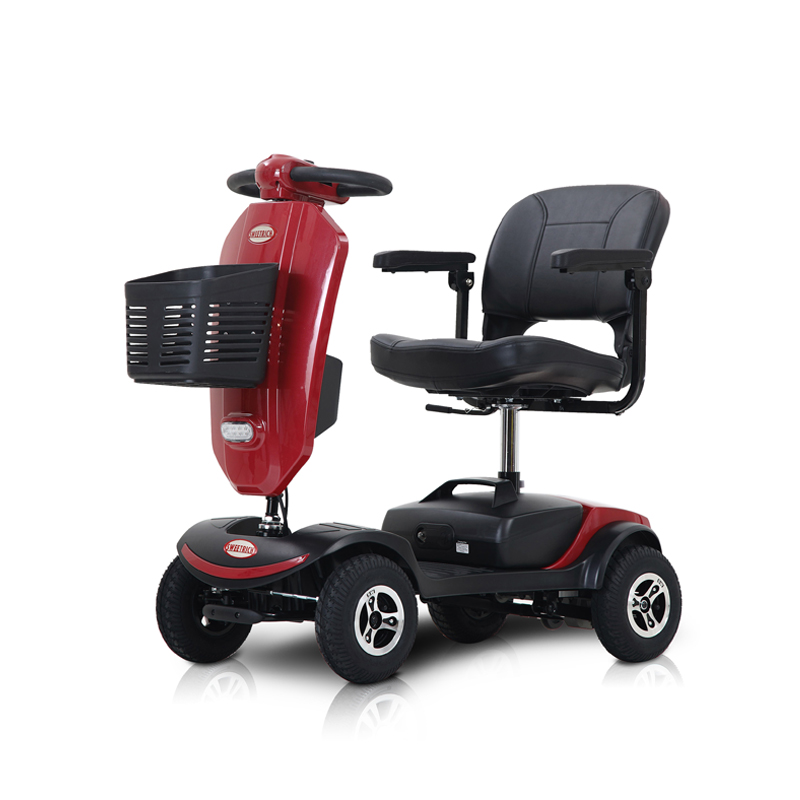
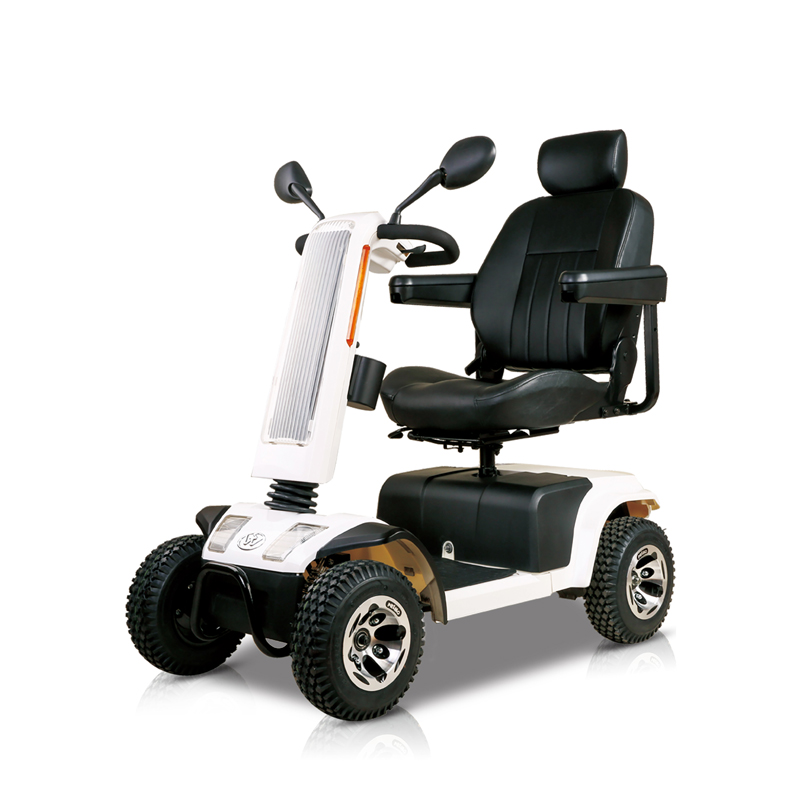
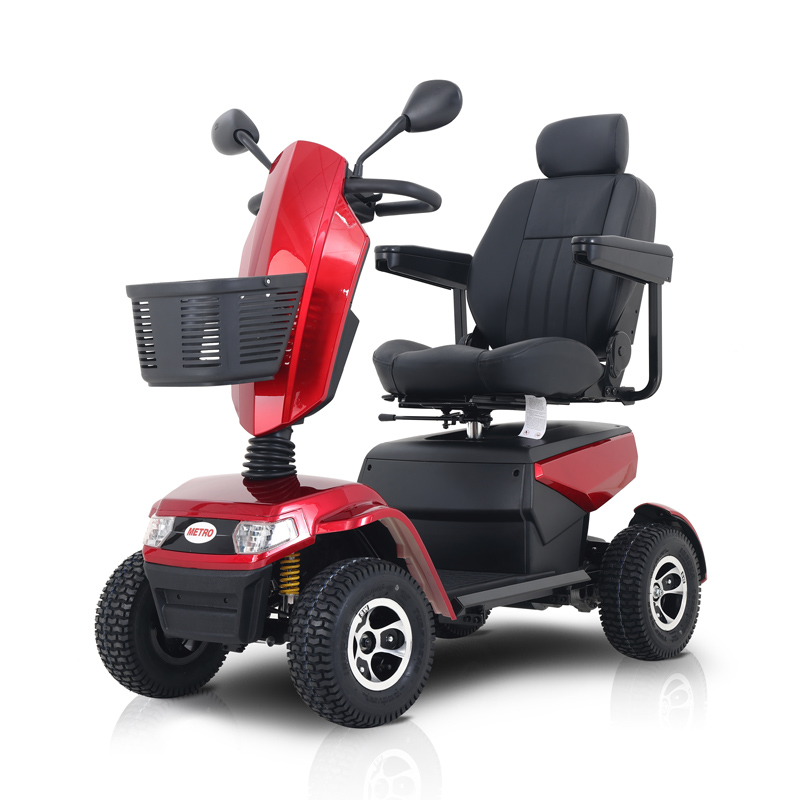
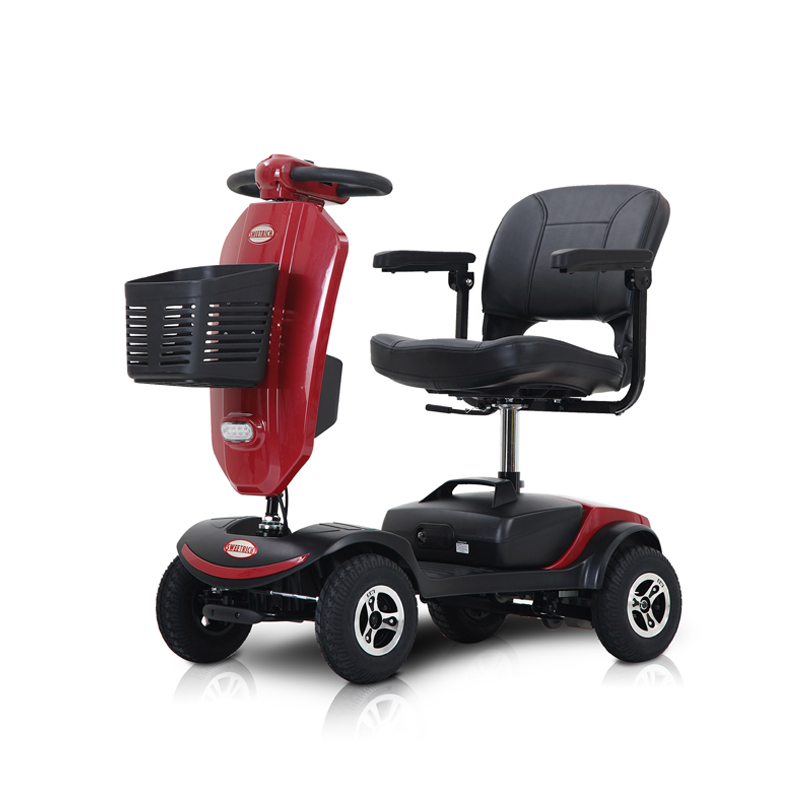
A Heavy Duty 4 Wheel Scooter tackles outdoor stability through several design choices working in concert. Wheel placement establishes a broad base of support, while frame structure, weight distribution, tire condition, seating position, steering, and braking all shape how the vehicle actually behaves once it's moving.
No single piece carries this responsibility alone. Real stability comes from how these parts function together, combined with how the scooter gets operated across changing outdoor conditions.
Why Outdoor Terrain Affects Scooter Stability
Indoor floors stay fairly predictable. Outdoor routes don't offer that luxury — a paved sidewalk alone might contain raised edges, uneven joints, gentle slopes, and sections worn down by years of weather and foot traffic.
Even small terrain changes affect wheel contact and how the body of the scooter moves. Crossing a smooth stretch feels nothing like crossing an uneven patch or turning while on a slope, and speed changes that experience further still.
Weather adds another layer entirely. Wet surfaces cut down on available grip, and loose debris on a path can throw off both steering and braking. Daily outdoor use really comes down to a mix of solid mechanical design and sensible handling on the rider's part.
A few conditions worth paying attention to:
- Surface condition
- Slope and direction of travel
- Wheel contact
- Tire condition
- Steering movement
- Travel speed
- Weight placement
Even a scooter built specifically for outdoor travel still needs to be operated according to its instructions and used within its intended environment. Good design supports controlled movement — but operating habits remain very much part of the equation.
How a Four-Wheel Layout Supports Outdoor Stability
Wheel arrangement forms the actual foundation of a scooter's balance. Four wheels create separate points of support around the frame, spreading the load across a wider footprint than fewer wheels could manage.
Side-to-side movement becomes especially relevant outdoors. When one wheel rolls over a small rise or dip, the other three keep the scooter grounded and steady. How that movement transfers through the rest of the vehicle depends heavily on frame geometry and where each wheel sits relative to the others.
Spacing plays its own role too — a wider stance generally supports better lateral balance, while the exact positioning of front and rear wheels shapes how the scooter handles both straight travel and turns.
That said, four wheels don't eliminate every outdoor challenge on their own. Slopes, sharp turns, uneven ground, and excessive speed can still test stability regardless of wheel count. Getting good results really depends on how well the wheel arrangement pairs with everything else in the structure.
How a Heavy Duty Frame Influences Stability
The frame ties together the wheels, seat, steering components, and internal parts into one connected structure. It needs to hold its intended shape through normal use while still allowing the vehicle to respond naturally as the ground beneath it changes.
Here's something worth clarifying: a heavier frame doesn't automatically translate to better stability. Dimensions, wheel position, seat placement, how joints connect, and overall load distribution all factor in — weight by itself isn't the deciding variable.
Frame geometry shapes the overall footprint as well. A larger frame may need more room to turn, while a more compact build can behave quite differently around corners or narrow pathways.
During manufacturing, structural assembly deserves real attention, since alignment between connected parts directly affects handling. Wheel mounting points, frame joints, and seat support all play into keeping the whole structure properly organized and behaving as intended.
How Weight Distribution Affects Outdoor Handling
Where weight actually sits on a scooter changes how the ride feels. The rider makes up a large share of total load, while batteries and other internal components add weight of their own at different points across the frame.
Seat height plays into this balance too. A higher seating position creates different movement characteristics than a lower one, particularly noticeable during turns or when crossing a slope.
Internal components need placement that accounts for the complete structure, not just individual parts in isolation. And anything carried on the scooter should stay within the intended storage areas — items placed haphazardly around the frame can throw off balance in ways that aren't always obvious until they matter.
| Component | Influence on Handling |
|---|---|
| Seat position | Affects rider placement and balance |
| Battery area | Adds weight within the frame |
| Wheel position | Influences support and movement |
| Storage load | Can change balance when poorly placed |
| Frame dimensions | Affect overall footprint and turning behavior |
Even distribution keeps the scooter behaving predictably. Uneven loading, by contrast, can shift steering response or make the ride feel noticeably different from what the rider is used to.
What Role Tires Play in Outdoor Stability
Tires are the actual point of contact between scooter and ground, and their condition shapes grip, vibration, steering feel, and braking performance directly.
Different surfaces place different demands on them. Smooth pavement asks something different of tires than a rough path or slightly damp ground does. Tread pattern affects how well a tire handles loose material underfoot, while the tire material itself influences how the wheel responds when the surface changes beneath it.
Inflation and general condition deserve regular checking too — a tire that isn't maintained per manufacturer guidance can quietly change how the whole scooter handles, sometimes before the rider even notices anything's off.
Worth watching for during a visual check:
- Uneven wear
- Visible damage
- Changes in tire shape
- Foreign material caught in the tread
- Abnormal handling during travel
Tire selection ought to line up with wherever the scooter actually gets used. Outdoor stability isn't just a function of how many wheels a scooter has — ground contact quality matters just as much in practice.
How Suspension Affects Movement on Uneven Surfaces
Suspension helps manage the jolts that come from bumps, surface joints, and other terrain changes. Instead of letting every bit of ground movement travel straight up through the frame and into the seat, suspension components absorb a portion of that motion before it reaches the rider.
Comfort and stability are related concepts, though not quite the same thing. A smoother ride cuts down on sudden body movement, but true structural stability depends on the scooter's overall design working together as a system.
Wheel contact matters here as well. Crossing uneven ground, suspension movement lets individual wheels adjust to surface height changes independently, which helps maintain the ground contact that controlled movement depends on.
Suspension still needs to work in tandem with the frame, tires, and wheel arrangement, though — it can't compensate on its own for excessive speed, worn tires, overloading, or terrain that's simply not appropriate for the vehicle.
For outdoor use, a balanced system beats relying on any single feature to carry the load. Frame geometry provides the structural backbone, wheels establish ground contact, tires handle the actual surface interaction, and suspension takes the edge off the movement that uneven ground inevitably creates.
How Steering Design Affects Stability During Turns
Straight travel and turning ask different things of a mobility scooter. Once a turn begins, direction shifts and each wheel follows its own slightly different path — so the way the body moves through a turn feels distinctly different from cruising down a straight sidewalk.
Steering response needs to stay predictable above all else. A sudden jerk of the handlebar changes direction fast, sometimes too fast, while gradual steering input gives the rider actual time to react as the path curves.
Turning space matters just as much. A scooter with a larger frame needs more room to complete a turn, especially around corners, doorway entrances, or tight walkways — which is exactly why planning a route ahead of time cuts down on the need for last-second, abrupt steering.
A few habits genuinely help with controlled turning:
- Slow down before entering the turn, not during it
- Keep steering movements gradual rather than sharp
- Watch for uneven surfaces right near corners
- Avoid sharp turns while on sloped ground
- Keep any stored items in their intended spots
Surface condition and rider behavior stay tightly connected to mechanical design here. Even a genuinely stable four-wheel arrangement gets harder to manage if a turn is taken too fast or if ground conditions shift unexpectedly mid-turn.
How Brakes and Speed Control Support Outdoor Stability
Braking style affects body movement too. A sudden stop jolts the rider forward; gradual braking lets that slowdown happen in a much more controlled way.
Outdoor braking also has to account for the surface underneath. Smooth pavement, loose ground, and damp patches all offer different levels of traction, so riders need to factor in surrounding conditions rather than assuming one braking approach works everywhere.
Speed control and braking only function well alongside good tires and solid wheel contact — a braking system can work exactly as designed and still deliver inconsistent stopping if the tires are worn or the ground is unsuitable.
A quick check before heading out might include:
- Test steering response somewhere clear and open
- Confirm braking feels normal, not delayed or grabby
- Look over tire condition
- Make sure the seat is secure
- Check that anything stored on board is properly placed
Doing this regularly tends to catch small changes before they turn into surprises partway through a longer trip.
How Manufacturers Approach Stability in Design and Production
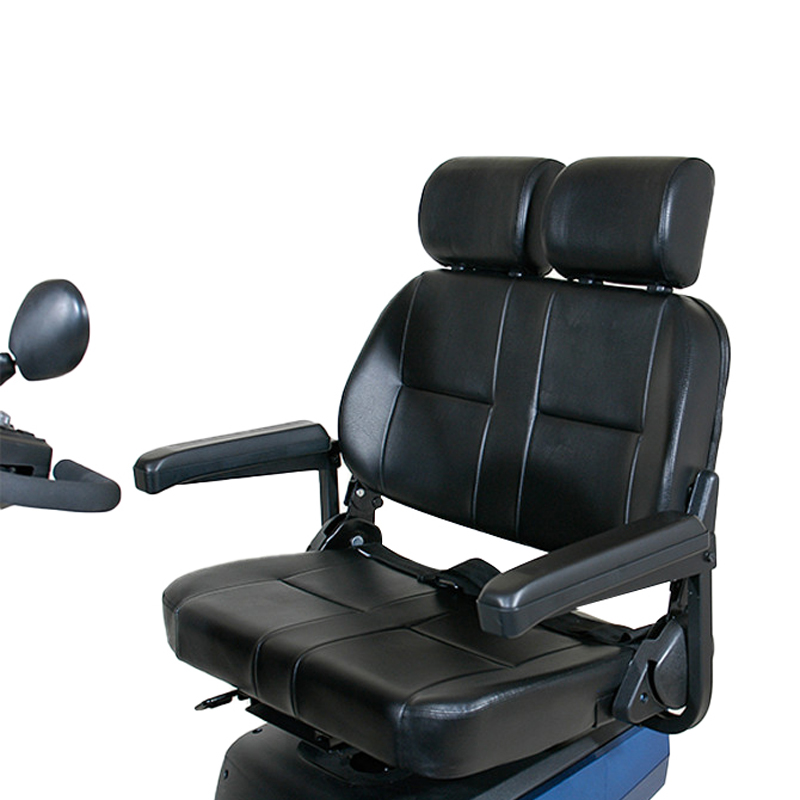
From a manufacturing standpoint, stability starts at the planning stage and carries through assembly and inspection alike. China Mobility Scooter Manufacturers typically need to treat frame dimensions, wheel placement, seat position, tire selection, braking response, and load arrangement as pieces of one connected design rather than isolated specs.
Material choice feeds into this too. Frame components need to hold their shape reliably under normal use, and joints and mounting points need consistent, repeatable assembly across every unit produced.
Wheel alignment gets particular attention for good reason — even a small misalignment in one wheel's position can throw off steering feel or cause uneven tire wear over time.
Inspection during production typically covers:
- Frame assembly
- Wheel mounting
- Steering movement
- Brake response
- Tire installation
- Seat attachment
- Storage and load areas
Functional checks go beyond how a finished scooter looks — they examine how it actually behaves under normal operation, since movement, alignment, and how components interact with each other all matter more than surface appearance. Keeping design intent and actual assembly practice aligned is really what prevents unexpected inconsistencies between individual units, and a stability feature only means something once every surrounding component is doing its job properly too.
What to Check Before Taking a Heavy Duty 4 Wheel Scooter Outdoors
A short pre-trip inspection doesn't need to be elaborate, but it should touch on anything that directly affects how the scooter moves:
- Tires — look for visible damage, uneven wear, or any change in condition
- Brakes — confirm braking feels familiar and controlled, not off in any way
- Steering — move the control gently and check that response feels normal
- Seat and frame — make sure both are secure and properly attached
- Battery — check charge level and general condition per the operating manual
- Load — keep bags and other items strictly within the intended carrying space
- Route — think through slopes, rough patches, wet ground, or narrow passages ahead of time
A scooter that's felt perfectly familiar for months can still handle differently the moment surface conditions change. Paying attention to the route ahead of time helps a rider choose the right speed and steering approach before problems come up, not after.
How Riders Can Maintain Stability During Everyday Use
Mechanical design lays the groundwork, but daily riding habits determine how well that groundwork actually gets used. Careful habits genuinely make outdoor movement more predictable.
Speed should match the surroundings rather than staying constant everywhere. A clear, smooth stretch allows for comfortable, normal-speed travel, while a rougher section calls for more attention and a slower pace.
Slopes deserve extra caution because direction, gravity, wheel contact and braking all interact at once on an incline. Crossing a slope sideways feels nothing like going straight up or down one, so route conditions are worth thinking through before starting across.
Sudden steering changes are worth avoiding too — gradual adjustments let rider and scooter respond together instead of fighting each other.
Habits worth building into routine use:
- Slow down ahead of turns
- Approach uneven ground carefully
- Avoid sudden changes in direction
- Keep both hands positioned for normal control
- Avoid carrying loads outside designated storage areas
- Check the scooter regularly, not just occasionally
- Follow the specific operating guidance for your model
Day-to-day stability really comes down to repeated attention to small details, not something that can be left entirely to the scooter's build.
How These Design Elements Work Together
A Heavy Duty 4 Wheel Scooter maintains outdoor stability through several elements working together rather than any one structural feature doing the heavy lifting.
Four wheels establish the basic support footprint. Frame geometry keeps the major components positioned correctly relative to each other. Weight distribution shapes overall balance, and tires keep the actual contact with the ground.
Suspension absorbs part of what uneven surfaces throw at the frame. Steering governs directional control, and brakes regulate how speed changes when it needs to.
| Design Element | Main Stability Role |
|---|---|
| Four wheel layout | Provides distributed ground support |
| Frame structure | Connects and supports major components |
| Weight placement | Influences overall balance |
| Tires | Maintain contact with the surface |
| Suspension | Manages movement from uneven ground |
| Steering | Controls directional changes |
| Brakes | Regulate speed and stopping |
| Seat position | Affects rider placement |
How Outdoor Conditions Should Shape Scooter Use
A scooter built for outdoor travel still needs sensible route choices from the rider. Sidewalks, paths, ramps and parking areas all present different handling conditions, sometimes within the same short trip.
Weather deserves its own attention here. Wet or slippery ground cuts down on available traction, loose debris can throw off steering and braking, and poor visibility makes obstacles harder to spot in time.
Riders benefit from staying alert to changes along the route and adjusting speed as conditions shift — a well-designed scooter reduces risk, but it doesn't remove the need for basic awareness on the rider's part.
The same logic applies on the manufacturing side during design evaluation. Testing across a range of operating conditions gives real, useful insight into wheel contact, steering response, braking behavior, and how a rider actually moves with the vehicle in practice.
Stability, in the end, comes down to both design and real-world use working together. Frame structure, wheel arrangement, tires, suspension, weight distribution, steering, and braking each play their part in how a scooter behaves once it's outside. Careful assembly and thorough inspection matter just as much on the manufacturing side — since consistent component positioning across every unit is really what makes predictable handling possible.